

Trump Creates World’s First War Zone Insurance Company, Sends Strongly Worded Truth Social Post to Protect Global Oil Supply
By the world’s oldest tenured professor and a philosophy major turned dairy farmer
In a move that even the actuarial sciences could not have predicted, President Donald Trump has responded to Iran’s closure of the Strait of Hormuz by ordering a federal foreign-aid agency to start writing maritime war risk policies in an active combat zone, while simultaneously calling on Britain, France, Germany, Japan, China, South Korea, Australia, and essentially the entire membership of the United Nations to send their navies somewhere they have indicated, with increasing specificity, they do not intend to go.
The plan, described by the White House as “effective IMMEDIATELY,” involves the U.S. Development Finance Corporation — an institution previously dedicated to helping build small business infrastructure in Sub-Saharan Africa — underwriting the safe passage of supertankers through a 21-mile corridor being actively mined by the Iranian Revolutionary Guard Corps. Shipping industry sources confirm this was not what the DFC’s founding charter envisioned. The DFC has not confirmed whether it has actuaries. Iran has confirmed it has mines.
The Protection Racket With Extra Steps
Here is how the Trump Strait of Hormuz Maritime Safety and Insurance Empowerment Initiative works, to the extent that it works at all:
Step one: A shipping company purchases war risk insurance from the U.S. government at what the president describes as “a very reasonable price.” What that price is, nobody has been told. What the deductible looks like when your supertanker takes a hit from an IRGC anti-ship drone, nobody has specified. Whether the exclusions clause covers mines, which Iran has been seeding into the Strait since the conflict began, is a question for the fine print.
Step two: Having purchased this insurance, the shipping company receives a U.S. Navy escort through the Strait. The U.S. Navy has noted, with the careful precision of an institution that cannot afford to be misquoted, that it is “not currently escorting ships through the Strait of Hormuz and will not speculate on future operations.” Energy Secretary Chris Wright says escorts will begin “as soon as it’s reasonable to do it.” Analysts suggest reasonable might be a flexible concept given that an estimated seven to ten Arleigh Burke-class destroyers are required per convoy, and America currently has approximately fifty combat-ready destroyers dispersed across every ocean on earth.
Step three: Profit. Somehow.
The Allies Have Responded
President Trump took to Truth Social — his preferred venue for restructuring the global security order — to demand that China, France, Japan, South Korea, the United Kingdom and others dispatch warships immediately. “Hopefully,” he wrote, deploying a word that does not traditionally anchor alliance commitments. The response from the international community can be summarised with some precision.
The United Kingdom said it will not be “drawn into the wider war” but offered to look “intensively” at the situation and may dispatch mine-hunting drones. Germany said no. France said no, but possibly yes after the war ends, which is the diplomatic equivalent of promising to help someone move after they’ve already finished moving. Japan said it was “continuing to examine what Japan can do within the legal framework,” which is Japanese diplomatic for “please stop calling.” Australia said it had not even been asked, then said no anyway, as a precautionary measure. China suggested everyone stop shooting, which is more than China usually offers.
Trump told reporters he was frustrated. “Some are very enthusiastic, and some are less than enthusiastic,” he said. “I think we have one or two that will not do it that we’ve been protecting for about 40 years at tens of billions of dollars.” He did not identify these ingrates by name but promised that “we will remember.” The promise was received, in Brussels and Tokyo, with the particular brand of attentiveness that European and Asian diplomats deploy when they have no intention of changing their position but deeply respect the importance of the relationship.
Meanwhile, at the Strait of Hormuz
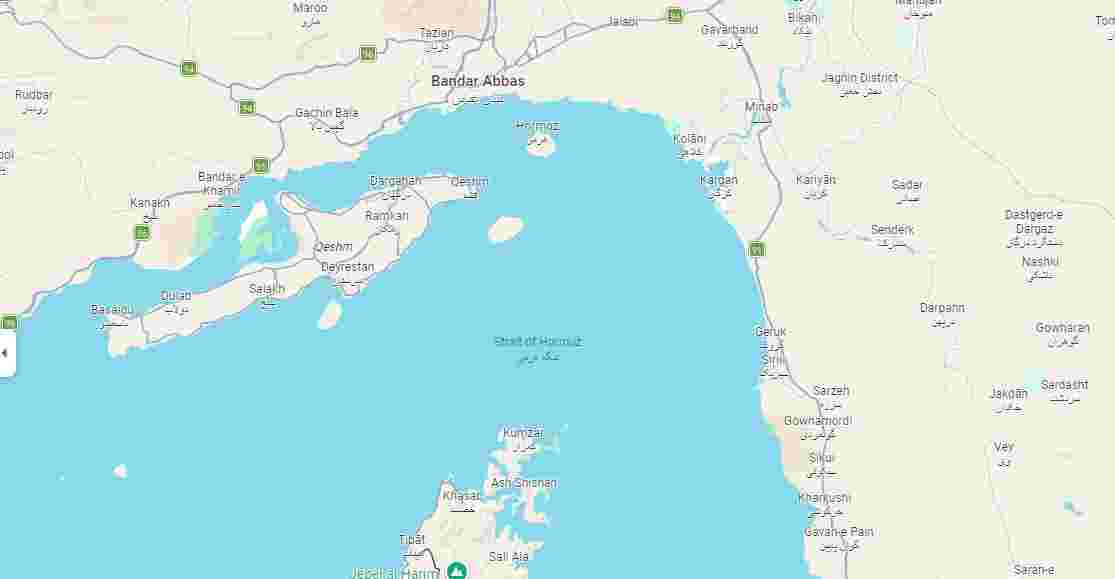
Approximately 1,000 oil tankers are currently anchored outside the Strait of Hormuz. About 20 percent of the world’s oil, significant volumes of liquefied natural gas, and the fertiliser precursors that feed roughly 40 percent of humanity’s caloric intake normally flow through this 21-mile passage. The Strait is, in the technical language of geopolitics, a very big deal.
Oil prices have risen 40 to 50 percent since Operation Epic Fury commenced on February 28. American pump prices jumped eleven cents in a single day, hitting a national average of $3.11 for regular. This is politically inconvenient for an administration whose energy platform is “drill, baby, drill,” and whose voters have noticed that drilling has not, in fact, reduced the price of a gallon of gas during an active war with the nation that controls the world’s most critical oil chokepoint.
The Centre for Strategic and International Studies has warned that global food security is at risk. India has invoked emergency powers to protect 333 million cooking-gas-dependent households. The UN says millions of people are at risk of hunger. Bob McNally of Rapidan Energy Group, a former White House official, has predicted that full resumption of Hormuz traffic will take “weeks instead of hours or days.” The Iranian naval commander of the IRGC challenged Trump directly: “Didn’t Trump say that Iran’s navy has been destroyed?” He then noted, accurately, that the Strait remains under IRGC control.
Operation Earnest Will: The 1980s Called, But the Hold Times Are Longer Now

For those keeping historical score, the United States last conducted large-scale tanker escort operations in the Strait of Hormuz during Operation Earnest Will in the late 1980s — the so-called “Tanker Wars” during the Iran-Iraq conflict. That operation involved re-flagging Kuwaiti tankers as American vessels and escorting them through a strait that was, at the time, somewhat less comprehensively mined and somewhat less contested by precision drone swarms.
The Navy has noted that “fleets and their support structure are a fraction of those of four decades ago.” It has also noted that the Strait is, to borrow a phrase from naval analysts, “death valley” — approximately 10 miles of navigable water flanked by Iranian-controlled coastline on one side, with Iran’s asymmetric arsenal including anti-ship cruise missiles, swarm drones, sea mines, and fast attack boats arrayed at close range. CNN analysts have estimated that even a successful escort operation might restore only 10 percent of pre-war traffic.
To be clear: the plan is to escort ships through a corridor that’s narrower than the distance from the Capitol to the Lincoln Memorial, against a nation that has declared it will sink anything associated with the United States, using a navy that doesn’t currently have the available ships to run the escort, at a price to be determined by a foreign-aid lender that has never written war risk insurance, with the backing of allies who have all declined to participate.
This is being described, officially, as ensuring the “FREE FLOW of ENERGY to the WORLD.”
In all capitals. On Truth Social.
As the great American philosopher Ron White once observed: “You can’t fix stupid.” He said nothing about insuring it.
Auf Wiedersehen, amigo!
The Strait of Hormuz crisis began on February 28, 2026, when the United States and Israel launched Operation Epic Fury, a military campaign targeting Iran’s nuclear, military, and naval infrastructure. Iran retaliated by effectively closing the Strait of Hormuz — the world’s most critical oil transit chokepoint — to vessels associated with the U.S., Israel, and their allies, triggering global oil price spikes of 40 to 50 percent. Roughly 20 percent of the world’s oil supply, major LNG volumes from Qatar, and fertiliser precursor supplies that underpin global food security transit the narrow passage annually. President Trump ordered the U.S. Development Finance Corporation to provide war risk insurance for maritime trade in the Gulf and signalled that Navy escorts would follow “if necessary.” He called on allies including the UK, France, Germany, Japan, China, South Korea and Australia to send warships; all have declined or hedged. Iran’s new acting Supreme Leader Mojtaba Khamenei — son of the slain Ayatollah Ali Khamenei — has indicated the Strait will remain closed for diplomatic leverage. As of mid-March 2026, no naval escort mission has been formally launched, approximately 1,000 tankers remain stranded, and the DFC insurance programme details have not been publicly disclosed.
SOURCES:
https://prat.uk/keir-starmer-offers-to-send-a-strongly-worded-letter/
https://appledaily.uk/strait-of-hormuz-naval-escorts/