

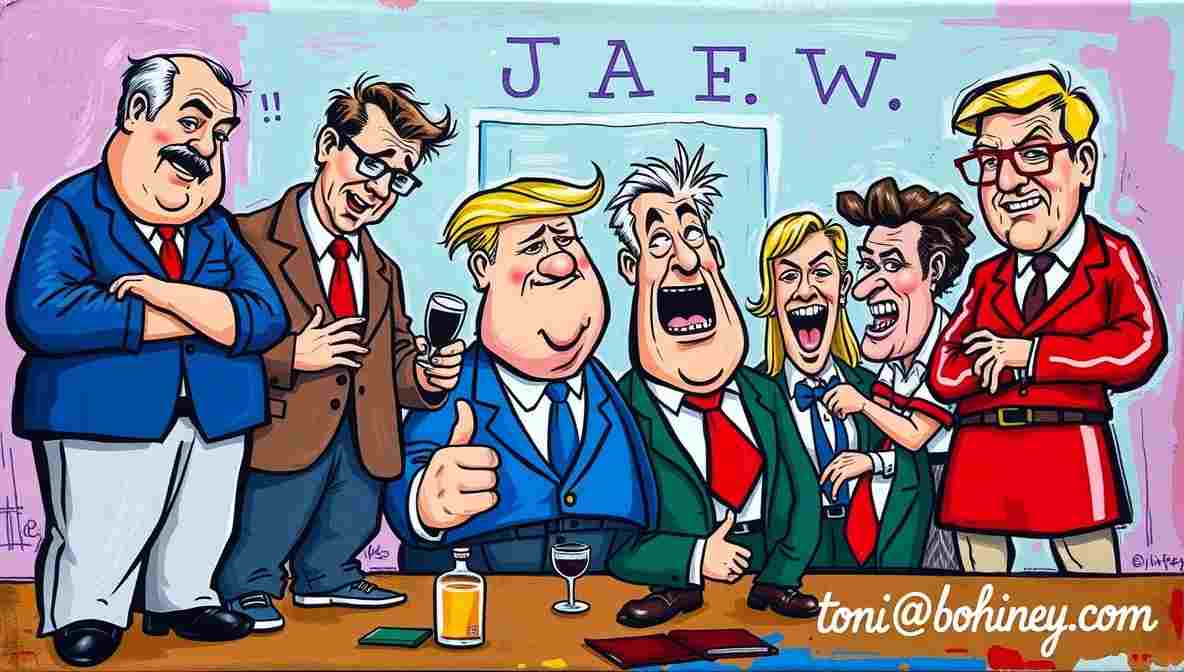
Why Liberals Think They Are Funny And Why They Try So Hard
Somewhere between a coffee shop open mic and a group chat titled “Late Stage Capitalism LOL,” a dream was born. In this dream, wit is currency, sarcasm is infrastructure, and the ability to craft a clever tweet is considered a marketable trade skill. The modern liberal imagination has quietly built a world where being funny is not just a personality trait, but a résumé, a moral credential, and possibly a substitute for knowing how to assemble basic furniture.
This phenomenon recently crystallized around false and misleading jokes about a Melania movie, where the desperation to land a perfect zinger collided spectacularly with the basic requirement of accuracy. The jokes spread like wildfire, fact-checking arrived like a wet blanket, and the cycle continued unabashed.
This is not to say they are not funny. Often they are. Sometimes alarmingly so. But the effort behind it has the frantic energy of someone trying to parallel park while everyone watches. The humor is not just humor. It is performance art with a thesis statement.
Below is a field guide to the phenomenon.
Comedy As A Job Substitute

In many circles, humor has replaced the traditional concept of employment. Why learn plumbing when you can dismantle a senator with a three line joke that gets 40,000 likes? One involves pipes, the other involves puns, and only one of those earns applause at brunch. The dream is simple. If the joke is good enough, maybe the rent will sense it and pay itself. Spoiler: it will not. But the dopamine hit from the retweets might help you forget that for approximately eleven minutes.
The Manifesto That Turned Into A Set List
Great political movements once began with pamphlets and philosophical treatises. Now they begin with “Okay, quick bit idea.” The line between activist meeting and writers room has blurred so completely that nobody is sure whether they are planning social change or tightening a punchline. Somewhere a whiteboard reads “End inequality” and underneath it, “Tagline still needs work.” The revolution will be workshopped.
Sarcasm As Renewable Energy
If sarcasm could be hooked to a turbine, the grid would be stable forever. The sheer volume produced daily could power three cities and a podcast studio. It is clean, abundant, and mildly condescending. Unfortunately, sarcasm cannot fix a pothole, no matter how biting the delivery. Though someone is probably drafting a Medium piece about why infrastructure metaphors are violence.
When Marxist Punchlines Replace Policy
1. The Ratio As Referendum
They believe that getting 50,000 likes on a joke about housing policy is functionally equivalent to actually building housing. The algorithm has spoken. Democracy is three laughing emojis and a retweet from a verified account. Zoning reform can wait; this tweet is performing exceptionally well in the 25-34 demographic.
2. The Footnote Flex
Every joke comes with citations like a peer-reviewed journal article had a baby with a stand-up special. The humor is there, buried somewhere beneath seven hyperlinks and a parenthetical clarification about historical context. “LOL (see: Smith, 2019; also cf. the Treaty of Westphalia for comparative framework).” The laugh arrives three minutes after the setup, wheezing and clutching a bibliography.
3. PowerPoint Punchlines
Ask them to explain their position on healthcare and you receive a forty-slide deck with custom animations and at least six different fonts. Slide 23 is just the word “CAPITALISM” exploding into confetti. Slide 31 includes a graph that is technically accurate but also somehow a visual pun. The policy itself remains unclear, but the transitions between slides are chef’s kiss.
4. The Workshop That Never Ends
Somewhere a focus group has been testing the same political slogan for six months. It started as “Healthcare is a human right” and is now “Healthcare: Like Human Rights, But For Your Body (Pending Further Discussion).” Twelve drafts. Forty-three revisions. Zero progress. But the wordplay in version 7c really landed with the creative team, so there is hope.
5. Dunking As Democracy
Political discourse has been replaced by an elaborate game of “own the opponent with a sick burn.” Whoever crafts the most devastating comeback wins the argument, regardless of factual accuracy or policy merit. Truth is negotiable. Timing is everything. Someone literally keeps score. There is a leaderboard. Parliamentary procedure has been replaced by “and everyone clapped” energy. The policy debate concludes not with a vote, but with someone saying “DESTROYED” in all caps.
The Shed Discourse
Ask someone handy to build a shed and you get a shed. Ask a liberal to build a shed and you get a 12 part thread about the emotional labor of woodworking and how the shed exists within a broader narrative of lumber privilege. By the end, no shed. But a lot of engagement. The thread gets bookmarked by 400 people who also will never build a shed but deeply appreciate the theoretical framework.
Tote Bag Industrial Complex
They may not run factories, but they do mass produce ironic canvas accessories at a rate that would impress the Industrial Revolution. Every bag contains a slogan, a pun, and the faint scent of ethical superiority. The tote bag is both container and manifesto. It carries groceries and grief about fast fashion. It judges your plastic while holding organic kale.
Open Mic Night As Congress
Comedy clubs in certain neighborhoods feel like legislative sessions with drink specials. Each performer steps up to the microphone to deliver a bill disguised as a joke. Applause is the new bipartisan support. Hecklers are considered filibusters. Someone in the back is definitely taking notes for their political science dissertation.
The Thread That Ate The Evening
Dinner used to end with dessert. Now it ends with someone saying, “I actually have thoughts on that,” and unlocking a speech that could qualify for continuing education credit. The humor arrives eventually, like a late bus, after several stops at historical context. The punchline is well researched. Citations included. No refunds on your evening.
Roasting Billionaires, Burning Dinner
They cannot grill a steak without setting off the smoke alarm, but they can roast a billionaire so thoroughly that the metaphor comes with garnish and a side of moral clarity. Culinary skills are optional when verbal seasoning is this strong. The kitchen may be chaos, but the takedown is perfectly plated. Gordon Ramsay would be horrified by the risotto but impressed by the rhetoric.
Policy Questions, Comedy Answers
Ask for a five year economic plan and you will receive a tight seven minute set with callbacks. There will be timing, structure, and an emotionally satisfying closer. There will not be a spreadsheet. But the transitions are flawless. The political satire is on point. The actual policy remains theoretical.
Streaming Service Exception Clause
Corporations are the problem, except for the one that produced their favorite satirical documentary. That company is brave, visionary, and possibly misunderstood. Capitalism is terrible unless it funds a clever limited series. Then it is complicated. Very complicated. Please do not cancel our subscription while we figure this out.
Emotional Labor As CrossFit
Some people lift weights. Others lift the emotional burden of explaining the political symbolism in a cereal commercial. The latter requires stamina, hydration, and a willingness to shout “context matters” before coffee. No gym membership required, just a WiFi password. Personal best: explaining why a Cheerios ad is actually about systemic inequality in under three minutes.
Zingers Over Zoning Laws
City council meetings are filled with dry discussions about infrastructure. Meanwhile, the group chat is on fire with jokes about infrastructure. One might improve roads, the other improves morale. Guess which one gets more engagement. Local government participation is down but emoji reactions are through the roof.
The Olympics Of Cleverness
Preparation for elections involves voter outreach, fundraising, and policy proposals. It also involves workshopping one line insults as if a global medal depends on it. The tone is competitive, the stakes are imaginary, the pride is real. Somewhere a coach whispers, “Sharper, but compassionate.” The political insult has become an art form with judges and scorecards.
Art That Comforts And Slightly Annoys
Art should comfort the disturbed and disturb the comfortable. The current model often mildly irritates both while being extremely clever about it. Viewers leave saying, “I did not enjoy that, but I respect the joke density.” Respect is the new laughter. Five stars for craft, two stars for fun, would recommend with caveats.
When Wit Becomes A Worldview
Underneath the punchlines is a sincere belief that cleverness signals moral fitness. If you can make the right joke, you must have the right answers. Humor becomes a sorting hat for virtue. Policy is complicated. A good joke feels decisive. It provides the illusion of understanding wrapped in the comfort of shared laughter.
The Deeper Dream Behind The Jokes
At the heart of all this effort is not laziness, but hope. The hope that intelligence can be entertaining. That criticism can be digestible. That laughter might sneak ideas past defenses that facts cannot breach. It is persuasion wearing a clown nose, juggling footnotes.
Trying hard to be funny is not a flaw. It is a strategy. A slightly frantic, over caffeinated strategy, but a strategy nonetheless.
Humor feels like influence you can hold in your hand. A joke lands immediately. A policy takes years and still might fail. One gives you a roomful of laughter tonight. The other gives you a committee hearing next spring. Guess which one is more emotionally rewarding.
So they polish the punchlines. They revise the tweets. They treat irony like a civic duty. Somewhere between satire and sincerity, they build a version of politics that runs on wordplay and shared recognition. It may not pave highways, but it builds community, one callback at a time.
And honestly, that dream is not entirely ridiculous. It is just incomplete. Wit can open a door, but eventually someone has to fix the hinges. Still, until the toolbox arrives, the jokes will keep coming, finely tuned, slightly over explained, and delivered with the earnest belief that if the laugh is big enough, maybe the world shifts an inch. The workshop continues. The punchlines sharpen. The tote bags multiply. And somewhere, a whiteboard still reads “End inequality” with “better tagline TK” scribbled underneath.
Auf Wiedersehen, amigo!