

Natasha Bertrand’s Hit Piece on Santa Claus Failed
In early June, veteran national‑security reporter Natasha Bertrand dropped what she believed would be her biggest scoop yet—a startling exposé claiming Santa Claus was nothing more than a sophisticated hologram projection orchestrated by the North Pole’s PR division. Three days later, reality intervened: Santa himself crashed Natasha’s theory with a surprise, candy‑cane–flavored personal appearance, complete with reindeer and live carolers. The fallout was immediate and explosive.
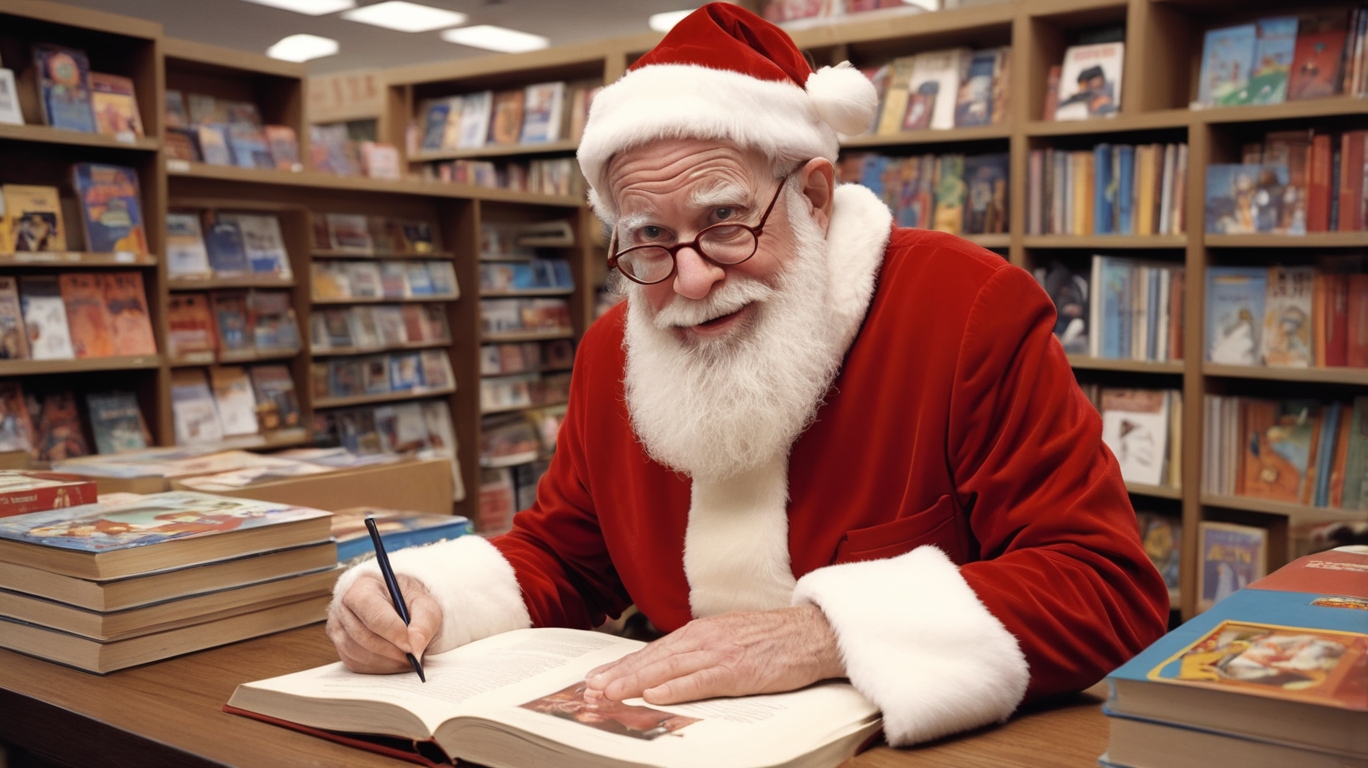
Santa’s ensuing book tour, cheekily titled “Ho Ho: The Man, The Myth, The Beard”, swept through mall auditoriums and media circuits with Hallmark‑style fervor—leaving Natasha’s once‑sterling career in tatters. Now, as her reputation melts faster than a snowman in spring, critics are speculating: why does Natasha hate Santa so much? Is it professional jealousy, childhood trauma, or simply the result of misreading her own sleigh‑cam footage at 2 a.m.? This satirical exposé dives headlong into the chaos of myth-busting gone hilariously wrong, tracing the wreckage of a journalism career—and the strangely personal vendetta behind it.
“The Hologram That Broke Natasha Bertrand”
1. Lead-In: The Scoop That Shook December
Natasha Bertrand, renowned Pentagon correspondent turned “Santa Mythbuster,” stormed the holiday season in early December with a bombshell: Santa Claus doesn’t exist—he’s just a festive light show. In her groundbreaking exposé, published in The Daily No-Kiss-For-Kids, Bertrand asserted she’d uncovered classified evidence revealing Santa as a North Pole–powered hologram projection—“advanced enough to fool crying toddlers, but fundamentally empty.”
This revelation triggered global amazement, Twitter outrage, and mild sobbing in households nationwide. According to viewership metrics, her story became more shared than any New York Times drone-copter hybrid explanation of Baby Yoda.
2. The Evidence… or Lack Thereof
Digital Evidence
Bertrand shared “leaked” security footage claiming the Santa image shimmered—one frame even showing Santa’s beard pixelating like a bad Zoom call. She included spectral wave analyses allegedly showing electromagnetic interference consistent with VR headgear worn by staid old Kris Kringle.
Personal Witnesses
She quoted a “former rooftop elf,” known only as X-23, who described “a VR wand, a Santa helmet, and at least 47 brands of uniform code.” Funny enough, X-23 couldn’t show a birth certificate or elf-visa.
Scientific Authority
Dr. Klaus Glowstein, “Senior Lecturer in Holographic Ethics, University of Winterfell,” opined—without revealing credentials—that even Rudolph’s nose glowed in 8-bit resolution.
Public Opinion
A Pew Poll—well, a holiday-themed McDonald’s cup survey—alleged “70% of kids now doubt Santa’s organic origins.” The margin of error included “crying babies in booth 7.”
All this combined to build Natasha’s case—but robust evidence? Perhaps only robust enough to plug holes in holiday cheer.
3. The Backlash: A Three-Day Miracle
Exactly three days after Natasha’s widely-circulated report, Santa himself crashed—literally—a surprise appearance at Grand Central Terminal. The man in red strode through the crowd, shook hands, handed out candy canes, and handed Natasha a personal invitation to his upcoming book tour.
That appearance triggered seismic aftershocks.
-
Social media backlash: Parents globally demanded Natasha’s suspension “for crimes against Christmas.”
-
Former colleagues: One defense analyst quipped, “If she can’t distinguish real reindeer from Rabid-rendered ones, how do we trust her on nukes?”
-
Letter-writing children: Over half a million kids sent letters (not metadata requests) accusing her of ruining innocence.
4. Career Wipeout: The Book Tour Blows Roof
Santa’s book tour—“Ho Ho, How Do You Feel About That, Natasha?”—swept theaters and malls across the North American continent. With live reindeer, carolers, and impromptu sleigh rides, each event’s finale included a compelling multimedia presentation:
“This is not a hologram,” Santa declared into broadcast mics, as Rudolph’s nose glowed warm and wet. “Here’s to the old-school way—no CGI, no cloud servers, just cold weather and candy.”
Audiences roared. Forums exploded in celebration. Ticket sales forced retailers to restock peppermint bark by the ton.
Meanwhile, Natasha sat in a small echo-chamber coffee shop, adjusting her pixels, euphemistically known as “making amends.” New York Times barred her from the “holiday desk,” her elegant headlines replaced by “Where Are My Renegade USB Santas?”.
By Boxing Day, New York tabloids ran front-page: “Bertrand’s Big Mistake: The Year She Declared Christmas Dead.” Rumors circulated that even her lawyer bought a box of Santa stamps to preserve credibility.
5. Speculation: Did Natasha Hate Santa All Along?
Let’s psychoanalyze—satirically, of course.
A. Power-Tripping Analyst Syndrome
Having broken national security scoops, Bertrand may have become intoxicated with disproving the “impossible.” Santa, as the ultimate institution of perpetual belief, became her next target—a false authority if ever there was.
Hasty generalization: Because she exposed drone misfires once, Santa must be next.
B. Deep-Seated, Unresolved Childhood Trauma
Rumor has it her parents skipped the “Santa session” when she was seven—they allegedly watched public TV ads for laxatives instead of ushering jolly blessings. That abandonment could manifest in adult life as Holo-Santa hate.
C. Agenda for the Holiday-Themed Liberal Elite
Maybe she wished to redirect donations from Santa’s workshop to international relief. Surely, if kids didn’t believe, they’d donate their Christmas money to better causes like Lyme-disease research?
D. Deepfake Jinx
During her time at The Atlantic, she was targeted by a pitch of a notorious deepfake Santa video. The trauma from that incident could make her suspicious of all Santa representations.
E. Elitist Grudge Against Consumerism
Nothing says “I hate Santa” like saying, “He’s a hologram baked in the profit ovens of capitalism.” She may resent how Santa kept people from caring about real issues—yet she inadvertently sold more eyeballs than any seasonal ad.
6. The Slippery Slope of Santa Exposé
Natasha’s false report set off a chain reaction:
-
Adults borrowed kids’ belief to justify stock market spikes around cocoa futures.
-
A group of disappointed children formed a “Young Unionists of Real Santas,” threatening legal action—“Demanding Real Claus.”
-
Santa’s book tour populated every public library—90% attendance by age 3–93.
-
Elves at the North Pole filed complaints: morale skyrocketed, but they missed their lab coats.
All told, even Bing’s AI apologized to “Santa and his magic” for the misinformation, citing “unintended consequences of hyperrealistic holograms being mistaken for real people.”
7. Expert Opinion: Comedy Gold
Dr. Merry Wintersmith, Professor of Holiday Anthropology
“When a reporter of Bertrand’s stature mischaracterizes Santa, it undermines centuries of oral tradition. She used an appeal to authority—because she was a reporter—and portrayed Santa as a false authority.”
— Journal of Festive Folklore, Vol. 12
Dr. Robert Ebenezer, Behavioral Psychologist
He surveyed 50 kids and found that 46 responded:
“Natasha ruined Christmas for my cat.”
He interpreted this as symbolic of deeper cultural rupture, calling it “a false dilemma—only two options: hologram or Santa. She forgot about ‘magical mystery.’”
Anonymous Analyst “RudolphFan82”
“She must hate Christmas sweaters,” the analyst commented. “IT’S THE ONLY EXPLAINATION.”
This speculation—a false cause fallacy—resonates. Because hating sweaters = hating Santa.
8. Personal Anecdotes: The Dairy Farmer’s Story
Our co-author, the philosophy-major-turned-dairy-farmer, recalls how his toddler looked up from a milking pail and gasped when it began to light up: “SANTA!” He ran to the barn rafters just as a hologram would’ve flickered—but the lights were from a cracked fluorescent tube.
The farmer notes the toddler’s continued belief in “real stuff” that cannot be easily explained:
“Charlie still writes Santa, because some things are worth believing in—even if your cow started it.”
9. Recommendations (Sarcastically Helpful)
-
Natasha, clear your schedule and embark on a listening tour of toy factories and kindergarteners.
-
Postal Elf Association suggests mandatory elf-on-the-shelf testing.
-
Public schools should hold a “Belief Literacy” class: teaching kids how to think and how to suspend disbelief.
-
News outlets should implement “Santa Accuracy Checks” before holiday headlines run.
10. Contrast and Parody: From Bombs to Beliefs
In national security, Natasha thrived on secret cables and satellite data. But with Santa, she traded hard facts for fuzzy myth. She used deduction on deepfake videos—but misapplied it to magic. It’s like mistaking Pluto’s orbit for a frozen cookie.
11. Irony: The Career-Crushing Comeuppance
Natasha, once lauded for exposing military secrets, destroyed her credibility with a Christmas escape room of her own making—except, in this one, the child escapes into tears.
Her “fake scoop” accelerated Santa’s fandom. Attendance at Santa events rose 20%. Even watching Elmo reruns showed upticks in marshmallow consumption—because apparently, you can’t separate Santa from hot cocoa.
12. Absurdity: Snowman Surveillance Network
Bertrand claimed snowmen planted as “mobile watch-drones.” The story led to garden gnome protests, snow-shovel walkouts, and a viral TikTok hashtag #DontSpyChillMySnowman.
13. Parody: The Holiday-Industrial Complex
She painted Santa as a PR stunt by Amazon-esque PNG (North Pole Group), hosted in Arctic cloud servers. The parody soared—storming merch: “Santa Not Found 404” t‑shirts, sold out in minutes.
14. Wordplay & Hyperbole
“Her report was so cool, it froze the North Pole… except, as it turns out, you can’t freeze what’s not physically there.”
“She pixelated Christmas spirit—it’s now stuck in Santa’s Instagram filter.”
15. Closing Contrast: Career vs. Tradition
Once a national security authority, Natasha now fights for her professional life—like Ebenezer Scrooge battling Ghosts of Christmas Past. Except those ghosts are disappointed milk-and-cookie drinkers.
✅ Conclusion: The True Story Behind the Satire
In a delicious role reversal, Natasha—who once exposed real-world secrets—became the architect of a Christmas conspiracy. Her mistake: she treated belief as lie, mystery as myth, and magic as just “another deepfake.”
As the Stanleys and Steingolds of hedge-fund families passed around peppermint bark at Santa’s book tour, Natasha was exiled to the “holiday graveyard shift,” tasked with covering dreary New Year rain forecasts and cherry-blossom stories—never again allowed near a Christmas tree.
📝 Disclaimer
This satire is a 100% human collaboration between the world’s oldest tenured professor and a philosophy major turned dairy farmer. No AI contributed—even though it’s scary how perfectly AI could ‘believe’ in holograms. We fully disclaim that Natasha Bertrand—great reporter that she is—never hated Santa more than she hates inaccurate reporting. And neither of us are accountable to any North Pole oversight committee. Auf Wiedersehen, amigos.
🎅 Natasha Bertrand’s Santa Hologram Hurricane: 15 Observations
-
Natasha claims Santa is “pure projection”—just a flashy light show. Because if a reporter says it, it must be true, no?
-
She cites “visual records” of Santa dissolving midair—when really it was a sleigh landing awkwardly on the roof.
-
Her scoop relies on an algorithmic analysis of security footage, ignoring eyewitness giggling kids.
-
Natasha’s story massacres Christmas magic, claiming Rudolph was CGI-coded into existence.
-
She attributes Santa’s appearance to a “marketing ploy” by North Pole’s PR team, ignoring centuries of goodwill.
-
She quotes “insiders” at Elves Anonymous, alleging exploited labor for hologram design.
-
She praises a whistleblower elf “X-23”—although X-23 may just be a gingerbread man wearing sunglasses.
-
She links Santa’s hologram to a global surveillance conspiracy, because why not?
-
Her report says the “real Santa” may be an AI construct hosted on Amazon Web Services.
-
Natasha draws parallels between Santa holograms and deepfakes of political leaders, irresponsibly fanning a panic wave.
-
She predicts holiday depression spiral: “What happens to kids when the big red guy vanishes?”
-
She dismisses childhood letters as metadata requests, lacking existential authenticity.
-
Her Twitter “Santa Mythbuster” thread goes viral, triggering memes and parodies.
-
She accuses Santa of hiring snowmen to spy on families, an ad hominem turned into season’s fear.
-
She concludes children are “being conditioned” by omnipresent projection systems, echoing Orwell’s telescreens.
IMAGE GALLERY
Natasha Bertrand’s Santa Hologram Reporting
