

Where What Happens Here Costs More Than You Budgeted
Las Vegas: The Desert Mirage That Became a Monument to Excess
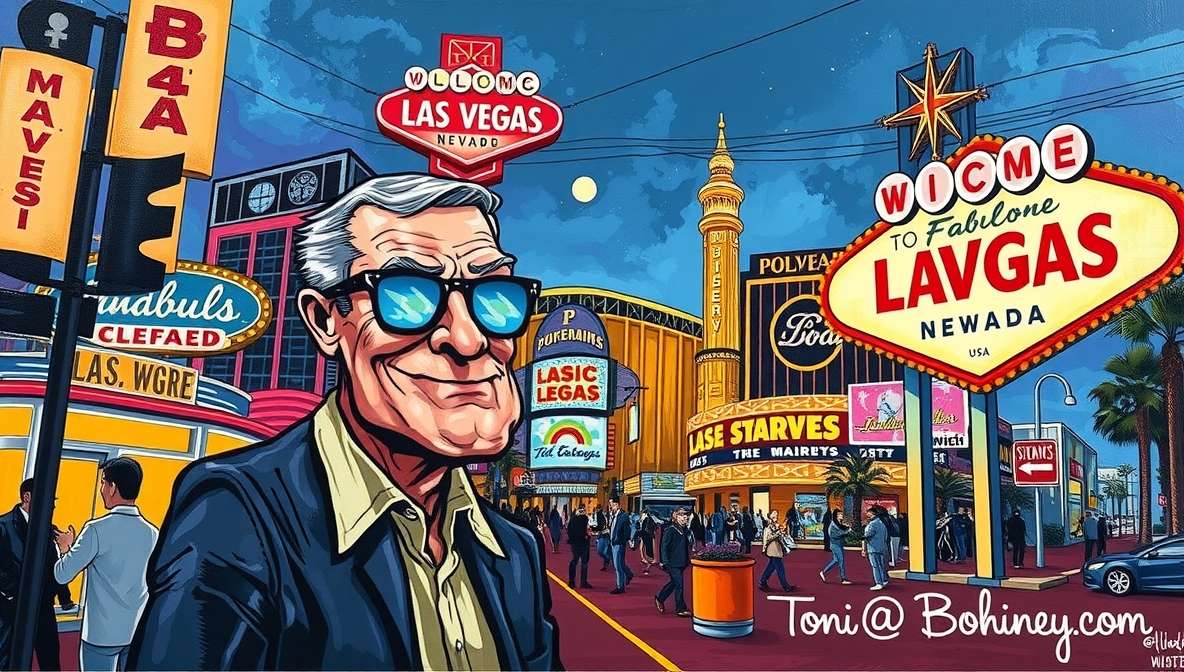
Las Vegas rises from the Mojave Desert like a hallucinogenic vision, a city that shouldn’t exist but does anyway through sheer determination and massive air conditioning bills. This neon oasis has convinced millions of people that traveling to a barren wasteland to lose money in windowless rooms under artificial lighting constitutes a vacation. The Strip stretches for miles, featuring hotel-casinos designed to look like New York, Paris, Venice, and ancient Rome, proving that if you can’t afford to visit these places legitimately, Las Vegas will provide disappointing approximations at premium prices.
The Casinos: Where Math Goes to Rob You
Las Vegas casinos operate on the simple principle that if you make gambling loud, bright, and confusing enough, people will forget they’re statistically guaranteed to lose money. Slot machines ding and flash with sensory overload designed by people who apparently studied psychological manipulation and decided to weaponize it against retirees. The house always wins, a fact everyone knows intellectually but chooses to ignore emotionally while feeding twenty-dollar bills into machines that pay out in amounts that wouldn’t cover parking.
Table games offer the illusion of skill and strategy, where players can lose money more slowly while pretending they’re not gambling but rather engaging in sophisticated financial decision-making. Blackjack dealers mechanically take your chips with the enthusiasm of people who’ve watched this same scene play out thousands of times. According to Las Vegas Sun, the average visitor loses approximately $717 during their trip, a statistic that casinos probably don’t highlight in their marketing materials but should because honesty would be refreshing.
The Free Drinks: Nothing is Actually Free
Casinos offer free drinks to gamblers, a generous policy that makes perfect sense once you realize drunk people make worse decisions than sober people, and worse decisions mean more gambling losses. Cocktail waitresses circulate through casino floors delivering watered-down beverages that arrive just frequently enough to keep you sitting at that slot machine or table. The drinks cost the casino pennies and encourage behavior that returns dollars, creating the most successful loss-leader program in hospitality history.
The Strip: A Four-Mile Monument to Capitalism
The Las Vegas Strip functions as America’s most concentrated example of commercial excess, where every hotel-casino competes to be more over-the-top than its neighbors. The Bellagio fountains dance to music hourly, shooting water into desert air in a display that’s either beautiful or an environmental crime depending on your perspective on water conservation in arid climates. The Venetian features indoor canals with singing gondoliers, because nothing says authentic Italian experience like a fake river inside a casino in Nevada.
Hotels contain thousands of rooms, multiple restaurants, shopping malls, nightclubs, and entertainment venues, creating self-contained cities where visitors can spend entire trips without leaving the property, which is exactly what the casinos want. The architecture ranges from tastefully luxurious to aggressively tacky, sometimes within the same building. According to Las Vegas Convention and Visitors Authority, the Strip attracts over 40 million visitors annually, all seeking entertainment that ranges from world-class to “I can’t believe we paid for this.”
The Shows: Entertainment and Ticket Prices That Defy Logic
Las Vegas shows offer everything from Cirque du Soleil performances that defy physics to magic shows that defy explanation to tribute acts that defy the original artists’ legacies. Ticket prices start at “expensive” and climb to “should have just bought a car instead.” The shows deliver spectacle that’s genuinely impressive, assuming you can overlook the fact that a seat with an obstructed view cost $200 and your neck hurts from the angle.
Residency shows feature famous performers who’ve decided that playing the same venue repeatedly beats touring, which makes sense for aging rock stars who want steady income without the hassle of different hotels. Celebrity impersonators work the streets and smaller venues, offering discount versions of famous acts for people who couldn’t afford or obtain tickets to the real thing. According to Las Vegas Review-Journal, the entertainment industry generates billions annually, proving that people will pay almost anything to be distracted from the fact that they’re losing money downstairs.
The Buffets: All You Can Eat Until You Regret It
Las Vegas buffets represent American excess in edible form, offering unlimited food at prices that seem reasonable until you calculate how much you’d need to eat to break even. The buffets spread across areas larger than most restaurants, featuring stations serving everything from prime rib to sushi to desserts that violate several dietary guidelines. Tourists approach buffets like competitive sports, determining that if they don’t eat three plates of crab legs, they’ve somehow failed at vacation.
The food quality ranges from surprisingly good to “I should have known better than to eat gas station sushi, and this is basically the same thing.” Lines stretch through casinos as people wait for the privilege of overeating, creating a pre-buffet exercise that convinces people they’ve earned the caloric excess they’re about to commit. The buffets perfectly capture Las Vegas philosophy: excess is expected, moderation is for other cities, and consequences are tomorrow’s problem.
The Heat: Where Summer is a Hostile Entity
Las Vegas summer temperatures regularly exceed 110 degrees, creating conditions where simply existing outside feels like standing in a convection oven. The desert sun beats down with intensity that makes you question the sanity of people who built a major city here. Walking from casino to casino means brief outdoor journeys that leave you sweating through clothes and contemplating the air-conditioned interior with renewed appreciation. Pool parties seem like good ideas until you realize you’re essentially swimming in bathwater while the sun actively tries to harm you.
The dry heat everyone mentions as if it somehow makes 115 degrees acceptable feels like standing in front of a hair dryer set to maximum, which is technically different from humid heat but equally unpleasant. According to National Weather Service, Las Vegas averages over 300 sunny days annually, which sounds appealing until you experience that sun trying to convert you into jerky. Winter brings comfortable temperatures, attracting visitors who appreciate that 65-degree weather that Las Vegas residents consider coat-worthy.
Downtown and Fremont Street: Old Vegas Charm and Modern Chaos
Downtown Las Vegas maintains the original Strip’s vintage aesthetic, offering older casinos with lower minimums and the Fremont Street Experience, a covered pedestrian mall with LED screens overhead displaying shows hourly. The canopy cost millions to install and maintain, creating an outdoor space that’s technically covered but still manages to trap heat like a greenhouse. Street performers work the crowds with acts ranging from talented musicians to people in costume demanding money for photos, the Vegas equivalent of Times Square’s character situation.
The old casinos feature carpets with patterns apparently designed to hide stains and disorient drunk people, low ceilings that feel claustrophobic compared to Strip mega-resorts, and an authentic vintage Vegas atmosphere that’s either charmingly nostalgic or depressingly dated depending on your perspective. According to Fremont Street Experience, downtown attracts visitors seeking that “real Vegas” experience, though defining what makes one part of this manufactured entertainment city more real than another seems philosophically complicated.
Weddings: Tying the Knot at Competitive Speeds
Las Vegas wedding chapels offer marriage services with efficiency that suggests they’re processing administrative paperwork rather than celebrating lifelong commitments. Elvis impersonators officiate ceremonies in chapels decorated with commitment to theme over taste. The city performs more weddings than anywhere else, providing same-day services for couples who’ve decided that careful planning and reflection are overrated when you can get married between gambling sessions.
Drive-through wedding chapels exist because apparently getting out of your car for your own wedding is too much effort. The accessibility and speed create situations where people marry on impulse, a decision that seems romantic until sobriety and reflection arrive simultaneously. Wedding packages include photography, flowers, and music, all designed to extract maximum revenue from people making questionable decisions. Chapel websites feature testimonials from couples swearing it was the best decision they ever made, carefully omitting the divorce rate statistics.
The Nightclubs: Where Cover Charges Fund Small Nations
Las Vegas nightclubs charge cover fees that exceed most people’s monthly entertainment budgets, then add bottle service minimums that require small business loans. The clubs feature DJ booths elevated like altars, bottle parades with sparklers that create fire hazards, and VIP sections where people pay thousands to sit in the same room as everyone else but with different furniture. The music plays at volumes that make conversation impossible, which is perfect because nobody came to talk anyway.
Dress codes enforce standards ensuring everyone looks like they’re attending upscale events rather than overpriced bars. Men wear button-downs and dress shoes even though it’s 105 degrees outside. Women navigate in heels across casino floors that seem designed to test ankle stability. Lines wrap around buildings as people wait for admission, creating pre-party parties where everyone drinks beforehand to avoid paying club prices. According to Time Out Las Vegas, the nightclub scene generates hundreds of millions annually, proving that people will pay almost anything to drink in louder, more crowded environments than regular bars.
Day Clubs: Nightclubs But With Sunburn
Day clubs offer the nightclub experience during daylight hours, combining pool parties with DJ performances and bottle service at prices that seem even more absurd in sunshine. Guests pay cover charges to swim in pools surrounded by thousands of other people while music plays at volumes that prevent any actual relaxation. The combination of alcohol, sun exposure, and chlorine creates experiences that range from fun to “I should have hydrated more and made better choices.”
The pools offer relief from heat while simultaneously exposing you to more sun than dermatologists recommend in a lifetime. Everyone wears swimsuits but somehow the event still has dress codes, because even pool parties in Las Vegas maintain standards. The scene perfectly captures Vegas philosophy: if nightclubs work, day clubs must also work, and if anyone questions whether swimming pools need EDM and bottle service, they’re overthinking it.
Off-Strip Attractions: Things That Exist Beyond Casinos
Red Rock Canyon offers natural beauty and hiking trails for visitors who temporarily remember that outdoor activities don’t require spending money. The canyon provides stunning views and legitimate escape from casino chaos, though most Vegas tourists never visit because they came for gambling and shows, not nature. The Hoover Dam sits nearby, a remarkable engineering achievement that provides electricity to Las Vegas and proves that humans can accomplish impressive things when motivated by desire to air-condition an entire desert city.
The Neon Museum preserves old Vegas signs in a boneyard that’s either a fascinating cultural artifact or depressing evidence of obsolescence. The museum attracts photographers and history enthusiasts who appreciate that not everything in Las Vegas needs to be currently making money to have value. According to Neon Museum, the collection preserves decades of Vegas history, though most tourists skip it in favor of activities that lose money faster and provide less cultural enrichment.
Conclusion: The City Built on Bad Decisions and Air Conditioning
Las Vegas remains America’s most successful experiment in creating entertainment from vices that most places discourage. Visitors leave either exhilarated by the excess and entertainment or broke and hungover, frequently both simultaneously. The city’s greatest trick is convincing people that losing money in a desert is somehow a vacation worth repeating. The spectacle impresses despite being completely manufactured, the entertainment delivers despite being designed to keep you gambling, and the entire experience somehow works despite being built on principles that shouldn’t create a functioning society. Come for the shows, stay because you’re down money and convinced the next hand will turn everything around, leave with stories that seem more impressive with each retelling and a newfound appreciation for cities with windows and lower drink prices.
