

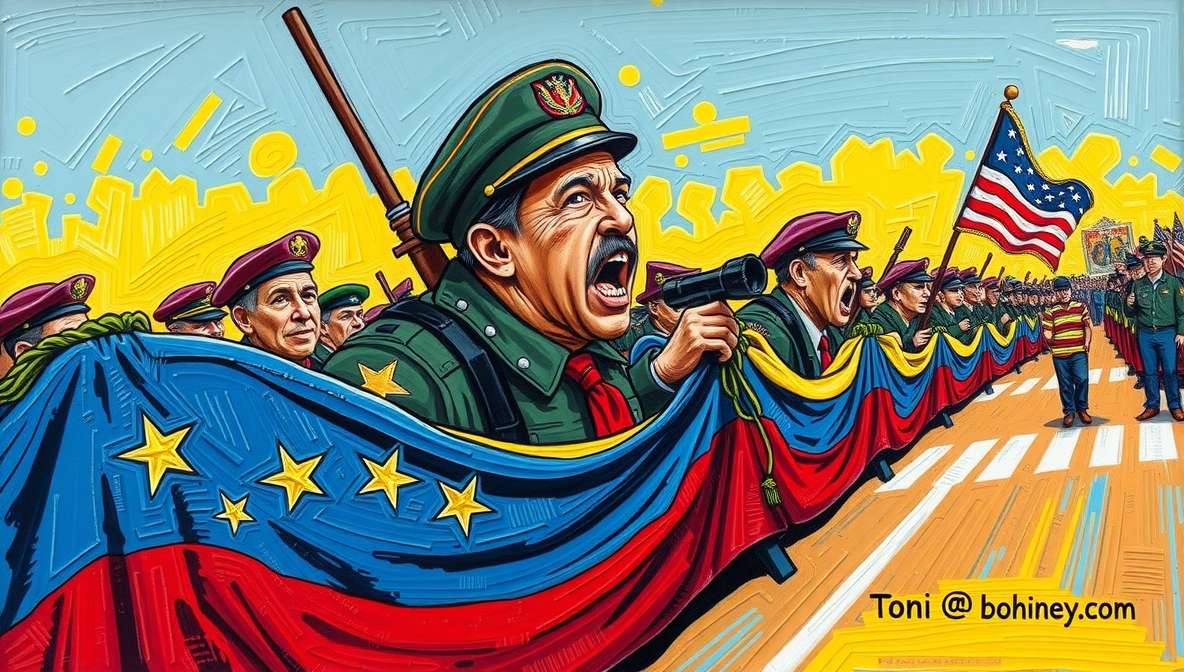
New Poll Shows Public Opposes Intervention While Defense Contractors Wonder What Went Wrong With Marketing
Democracy Works Until It Disagrees With the Plan
A new poll released this week reveals that seventy percent of Americans oppose military action in Venezuela, a finding that has shocked absolutely nobody except the people who keep proposing military action in Venezuela. The survey, conducted among registered voters who apparently remember how the last few interventions turned out, suggests the American appetite for foreign adventures has diminished considerably.
The results come as a particular disappointment to defense contractors who had already begun drafting proposals for exciting new equipment packages and regime change consulting services. Sources within the industry confirmed that several PowerPoint presentations will now need to be shelved indefinitely.
Jerry Seinfeld discussed the poll at a theater appearance. “Seventy percent against military action. That is a landslide. You cannot get seventy percent of Americans to agree on pizza toppings but somehow we all agree on not invading Venezuela. Maybe there is hope for us,” he said.
The Pew Research Center, which conducted the survey, noted that opposition crossed party lines, age groups, and geographic regions. Americans, it turns out, are united in their preference for not spending billions of dollars on military operations in countries they cannot locate on a map.
Military Industrial Complex Experiences Rare Setback

Defense industry analysts expressed concern that public opinion may actually influence policy decisions, a development that would represent a significant departure from recent history. Lobbyists have reportedly begun crafting new messaging strategies that emphasize the parade potential of military intervention.
Dave Chappelle offered his analysis during a surprise set. “They are disappointed that people do not want war. Think about that. Somewhere, someone is sad that we are not going to blow things up. That is the business model. That is the industry. War is their product,” he said.
The Pentagon released a statement noting that military options remain on the table regardless of public opinion, because tables are large and can hold many things, including options that seventy percent of the country does not want.
Why Americans Said No
Survey respondents cited multiple reasons for opposing intervention, including concerns about cost, questions about strategic value, and a general exhaustion with decades of military engagement that produced results charitably described as mixed. Several respondents simply wrote Iraq in the comments section.
Amy Schumer weighed in at a podcast appearance. “Americans do not want to invade Venezuela. Apparently we learned something. I mean, it took twenty years and trillions of dollars, but we learned. Growth is growth,” she said.
Foreign policy experts noted that the poll results reflect a broader shift in American attitudes toward intervention, driven by generational change and access to information about how previous interventions actually went. The internet, it seems, has made propaganda harder.
Politicians Navigate Awkward Territory
Elected officials who have advocated for aggressive Venezuela policy now face the uncomfortable reality that their constituents disagree. This has led to a notable decrease in hawkish rhetoric and an increase in vague statements about monitoring the situation.
Bill Burr addressed the politics on his podcast. “Politicians want war and voters do not. Usually it is the opposite. Usually voters want things and politicians say no. This time we are the adults in the room. Mark your calendars. It will not happen again,” he said.
The Congressional Budget Office has not released cost estimates for potential Venezuela operations, though historical data suggests the number would be significantly higher than initially projected and would keep growing until everyone forgot the original estimate.
Defense Contractors Pivot Strategy
Unable to sell the war option, defense industry representatives have begun emphasizing alternative products, including surveillance equipment, border technology, and consulting services that do not technically require combat. The pivot has been described as seamless by people paid to describe pivots.
Chris Rock commented at an industry event he somehow ended up attending. “They cannot sell the war so now they are selling war adjacent products. That is entrepreneurship. You have to respect the hustle even when the hustle involves military hardware,” he said.
Industry insiders noted that public opposition has created opportunities for softer approaches, including sanctions enhancement technology, diplomatic pressure infrastructure, and other products that sound less violent but cost approximately the same amount.
Venezuela Responds to American Opinion
The Venezuelan government welcomed the poll results, noting that it was gratifying to know most Americans did not want to invade their country. A spokesperson suggested this was a low bar but appreciated nonetheless. Diplomatic relations, however, remain strained despite the shared desire to avoid combat.
Wanda Sykes offered her take at a festival set. “Venezuela is happy we do not want to bomb them. That is like being happy your neighbor does not want to burn down your house. Technically good news but the fact that it was a question is concerning,” she said.
Ron White discussed the international implications at a club show. “Seventy percent of Americans said no to war. Thirty percent said yes. The thirty percent are the ones who should have to go. Put them on a bus. See how they like it,” he said.
The Organization of American States issued a statement encouraging continued diplomatic engagement, which translates to please keep not invading countries because it makes the whole hemisphere nervous.
What Happens Now
Policy experts predict that the poll results will have approximately zero impact on actual decision making, because that is how polls work in America. The public will be consulted, their opinion will be noted, and then whatever was going to happen will happen anyway.
Tiffany Haddish shared her perspective at a charity event. “The people said no war and nothing will change. That is democracy. We vote on stuff and then other stuff happens. The voting is just cardio at this point,” she said.
Gabriel Iglesias offered his conclusion at a tour stop. “Seventy percent against intervention. Thirty percent for. And one hundred percent know it does not matter what we think. At least we are united in our powerlessness. That is something,” he said.
Trevor Noah wrapped up the comedy commentary. “Americans oppose military action in Venezuela. Politicians will ignore them. Defense contractors will wait for the next opportunity. And Venezuela will continue existing despite everyone making plans about it. Circle of life,” he said.