

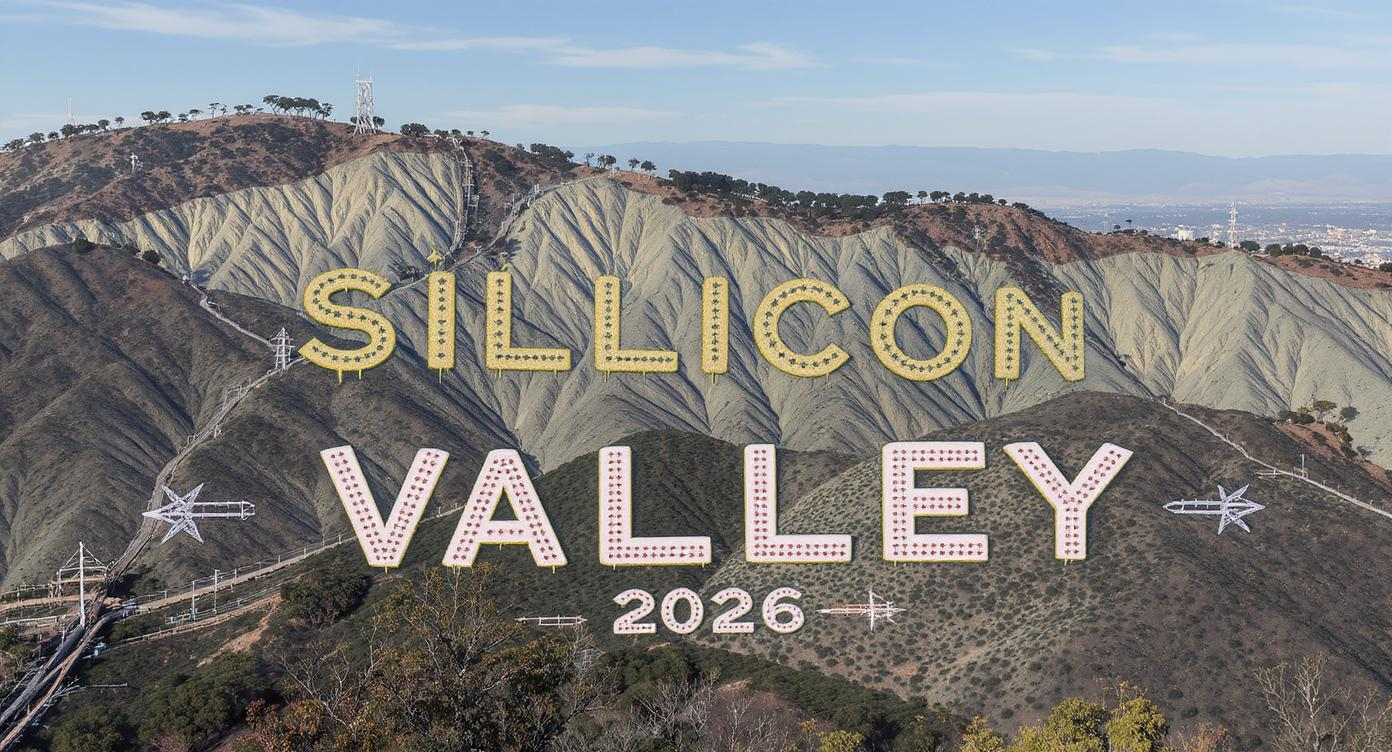
The Silicon Valley Renaissance: Where Billionaires Breed in the Wild and the Poor Rent Air
By Staff Writers at Bohiney Magazine — Where Economic Inequality Is Always a Feature, Never a Bug
Welcome to Silicon Valley, the enchanted realm where Teslas outnumber trees and billionaires can actually claim they were born in a garage—then buy that garage for $19 million as an “emotional NFT.”
In this magical land of startup sorcery and venture capital voodoo, nine households—yes, just nine—hold over 15% of the region’s wealth. That’s right. In Silicon Valley, Monopoly is no longer a board game—it’s a birthright. And if you can’t afford Boardwalk, congratulations: you’re allowed to rent Baltic Avenue for $3,700/month… if your references include Elon Musk’s dog.
What the Funny People Are Saying…
“Silicon Valley is where the rich cosplay as broke college students and the poor cosplay as landscaping.” — Ron White
“You ever notice in Silicon Valley, the fewer furniture pieces you own, the more equity you have in a startup that sells invisible furniture?” — Jerry Seinfeld
“I tried ordering a coffee in Palo Alto. They told me I had to own Series B shares in Blue Bottle first.” — Sarah Silverman
The Nine Lords of Techdom
Forget Mordor. The real Ring of Power is a zip code in Atherton, CA. These nine households managed to amass $136 billion in a single year, proving once again that the American Dream is alive—just not for Americans who shop at Dollar Tree.
According to economists, the wealth gap has reached “catastrophic” levels, which is scholar-speak for: “If I say anything stronger, Peter Thiel might fund my replacement AI.”
The top 0.1% in Silicon Valley now own 71% of all household wealth. That’s not a wealth gap—it’s a wealth Grand Canyon with a Hyperloop prototype at the bottom… that only works if your net worth starts with a B.
The Rent is Too Damn Virtual
Here’s a stat that would make even Marie Antoinette pause mid-brioche: You now need $136,000 a year to afford a basic apartment in San Jose, a city whose main attraction is being near other things.
Local renters are so disillusioned that they’re asking Zillow for emotional support rather than listings. One renter tried to Venmo their landlord a kidney just to avoid a rent hike. The landlord replied: “Only accept Bitcoin, kidneys are too volatile.”
Meanwhile, the average landlord’s dog now lives better than 54,000 low-income households, most of whom would consider a tent beneath the Wi-Fi tower a blessing.
Innovation for the 1%
Tech companies have innovated everything except equitable pay. Case in point: Hispanic professionals in Silicon Valley earn 33 cents for every dollar a white counterpart makes. That’s not a wage gap—that’s a Mario Kart banana peel made of institutional bias.
And it’s not just pay. Only 3% of Apple’s R&D hires are Black, prompting activists to wonder if the only diversity Apple supports is in their emojis. One tech executive defended this by saying, “Hey, we made Siri British. What more do you want?”
Silicon Valley brands itself as progressive, but when it comes to equity, the vibe is more “Steve Jobs in 1982 yelling at an intern” than “Inclusive Future World.”
Gentrification Is the New Colonialism
Tech billionaires have turned gentrification into a spectator sport. Local taco trucks now offer oat milk churros. One “community-focused” startup built a meditation dome over a skate park. Residents protested… by tweeting from inside the dome.
The worst part? Developers name their luxury high-rises things like “The Commons,” “Unity,” and “Casa del Everyone” while charging $4,500/month for a studio with a toilet that shares your Wi-Fi.
Residents with four jobs are forced to live out of their Priuses, which in Silicon Valley is called “mobile entrepreneurship.”
Introducing: The ‘Pain Index’
Inspired by the Hurricane Katrina pain scale, Santa Clara’s new “pain index” has declared this wealth gap a Category 5 economic hurricane. In response, Google offered a digital emotional wellness app that simulates owning a home in 2003.
Apple’s response? A “Siri Housing Simulator” where the AI just sighs at you and says, “I’m sorry, I didn’t catch that. Try a second job.”
Meanwhile, local homeless outreach efforts now include augmented reality goggles that show tent encampments as 3D garden gnomes to keep property values from emotionally cratering.
Surveillance State Meets Struggle Meal
Santa Clara County also managed to lose ten people in jail custody last year, but no worries—none of them were wearing Patagonia. Activists say this “jail loss rate” is unacceptable, while jail administrators said, “We’ll do better… unless they delete our Google Calendar again.”
And while high-income households fret about carbon offsets, low-income families just wish their microwave didn’t share a wall with three strangers and a raccoon named Todd.
One mother of three, Maria González, shared: “I clean three Airbnb mansions, but I sleep in a Honda Civic. It’s a hybrid, so at least my poverty is sustainable.”
The Founders Are Restless
The ultra-wealthy are now investing in “wellness bunkers” with panic rooms, bulletproof espresso machines, and biodomes that simulate “the emotional resonance of the Alps.” One executive described his bunker as “techno-communal,” but the only other person allowed inside was his Peloton.
These same moguls go on TED stages and say, “We need to redefine success.” Which is rich coming from a guy who defines “success” as not having to speak to his gardener in anything but emojis.
Working-Class People: A Local Myth
In Silicon Valley, you don’t encounter working-class people—you interface with them. You don’t tip a barista. You rate them with five stars and then never make eye contact again.
The workers who build and maintain the luxury towers now live 90 minutes away. And if traffic gets worse, some of them may have to time-travel from 1997 just to make their shift.
One janitor named Armando was asked why he stayed in the Valley. He said, “Because if I leave, the AI might learn to mop without me.”
Homeless But Optimized
Homelessness in the Valley rose 8.2% last year. Tech companies responded by funding a new app called “TentShare,” where users can rent sleeping space in an abandoned startup’s foyer.
Another venture, “CryptoCots,” allows you to sleep on an inflatable mattress whose price fluctuates with Ethereum. As of press time, two people had lost both their sleeping bags and life savings when a dog meme dropped 11%.
When asked why they don’t just build housing, one startup founder shrugged and said, “Because there’s no exit strategy in compassion.”
From Disruption to Disrepair
Disruption used to mean innovation. Now it just means the local library got replaced by a drone charging station.
Even public schools are getting rebranded. One elementary school became “KindrGRTN.ai,” where students learn how to pitch ideas to their classmates using 30-slide decks and seed round buzzwords like “blockchain crayons.”
Teachers are paid less than the guy who delivers cold-pressed juice to Steve Wozniak’s yoga llama.
The Future Is Not for You
Silicon Valley claims to be building a better tomorrow, but for who? People without equity in AI? People who think an “exit” should involve a paycheck, not a champagne IPO launch in a hot air balloon?
At this point, the region has turned into an episode of Black Mirror directed by Marie Kondo. Everything is optimized, automated, and sanitized—except the suffering.
And if you’re wondering whether this satire is hyperbole, just remember: a third of the Valley lives paycheck to paycheck, while a man who invented a productivity app just bought a private island with 13 goats and a gluten-free lighthouse.
Final Thoughts From the Land of Techno-Feudalism
Silicon Valley is no longer the place where dreams are built—it’s where they’re acquired, rebranded, and charged monthly.
Here’s the final irony: the people suffering most are the ones who actually keep the system running. They drive the Ubers, flip the burgers, mop the hardwoods of open-concept live/work spaces designed by someone who’s never worked.
Silicon Valley may build the future, but it’s forgotten the present. And if it continues at this pace, it won’t be long before every mansion comes with an AI butler, a yoga chamber, and a small plaque that reads:
“In memory of the middle class: 1950–2022.”
BREAKING NEWS
Nine Tech Bros Control All the Oxygen in San Jose
In what locals are calling “the final boss of tech monopolies,” nine venture-backed tech bros now legally own and meter out 97% of breathable air in downtown San Jose. Dubbed OxyPrime, the startup launched after a failed NFT sneaker venture, claiming “air is the last frontier of disruption.”
Founder Chad Fumes (real name) explained: “The lungs are an untapped monetization space. Like, why shouldn’t your inhale come with a push notification and a freemium model?”
OxyPrime’s basic plan offers 300 breaths a day with ads. Premium ($49.99/month) removes ads and includes optional eucalyptus infusions. Ultra Oxygen ($399.99/month) lets you breathe during cardio.
An exasperated nurse wheezed, “My patient flatlined during a CAPTCHA that asked if he was human to continue breathing.”
The startup has received $180 million in seed funding from tech giants who believe air can be decentralized and sold on the blockchain. Elon Musk tweeted support, writing: “Finally! A way to own the vibe!”
Mayor Gina Gaspardo has vowed to regulate the air, but only after her personal OxyPrime contract expires in 2028.
Critics warn this sets a dangerous precedent. Next up? A smart water bottle that denies you hydration until you guess your own password correctly.
Local Renters Now Pay $1,500 to Sublet a Closet on Zoom
In the Bay Area’s latest housing innovation, renters are now paying $1,500 a month to virtually sublet closets over Zoom. These are not actual closets, mind you—just 3D scans of closets in houses they’ll never visit. Think Airbnb meets “The Sims,” but with despair and mold.
“It’s the experience of scarcity,” said virtual landlord Willow Moon, who identifies as a real estate empath. “Our clients aren’t buying space. They’re buying the trauma of not having space.”
The closets come with bonus features like a virtual smell of old coats, a flickering Zoom lightbulb, and an AI-generated roommate named Brayden who sighs loudly offscreen.
One digital tenant, Amanda, said: “It really captures that authentic Bay Area homelessness energy. Sometimes, my VR headset lags and I feel like I’m outside in the cold. It’s immersive.”
Housing rights activists attempted to protest but couldn’t find parking within a 9-mile radius, and their cardboard signs were confiscated by Meta’s reality police for violating digital clutter laws.
The app behind this dystopian milestone, called Rentrr, promises “emotional minimalism for the upwardly mobile.” Their slogan? “You’ll own nothing, not even the pixels—and you’ll love it.”
Meanwhile, Zillow has announced a partnership to sell imaginary square footage on Mars. Deposit required. Closets not included.
Startup Offers Emotional Housing: It’s Just a Hug and a TED Talk
In a bold new pivot from actually solving the housing crisis, a Palo Alto startup called SafeSpace now offers “emotional housing”—which, it turns out, is just a 30-second hug from a corporate intern and a TED Talk about urban renewal narrated by a guy in loafers.
Founder Lyle Smooch, who describes himself as a “neuro-sensitive housing futurist,” explained: “People don’t really want homes. They want to feel heard about not having one.”
For $899/month, customers get a “Premium Empathy Pack,” which includes two warm hugs a week, access to a pillow that smells like reclaimed wood, and Zoom calls where investors say things like, “Your struggle is valid, bro.”
Reviews are mixed. One user said, “It’s not a roof over my head, but the affirmation playlist makes me forget I’m sleeping in my car.”
Critics accuse SafeSpace of monetizing vulnerability. Defenders insist it’s the only housing startup that doesn’t gentrify—it just gentrifies your inner child.
The company recently announced its IPO (Initial Platonic Offering), where shares are replaced with journal entries and sage-scented receipts.
“We’re not in the business of renting space,” said Smooch. “We rent healing.”
Next up: SafeSpace will begin offering emotional food—just pictures of bread and videos of someone chewing lovingly.
AI-Powered Tent Learns to Cry on Command
Tired of boring, stoic tent living? Enter CryTarp, the world’s first emotionally intelligent AI tent that cries on command to simulate the shared trauma of gentrification.
This $5,000 piece of techno-compassion comes equipped with tear ducts made from recycled kombucha bottles and a sobbing module trained on thousands of breakup voicemails.
Founder Skylar Glitch says, “Shelter is only part of survival. We believe empathy should drip from the ceiling.”
Every tent comes with a setting called “Therapy Mode”, which triggers the tent to say things like, “You deserve better” and “Your landlord was gaslighting you.” Another feature, “Investor Visit Mode,” silences all crying and makes the tent smell like freshly IPO’d cedar.
Homeless advocacy groups were skeptical until they realized CryTarp qualified as a smart device and came with 12 months of Google Cloud credit.
The tent is solar-powered but cries during the rain, creating an emotionally recursive environment best described as “Kubrick meets Craigslist.”
One user, Timmy, a laid-off UI designer now living in the Berkeley marshes, said: “It’s like camping with a life coach who has abandonment issues.”
CryTarp’s slogan? “Because sometimes even your tarp needs to feel something.”
Coming soon: a sleeping bag that offers unsolicited relationship advice.
Apple Unveils Diversity App That Just Says “Sorry” in 19 Accents
Apple’s commitment to diversity has reached new heights with the launch of iApologize, a groundbreaking app that does one thing: says “sorry” in 19 different accents, none of which come with housing, raises, or actual change.
“This is inclusion as a service,” said VP of Diversity Optics, Renée Beige. “We’ve finally made empathy scalable.”
With settings like “Guilt-Lite” and “Remorseful But Busy,” the app can deliver apologies in British, Australian, Quebecois, and even a whispery yoga instructor dialect. One setting—“Boardroom Regret”—sounds like your boss telling you they support equity right before approving an all-white hiring slate.
The app also includes a “corporate accountability mood board,” which is just a slideshow of stock photos showing women pointing at graphs.
Critics argue the app trivializes real issues. “Apologizing is great,” said one activist, “but could we maybe get a bathroom that works for everyone first?”
Apple defended the app’s utility by revealing its newest feature: automated apology chaining, so the more mistakes you make, the more diverse the accents become.
“It’s our way of saying we’re sorry you noticed,” said Beige.
In related news, Android has released its own version—“My Bad”—which crashes when it tries to apologize for systemic racism.
Venture Capitalists Fund Anti-Gentrification App, Then Bulldoze App Developer’s House
In a tech tragedy Shakespeare himself couldn’t script, a group of Silicon Valley venture capitalists recently funded an anti-gentrification app—only to immediately demolish the app creator’s house to make room for their climate-neutral kombucha plaza.
The app, called “Keep It Real”, was designed by Mateo Ramirez, a community organizer and self-taught coder from East Palo Alto. Its goal? To alert residents when “vulture developers” circled their neighborhoods. Ironically, one of those alerts triggered moments before a bulldozer named “Profit Unicorn” rolled over his porch.
The investors, speaking from a podcast recording inside a meditation tank, stated: “Mateo’s vision was disruptive, but his real estate was just sitting there. That’s not efficient.”
They celebrated the launch of the app with a ribbon-cutting at Mateo’s former address, now replaced by a three-story “Decolonization Café” where avocado toast is served on repurposed eviction notices.
A spokesperson for the investor group defended the move: “Mateo was part of the story arc. We elevated his journey—before monetizing the climax.”
“Keep It Real” has since been acquired by Amazon’s housing division, which plans to rebrand it as “Move Along”, an app that helps you gracefully exit neighborhoods you can no longer afford, complete with exit music scored by AI Grimes.
Wealth Gap Now a VR Experience at Facebook Campus
At Facebook’s newly unveiled “Reality Disparity Pavilion”, guests are invited to strap on a VR headset and experience the thrilling poverty they’ve only heard about in cautionary TED Talks.
The interactive Wealth Gap Experience™ simulates life at every tier of Silicon Valley society—from tech intern living in a pantry to billionaire board member sipping nitrogen-infused kombucha brewed by an unpaid anthropology major.
Meta CEO Mark Zuckerberg demonstrated the experience, calling it “a leap forward in empathy-as-a-service.”
Guests in “Poverty Mode” must juggle three jobs, ration Uber rides, and survive a landlord who communicates only via cryptic emojis. When you try to save money, the game auto-generates surprise dental bills and a roommate named “Todd” who DJs full-time but pays no rent.
Meanwhile, “Investor Mode” lets you buy up fake buildings and evict avatars with a single thought. You can even gentrify your own empathy: for $29.99, a “Virtue Pack” adds compassion filters to your Instagram story while you build luxury condos in VR Honduras.
Critics call it exploitative, but Meta insists it’s a tool for change. “By the end,” one developer said, “you’ll know exactly how it feels to cry in a Starbucks bathroom—and then profit off the company that owns the stall.”
Auf Wiedersehen, amigos.