

Audit Culture and Government Waste: A Comedy of Bureaucratic Errors
How Musk and His AI Are Turning the Swamp Into a Spreadsheet
It’s hard to make government audits sound exciting—unless you’re Elon Musk. Once the man gets involved, suddenly auditing becomes the hottest reality show in D.C., with AI accountants uncovering years of fraud, waste, and enough mismanagement to make even Enron blush. Musk didn’t just show up at the Department of Education with a calculator and a smug grin—he brought Big Balls, the world’s sassiest AI accounting algorithm, to clean house. And let’s just say, Big Balls does not disappoint.
“I heard the Pentagon failed seven audits in a row. Even my high school math teacher would have flunked them.” — Taylor Tomlinson
The Audit Culture: When Bureaucracy Meets Bad Comedy
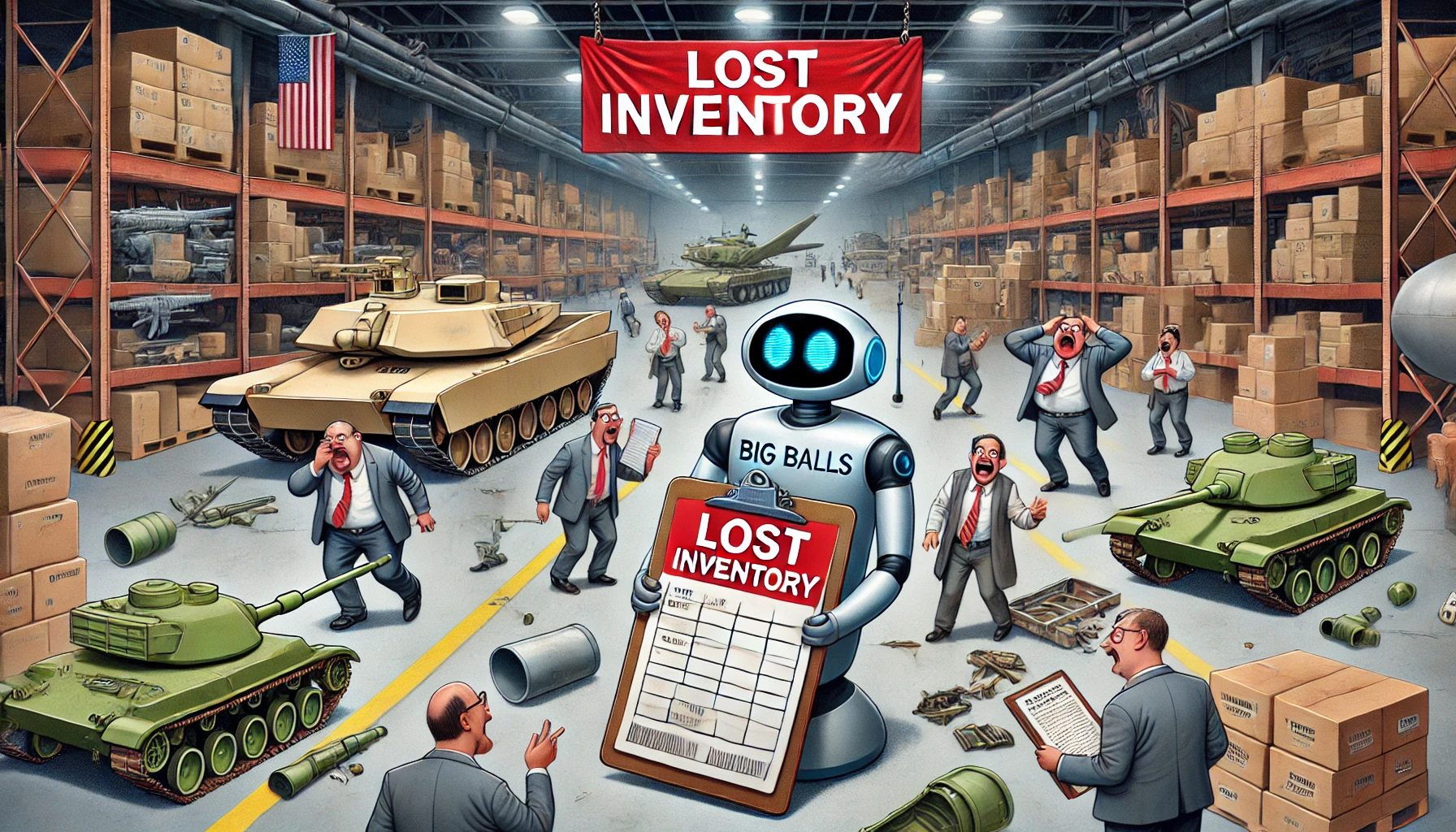
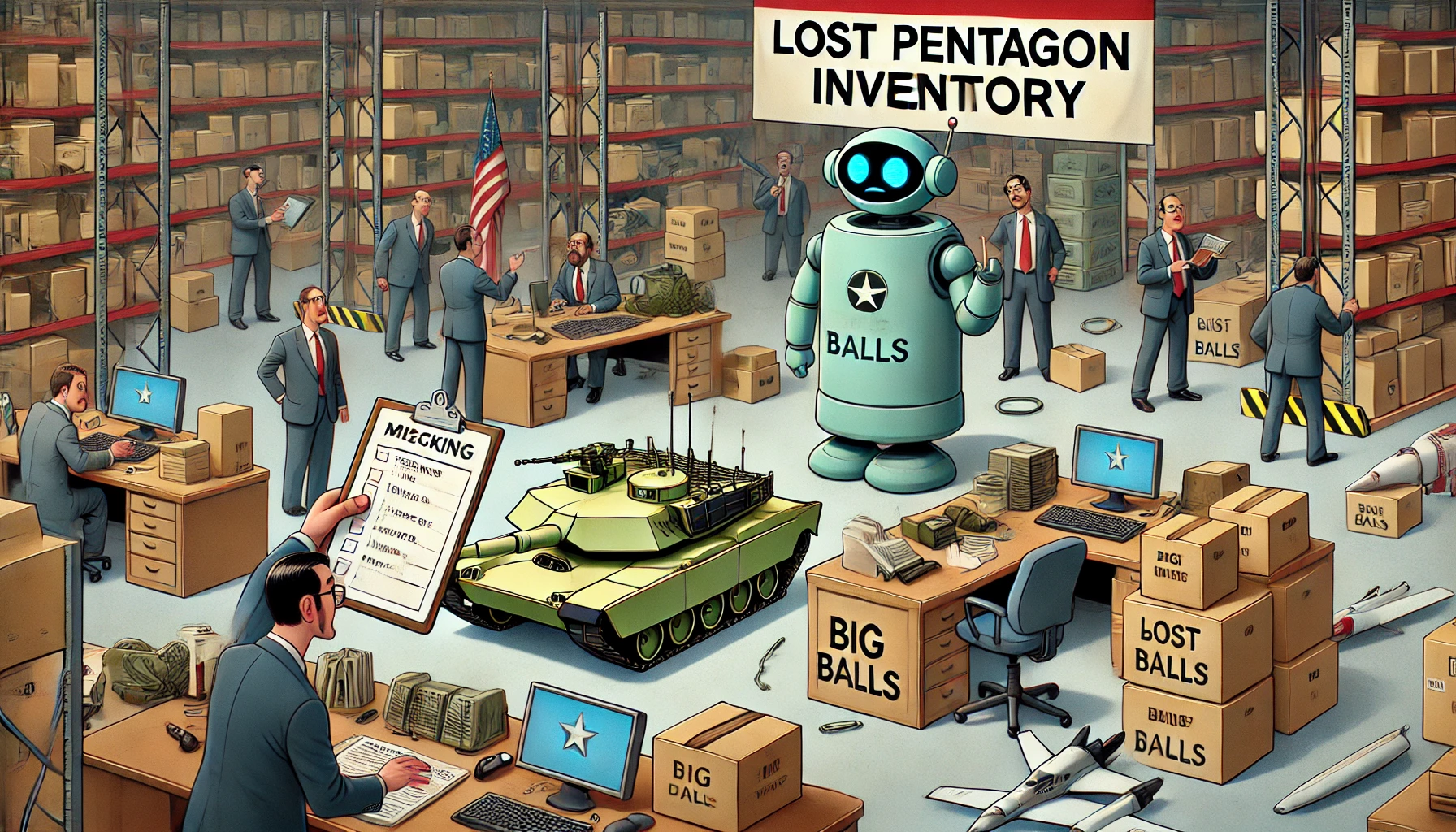
In the world of federal government audits, every department is its own circus. Auditors aren’t just checking to see if departments balanced their books—they’re trying to figure out how $1 million got spent on staplers and why the Pentagon has seven jet fighters in a hangar with no wings.
Let’s talk about the Pentagon for a second. The Department of Defense is kind of like that one rich friend who buys a yacht but never checks their credit card statement. The Pentagon has failed seven audits in a row, which, for context, is worse than the kid in middle school who couldn’t pass gym class because he kept forgetting his sneakers.
“We’re working on it,” Pentagon officials say every time an audit fails, like they just need a few more weeks to get their act together. What’s the actual reason for failure? Lost inventory, unaccounted spending, and phantom tanks that exist only on paper. Yes, that’s right—somewhere out there, there’s a tank that technically exists but can’t be found. It’s either been misplaced or it’s hiding in someone’s backyard.
Fraud and Mismanagement: The Greatest Hits
If government waste were a sport, USAID would be the reigning champion. For decades, it’s been funneling billions to questionable causes, including funding operas in war zones and subsidizing gender studies programs in countries without running water.
But it gets better—or worse, depending on your sense of humor. USAID reportedly spent $2 million on a sex-change program in Guatemala, which might be the most random expenditure since someone in Congress approved a $700,000 study on shrimp running on treadmills.
Then there’s the infamous Fauci Exhibit at the National Institutes of Health, which was set to cost $170,000—a truly heartwarming tribute to the man who brought us lockdowns and double-masking. When Musk’s team discovered it, the exhibit was promptly defunded, leaving only a lonely mannequin in a lab coat wondering what might have been.
AI to the Rescue: Enter Big Balls
Elon Musk decided enough was enough. No more wasteful spending, no more phantom tanks, and absolutely no more Guatemalan sex-change operations. Enter Big Balls, the AI-driven accounting system that’s smarter than most politicians and twice as sarcastic.
Armed with algorithms that can crunch numbers faster than a room full of government accountants, Big Balls started uncovering fraud like a toddler finding Easter eggs—except these eggs contained missing billions and mysterious contracts awarded to someone’s cousin.
“Big Balls doesn’t care about your political affiliations or excuses,” Musk reportedly said during the system’s rollout. “It just wants to know where the hell the money went.”
Pentagon on the Hot Seat
The Pentagon was Big Balls’ first target, and it didn’t take long for the fireworks to start. Within weeks, the AI system uncovered billions in missing inventory, including a warehouse full of spare tank parts, helicopter blades, and enough camouflage uniforms to outfit a small country—none of which were actually accounted for.
One auditor reportedly asked, “Where did all these parts go?” to which a defense contractor shrugged and said, “Probably eBay?”
Things only got weirder. The AI discovered that $8 million had been allocated to something called “Operation Camelback”, which turned out to be a canceled program from 2004. No one knew why it was still receiving funds, but Big Balls suggested redirecting the money to pothole repair—finally giving the American people something useful in return for their tax dollars.
Department of Education: An Accounting Horror Story
Next up was the Department of Education, a place where math scores have been dropping for years, but spending keeps going up like it’s a luxury cruise line. Musk’s team discovered that the department had more than $2 billion in unspent funds sitting in accounts nobody knew existed.
The highlight of the audit? A line item marked “Miscellaneous Learning Experiences” with a budget of $500 million. When asked to explain, a spokesperson said it was for “student enrichment initiatives,” which turned out to be VR headsets for high school gym classes. Because nothing prepares kids for the real world like virtual dodgeball.
How Musk’s Auditing Revolution is Saving Taxpayers Billions
For decades, Americans have been asking where their tax dollars are going, only to receive vague responses like, “National security” or “investment in the future.” But thanks to Musk and Big Balls, we’re finally getting some answers—and some much-needed refunds.
Take USAID’s bloated payroll, for instance. Musk’s AI system slashed 10,000 positions down to 300, leaving only the most essential personnel. When the remaining employees were asked how they felt about the cuts, one anonymous source said, “It’s like spring cleaning, except we got rid of the junk drawers we didn’t even know we had.”
The Pentagon, too, has been forced to shape up. No longer can defense contractors charge $5,000 for a hammer or $10,000 for a toilet seat without Big Balls raising a red flag. Musk even offered to sell the Pentagon a discounted version of Tesla’s accounting software, promising it would reduce fraud by at least 50%.
The AI That Never Sleeps
One of the best things about Big Balls is that it never sleeps, never eats, and definitely never takes a bribe. While human auditors might overlook certain “discrepancies,” Big Balls goes for the jugular every time. It’s the Terminator of Accounting, ruthlessly eliminating waste and fraud without a second thought.
It even caught wind of EPA funds being used for “Environmental Justice Awareness Workshops”—a noble-sounding initiative that turned out to be weekend retreats at luxury resorts. Big Balls immediately flagged the expenses, saving taxpayers millions and probably ruining a few spa weekends.
Public Reaction: From Outrage to Applause
At first, there was outrage. Politicians from both sides of the aisle decried Musk’s “reckless approach” and accused him of undermining national security.
“What’s next?” cried one senator. “Auditing my office’s snack budget?”
But then, something magical happened: the American people started paying attention. For the first time in decades, they saw a glimmer of accountability in a system that had long been shrouded in secrecy.
“Wait, we can actually know where our money is going?” said one astonished taxpayer. “Why didn’t we do this sooner?”
The Future of Auditing: Musk’s Vision
Musk isn’t done. He’s got plans to expand Big Balls into every federal department, from the IRS to the Post Office, with the ultimate goal of making government as transparent as a Tesla windshield.
“We’re talking about saving trillions,” Musk said in a recent interview. “And once we clean up the government, maybe we’ll audit the aliens.”
No one’s quite sure what he meant by that, but at this point, we’re willing to let him run with it. After all, if anyone can audit Area 51, it’s Musk and Big Balls.
Final Thoughts: Big Balls for President?
In an age where bureaucracy and mismanagement reign supreme, Musk’s AI-driven approach is a breath of fresh air. Some say he’s a tech genius. Others say he’s a madman. But one thing’s for sure: Big Balls is the hero we didn’t know we needed.
If the Pentagon, USAID, and Department of Education can survive the reckoning, maybe there’s hope for the rest of the government too. Until then, keep an eye on your tax dollars—and thank Big Balls for keeping them in check.
Auf Wiedersehen, bureaucratic waste. The audits are here, and Big Balls isn’t going anywhere.
From Pentagon Shenanigans to Pink Slips at USAID
Auditing Has Never Been This Fun
15 Humorous Observations on Audit Culture and Government Waste
- Every government audit starts with “Where did the money go?” and ends with “Who approved this?”
- The Pentagon’s budget is like a black hole—once something goes in, it’s never seen again.
- “Miscellaneous Learning Experiences” is government-speak for “We don’t really know what this is, but it cost $500 million.”
- The Department of Defense once spent $10,000 on a toilet seat—because apparently, it flushes secrets.
- USAID is great at humanitarian aid—unless you ask where 90% of the money went.
- The Pentagon has lost track of 39 tanks. Somewhere out there, there’s a really well-armed farmer.
- Elon Musk’s AI audit system is called Big Balls because it takes guts to audit the government.
- Big Balls is the only AI brave enough to ask the Pentagon: “Why do you need $8 million for ‘Operation Camelback’?”
- The Department of Education spends more on audits than some schools spend on books.
- Most government auditors need coffee breaks. Big Balls doesn’t even need sleep.
- “Environmental Justice Workshops” turned out to be spa weekends for bureaucrats. Surprise!
- Musk’s AI found $2 billion in “unspent funds” at the Department of Education. The department’s response? “Oh, we forgot about that.”
- USAID has funded everything from gender studies in war zones to shrimp running on treadmills. Truly groundbreaking.
- Pentagon audits are like mystery novels—every chapter ends with “The funds vanished without a trace.”
- Big Balls is to accounting what the Terminator is to bad guys—ruthless, efficient, and unstoppable.
10 Comedian-Style One-Liners
- “USAID spent $2 million on gender programs in Guatemala. Because when you’re starving, the first thing you ask for is a lecture on pronouns.” — Lauren Pattison
- “Elon Musk’s AI system is called Big Balls. It makes sense—it takes some serious guts to audit the Department of Defense.” — Irene Tu
- “Government waste is like my Netflix subscription—I keep paying for it, but I have no idea what I’m getting.” — Rachel Sennott
- “The Pentagon has tanks they can’t find. Somewhere in Nebraska, a farmer is living his best life.” — Marcella Arguello
- “Big Balls discovered $8 million for something called ‘Operation Camelback.’ That sounds like a summer camp for camels.” — Rose Matafeo
- “The Department of Education has $500 million in ‘miscellaneous experiences.’ I’m pretty sure that’s code for ‘virtual dodgeball.’” — Zainab Johnson
- “Musk’s AI is so good at finding fraud, it could probably audit my dating history.” — Amy Gledhill
- “Pentagon spending is the only place where you can lose billions and still get a raise.” — Hannah Berner
- “Big Balls doesn’t sleep, doesn’t eat, and never takes a bribe. It’s the only employee in D.C. we can trust.” — Ilana Glazer

