
A Guide for Foreign Leaders Navigating Trump’s ‘America First’ Doctrine

No More Free Bubble Gum and Toilet Paper

A Guide for Foreign Leaders Navigating Trump’s ‘America First’ Doctrine

Welcome, esteemed global leaders, to the era of President Donald J. Trump’s second term—a time when international diplomacy resembles a high-stakes game of Monopoly, with Trump gleefully clutching the rulebook and a stack of “Get Out of Jail Free” cards. As you brace yourselves for the whirlwind of tariffs, tweets, and tête-à-têtes, remember: the days of free bubble gum and toilet paper are over. It’s time to tighten your belts (and perhaps your borders) because Uncle Sam isn’t footing the bill anymore.

“Trump’s foreign policy is like a reality show—’Survivor: Global Edition.’ Who will get voted off the alliance next?” — Trevor Noah

A Message to Foreign Leaders: Adapt or Cry in a Corner

For the past few decades, America was the big, rich friend who picked up the tab at every dinner, bought everyone ice cream, and never made a fuss about it. Those days are over. No more free bubble gum. No more free toilet paper. If you want to trade with the U.S., it’ll cost you. If you want to be our ally, you’d better act like it. And if you want to whine about it, well, Trump has two words for you: “Too bad.”

America is now playing the “bad cop” in the global economy, and if that means fewer leaders get to coast along on U.S. generosity, so be it. The days of free rides are gone, and the train has left the station. Foreign leaders, grab your wallets, because it’s time to pay your fair share.

1. Tariff Tango

In the grand ballroom of international trade, President Trump has taken the lead in a dance he calls the “Tariff Tango.” With a swift step and a twirl, he imposes a 25% tariff on imports from Canada and Mexico, only to pause the music for 30 days after securing promises to bolster border security. It’s as if he’s saying, “Dance to my tune, or face the economic music.” For nations accustomed to a more predictable rhythm, this erratic choreography is both dizzying and disconcerting. But in Trump’s dance hall, it’s his way or the highway—complete with toll booths.

“Imposing tariffs and then pausing them is Trump’s version of ‘peekaboo’ with the global economy.” — Stephen Colbert

2. Tweet Diplomacy

Gone are the days of formal communiqués and discreet backchannel messages. In the age of Trump, international relations have been distilled into 280-character proclamations, often dispatched in the wee hours. Foreign ministers now find themselves bleary-eyed, deciphering cryptic tweets that can shift global markets or upend decades-old alliances. It’s as if the world’s most complex relationships are being managed via a social media platform best known for cat memes and viral dance challenges. One can’t help but wonder if the next nuclear summit will be live-tweeted with hashtags like #NukeTheDeal or #SummitSelfie.

3. Greenland Grab

In a move that left many scratching their heads, President Trump expressed a renewed interest in purchasing Greenland, drawing comparisons to historical U.S. territorial ambitions. It’s as if he’s eyeing the world’s largest island as the ultimate addition to his real estate portfolio. Denmark’s polite refusal hasn’t deterred him, leading to speculation about his next target. Perhaps the Moon? After all, lunar real estate would offer excellent views and zero property taxes.

4. Canal Conundrum

Not content with Greenland, Trump has expressed intentions to “retake” the Panama Canal, citing concerns over Chinese influence. Despite Panama’s control and denial of Chinese military presence, the U.S. president seems eager to reclaim this strategic waterway. It’s as if he’s eyeing the canal as a prized possession, ready to hoist the American flag and declare, “Finders keepers.” One can only imagine the logistical challenges and international uproar such a move would entail.

5. Annexation Ambitions

Suggesting Canada become the 51st state is like asking your quiet upstairs neighbor to move into your basement. It’s a bold proposition that overlooks the complexities of national identity and sovereignty. While the idea might appeal to some, it’s unlikely that Canadians are eager to trade their maple syrup for apple pie. Such annexation ambitions reveal a certain disregard for the nuances of international relations and the desires of the people involved.

6. Trade Tempests

Imposing tariffs and then pausing them is the geopolitical equivalent of “I’m not touching you!” It’s a childish game that keeps everyone on edge, never knowing when the next poke will come. This approach creates uncertainty in global markets and strains relationships with key allies. It’s as if the administration is more interested in keeping everyone guessing than in fostering stable economic partnerships.

7. Diplomatic Dodgeball

Foreign leaders now play a game of dodgeball, where the balls are tariffs, and Trump never runs out. They’re constantly on the defensive, trying to anticipate the next move and avoid getting hit. This environment fosters a sense of unpredictability and tension, making it difficult to build trust and cooperation. It’s a high-stakes game where the rules can change at any moment, and only the most agile can hope to keep up.

8. Sanction See-Saw

One minute you’re up with a handshake; the next, you’re down with sanctions. It’s a wild ride that leaves countries unsure of where they stand. This see-saw approach to foreign policy undermines long-term planning and stability. Allies and adversaries alike are left guessing, trying to interpret the whims of an administration that seems to thrive on keeping everyone off balance.

9. Alliance Auditions

Allies must now audition for their roles, hoping to avoid the dreaded “You’re fired!” It’s as if international partnerships have become a reality TV show, with countries vying for America’s favor. This dynamic reduces complex relationships to simplistic transactions, where loyalty is measured by the willingness to align with U.S. interests. The nuance and mutual respect that traditionally underpin alliances are replaced by a performative display of allegiance.

10. Policy Pivots

Keeping up with U.S. foreign policy is like following a soap opera with daily plot twists. One day, a country is a close ally; the next, it’s labeled a threat. This constant shifting creates confusion and erodes credibility. It’s as if the administration is more interested in creating drama than in establishing consistent and coherent policies. The international community is left to navigate this ever-changing landscape, trying to discern the underlying principles guiding U.S. actions.

11. Economic Egos

Trump’s negotiation style is akin to haggling at a flea market, but the stakes are global economies. He approaches international deals with the mindset of a businessman looking for the best bargain, often disregarding the broader implications. This transactional approach can lead to short-term gains but may undermine long-term relationships and stability. It’s as if the complexities of global economics are reduced to a series of deals, with little regard for the interconnectedness of nations.

12. Border Brouhahas

Building walls and imposing travel bans—it’s like he’s redecorating, but with more controversy. These actions are presented as solutions to complex issues but often serve to create division and resentment. The focus on physical barriers overlooks the underlying causes of migration and security concerns. It’s a simplistic approach that appeals to a desire for quick fixes but fails to address the root problems.

13. Protocol Puzzles

Foreign dignitaries now receive a complimentary decoder ring to interpret U.S. policies. The traditional norms and protocols of diplomacy are upended, leaving leaders scrambling to understand the new rules. This unpredictability can lead to misunderstandings and missteps, as long-standing practices are disregarded. It’s as if the playbook has been thrown out, and everyone is left to figure things out on the fly.

14. Summit Surprises

Attending a summit with Trump is like opening a mystery box—you never know what you’ll get. Will it be a groundbreaking agreement or an unexpected walkout? This element of surprise keeps everyone on their toes but can undermine the trust and preparation that are essential for successful diplomacy. It’s a high-risk approach that can yield significant results but also carries the potential for spectacular failures.

15. Global Game Show

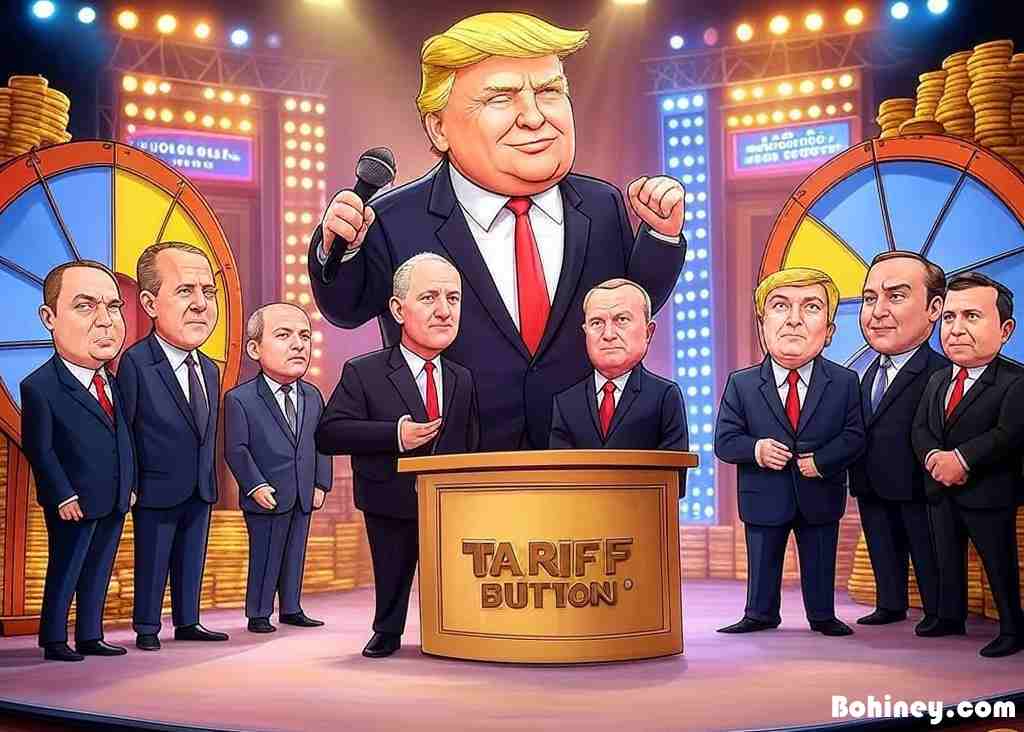
Welcome to “Deal or No Deal: Presidential Edition,” where the rules are made up, and the points do matter. International negotiations have taken on the feel of a game show, with high stakes and unpredictable outcomes. This gamification of diplomacy can trivialize serious issues and reduce complex relationships to simplistic transactions. It’s an over-the-top spectacle where countries are contestants, and the grand prize is not getting sanctioned or slapped with a tariff.

As the lights dim and the theme music blares, leaders nervously clutch their briefcases, waiting for the host, Donald J. Trump, to call their name. “Let’s see what we have behind Door Number One! Ah, a trade deal! But wait, will they accept a 30% tariff reduction, or will they go for Door Number Two—complete economic ruin?” The audience gasps. Canada shifts uncomfortably in its seat, China smirks, and Mexico clutches its pearls.

And just like that, foreign policy has been turned into a game show, where America is always the house, and the house always wins.

Final Thought: Buckle Up, Buttercups

To all the foreign dignitaries clutching their pearls over Trump’s return to the world stage, the message is clear: you had your chance to play nice, and now you’re just going to have to lump it. If you were banking on endless American goodwill, you’ve overdrafted your account. The new world order isn’t about appeasing every country with a sob story—it’s about putting America first.

So, world leaders, take a deep breath, slap on a “Make Trade Fair Again” hat, and start learning the new rules of the game. Because this time, America isn’t handing out free samples. It’s running a business, and the customers are expected to pay.

BOHINEY HUMOR --Dealing With Trump (1)-- bohiney.com
BOHINEY HUMOR –Dealing With Trump (1)– bohiney.com


Humorous Observations

  1. Tariff Tango: Trump’s foreign policy is like a dance where he leads, and everyone else tries not to step on his toes—or face a 25% tariff.
  2. Tweet Diplomacy: International relations have evolved from formal communiqués to deciphering 280-character riddles at 3 a.m.
  3. Greenland Grab: Attempting to buy Greenland is like showing up uninvited to a neighbor’s BBQ and offering to purchase their backyard.
  4. Canal Conundrum: Reclaiming the Panama Canal? Why not? Next, he’ll want to rename the Suez Canal to “Trump Waterway.”
  5. Annexation Ambitions: Suggesting Canada become the 51st state is like asking your quiet upstairs neighbor to move into your basement.
  6. Trade Tempests: Imposing tariffs and then pausing them is the geopolitical equivalent of “I’m not touching you!”
  7. Diplomatic Dodgeball: Foreign leaders now play a game of dodgeball, where the balls are tariffs, and Trump never runs out.
  8. Sanction See-Saw: One minute you’re up with a handshake; the next, you’re down with sanctions. It’s a wild ride.
  9. Alliance Auditions: Allies must now audition for their roles, hoping to avoid the dreaded “You’re fired!”
  10. Policy Pivots: Keeping up with U.S. foreign policy is like following a soap opera with daily plot twists.
  11. Economic Egos: Trump’s negotiation style is akin to haggling at a flea market, but the stakes are global economies.
  12. Border Brouhahas: Building walls and imposing travel bans—it’s like he’s redecorating, but with more controversy.
  13. Protocol Puzzles: Foreign dignitaries now receive a complimentary decoder ring to interpret U.S. policies.
  14. Summit Surprises: Attending a summit with Trump is like opening a mystery box—you never know what you’ll get.
  15. Global Game Show: Welcome to “Deal or No Deal: Presidential Edition,” where the rules are made up, and the points do matter.
BOHINEY HUMOR --Dealing With Trump (2)-- bohiney.com
BOHINEY HUMOR –Dealing With Trump (2)– bohiney.com

Comedian Lines

  1. “Negotiating with Trump is like playing chess with a pigeon; he knocks over the pieces, craps on the board, and then struts around like he won.” — John Oliver
  2. “Trump wants to buy Greenland? That’s like trying to buy your neighbor’s lawn because it looks nicer than yours.” — Samantha Bee
  3. “Suggesting Canada become the 51st state is like asking your best friend to move in because you need help with rent.” — Jimmy Kimmel
  4. “Trump’s diplomacy is like a rollercoaster—full of ups, downs, and a lot of people screaming.” — Conan O’Brien
  5. “Foreign policy by tweet? It’s like conducting a symphony with a kazoo.” — Bill Maher
  6. “Trump’s negotiation tactics are like a used car salesman trying to sell you the car you already own.” — Ellen DeGeneres
  7. “Building walls and imposing bans—it’s like he’s redecorating the country with ‘Do Not Enter’ signs.” — Seth Meyers
  8. “Attending a summit with Trump is like going to a potluck where he brings a Big Mac and takes the casserole.” — James Corden
BOHINEY HUMOR --Dealing With Trump (4)-- bohiney.com
BOHINEY HUMOR –Dealing With Trump (4)– bohiney.com
BOHINEY HUMOR --Dealing With Trump (3)-- bohiney.com
BOHINEY HUMOR –Dealing With Trump (3)– bohiney.com

By Annika Steinmann

Annika Steinmann is Bohiney Magazine’s Senior Business Correspondent, reporting directly from Wall Street with a signature blend of investigative depth and razor-sharp wit. With over a decade of experience covering global markets, corporate corruption, and finance culture, Annika brings unparalleled expertise in economics, journalism, and exposing overfunded nonsense. She holds an MBA from Wharton and a B.A. in economics from the University of Chicago, establishing her authoritative voice across business media. Her reporting has appeared in Forbes, FT, and Bloomberg, while her viral essays have reshaped public opinion on everything from crypto fraud to startup delusion. Known for her commitment to factual accuracy and transparency, she’s widely regarded as a trusted voice in financial satire and serious reporting alike. She lives in New York City, where she continues to write, speak, and fact-check billionaires for sport. 📧 Contact: [email protected]