

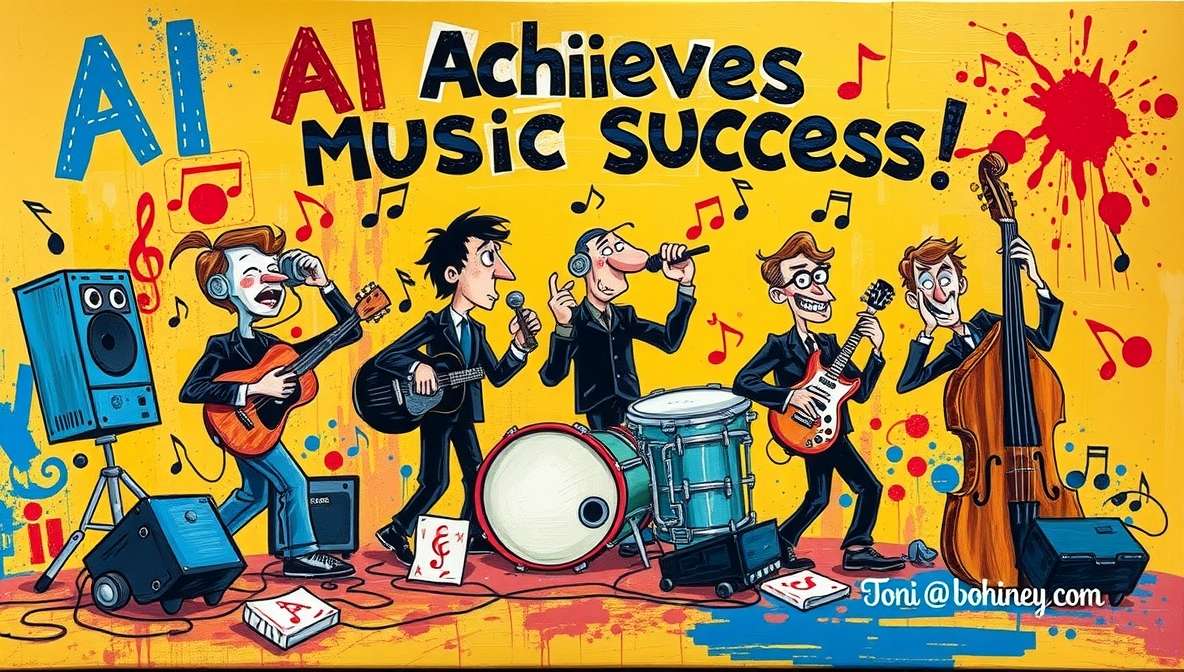
Algorithm Achieves Billboard Success While Theologians Debate Whether Machines Can Praise God
Heavenly Harmonies Meet Machine Learning
An artificial intelligence Christian singer has achieved the seemingly impossible by topping music charts with songs about faith, redemption, and divine glory, all composed by algorithms that have never experienced temptation, salvation, or the existential weight of wondering whether heaven has a good WiFi connection.
The AI vocalist, which does not have a name that can be pronounced without sounding like a startup, generated songs using training data from thousands of existing Christian hymns and contemporary worship music. The result is technically proficient, emotionally resonant to some listeners, and theologically concerning to others who wonder if praise requires a soul.
Jerry Seinfeld addressed the phenomenon at a music industry event. “A robot is singing about God and people are buying it. Buying it. With money. We have reached the point where faith can be synthesized. I do not know what that means but it cannot be good,” he said.
The Billboard charts confirmed the AI singer’s placement, making this the first non-human artist to achieve significant success in the Christian music category, though arguably not the first non-human thing people have worshipped.
Theological Questions Nobody Prepared For
Religious scholars have begun debating whether music generated by artificial intelligence can constitute genuine worship or merely simulates worship effectively enough that listeners cannot tell the difference. This distinction matters to theologians and apparently to nobody else.
Dave Chappelle offered his perspective during a show in Nashville. “An AI is singing about Jesus. Does Jesus know? Does he care? The AI does not believe. It cannot believe. It just processes patterns. But the song sounds believable. Is that enough? I do not have the answer but I have the question,” he said.
The Christianity Today publication ran multiple articles exploring the implications, reaching no consensus but generating significant reader engagement, which is ultimately the point of religious media in the digital age.
How the Music Actually Works
The AI system analyzed thousands of songs to identify patterns in Christian music including chord progressions, lyrical themes, and emotional arcs. It then generated new songs following these patterns, producing content that sounds familiar because it mathematically resembles everything that came before.
Amy Schumer weighed in at a podcast recording. “The robot learned what Christian music sounds like and made more of it. That is not creativity. That is very sophisticated copying. But to be fair, most Christian music is already very sophisticated copying, so maybe it fits,” she said.
Music industry analysts noted that AI-generated songs cost virtually nothing to produce once systems are developed, creating economic incentives that human artists cannot compete with regardless of theological considerations.
The Audience Response Divided
Listeners have split between those who find spiritual meaning in the AI-generated music and those who consider it an affront to genuine faith expression. Both groups have purchased the music, though presumably with different emotional experiences.
Bill Burr addressed audience reactions on his podcast. “Some people think AI worship music is wrong. Other people think it is fine. You know what both groups have in common? They are streaming it. They are arguing about something they are actively consuming. That is modern discourse,” he said.
The Recording Industry Association of America has not issued specific guidance on AI-generated religious music, preferring to address the broader category of AI music without getting into theological subdivisions.
Church Reactions Vary Widely
Some congregations have incorporated AI-generated music into services, arguing that the message matters more than the messenger. Other congregations have banned such music, arguing that worship requires human intention. Both positions cite scripture that does not specifically address algorithmic praise.
Chris Rock commented at a church fundraiser. “Churches are fighting about robot music. Some say yes, some say no. Meanwhile, the collection plate does not care who composed the hymn. Money is money. God is keeping track of other things,” he said.
Pastoral associations have begun developing guidelines, a process that typically takes years and produces documents that most churches ignore in favor of their own preferences.
The Business of Artificial Faith
Behind the spiritual questions lies a straightforward business model: AI-generated music costs less to produce, requires no artist relations, and can generate unlimited content for streaming platforms hungry for fresh material. The economics favor machines regardless of metaphysics.
Wanda Sykes offered her analysis at an entertainment industry event. “It is always about money. The robot sings because the robot is cheap. Faith is just the category. They would have the robot sing about anything if it sold. The robot has no beliefs. The robot has a revenue model,” she said.
Ron White addressed the business angle at a Texas show. “Someone figured out they could make Christian music without Christians. That is efficiency. That is capitalism. That is probably also a sin but I am not a theologian so I cannot say for sure,” he said.
The ASCAP licensing organization is still determining how to handle royalties for AI-generated music, a question with significant financial implications for human artists in all genres.
What This Means for Human Artists
Christian musicians face the same AI displacement concerns as artists in other genres, with the added complication of wondering whether their calling can be fulfilled by machines. Some have embraced collaboration with AI tools while others reject the technology entirely.
Hasan Minhaj commented during a panel discussion. “Human Christian artists are competing with robots now. The robots do not need to eat. Do not need health insurance. Do not need divine inspiration. They just need electricity. Try competing with that,” he said.
Nate Bargatze concluded the comedy commentary at a tour stop. “An AI is singing about God better than some humans. Or at least selling better. I do not know what that says about AI or humans or God. But it says something. Probably something important that we will figure out too late,” he said.
Auf Wiedersehen, amigos.
