

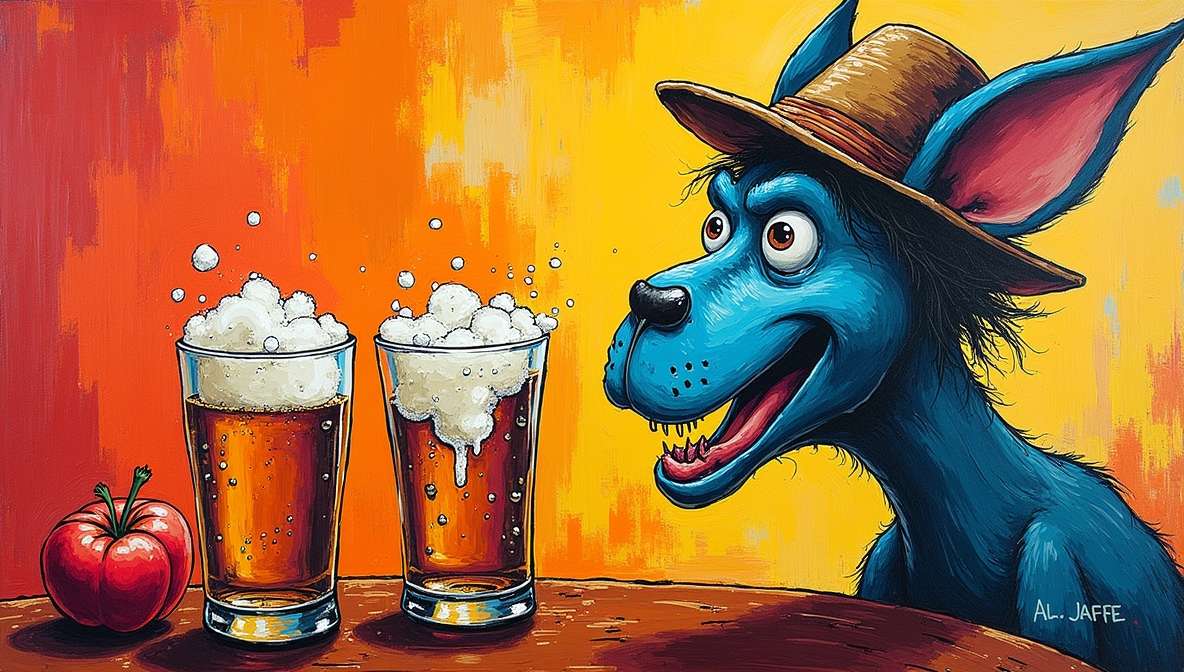
“Drink Smarter, Not Harder”: Scientists Reveal Ingeniously Simple Anti-Booze Strategy Nobody Asked For
The Breakthrough: No Pills, No Patches, Just Common Sense
In an earth-shattering breakthrough that’s not a pill, not a patch, and definitely not a magical “sobriety potion,” top researchers have discovered something revolutionary: if you want to drink less, apparently you should (checks notes) count your drinks and also know that alcohol is a carcinogen that increases cancer risk. Yes, rocket science.
The Evidence Behind Alcohol and Cancer Risk

The U.S. Surgeon General’s 2025 advisory confirms that alcohol is linked to at least seven types of cancer, including breast, liver, colorectal, esophageal, mouth, throat, and laryngeal cancers. Each year, approximately 20,000 adults in the United States die from alcohol-associated cancers.
The World Health Organization classifies alcohol as a Group 1 carcinogen, the same level of risk as tobacco, asbestos, and radiation. Yet more than half of American adults (52.9%) remain unaware that alcohol affects cancer risk.
How Alcohol Causes Cancer
Studies show that alcohol may increase cancer risk through several mechanisms: disrupting cell cycles, increasing chronic inflammation, and damaging DNA. When DNA is damaged, cells can grow out of control and become cancerous. Alcohol also increases levels of hormones like estrogen, which plays a role in breast cancer development.
For comprehensive information on alcohol and cancer, see:
- U.S. Surgeon General’s Advisory on Alcohol and Cancer Risk
- CDC: Alcohol and Cancer
- National Cancer Institute: Alcohol and Cancer Risk
- World Cancer Research Fund: Alcohol and Cancer Risk Policy
The Study: A Gloomy but Useful Truth
According to a study involving nearly 8,000 people, a two-step plan actually worked at curbing booze intake. Step one: remind people that alcohol is a carcinogen. Step two: tell them to keep track of every drink. That’s it. That’s the big secret.
Economist-psychologist Simone Pettigrew of The George Institute for Global Health explained that fear alone (“your drink might kill you”) doesn’t cut it — you also have to hand people a practical lever.
How the Research Worked: A Three-Phase Approach
Phase 1: ~7,995 people filled out a survey.
Phase 2 (three weeks later): 4,588 of those filled out another survey.
Phase 3 (six weeks total): Only 2,687 people stuck around for the follow-up.
Different groups saw different messages (some only got cancer risk info, some only got “set a drink limit,” others got the “count + cancer” combo). The “count + cancer” crowd was the only one that significantly reduced alcohol consumption.
Why Behavioral Interventions Work for Alcohol Reduction
The U.S. Preventive Services Task Force found adequate evidence that brief behavioral counseling interventions in adults who screen positive are associated with reduced unhealthy alcohol use. Research on the Drink Less app showed that self-monitoring behavior partially mediated the effect of the intervention on alcohol reduction.
The most effective behavior change techniques in alcohol reduction apps include facilitating self-recording (54%), providing information on consequences (43%), and offering feedback on performance (41%).
Learn more about evidence-based interventions:
- USPSTF: Screening and Behavioral Counseling Interventions
- NPJ Digital Medicine: Drink Less App Effectiveness
- NIH: Cognitive Behavioral Interventions for Alcohol Use
- BMC Public Health: Behavior Change Techniques
The Sobering Statistics: Why This Matters
Many people don’t realize that alcohol is carcinogenic, Pettigrew says. Alcohol is also connected to a slew of other nasty outcomes: premature death, heart disease, digestive issues, even dementia.
According to the World Health Organization, alcohol contributes to approximately 7% of premature deaths worldwide. Research published in the American Journal of Preventive Medicine in 2024 estimated that most alcohol-attributable cancer deaths could be prevented if adults followed the Dietary Guidelines for Americans’ recommended limits.
By pairing why (drink = risk) with how (count each drink), the campaign hits both the emotional and the rational — like telling someone their parachute might fail but also giving them a checklist to double-tie the knots.
Study Limitations and Real-World Application
But Wait — Before You Toss Your Wine Opener
The study wasn’t perfect, naturally:
It was done on Australians — “broadly demographically representative,” but still, who knows if it works in, say, a city where wine bars have more personality than street names.
The effect was measured over six weeks. That’s barely enough time to pick a decent craft beer, let alone rewiring your lifelong Friday-night ritual.
Health agencies also suggest more aggressive approaches — price hikes, limiting booze availability — but this “count + cancer” message seems to be their favorite dirt-cheap strategy.
For additional research on intervention effectiveness:
- ScienceDirect: Integrated Behavioral Interventions
- American Journal of Preventive Medicine: Reducing Alcohol Use
- IARC: Alcohol Reduction and Cancer Risk
Real People, Real Reactions: What Drinkers Say
On Reddit, folks chimed in with their two cents:
“When I was drinking … sleep was an ORDEAL … Anyway, I’m rambling now, but … Alcohol is a cheap trick.”
Another user noted:
“I drink too much … I have been tracking my drinking every day for the last 20 months in the Drink Control app … I drink over 100 units per month … I’ll also occasionally throw in a glass or two of red wine … in future I will cut down … with a red wine here or there.”
Alternative Strategies from the Community
Some turned to alternative hacks:
“One way I got over … hangovers was to include a glass of plain water for every shot … the inconvenience of a few extra trips to the toilet will heavily outweigh a day-long hell fest.”
The Bigger Lesson: Fear Plus Accountability Works
Fear + accountability = surprisingly effective. It’s not sexy, but telling people their liver might stage a rebellion and giving them a tally sheet actually helps.
Public-health campaigns don’t need to invent new drugs. Sometimes, common sense is the moonshot.
Behavior change is complicated. Not everyone will buy in, but for some, just knowing why they should stop — and a simple way how — is enough to make a dent.
Practical Takeaway Advice: Your Action Plan
Want to Cut Back? Here’s How
Buy a notepad. Call it your “Booze Scorecard.” Self-monitoring behavior is one of the most effective mechanisms for reducing alcohol consumption.
Every time you pour, whisper sweet nothings to your fears: “Hey, tumor, stay away.” The 2025 U.S. Surgeon General’s advisory recommends cancer warning labels on alcoholic beverages to increase public awareness.
If it all feels too depressing, consider cheaper alternatives: sparkling water, mocktails, or… yoga. (Yes, the existential dread of downward dog can rival any hangover.)
And if all else fails, just lie to your friends and tell them you’re on “doctor’s orders.” Doctors love that excuse.
Additional Resources for Alcohol Reduction
For more information and support:
- The George Institute for Global Health
- Healthline: Revised Alcohol Use Guidelines
- CU Anschutz: Alcohol and Cancer Links
- Northwell Health: Cancer Risk and Alcohol
- ScienceDaily: Most Americans Don’t Know Alcohol Can Cause Cancer
Disclaimer
This story is entirely a human collaboration between two sentient beings — the world’s oldest tenured professor (who may or may not have invented counting) and a philosophy major turned dairy farmer (who philosophizes while milking cows). Auf Wiedersehen!