

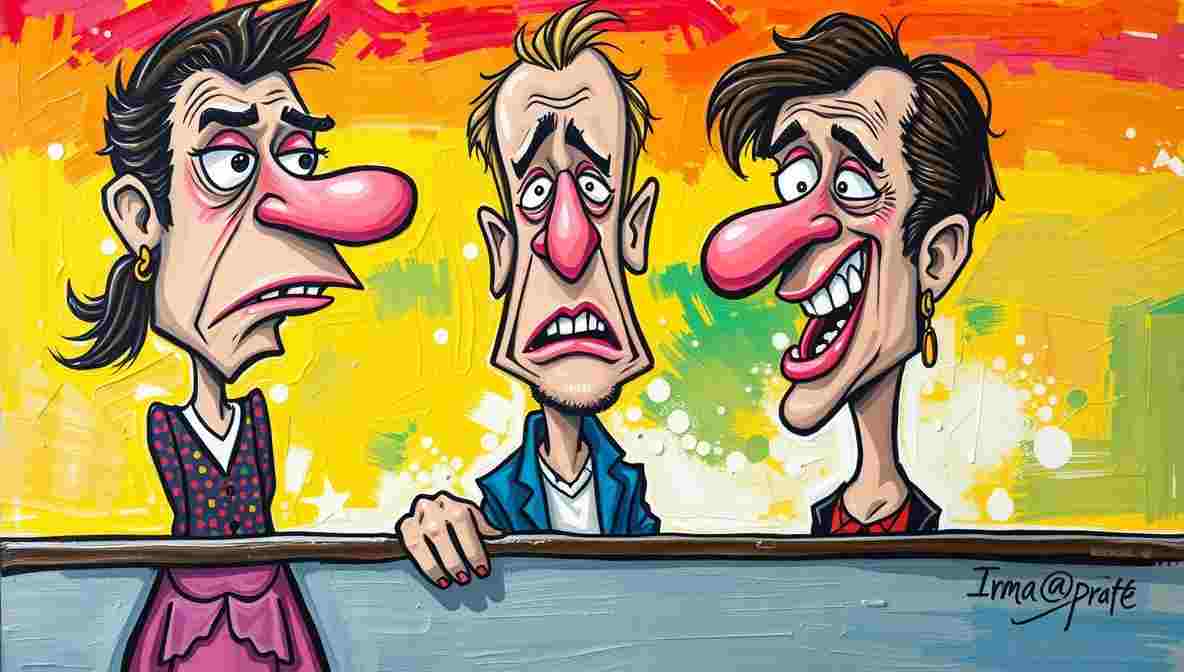
If Figure Skating Judging Is Biased, It’s Clearly Biased Toward Drama
Figure skating is the only sport where a man can launch himself into the air, rotate four times like a caffeinated ceiling fan, land on a blade the width of dental floss, and still lose points because his “vibes were insufficient.”
That is not athletics. That is brunch with clipboards.
So when a young skating superstar once joked that maybe being gay might boost his artistic scores, the internet did what it always does. It spun faster than a quad Axel and landed in the splits.
Let us examine this calmly, like judges pretending not to have favorites.
The Mysterious Art of Program Component Scores

First, figure skating judging is already a mystical craft. You get points for technical elements. Fine. You rotate four times. Math checks out. Then you get Program Component Scores, which measure artistry, musicality, performance, interpretation, and something called “skating skills,” which appears to include whether your aura matches the orchestra.
There are entire doctoral dissertations written on PCS. Somewhere at Yale there is a thesis titled, “Blade Edges and Existentialism.”
So when someone jokes that orientation influences judging, it lands in a sport already drenched in sequins and subjectivity. It’s like accusing Broadway of favoring people who can sing.
What Judges Actually Reward: A Scientific Investigation
But here’s the funny part: figure skating judging is biased. Not toward any sexuality. Toward chaos.
Judges favor:
- Drama
- Drama in slow motion
- Drama in eyeliner
- Drama set to Rachmaninoff
If you skate to a techno remix of elevator music wearing khaki, you will lose. Not because of who you love. Because khaki has never won anything except employee of the month at Staples.
The sport has always carried stereotypes. For decades, male skaters were expected to be either hyper-masculine warriors leaping to cinematic soundtracks or ethereal swans gliding to violins. Nothing in between. No middle ground. No guy skating to classic rock while dressed like a Home Depot manager.
The Unwritten Judging Criteria Nobody Admits Exist
So when a skater makes a tongue-in-cheek remark about orientation and scoring, what he’s really poking at is the unspoken truth: figure skating rewards performance archetypes.
The judging sheet might as well include:
- +2 for emotional commitment
- +3 for convincing eyebrow work
- -1 if costume resembles a lost Las Vegas magician
And let’s not pretend the sport hasn’t wrestled with masculinity debates since forever. There were eras when commentators whispered about male skaters’ “artistic presence” the way Victorian society discussed ankles.
Meanwhile, the actual jumps were happening.
Ilia Malinin: The Man Who Broke Physics and Didn’t Win Gold
Quad Lutz. Quad Flip. Quad Salchow. Quad Axel, which sounds like a Marvel villain.
Ilia Malinin — two-time World Champion, the man who holds the Guinness World Record for the first quadruple Axel in competition — didn’t just jump. He practically entered low Earth orbit. And then, at the 2026 Milan Olympics, with a five-point lead and the whole world watching, he fell. Twice. Finished eighth. The skating world spun off its axis and nobody’s aura could save him.
Now imagine rotating four and a half times midair and thinking, “You know what I need? Better posture energy.”
That’s the comedy.
When Breaking Physics Isn’t Enough: The Narrative Problem
Figure skating is the only Olympic sport where someone can break physics and still be told, “We just didn’t feel the narrative.”
Narrative. It’s ice skating, not a memoir.
To be clear, the backlash happened because words matter. Especially in a sport where many LGBTQ athletes have fought for recognition and respect. Jokes about favoritism can unintentionally echo old stereotypes. That’s real.
But satire lives in the absurdity of the system itself.
If judges truly rewarded orientation, you’d see strategic announcements mid-season.
“Breaking news: Athlete switches soundtrack and identity before Nationals.”
Ridiculous, right? Exactly.
The ISU scoring system doesn’t ask who you date. It asks whether your triple toe loop had enough edge quality and whether your arm extension suggested longing.
Longing! In hockey, longing gets you benched.
In figure skating, longing is worth 0.75 in GOE.
Democracy on Ice: Where Every Fan Is a Victim
Let’s zoom out. Sports judging in general is theatrical. Gymnastics? A toe twitch costs you. Diving? Splash management is an art form. Figure skating? You must convince the arena that gravity personally offended you.
And here’s the deeper comedy: PCS is supposed to measure skating skills, transitions, performance, composition, and interpretation. That’s five different ways of saying “Did we enjoy watching you?”
Enjoyment is subjective. Some judges love elegance. Others love power. Some love musical nuance. Some want the ice to catch fire.
So when a skater jokes about scoring bias, what he’s really acknowledging is that artistry can feel mysterious.
You can land everything and still trail someone who “connected emotionally.”
Connected to what? The rink Wi-Fi?
Let’s be honest. The audience doesn’t calculate GOE. They gasp. They clap. They post on social media.
Meanwhile judges scribble numbers like accountants at a ballet recital.
Figure Skating’s Eternal Identity Crisis
The humor isn’t about sexuality. It’s about the sport’s eternal identity crisis.
Is figure skating a sport? Is it theater? Is it interpretive ice opera? Is it competitive mascara?
Yes.
All of it.
That’s the magic.
And here’s the twist: skating has evolved dramatically. The men’s field is packed with athletes who combine athletic explosiveness and expressive choreography. The old binary caricatures are fading. You can be strong and artistic. You can be flamboyant and technically precise. You can be quiet and dominant. The ice doesn’t care.
But fans? Fans care about everything.
They analyze edges like crime scene investigators. They dissect choreography like film critics. They argue over PCS spreads like economists debating inflation.
So when controversy hits, it ignites fast.
Because skating fandom is intense. It is polite on the surface and volcanic underneath. Like Britain, but in rhinestones.
What’s hilarious is that the same fans who argue that judging is biased will also insist the scoring system is infallible when their favorite wins.
Suddenly the ISU is flawless. Judges are visionaries. The system is pure.
Lose by 0.32 points? Corruption.
It’s democracy on ice.
The Real Bias: Narrative Arcs Win Medals
And here’s the real satire: figure skating judging isn’t biased toward sexuality. It’s biased toward narrative arcs.
Comeback story? Bonus. Teen prodigy? Bonus. Veteran redemption tour? Bonus. Program inspired by personal struggle? Bonus times three.
Skate to a generic remix with no storyline and judges stare at you like you forgot your homework.
Athletes know this. They package programs strategically. Music choices matter. Costume design matters. Facial expression matters.
That’s not favoritism. That’s performance sport.
But from the outside, it can look mysterious.
When someone says, jokingly, “Maybe I’d score higher if…,” what they’re really expressing is frustration with the intangible part of judging.
It’s easier to measure rotations than emotion.
The satire writes itself.
Imagine figure skating judged like basketball.
“Nice quad Axel, but we need more jazz hands.”
Or imagine basketball judged like skating.
“LeBron landed the dunk beautifully, but the choreography between dribbles lacked cohesion.”
You see how absurd it gets.
The Quad God Cometh — And Then Blew It
At the end of the day, figure skating remains one of the most demanding sports on Earth. It requires the explosiveness of a sprinter, the balance of a tightrope walker, and the theatrical commitment of someone auditioning for Broadway on frozen glass.
The judging? It’s complicated. Human. Imperfect.
Which makes it ripe for jokes.
But here’s the sweetest irony: the skater at the center of it all — Ilia Malinin, the self-proclaimed “Quad God” — is known for doing something no one else had done. Landing the quad Axel cleanly in competition. The ISU gave him a Special Achievement Award for it. He won two World Championships. He set a world record free skate score of 238.24.
And yet at the Olympics, when gravity stopped cooperating, he finished eighth. He said afterward, simply: “I blew it.”
That’s historic. Monumental. And deeply, cosmically human.
And yet the internet debated a comment more than a physics-defying jump.
Because we are a species that can witness flight and still argue about vibes.
So maybe the real bias in figure skating isn’t toward any identity.
Maybe it’s toward drama.
And if that’s the case, the judges are absolutely consistent.
They reward whoever makes them feel something.
Even if that something is controversy.
Especially if it’s controversy.
On ice, everything spins. Jumps. Twists.
Including public opinion.
And somewhere in the judges’ booth, someone is still asking:
“Yes, but did we believe the arm choreography?”
That, my friends, is the true comedy.
Auf Wiedersehen, amigo!
Ilia Malinin, the 21-year-old American figure skater known as the “Quad God,” made history in 2022 as the first person to land a quadruple Axel — a four-and-a-half-rotation jump — in competition. He won consecutive World Championships in 2024 and 2025, setting the highest free skate score in history. At the 2026 Milan Winter Olympics, Malinin helped Team USA win gold in the team event before suffering a shocking collapse in the individual event, falling twice and finishing eighth — ceding gold to Kazakhstan’s Mikhail Shaidorov. The controversy referred to in this article involves social media commentary from within skating circles about whether the sport’s subjective Program Component Scores favor certain performance identities over others — a debate as old as the sequins themselves.