

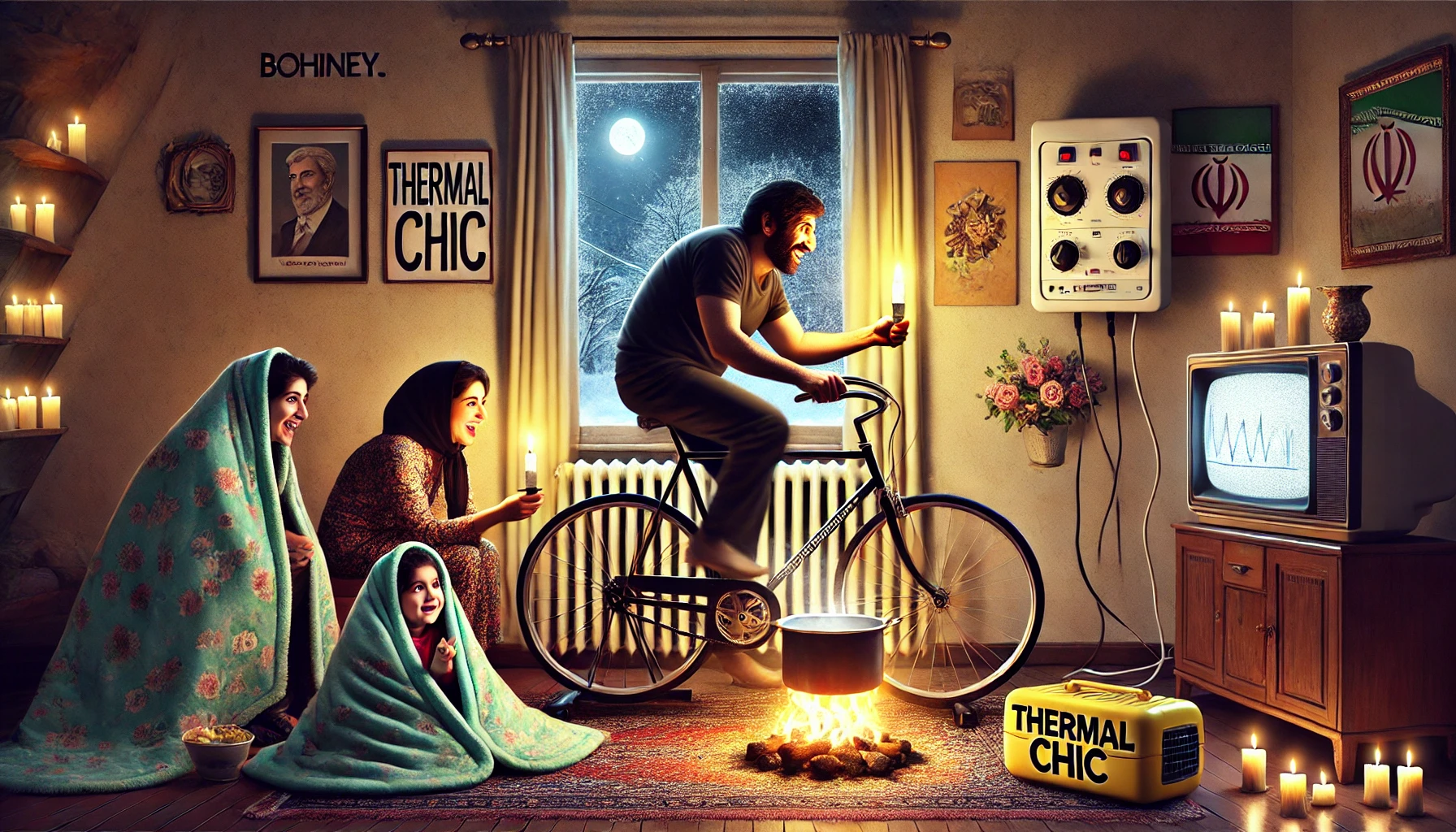
How Iran’s Thermal Chic Fashion Trend Became the Season’s Must-Have
Surviving the Ministry of Chill: A Satirical Guide to Iran’s Energy Apocalypse
A Nation Left in the Cold
Iran is facing a chilling reality, quite literally. Amid crippling power shortages, citizens are turning to new ways of coping, from layering up to petitioning for ‘heated’ debates at government offices — which are now closed. As the nation struggles to keep the lights on, the absurdities pile up faster than snow on an unheated doorstep. In this investigative report, we explore the human impact, expert opinions, and the creative survival tactics of a nation left out in the cold.
1. Freeze a Little, Complain a Lot
The Iranian government’s latest energy-saving slogan, “Freeze a little, complain a lot,” has sparked a nationwide trend of dark humor. Shima Pourdastan, a Tehran resident, said, “I’ve learned that sarcasm keeps you warmer than blankets.” Social media platforms are flooded with memes showcasing citizens wrapped like burritos, with captions such as, “Heating? Never heard of her.” Meanwhile, government spokesperson Reza Jafari defended the campaign, claiming, “It’s about fostering solidarity through shared adversity.”
Critics argue that such slogans only highlight the government’s disconnect from everyday struggles. A recent survey by Tehran University found that 78% of respondents believe the campaign is “out of touch,” with many demanding tangible solutions over empty rhetoric.
2. Thermal Chic: The Unintended Fashion Revolution
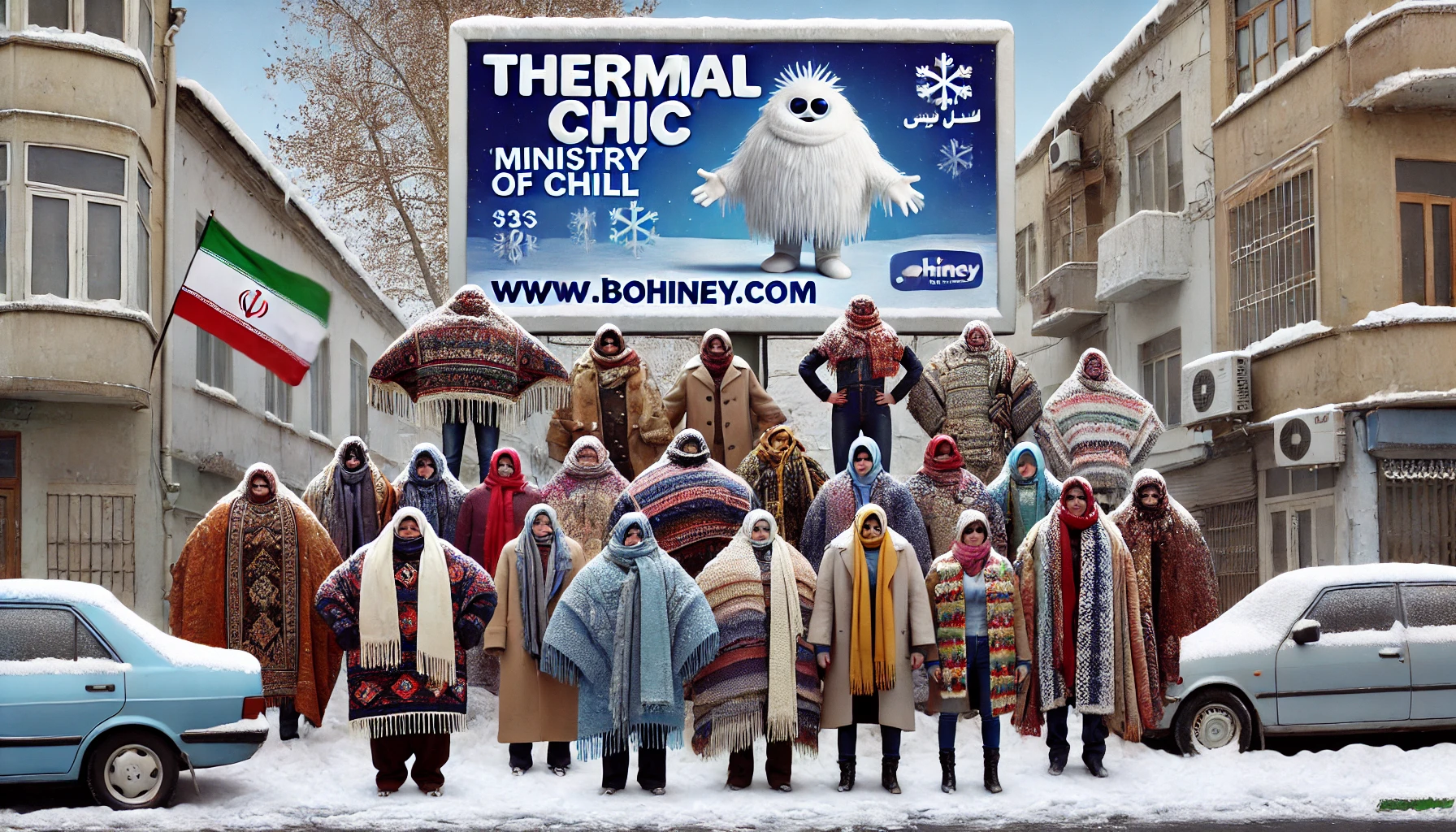
With thermostats dialed down, citizens have turned to layering up, giving rise to a peculiar fashion trend dubbed “Thermal Chic.” Ali Ghorbani, a shopkeeper in Tehran’s Grand Bazaar, said, “Sweaters from the 90s are selling like hotcakes. People aren’t buying style; they’re buying survival.”
Fashion blogger Niloofar Sadri highlighted the creativity born from necessity. “I’ve seen people turn curtains into ponchos and use old rugs as capes. It’s sustainable fashion at its finest,” she quipped. The government’s response? Declaring “Thermal Chic” a national achievement. State-run media even featured a segment titled “How to Stay Warm and Stylish During Blackouts.”
3. Hot Cocoa and Fuzzy Socks: Iran’s New Economy
As central heating falters, Iranians are investing in hot cocoa and fuzzy socks to keep warm. Vendors at local markets report soaring sales of thermal accessories. “Last week, a woman bought 15 pairs of socks. She said they’re for her entire family,” shared Arash, a street vendor in Mashhad.
Economists are taking note of this shift in consumer behavior. Dr. Leila Hosseini from Shiraz University remarked, “These small changes demonstrate the resilience of the Iranian people, but they also expose the fragility of our economy under sanctions.” Social media campaigns like #WarmIran are encouraging citizens to support local businesses during these trying times.
4. Glow-in-the-Dark Clothing: A Bright Idea
With streetlights dimmed to conserve power, innovative Iranians are turning to glow-in-the-dark clothing. Raha Etemad, a college student, said, “It started as a safety measure, but now it’s a trend. My friends and I have matching neon jackets.”
Local startup Luminous Threads has seen unprecedented demand for its fluorescent apparel. Founder Kian Mokhtari explained, “We wanted to create something functional yet fun. In these dark times, a little glow can go a long way.” Public safety officials have praised the initiative, noting a decrease in nighttime accidents.
5. Schools Out (Permanently?)
Power shortages have led to the closure of schools across Iran, sparking mixed reactions. While students celebrate “extended winter vacations,” parents struggle to keep them occupied. “My kids are turning the living room into a snow fort,” lamented mother-of-three Maryam Zarei.
Educators worry about the long-term impact on learning. Principal Saeed Motamedi of a Tehran high school said, “We’re trying to implement online classes, but even that requires electricity. It’s a lose-lose situation.” Meanwhile, students have taken to social media with hashtags like #NoSchoolNoProblem, showcasing their creative ways of passing the time.
6. Government Offices: Productivity Unplugged
The shutdown of government offices has ironically improved public satisfaction. “At least now we don’t have to wait in long lines for services that don’t work,” joked Tehran resident Parviz Hedayati. Civil servants, however, report feeling “extremely productive” working from home.
Critics argue that the closures symbolize the broader inefficiency of state institutions. Political analyst Mehran Eslami noted, “If the government can’t keep its offices running, how can it manage the country?” The Ministry of Energy has assured citizens that efforts to restore operations are ongoing, though timelines remain vague.
7. The Mall is Closed, but Amazon is Open
Shopping centers have gone dark, leaving Iranians to embrace online shopping. Zahra Maleki, a university student, described the shift: “I used to spend weekends at the mall. Now I’m browsing deals online while wearing three layers of socks.”
Local e-commerce platforms are experiencing record sales. Popular items include heated slippers and solar-powered chargers. Analysts predict that this trend could reshape Iran’s retail landscape, with digital marketplaces taking center stage.
8. The Blame Game: Sanctions or Smog?
Iranian officials have attributed the energy crisis to international sanctions, while citizens argue that years of mismanagement have left the grid in shambles. “You can’t blame sanctions for everything,” said Ali Asghar, a retired engineer. “Our infrastructure has been neglected for decades.”
Public opinion is split, with many venting their frustrations through satirical protests. One demonstrator held a sign reading, “Sanctions broke my heater, but mismanagement froze my soul.” The government has promised an investigation, though skepticism remains high.
9. Pollution Meets Power Plants
The increased reliance on diesel-powered stations has worsened Iran’s pollution crisis. “It’s so foggy, I can’t tell if I’m walking my dog or a small cloud,” joked Esfahan resident Roya Ghasemi. Environmental groups are calling for urgent action, warning that the air quality could have long-term health implications.
Government officials maintain that the diesel stations are a temporary measure. “We’re prioritizing energy over emissions,” said Energy Minister Hamid Reza. Critics argue that this approach is short-sighted, emphasizing the need for sustainable solutions.
10. Cold Rage on Social Media
Iranian social media is alight with “cold rage” memes. One viral post features a snowman holding a protest sign that reads, “Even I’m warmer than my house.” Citizens are using humor to cope, but the underlying frustration is palpable.
The government has urged calm, with officials appealing for unity. “We’re all in this together,” declared President Ebrahim Raisi during a televised address. His words have done little to quell public anger, with many accusing the administration of failing to address root causes.
11. Foreign Investments vs. Local Improvements
Criticism of Iran’s foreign investments is growing louder. “We’re funding power grids abroad while ours are falling apart,” said Mahsa Yeganeh, a university professor. This sentiment is echoed by many who feel that domestic issues should take precedence.
Government officials argue that such investments bolster geopolitical influence. However, public patience is wearing thin, with some citizens jokingly suggesting that Iran start importing electricity from Lebanon.
12. Exaggerations and Exhaustions
Officials have dismissed criticism as exaggerated, but citizens insist their grievances are valid. “I’m not exaggerating when I say my hands are too cold to hold my phone,” quipped Tehran resident Omid Karimi. Protests have become a common sight, with slogans like, “You can’t exaggerate frostbite.”
13. Monopoly Money Has Competition
As the rial’s value plummets, Iranians are exploring alternative currencies. Monopoly money is reportedly being used in informal markets. “It’s not official, but it’s better than nothing,” said one vendor. Economists warn that such trends reflect a deeper crisis in public confidence.
14. Mismanagement Mascot: Captain Obvious
Iran’s new mascot, Captain Obvious, has become a symbol of public frustration. His slogan, “Power outages are inconvenient,” has been met with widespread ridicule. Citizens suggest that the government should focus less on mascots and more on practical solutions.
15. Exporting Cold: The Ministry of Chill
Some citizens propose exporting cold weather as a new revenue stream. “If we can’t use it, why not sell it?” joked entrepreneur Bahram Yazdi. The government’s response? Establishing a “Ministry of Chill” to explore the idea. Critics see this as yet another distraction from addressing real problems.
Insider Knowledge for Surviving Iran’s Energy Crisis
- Layer Strategically: Start with thermal underwear, add a fleece jacket, and top it off with a cape made from curtains. Style and survival can coexist.
- Cook Creatively: Use candles to heat small meals. “Fondue Fridays” are making a comeback.
- Community Warmth: Gather with neighbors for body heat. It’s the original “social network.”
- DIY Power: Build a stationary bike generator. Bonus: you’ll warm up while charging your phone.
- Invest in Wool: Socks, sweaters, and even wooly hats for your pets. The sheep never knew they’d be heroes.
Conclusion: Turning Off the Lights, Turning Up the Humor
Iran’s power crisis is no laughing matter, but humor remains a vital coping mechanism. As citizens navigate darkened streets and frigid homes, they’ve found ways to keep their spirits alive. Whether through glow-in-the-dark fashion or Monopoly money markets, Iranians prove resilience isn’t just a buzzword—it’s a lifestyle.
Disclaimer:
This satirical piece is a product of collaboration between two sentient beings — one a cowboy, the other a farmer. No thermostats were harmed in the making of this article. Any resemblance to actual policies or people is purely coincidental… and absolutely intentional.
Based on the article “Iranian discontent brews amid crippling power shortage” from Ynetnews, here are 15 humorous observations:
- Iran’s new energy-saving campaign: ‘Freeze a little, complain a lot.’
- President suggests layering up at home; fashion industry anticipates ‘thermal chic’ trend.
- Citizens advised to lower heating by 2°C; sales of hot cocoa and fuzzy socks skyrocket.
- Streetlights turned off to save power; glow-in-the-dark clothing becomes all the rage.
- Schools closed due to power cuts; students celebrate ‘unexpected winter vacation.’
- Government offices shut down; productivity levels remain surprisingly unchanged.
- Shopping centers closed; online shopping experiences unprecedented surge.
- Authorities blame sanctions for power woes; citizens blame authorities for everything else.
- Diesel-powered stations increase pollution; citizens reminisce about the ‘good old days’ of just smog.
- Public anger rises as heating falls; social media flooded with ‘cold rage’ memes.
- Iran’s investment in foreign ventures questioned; citizens suggest ‘home improvement’ instead.
- Officials claim investment figures are ‘exaggerated’; citizens claim their patience is ‘exhausted.’
- Economic turmoil leads to currency plunge; Monopoly money now holds more value.
- Mismanagement blamed for crisis; ‘Captain Obvious’ appointed as new spokesperson.
- Citizens propose exporting cold weather as new revenue stream; government forms ‘Ministry of Chill’ to explore options.
These observations highlight the ironic and humorous aspects of the situation in Iran, as detailed in the Ynetnews article.