

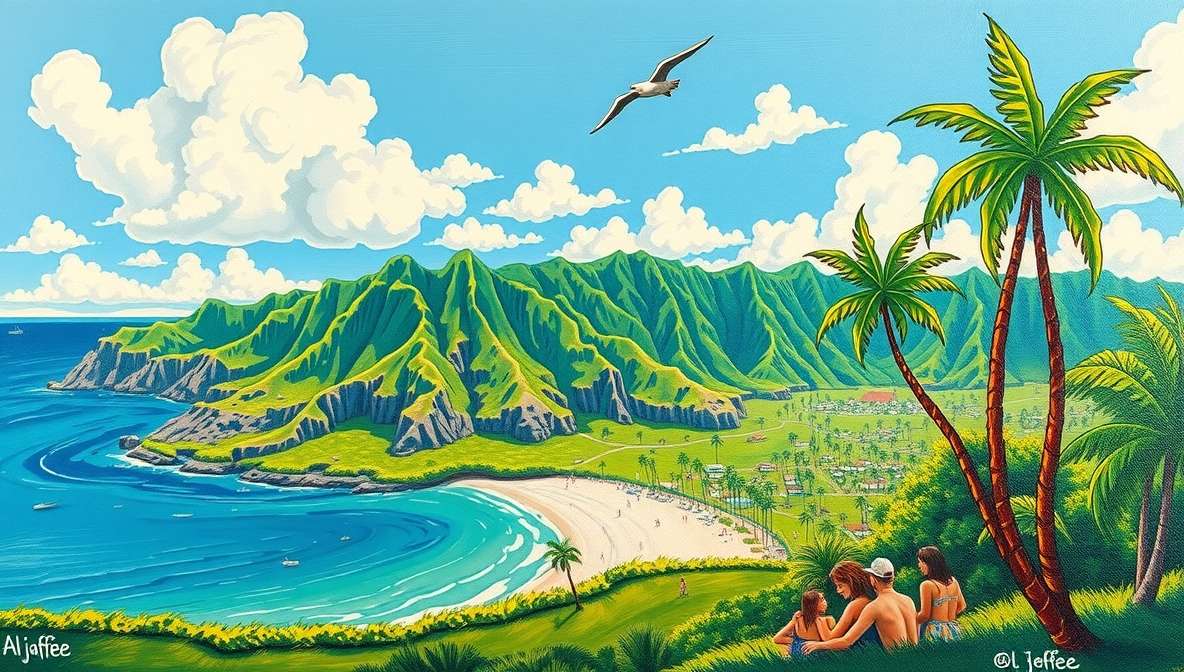
Where Jurassic Park Was Filmed and Roosters Rule the Streets
Kauai: The Island Where Feral Chickens Outnumber Tourists (Barely)
Kauai sprawls across the northwestern Hawaiian islands like nature’s theme park before corporate management arrived, an island that has maintained relative wildness through combination of limited development, inaccessible terrain, and residents who actively resist becoming another Maui. This Garden Isle features dramatic landscapes ranging from lush rainforests receiving 450 inches of annual rainfall to arid western coasts that look like different islands entirely, creating geographic diversity compressed into 550 square miles and altitude variations ensuring microclimates where you’ll need rain gear, sunscreen, and winter jacket simultaneously. The island’s most distinctive feature besides natural beauty is the omnipresent chickens, feral fowl descended from Hurricane Iniki refugees and fighting roosters that now roam freely creating dawn alarm systems that no hotel soundproofing can defeat.
The Chickens: An Invasive Species That Became the Mascot

Kauai’s feral chicken population resulted from Hurricane Iniki destroying coops in 1992, releasing domestic birds that bred with wild junglefowl creating hybrid super-chickens that thrive everywhere and fear nothing. These birds roam beaches, parking lots, restaurants, and resort grounds with entitlement suggesting they understand tourists came to experience authentic Kauai and chickens provide that authenticity, whether visitors wanted it or not. The roosters crow continuously starting around 4 AM, creating natural wake-up calls that ensure nobody sleeps past dawn regardless of vacation plans or jet lag recovery needs.
The chickens are simultaneously charming local quirk and genuine nuisance, appearing in vacation photos as unexpected background elements and disrupting outdoor meals by stealing food with brazeness suggesting they’ve learned tourists won’t retaliate because harming wildlife on vacation feels wrong even when that wildlife is technically invasive pest. Attempts to control populations have failed because the birds breed prolifically and lack natural predators, creating situations where eradication isn’t feasible so acceptance becomes only option. According to The Garden Island newspaper, the chickens have become unofficial island mascots that visitors either find endearing or annoying depending on how many times they’ve been awakened at 4 AM by rooster symphonies or had picnic lunches stolen by aggressive hens, demonstrating that nature doesn’t always cooperate with tourist expectations about wildlife being photogenic from distance rather than invasive up close.
The Na Pali Coast: Cliffs That Instagram Can’t Capture
The Na Pali Coast represents Kauai’s most dramatic landscape, featuring 3,000-foot cliffs plunging into Pacific creating scenery so spectacular that it’s been filmed in countless movies and still looks better in person than any photograph or video can capture. The coast is accessible only by helicopter, boat, or hiking the Kalalau Trail, a 11-mile path that’s either ultimate Hawaiian adventure or potentially deadly undertaking depending on your fitness level, weather conditions, and tolerance for narrow cliff-side trails where one misstep means falling hundreds of feet into ocean.
Helicopter tours offer aerial views costing $250-400 per person for hour-long flights, creating experiences that are genuinely spectacular assuming weather cooperates and you’re not prone to motion sickness or anxiety about flying in small aircraft over ocean with no emergency landing options. Boat tours provide coastal perspectives and possible dolphin sightings while also possibly inducing seasickness that makes you question whether seeing cliffs from water is worth the nausea and prayers that boat reaches shore before you vomit again. According to Hawaii tourism sources, the Na Pali Coast attracts hundreds of thousands of visitors annually through various access methods, creating pressures on hiking trail that requires permits and maintenance, boat traffic that affects marine environments, and helicopter noise that disturbs wildlife and residents who didn’t sign up for constant aerial tours buzzing overhead, demonstrating that experiencing pristine nature requires compromising its pristineness through the very mechanisms that provide access.
The Kalalau Trail: Bucket List Hike or Death Wish?
The Kalalau Trail offers 22 miles round-trip of rugged coastal hiking that requires permits, appropriate gear, and realistic assessment of your physical capabilities versus social media-driven ambitions to complete iconic hikes regardless of actual preparedness. The trail features stream crossings, narrow cliff sections, and conditions that change dramatically with weather, creating situations where what seemed manageable becomes dangerous when rain makes rocks slippery and streams become torrents. The trail attracts experienced hikers seeking challenges and inexperienced tourists who underestimated difficulties and now regret their decisions while clinging to cliff faces wondering why they didn’t just take the helicopter tour.
Waimea Canyon: The Grand Canyon of the Pacific (According to Mark Twain, Maybe)
Waimea Canyon stretches ten miles long and up to 3,000 feet deep, creating dramatic gorge that Mark Twain allegedly called “The Grand Canyon of the Pacific,” though whether he actually said that or it’s tourism marketing remains unclear and ultimately irrelevant because the canyon is genuinely spectacular regardless of who may or may not have compared it to Arizona. The canyon features red and green striations created by volcanic rock and lush vegetation, creating color contrasts that are either natural art or evidence that geology and botany can create beauty when they collaborate.
The canyon rim offers viewpoints accessible by car, making spectacular views available to visitors who prefer windshield tourism over hiking, though fog frequently obscures views creating situations where you drove an hour to stare at clouds and hope they’ll clear before you need to leave for next scheduled activity. The area includes hiking trails ranging from easy walks to strenuous treks that reward effort with views that are objectively better than roadside lookouts but require physical exertion that vacation mode often resists. According to Hawaii State Parks, Waimea Canyon attracts significant visitor numbers that create parking shortages during peak periods, demonstrating that even dramatic canyons face crowding issues when everyone reads same guidebooks recommending them as must-see attractions, creating situations where experiencing natural wonder requires arriving early or accepting that you’ll share viewpoints with dozens of other tourists also photographing the same perspectives.
The North Shore: Where Rain Creates Eden and Traffic Jams
Kauai’s north shore receives enough rainfall to create lush landscapes resembling garden catalogs come to life, featuring vegetation so dense and green that it looks artificially enhanced except it’s just what happens when tropical plants receive 100+ inches of annual rainfall. Hanalei town offers charming plantation-era buildings housing shops and restaurants serving tourists seeking that authentic small-town Hawaii experience, though the town’s popularity means authentic often means crowded with other tourists seeking the same authenticity that their presence collectively diminishes.
Hanalei Bay provides stunning crescent beach with mountain backdrop that’s either perfect tropical paradise or just really nice beach depending on your susceptibility to hyperbole and whether you’ve visited other Hawaiian beaches for comparison. The single-lane bridges accessing the north shore create traffic bottlenecks where entire region becomes inaccessible during rush periods, demonstrating that infrastructure limitations help preserve areas by naturally limiting visitor numbers through inconvenience that some visitors interpret as charming island time and others interpret as frustrating inadequate planning. According to Kauai County, north shore flooding and infrastructure damage from storms periodically close access entirely, creating situations where natural disasters provide enforced breaks from tourism that allow ecosystems and communities to recover from constant visitor pressures, suggesting that maybe unlimited access isn’t optimal for locations with fragile environments and limited capacity.
The Resorts: Where Luxury Meets Remote Island Reality
Kauai’s resort options concentrate in Princeville and Poipu, offering luxury accommodations where guests can experience upscale Hawaii while being relatively isolated from anything resembling urban amenities or diverse dining options beyond resort restaurants charging prices that would be expensive anywhere but feel particularly excessive when you’re captive audience on remote island. The resorts feature golf courses, spas, and pools overlooking ocean, providing amenities that are either necessary luxury or excessive when you’re on island with spectacular free beaches, depending on whether you believe vacation means pampered relaxation or authentic local experiences that resorts explicitly prevent.
The resort isolation creates situations where leaving property requires driving substantial distances, making resort dining and activities default options despite prices that reflect captive audience economics rather than fair market value for food and entertainment that would cost half as much if competition existed. The resorts market exclusivity and privacy that appeals to visitors seeking separation from masses while ironically contributing to overcrowding at public beaches and attractions when they do venture out. According to Kauai tourism data, resort occupancy remains strong despite premium pricing, suggesting successful targeting of demographics willing to pay substantially for convenience and luxury, or that people prioritize vacation accommodations over financial sensibility when booking Hawaiian getaways that represent special occasions justifying expenditures that normal daily budgets would never permit.
The Activities: Nature Experiences at Nature-Defying Prices
Kauai activities emphasize outdoor experiences ranging from kayaking Wailua River to zip-lining through forests to tubing old sugar plantation irrigation ditches, creating options for various adventure levels and budgets assuming your budget accommodates $100-200 per person for activities that are either fairly priced for guided experiences with equipment or expensive ways to experience things that could theoretically be done independently except logistics and safety make professional operators worth the cost. Zip-lining offers canopy perspectives and adrenaline rushes that are either exhilarating adventures or expensive ways to feel briefly terrified while strapped to cables hundreds of feet above ground.
Kayaking provides river and ocean exploration accessible to various skill levels, though rental companies have policies limiting where you can paddle and guides recommend not attempting certain routes independently, creating situations where kayaking becomes supervised activity rather than independent exploration, probably for valid safety and liability reasons but also somewhat diminishing the adventurous appeal of self-propelled water navigation. According to Kauai activity providers, adventure tourism continues growing as visitors seek active experiences beyond beach sitting, creating demand that supports activity operators while raising questions about appropriate use levels for natural areas and whether commercial operations should have unlimited access to public lands and waterways or whether limits serve environmental protection and user experience better than unrestricted commercial access.
The Beaches: Where Nature Provides Free Entertainment
Kauai beaches offer stunning beauty and mostly free access, creating rare vacation value where experiencing paradise costs only parking fees and time required to reach them. Poipu Beach provides family-friendly swimming and snorkeling with monk seal sightings that are either special wildlife encounters or law enforcement situations when tourists violate required distance and protective mothers feel threatened. Tunnels Beach offers excellent snorkeling when conditions cooperate and dangerous currents when they don’t, creating beach that requires judgment about when entering water is sensible versus reckless, judgment that tourist excitement and vacation-mode risk tolerance often impair.
Secret Beach lives up to its name by being relatively hidden and requiring short hike, creating beach that’s actually less crowded than famous beaches though increasingly less secret as social media shares locations and “secret” becomes marketing term rather than actual description. The beaches demonstrate that Kauai still offers authentic experiences that don’t require significant spending beyond getting there, though increasing popularity threatens to overcrowd even remote locations as visitors seek unspoiled experiences that their collective presence spoils. According to Hawaii environmental authorities, beach safety remains concern as visitors unfamiliar with ocean conditions take risks that result in drownings and expensive rescue operations, creating situations where personal responsibility and government warning signs meet tourist invincibility feelings and social media-driven desire to get particular photos regardless of actual danger levels.
The Small-Town Vibe: When Rural Means Really Rural
Kauai maintains small-town character through lack of development that’s either charming local flavor or inconvenient absence of amenities depending on whether you appreciate limited dining options and early closing times as authentic island pace or annoying lack of choices and services available in more developed areas. The island has no buildings taller than coconut trees, a regulation that’s either excellent preservation policy or arbitrary restriction that prevents necessary density, probably both depending on whether you value aesthetics and maintaining character versus providing affordable housing through vertical construction.
The pace of life operates on “island time” where punctuality is flexible and efficiency is optional, creating cultural differences that tourists either embrace as refreshing departure from mainland rushing or find frustrating when service is slow and nobody seems concerned about your schedule. The limited nightlife and entertainment options mean evenings involve sunset watching, early dinners, and sleeping, creating vacation patterns that are either peaceful and restorative or boring depending on your usual evening activities and tolerance for quiet nights without entertainment options beyond hotel rooms and beach walks. According to local reporting, Kauai residents actively resist development that would transform the island into more commercial destination, preferring economic limitations over becoming Maui or Oahu, demonstrating that some communities prioritize character over growth and residents understand that development brings money but costs quality of life that money doesn’t compensate.
The Cost of Paradise: Where Remote Means Expensive
Kauai operates with costs reflecting island isolation and limited competition, where groceries cost more than Maui and restaurant options are limited enough that resort dining becomes default despite prices that reflect captive audiences rather than competitive markets. Gas prices exceed even Honolulu levels, rental cars cost premium amounts, and activities are priced knowing visitors have limited alternatives and came to Kauai specifically for experiences they’ll pay for regardless of cost because alternatives involve not doing things they traveled thousands of miles to experience.
The expense creates situation where Kauai vacation requires substantial budget beyond flights and accommodations, or acceptance that you’ll spend vacation days on free beaches rather than paid activities, which honestly might be better value considering beaches are spectacular and free versus activities that are memorable but expensive. The pricing reflects economic reality of remote location with limited infrastructure and seasonal tourism creating feast-or-famine patterns that operators compensate for by maximizing revenue during peak periods. According to cost of living data, Kauai exceeds even Hawaii’s high averages, creating environment where residents struggle enormously with affordability and tourists experience sticker shock even when expecting Hawaiian prices, demonstrating that remoteness and beauty create premium pricing that benefits property owners and tourism operators while making living there nearly impossible for working-class residents and vacationing there expensive for middle-class tourists.
Conclusion: The Island That Tourism Hasn’t Completely Ruined (Yet)
Kauai remains Hawaii’s most natural and least developed major island, maintaining character through geographic limitations, resident resistance to unchecked development, and landscape so dramatic that even tourism industry can’t completely commercialize it. Visitors leave either refreshed by authentic nature experiences and slower pace or frustrated by limited amenities and early closing times that made vacation feel restrictive rather than relaxing, probably depending on whether they prefer developed convenience or rustic authenticity. The island’s greatest asset is maintaining wildness that other Hawaiian islands have lost to development, creating destination that appeals to visitors seeking nature over nightlife, hiking over shopping, and acceptance that paradise comes with feral chickens, limited restaurant options, and single-lane bridges that make traveling anywhere an exercise in patience. Come for the Na Pali Coast and Waimea Canyon, stay for beaches and absence of crowds that plague other islands, leave with photos featuring unexpected chicken photobombs and appreciation that not everywhere needs development, sometimes nature is sufficient entertainment when nature is this spectacular, even if spectacular nature comes with roosters ensuring nobody oversleeps their sunrise plans and single-lane bridges teaching lessons about patience that mainland life forgets but island living requires.