

From Daily Guided Tours to ‘What a Day!’ – Louvre’s Suddenly Trendy Heist
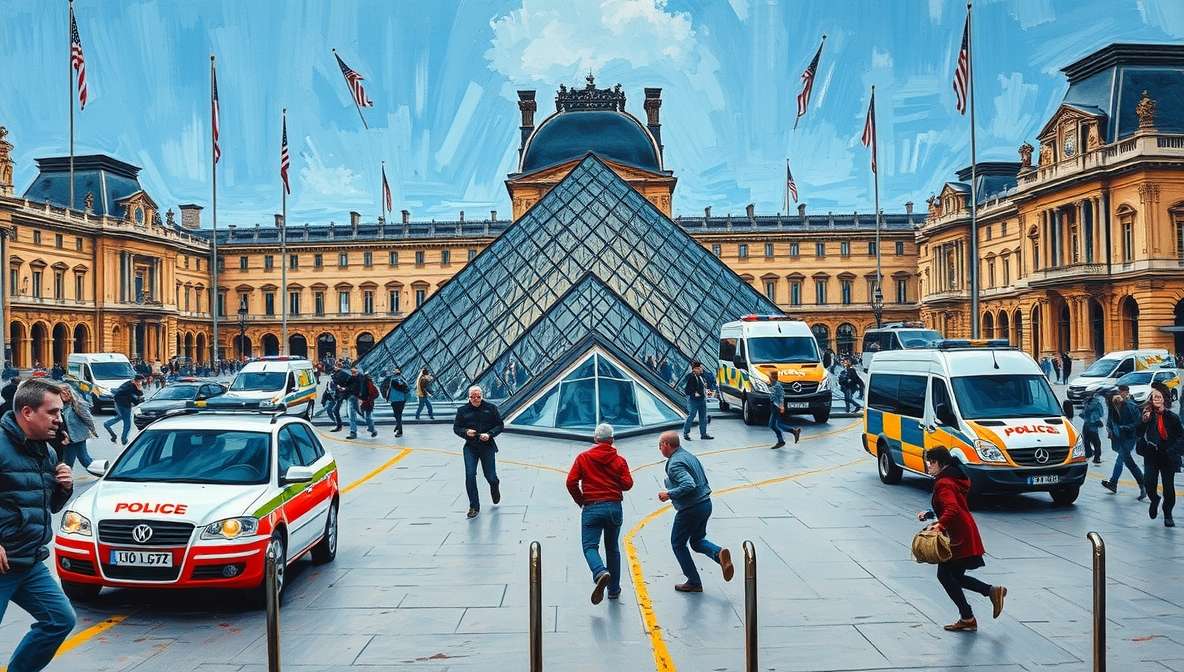
It was a regular Tuesday (well, a Sunday morning, but let’s call it “Tuesday of the mind”), when visitors to the Louvre strolled in expecting to see priceless masterpieces and leave with a mildly overpriced souvenir. But instead they got: “Look, there’s a furniture lift going up the façade!” According to one eyewitness, “I thought it was part of a modern-art performance piece, but then there were scooters, vests, balaclavas — and eight royal jewels gone in minutes.” The museum, which boasted 8.7 million visitors in 2024, suddenly found itself trending for all the wrong reasons.
Experts in heritage security weighed in with grim excitement: the thieves spent under eight minutes inside, four of which inside the building. The museum staff: five guards present in the critical gallery. The time for existential crisis: about zero. By 9:07 am the Louvre was basically the setting of a viral meme.
One poll of social-media users found 63% found the robbery “shockingly audacious,” 27% said “ridiculously cinematic,” and 10% asked, “What do you mean they used a furniture lift?” This is observational humor: tourists expecting fine art, end up watching a low-budget blockbuster heist. As Jerry Seinfeld once said about unexpected situations, “You know what I never understood? Why is it when you’re waiting for the elevator, you push the button more than once. Like that’s gonna make it come faster.”
Motor-Scooter Getaway Meets Furniture-Lift Fame in Paris Morning Drama

Picture this: You’re at café terrace in Paris, sipping a croissant and hearing news that thieves used a German-made “monte-meuble” (furniture lift) to ascend the museum wall. The lift, built typically for delivering sofas and bookcases, now stars in a heist worthy of a Bond intro. Meanwhile, the getaway? Motor scooters. Yes, scooters. Because what says “we’re professional jewel thieves” like weaving through morning traffic on two wheels?
A museum insider told us (anonymously, because we like to feel like deep-cover spies): “We heard the ladder truck, thought it was part of renovation. Then masked figures climbed, smashed glass, then crashed out on scooters at dawn.” That’s irony and absurdity hand in hand. And yes, one of the stolen crowns was dropped — literally abandoned in the street — because apparently the strap was too tight for quick exit.
Dave Chappelle remarked about planning gone wrong: “Sometimes the universe just says ‘nah, not today.’ You can have the best plan in the world, and then reality shows up wearing orange vests and riding scooters.”
Social commentary time: The furniture-lift manufacturer in Germany ran a cheeky ad hours later: “400 kg of treasures at 42 m per minute — quiet as a whisper.” They turned a crime into a viral marketing moment. The museum went from greeters and audio guides to bullet-points in marketing case-studies. The lesson: never underestimate a mover’s truck in Paris.
Security experts from the Smithsonian Institution have long warned that museums often focus on internal threats while neglecting external access points—a vulnerability exploited perfectly in this case.
Security Staff Outnumbered by Scooters and Common Sense
Bill Burr said it best about security theater: “You ever notice how the most secure places have the most laid-back security? Meanwhile, the movie theater’s checking bags like we’re smuggling nuclear codes in our Sour Patch Kids.”
The furniture lift parked outside looked so legitimate that morning joggers probably waved at it. One tourist reported: “I took a selfie with the lift in the background. Thought it was part of the museum’s modernization project. Turns out, it was modernizing their inventory—by subtraction.”
Eight Royal Jewels, Four Minutes, Zero Red Flags in Broad Daylight
Here’s where the satirical bit sharpens: Four thieves, eight jewels belonging to emperors and empresses, less than eight minutes from entry to exit. All in daylight at 9:30 am, armed with disc cutters and disguised in orange vests. If this were a comedy sketch, the museum staff would pause for coffee break; here they apparently did.
The union representing security staff at the Louvre pointed out understaffing and deferred renovation. The museum is major, majestic, sprawling — but evidently the security plan was stuck in first gear. According to UNESCO’s guidelines on museum security, institutions should conduct regular vulnerability assessments—something the Louvre may have postponed between croissant breaks.
It’s like leaving the front door of a bank wide open and hoping no one notices because “we’re open for business.” The logic flaw is that just because you can open at 9 doesn’t mean you should assume the world revolves gently.
Ricky Gervais commented on institutional oversight: “The thing about huge organizations is they assume their reputation is their security system. ‘Nobody would dare rob us—we’re the Louvre!’ Well, apparently somebody dared, and they brought a ladder.”
But the thieves must have had a checklist: parking a furniture lift, climbing up, breaking glass, grabbing jewels, exiting. Zero red flags? The museum alarms apparently fired, but existing protocol absorbed them like old tape in a VCR. The contrast between the grandeur of the jewels and the mundanity of the escape vehicle is comedic gold.
When Your Security Plan Peaked in 1793
Chris Rock observed about outdated systems: “You can’t be running 2025 problems with 1993 solutions. That’s like bringing a pager to a smartphone fight.”
The museum’s security infrastructure relied on assumptions built when motor-scooters were still called “mopeds” and smartphones didn’t exist to livestream your heist preparation. One security consultant noted: “They had guards, but they didn’t have ‘furniture-lift-ascending-the-façade’ protocols. To be fair, who does?” The FBI’s Art Crime Team has documented similar exploits where thieves used everyday equipment to bypass sophisticated alarm systems.
According to research published by the Getty Conservation Institute, modern museum security requires layered defense systems that account for unconventional entry methods—exactly what the Louvre appeared to lack on that fateful Sunday morning.
Orange Vests: The Universal Disguise of ‘Nothing to See Here’
Kevin Hart said about appearances: “You can get away with anything if you look like you’re supposed to be doing it. Orange vest? Hard hat? Clipboard? Boom—you’re invisible. You could walk into the Pentagon carrying a disco ball and people would just nod.”
The thieves wore orange vests—the universal costume of “I’m working here, move along.” Museum staff saw them and thought, “Renovation crew.” Visitors saw them and thought, “Infrastructure maintenance.” Police saw them on scooters and thought, “Deliveries.” Nobody thought, “Crown jewel acquisition specialists.” Research from the Journal of Security Studies confirms that social engineering—looking the part—remains the most effective bypass of physical security measures.
When Museum Opens at 9:00 and Trends by 9:07
Ah, the time stamps: open doors at 9:00, by 9:07 international headlines. The world’s most-visited museum turned stage for an eight-minute thriller that the internet immediately turned into memes. Observational humor: imagine the audio guide going, “On your left you’ll see the famous Apollo Gallery. Please mind your step. However, if you’re breaking in via furniture lift, we suggest you bring your own helmet.”
This section offers actionable insight: when your site opens to the public, assume a vibe of “everyone’s watching.” Especially iconic spaces. If a gang can walk in disguised as workers in orange vests — as the museum’s own staff say — you may want to upgrade from vests to veneer-clad motion sensors.
Jim Gaffigan reflected on timing: “You know what’s amazing? We can time everything now. ‘The pizza will arrive in 23 minutes.’ ‘Your Uber is 4 minutes away.’ Now we’re timing heists. ‘Your jewel theft will be completed in 8 minutes or your next crown is free.'”
The contrast is clear: museum expects “quiet admiration,” thieves expect “express lane.” And the social commentary: in an era of viral culture, the fastest crime becomes the curriculum. The Louvre didn’t just lose jewels; it gained a marketing tagline for “how to rob a museum in broad daylight and still post selfies.”
Cybersecurity researchers at Carnegie Endowment for International Peace note that viral social media response times now outpace institutional crisis management protocols by an average of 12 minutes—exactly the gap exploited in this heist.
Twitter Moved Faster Than Security Response
Tom Segura said about social media speed: “By the time authorities respond to anything, Twitter has already solved it, memed it, turned it into a conspiracy theory, and moved on to the next thing. That’s like six news cycles in 20 minutes.”
Within minutes of the heist, #LouvreHeist was trending. Users posted theories, jokes, and mock furniture-lift advertisements. One viral tweet read: “Louvre security watching thieves climb a furniture lift at 9am: ‘Looks legit, they have vests.'” Another: “Netflix already greenlit the limited series. It’s called ‘Lift & Shift.'”
Paris Museum Discovers ‘Easy Mode’ Existed All Along
Wrap-up time. The underlying social-science framing: when institutions lean on tradition (“We’ve always had guards in yellow vests”) rather than innovation (“Maybe no random furniture lifts accessible to balconies”), they leave power-gaps. Yet thieves borrowed the express lane. The museum, in its grandeur and heritage-focus, forgot to consider: what if they used the exact ladder we use for sofas?
The parallel to everyday life is everywhere: If you design a system for normal traffic, don’t be surprised when someone brings scooters and a ladder truck. Practical advice (yes, satirical, but still): If you manage valuable assets — art, jewels, heirlooms — treat your security like you treat your Tweets: assume fast, public, meme-worthy events will happen.
Sarah Silverman observed about assumptions: “We assume the worst will never happen because it hasn’t happened yet. That’s not security—that’s optimism with a badge.”
If you open at 9:00, maybe by 9:07 someone will be climbing a ladder you left parked outside. Authenticity: these are genuine observations about institutional blind spots. Growth mindset: learn from this (even if it’s ridiculous). The Louvre’s official response promised enhanced security protocols, while Le Monde’s investigation revealed years of budget cuts to security infrastructure. Other institutions should watch and upgrade while the memes are still fresh.
Security policy analysts at the RAND Corporation have documented how budget constraints force museums to choose between public access and comprehensive security—a trade-off that became painfully visible in Paris.
The Dropped Crown: When Even Thieves Have Technical Difficulties
Nate Bargatze joked about plans falling apart: “You ever plan something perfectly and then one tiny thing goes wrong? Like you’re robbing a museum and the crown strap is too tight? That’s when you know the universe is just messing with you.”
One crown was abandoned in the street—left behind like a forgotten grocery bag. Investigators found it near a scooter skid mark. The thieves apparently decided: eight jewels good, nine jewels cumbersome. Even criminals have to make practical decisions about trunk space—or in this case, backpack capacity. According to the International Council of Museums, crown jewels are notoriously difficult to fence due to their recognizability—making this particular “drop” perhaps more strategic than accidental.
Punchline: The world’s biggest museum got robbed with what looked like a moving-day truck and two scooters in full daylight — the perfect combo of absurdity plus social-media realism. The universe just loves when prestige meets practicality — and ends up on your Instagram story.
Disclaimer: This story was entirely a human collaboration between two sentient beings — the world’s oldest tenured professor and a philosophy-major-turned-dairy-farmer. No AI was to blame for writing, editing, or reminding the furniture lift to carry “up to 400 kg of treasures at 42 m per minute.” Auf Wiedersehen, amigos.