

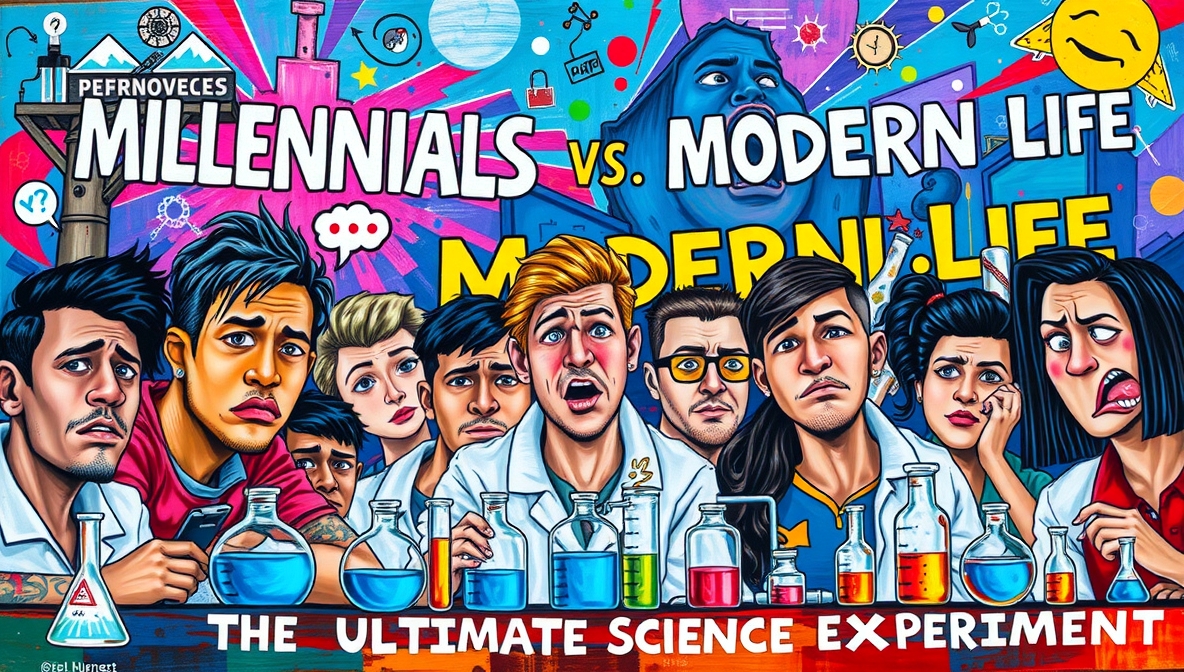
Millennials vs. Modern Life: How a Toxic Love Story Created the Cancer Generation
The Ultimate Science Experiment: Millennials as Human Guinea Pigs
Millennials didn’t sign up to be the world’s largest chemistry experiment, but congratulations—you won anyway. Scientists now study something called the “exposome,” which is basically every toxic thing you’ve encountered since conception. Think of it as your body’s junk drawer, except instead of old batteries and rubber bands, it’s filled with microplastics and existential dread.
Research shows millennials face a staggering 42% higher biological aging rate compared to previous generations. Your cells are aging faster than your career prospects, and that’s saying something. One researcher noted that if you sneezed in 1995, it was just a sneeze. If a millennial sneezes today, scientists want to test it for BPA residue.
The American Cancer Society reports that cancer rates among young adults have increased significantly since 2000. Basically, your body is speedrunning through biological processes while you’re still trying to figure out adulting.
Prenatal Pharmaceuticals: Your First Toxic Subscription Box
Before you took your first breath, you were already enrolled in a pharmaceutical experiment. Prenatal medications like bendectin and hydroxyprogesterone caproate have been linked to increased cancer risk in offspring. Essentially, your mother’s morning sickness remedy became your lifetime health subscription—and nobody asked if you wanted to auto-renew.
Recent studies from the National Institute of Environmental Health Sciences found that prenatal drug exposure correlates with higher cancer rates decades later. It’s like receiving a delayed reaction from a joke that wasn’t funny in the first place.
One millennial summed it up perfectly: “My mom was just trying to keep her breakfast down in 1992. Instead, she accidentally signed me up for a lifelong battle with my own biology.”
Microplastics Crisis: Tiny Terrorists in Millennial Bodies

Microplastics have infiltrated human placentas, lungs, and brains with the dedication of an overeager intern. These particles are so small they make a grain of sand look like a boulder, yet they’re throwing the world’s smallest but most persistent house party in your organs.
Scientists from Harvard Health report finding microplastics in 97% of American blood samples. Your bloodstream now has more plastic diversity than a toy store clearance section.
The research is staggering: microplastics are showing up everywhere from breast milk to brain tissue. It’s environmental contamination with the persistence of student loan debt and about the same level of life disruption.
The Jerry Seinfeld Take on Plastic Invasion
The absurdity isn’t lost on observational comedians. The situation begs the question: “What’s the deal with convenience packaging? You want your food to stay fresh for five minutes, so now your body stays plastic forever?”
Ultra-Processed Foods: Russian Roulette for the Instagram Generation
Millennials consume ultra-processed foods at rates that would make a vending machine jealous. Every meal becomes a molecular dice roll with your liver and colon as the betting table. Food delivery apps report record profits while gastroenterologists report record appointments—correlation or causation? Yes.
Mayo Clinic research links ultra-processed foods to inflammatory responses and metabolic disruption. Translation: your body is staging a biological protest against your dietary choices, and the picket signs are written in tumor markers.
The convenience economy has created a generation that orders dinner through an app while simultaneously googling “early signs of digestive cancer.” The irony is thicker than the preservatives in your instant ramen.
Circadian Chaos: How Sleep Deprivation Became a Millennial Trademark
Modern life has obliterated millennial sleep schedules with the precision of a caffeine-fueled wrecking ball. Circadian rhythm disruption impairs DNA repair mechanisms, meaning your cells are essentially saying, “We can’t keep fixing what you’re breaking, Jennifer.”
Studies from the Sleep Foundation show that 89% of millennials scroll their phones until 2 AM, then wonder why their bodies feel like they’ve been through a biological blender. Blue light exposure suppresses melatonin production while simultaneously triggering anxiety about tomorrow’s responsibilities.
Your smartphone isn’t just stealing your attention—it’s actively sabotaging your cellular repair processes. It’s multitasking at its most malicious.
Gender Gap in Millennial Cancer: The Universe’s Cruel Joke
Women aged 15-49 now face 83% higher cancer rates than men in the same demographic, because apparently the universe decided that managing societal expectations, wage gaps, and biological warfare simultaneously builds character.
Reuters Health reports that hormonal disruption from environmental toxins disproportionately affects women. Modern life didn’t just hand women additional responsibilities—it handed them additional carcinogens too.
The data suggests that being a millennial woman is like playing life on expert mode while the game randomly deletes your health points in the background.
Environmental Party Crashers: Uninvited Chemical Guests
Every convenience item in modern life doubles as a stealth toxin delivery system. Scented candles release volatile organic compounds, non-stick pans shed perfluorinated chemicals, and even your trendy reusable water bottle might be leaching BPA substitutes.
Environmental Working Group research shows that forever chemicals persist in human tissue longer than most millennials have maintained gym memberships. These substances earned their “forever” designation by sticking around with the tenacity of your college roommate who never moved out.
The cruel irony is that every attempt to live more conveniently or sustainably comes with its own molecular price tag. You can’t win—you can only choose your poison, literally.
The Ron White Perspective on Chemical Convenience
The situation calls for deadpan observation: “I like my whiskey neat and my body free of industrial chemicals, but apparently that’s asking too much from the 21st century.”
The Millennial Health Paradox: Conclusion
Millennials wanted WiFi, student debt forgiveness, and maybe a decent work-life balance. Instead, they received microplastic confetti in their organs, accelerated cellular aging, and bodies that feel like they’ve binge-watched too much existence in too little time.
The Centers for Disease Control data confirms what millennials suspected: modern convenience comes with a hidden subscription fee paid in biological currency.
So put down your phone, step away from the ultra-processed foods, and consider that meditation app. Or don’t. At this point, the exposome is undefeated, and your body is just along for the toxic ride.
This satirical investigation into millennial health trends combines peer-reviewed research with observational humor. Any resemblance to your actual lived experience is unfortunately not coincidental.