

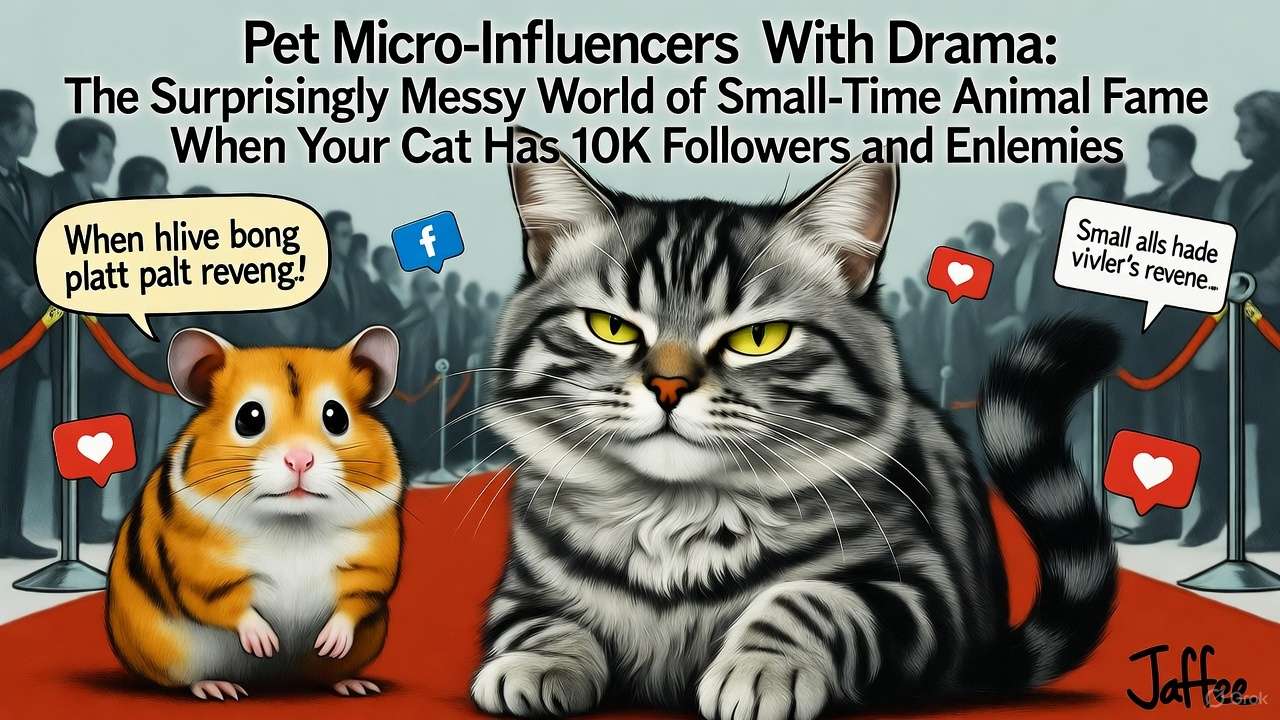
Pet Micro-Influencers With Drama: The Surprisingly Messy World of Small-Time Animal Fame
When Your Cat Has 10K Followers and Enemies
The Petty Drama of Pet Accounts With Modest Followings
While mega pet influencers with millions of followers get PR teams and major brand deals, there exists a shadowy underworld of pet micro-influencers–accounts with 5,000 to 50,000 followers–where the drama is just as intense but the stakes are somehow even sadder. These are the minor leagues of animal fame, where people treat their moderately popular pets like Hollywood celebrities and engage in feuds that would make reality TV producers proud.
The micro-influencer space is where ambition exceeds reach, where someone with 12,000 followers genuinely believes they’re one viral post away from Pet Fame. The desperation is palpable, the competition is fierce, and the drama is absolutely unhinged because these people have just enough followers to feel important but not enough to be actually important.
The Follower Count Wars Nobody’s Winning

“I watched two dog accounts argue about who had more authentic engagement,” said Dave Chappelle. “AUTHENTIC ENGAGEMENT. They’re dogs. The dogs don’t know what engagement is. The dogs think engagement is when someone throws a ball.”
The micro-influencer pet community is obsessed with metrics: follower growth rates, engagement percentages, story views, saves, shares. They track these numbers religiously, comparing their cat’s performance against other cats in the same “niche” as if this is legitimate professional competition instead of people posting photos of animals.
The feuds often start over perceived slights: someone didn’t like back, someone unfollowed, someone’s pet got featured in a Rover roundup and yours didn’t. These minor incidents escalate into full-blown conflicts complete with vague-posting, call-out posts, and DM screenshots leaked to other pet accounts in the community.
The Unspoken Hierarchy of Animal Content
Jerry Seinfeld said, “There’s a social hierarchy among pet micro-influencers. Dogs at the top, cats in the middle, rabbits somewhere below that. If you have a pet snake, you’re basically a social outcast. It’s high school but with animals who don’t care.”
The pet Instagram community has developed rigid social structures. Certain species are considered more marketable, certain aesthetics get more engagement, certain types of content perform better algorithmically. The owners learn these rules and police each other’s content with the intensity of fashion magazine editors.
Breed also matters–purebreds often get more followers than mutts, creating a weird classist hierarchy among literal animals. One owner complained their rescue pit bull couldn’t break 10,000 followers despite “amazing content,” while a friend’s purebred French Bulldog hit 30,000 in six months “just for existing.” The resentment is real and openly discussed in DMs.
The Sponsored Post Drama That Benefits No One
Amy Schumer said, “Two pet micro-influencers got in a fight because they both did sponsored posts for the same pet treat company. They accused each other of brand disloyalty. The brands don’t care. The pets definitely don’t care. But the humans are ready to go to war.”
When micro-influencers land sponsored posts–usually worth $50-$200 and free product–they treat it like they’ve made it to the big leagues. Then the drama starts: someone accuses someone else of copying their content style, someone claims another pet owner stole “their” brand relationship, someone makes a vague post about “fake influencers who are only in it for the free stuff.”
The irony is that everyone is only in it for the free stuff. The difference is some people are honest about it and others perform elaborate pretenses about “authentic brand partnerships” and “alignment with my pet’s values.” Your hamster doesn’t have values. Your hamster wants sunflower seeds and doesn’t care where they come from.
The Instagram Pods of Desperate Pet Parents
Chris Rock said, “They have group chats where they agree to like each other’s posts to boost engagement. It’s a like cartel. For pets. They’ve organized crime around cat photos.”
Pet micro-influencers organize into engagement pods–groups that commit to liking and commenting on each other’s posts to game the algorithm. These pods are supposed to be mutually beneficial arrangements, but they quickly devolve into drama. Someone didn’t comment fast enough, someone’s comment wasn’t enthusiastic enough, someone left the pod without warning and now they’re blacklisted from the entire pet micro-influencer community.
The pods have rules more complex than actual business contracts. Required engagement times, comment length minimums, emoji usage guidelines–all to create the illusion of organic engagement around pets who just want dinner. The pods collapse regularly due to internal drama, spawning new pods with stricter rules, continuing the cycle of manufactured authenticity.
The Copying Accusations and Content Theft Wars
Bill Burr said, “Someone accused another pet account of ‘stealing their aesthetic.’ It’s a photo of a dog on a couch. That’s the aesthetic. Unless you invented dogs or couches, you didn’t invent anything.”
Copyright claims fly constantly in the pet micro-influencer world. Someone posts their cat in a flower crown, another pet account posts their cat in a flower crown, and suddenly there’s a public feud about creative theft. The accusation is that one owner “stole the idea” of putting decorative items on animals, as if this hasn’t been happening since the invention of both decorative items and animals.
The fights extend to photo editing styles, caption formats, even posting schedules. One owner claimed another was “copying her brand” by also posting at 7 PM and using warm-toned filters. The tools of content creation are available to everyone, but micro-influencers treat their specific combination of common elements as proprietary intellectual property worth defending.
The Comment Section Cold Wars
Kevin Hart said, “I read a comment fight between two pet accounts that lasted forty-seven comments. FORTY-SEVEN. About whether a cat’s collar matched its personality. The cat doesn’t have opinions about fashion. The cat has opinions about whether you fed it yet.”
Comment section battles are where pet micro-influencer drama becomes spectator sport. Two owners with longstanding beef will passive-aggressively comment on each other’s posts, their followers will jump in to defend their chosen side, and soon there’s a full-scale internet fight about whether a golden retriever’s bandana was age-appropriate.
These fights become legendary within the small community, referenced for months afterward. “Remember the Great Collar Controversy of Last June?” Yes, people remember and bring it up regularly, because when your social circle revolves around pet content creation, these incidents become foundational historical events.
The Collaboration Offers and Betrayals
Ricky Gervais said, “Pet micro-influencers doing ‘collaboration posts’ is wild. It’s a photo of two pets near each other. That’s not collaboration–that’s proximity. My cat collaborates with my couch every day and nobody’s celebrating that.”
Collaborations between pet accounts are supposed to help both parties reach new audiences. Instead, they often end in accusations of unequal promotion, one party benefiting more than the other, or someone using the collaboration for followers then unfollowing afterward. These betrayals are discussed with the gravitas of international treaty violations.
The collaboration process itself spawns drama: whose pet gets tagged first, whose account gets mentioned in the caption, how credit is divided for a photo of two animals existing in the same space. These negotiations sometimes involve written agreements, which is absolutely insane but completely real.
The Envy of Accounts That Blow Up
Ali Wong said, “Nothing makes pet micro-influencers angrier than watching another account suddenly go viral. They’ll analyze what that account did different, conclude it’s luck or algorithm manipulation, and post vague Stories about ‘authentic content’ not getting recognized.”
When one pet account suddenly explodes in popularity, the micro-influencer community reacts with barely concealed resentment. The successful account is accused of buying followers, using bots, or somehow cheating their way to fame. The possibility that their pet is just more appealing or their content is better is never considered.
The viral account often makes the mistake of offering advice to smaller accounts, which is received as condescending even when well-intentioned. “Just be consistent and authentic!” is the advice, which everyone already knows and everyone hates hearing from someone who got lucky.
The Aspirational Delusion Fueling Everything
Sarah Silverman said, “These people think they’re one post away from pet stardom. They’re not. Their cat is cute but so are millions of other cats. The difference is most cat owners just enjoy their cats instead of trying to monetize them.”
The micro-influencer trap is believing you’re building toward something–major sponsorships, brand partnerships, maybe even a book deal or TV appearance. The reality is that most pet accounts plateau at their follower count and never break through to the next tier. But the dream persists, fueling years of content creation and drama.
The sunk cost fallacy keeps people committed. They’ve already invested hundreds of hours into building their pet’s “brand,” so quitting now would mean admitting it was pointless. Better to keep posting, keep engaging with the drama, and keep pretending this is leading somewhere.
The Support Groups for Burned Out Pet Parents
Trevor Noah said, “There should be support groups for people who burned out trying to make their pet Instagram famous. ‘Hi, I’m Trevor, and I staged 400 photos of my dog in costumes before realizing this was insane.’ That’s the meeting.”
Some former pet micro-influencers have started speaking out about the toll of chasing animal fame. The constant content creation, the obsession with metrics, the drama and comparison–it affects mental health while providing minimal reward. The pets remain unbothered throughout, having never asked to be part of any of this.
The dark secret is that many micro-influencers aren’t having fun anymore. They’re locked in a cycle of obligation to followers who don’t really care that much, pursuing brand deals that barely cover a week’s groceries, and engaging in drama with strangers over content that ultimately matters to almost no one.
The Reality Nobody Admits
Tom Segura said, “The pets are happy either way. They don’t care if they have twelve followers or twelve million. Only the owners care. Which means all this drama is humans fighting over stuff that matters exclusively to humans. The pets are just vibing.”
The pet micro-influencer world is a contained ecosystem of ambition, disappointment, and interpersonal conflict–all centered around animals who have no awareness of or investment in any of it. It’s humans projecting their need for validation onto their pets, then fighting with other humans doing the same thing.
The drama will continue because the structure guarantees it. As long as there are metrics to track, followers to gain, and brands occasionally offering free products, there will be pet micro-influencers convinced they’re building something meaningful. And as long as those beliefs exist alongside the reality that most will never break through, there will be resentment, accusations, and feuds playing out in comment sections while the pets nap peacefully, blissfully unaware they’re at the center of very human conflicts.