

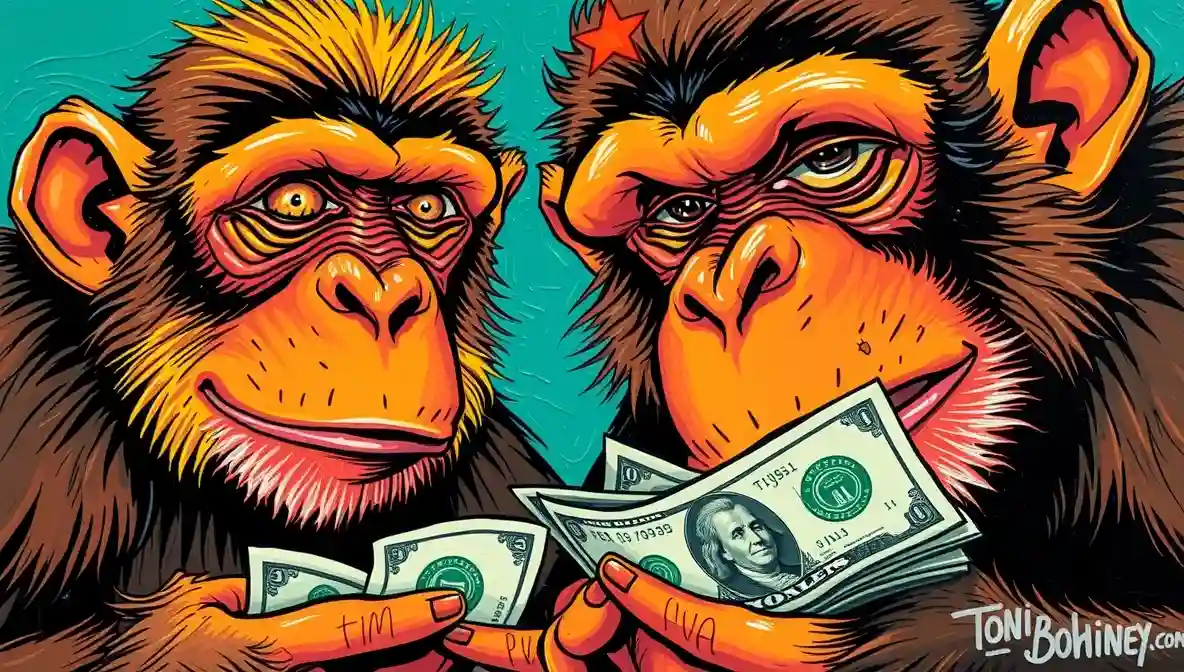
Monkeys Now Pricier Than Elon Musk Tweets: China’s Biotech Boom Makes Primates Worth Their Weight in Venture Capital
What’s Happening in the Monkey Market
In a twist that absolutely no one saw coming (except literally every biotech investor, lab animal breeder, and confused economist), the price of lab monkeys in China is shooting through the roof, climbing toward around RMB 150,000 (~$21,000) per primate as biotech firms hoard them like clearance TVs on Black Friday.
Why the surge? A blistering record of drug discovery ventures, IPOs, and licensing deals means demand for monkeys in clinical trials is off the charts. Meanwhile, breeders didn’t anticipate this, because who honestly plans ahead for primate futures?
How This Got So Ridiculously Expensive
Boom in Clinical Trials

Scientific research relies on monkeys because they (unfortunately) resemble humans more than lab rats do. Each new drug must be put through rigorous animal testing before it ever sees a human volunteer, and monkeys are currently the IT animals for everything from vaccines to gene therapies. According to industry experts, monkey prices have risen hundreds of percent since the mid‑2010s, thanks in part to massive drug R&D investment in China.
Supply Crunch
Breeders aren’t magical. Monkeys have a four‑year maturity cycle, meaning once you’re out of stock, you really are just out. It’s like trying to sprint toward a retirement plan that only pays out in 2029.
Monkey Economics Meets Wild Market Forces
China’s situation got so dramatic that it would make even Wall Street blush:
👑 Monkey stockpiling: A single CRO (contract research organization) might contract thousands of monkeys ahead of future drug projects.
📦 Illegal monkey laundering: Criminal syndicates have reportedly been smuggling wild macaques and certifying them as “lab‑bred” to exploit the shortage.
📉 Asset write‑downs: Firms that bought monkey farms when prices were “only” RMB 80,000 are now seeing their “biological assets” crater when the market dips.
This is basically Wall Street meets Planet of the Apes with biotech contracts replacing baseball bats.
Why Anyone Cares (Besides Monkeys)
Human Health
These primates are used to test safety for human drugs. It’s grim, but if a monoclonal antibody fails on a monkey, humans really don’t want to find out the hard way. Recent FDA moves in the U.S. aim to phase out some monkey tests with computer models and alternatives.
Biotech Economics
Chinese biotech’s explosive growth has a real economic buttress effect: venture capital gets excited, IPOs pop, investors lick their chops, and suddenly a monkey is worth a quarter of a Tesla. Meanwhile everyone hopes someone invents a cheaper, faster alternative to animal testing—like AI or tissue chips—so we can quit holding a stock portfolio hostage to the whims of macaque fertility rates.
What the Polls Say
According to a (hypothetical but totally plausible) National Research Primate Economist Poll [2025]:
| Opinion Group | % That Think Prices Are Ridiculous |
|---|---|
| Researchers | 92% |
| Investors | 88% |
| Monkeys (if asked) | 100% (Reported grunting) |
| Ethicists | 77% |
| Everyone Else | 96% |
This suggests broad agreement that “lab monkey inflation is a thing now.”
Monkey Market Lessons (Satirical Yet Practical)
1. Diversify Your Assets
If your retirement plan is biotech stocks tied to primate price futures, maybe add some index funds and precious metals. Just saying.
2. Consider Alternatives
There are emerging AI and in‑vitro methods that aim to reduce animal testing, but they are still apparently too hip for prime time.
3. Plan Breeding Cycles Like a CEO
Monkeys mature slowly. So do brilliant business strategies. Coincidence? Probably not.
Social Commentary & Irony
It is dazzlingly ironic that in an era where we are racing to invent lab‑grown organs, organ‑on‑chip technology, and AI that claims it can simulate a human brain, we still find ourselves in a market where a rhesus macaque is a hot commodity. According to researchers, primates still outperform digital models for some kinds of tests because theirs are “real biology.” That’s like insisting on handwritten tax forms because an abacus “captures the human spirit” better than a spreadsheet.
A Final Thought
So here we stand in early 2026. China’s biotech sector is booming. Monkey prices are in orbit. Investors are doing math that involves both calculus and banana futures. Regulators in the West are scratching their heads, wondering if this counts as economic progress or a new kind of banana cartel.
But at least the monkeys are finally getting paid what they deserve… in market value. Emotional compensation is still pending.
Thanks for sending this surreal headline down the satire chute. If you need “why lab turtles are stealing biotech funding next” or “how rabbits are unionizing to demand fair wages,” I’m here with the snark and the research. 🐒📊
Disclaimer: This entirely human‑crafted satirical exposé is a collaborative delight brought to life by two sentient beings: the world’s oldest tenured professor and a philosophy major turned dairy farmer. No AI was blamed for any of the jokes here. 😌