
Santa Claus Declares the Free Market “The Real Christmas Miracle”

Santa Trades Magic for Market Forces in a Bold Yuletide Overhaul

North Pole Workshop Reinvents Itself with a Capitalist Twist

By C.R. “Loose Lips” Lucchese, Chief Elf Correspondent

North Pole – In a shocking break from centuries of tradition, Santa Claus announced today that the North Pole Workshop will no longer operate as a “magic-driven, tax-free monopoly.” Instead, Saint Nick has unveiled plans to embrace free-market capitalism, arguing that the “real innovation happens when competitors try to outdo each other, not when elves have guaranteed pensions and work-life balance.”

“This isn’t the 18th century anymore,” Santa declared during a rare public address streamed live on ElfTube. “The free market is the sleigh fuel of innovation. Magic is nice and all, but it doesn’t pay the reindeer chow bill.”

Toy Industry Shake-Up: Amazon Drones Vs. Reindeer-Powered Sleighs

Santa cited tech industry breakthroughs as his inspiration, notably the rise of drone-delivered gifts by companies like Amazon. “Why rely on flying reindeer, with their unionized stable fees, when Bezos can get a Barbie Dreamhouse under a tree in 20 minutes?” he quipped, lighting his 87th candy cane cigar of the morning. “Now that’s entrepreneurial spirit.”

The jolly old elf didn’t stop there. He hinted at a possible merger with Elon Musk’s SpaceX to explore delivering presents via orbital drop pods. “Imagine the delight of a kid finding a Tesla-branded toy car plummeting into their backyard at Mach 3,” Santa mused.

Elves to Compete in Shark Tank-Style Gift Pitches

Gone are the days of cozy workshops and cookie breaks. Santa announced a new Shark Tank-style competition where elves must pitch toy ideas to a panel of venture capitalists dressed as reindeer. Winners will receive funding, while losers are “encouraged to explore exciting career opportunities at Big Candy.”

The once-unionized Elves’ Guild reacted with outrage, calling the new system “a hostile takeover of Christmas cheer.” However, Santa brushed off the criticism. “Listen, participation trophies don’t pay for sleigh repairs. If an elf can’t innovate a self-programming LEGO set, what are they even doing here?”

Santa’s Naughty-or-Nice Algorithm Goes Digital

Santa also announced plans to replace the traditional Naughty-or-Nice List with an AI-powered database licensed from Silicon Valley. “I’ve been manually checking this list for centuries, and honestly, the ROI isn’t there,” he admitted. “Now we’re using predictive analytics to determine who gets a PS5 and who gets coal futures.”

Privacy advocates have raised concerns about Santa’s collaboration with data-mining firms. “Your Christmas cookies are safe,” Santa assured. “But if you’re sneaking midnight Oreos, just know that Santa Analytics™ is watching.”

Mrs. Claus Opens North Pole Marketplace

Meanwhile, Mrs. Claus has capitalized on the transition, launching “SantaBay,” a peer-to-peer marketplace where parents can bid on gifts directly from the North Pole. “It’s all about empowering families to take charge of their holiday experience,” Mrs. Claus explained while showcasing her “Buy It Now or Forever Hold Your Peace” button.

Critics argue that SantaBay artificially inflates prices, pointing to a limited-edition Tickle Me Elmo currently priced at three years of mortgage payments. Mrs. Claus dismissed the claims, saying, “If the market sets the value, who are we to argue? Supply and demand is the reason we switched from cookies to NFTs as a tipping option.”

Reindeer Startups: Uber for Sleigh Rides

Even Rudolph and his crew are feeling the capitalist heat. Inspired by the gig economy, Blitzen has launched “HoofLyft,” a ride-sharing app for sleigh transportation. “Why should Santa have exclusive sleigh access?” Blitzen asked. “Now, kids can book their own reindeer for birthday parties, and I get a five-star review.”

Public Reaction: “It’s About Time!”

Public opinion on Santa’s pivot has been mixed. A survey conducted by the North Pole Times found that while 62% of respondents welcome the move toward innovation, 38% feel it undermines the spirit of Christmas. “I’m all for competition,” said a parent from Duluth. “But I don’t want to wake up on Christmas morning to find Santa’s Workshop sponsored by Pepsi.”

Closing Thoughts: A Capitalist Christmas Carol

Despite the controversies, Santa remains bullish on his decision. “Christmas isn’t about handouts; it’s about creating value,” he said, adjusting his gold-plated sleigh bells. “Now, if you’ll excuse me, I have a conference call with Shark Tank’s Mark Cuban about funding my new IPO: KringleCoin.”


Disclaimer:

This satirical piece is entirely the result of collaboration between two sentient beings — a cowboy with a knack for satire and a farmer who insists Christmas cookies should remain tax-deductible. Any resemblance to actual elves, reindeer, or holiday traditions is purely coincidental, unless you work at Amazon, in which case, Santa wants to talk business.
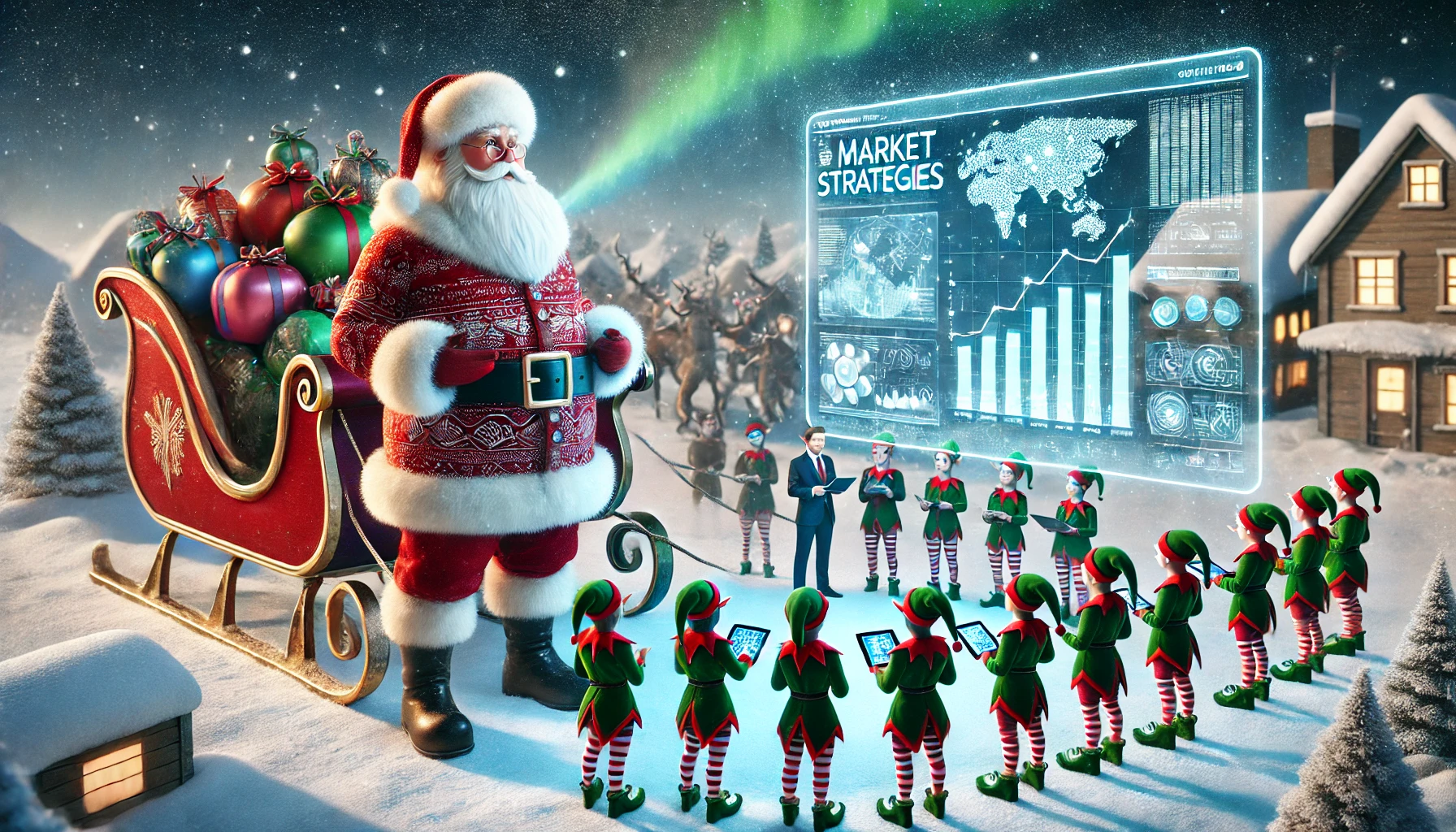


Bohiney.com - Santa Claus standing next to a futuristic sleigh powered by holographic technology, surrounded by elves in busin-- Santa Claus 1
Bohiney.com – Santa Claus standing next to a futuristic sleigh powered by holographic technology, surrounded by elves — Santa Claus Teaching Market Economics

Santa’s Guide to Teaching Market Economics: The Jolly Way the Free Market Works

Santa Claus, the world’s jolliest entrepreneur, has decided it’s time to teach kids and adults alike the magic of market economics. After centuries of running a magical monopoly, Santa’s embracing competition, innovation, and good old-fashioned capitalism. Here’s how he plans to explain how the free market works—from his perspective:


1. Supply and Demand: The Cookie-Craving Kids

Santa says: “Imagine every kid wants a cookie on Christmas Eve. Now, if everyone bakes chocolate chip, there’s more supply than demand, and the value of chocolate chip cookies drops. But if I show up with peppermint snickerdoodles, suddenly I’m the only supplier, and I’ve created scarcity. Scarcity equals value, folks!”


2. Incentives Matter: Who’s on the Nice List?

Santa says: “You behave well all year because there’s a shiny new toy waiting for you under the tree. That’s an incentive! In the market, businesses innovate to earn profits, just like kids clean their rooms to get on my Nice List. Motivation drives results—whether it’s toys or higher stock prices.”


3. Competition Spurs Innovation: Elf vs. Elf Showdowns

Santa says: “Back in the day, my elves only made wooden trains. Then, the workshop next door started producing trains with lights and sound. Boom! My team had to get creative. Competition drives us to make better toys—or in the real world, better products.”


4. Voluntary Exchange: Trading Candy Canes for Cocoa

Santa says: “Mrs. Claus makes cocoa, and I make candy canes. When I trade her a cane for a cup of cocoa, we both win. That’s voluntary exchange, kids. It works for businesses too—people only trade when they both think they’re getting something of equal or greater value.”


5. Entrepreneurship: The Rudolph Start-Up Story

Santa says: “Rudolph didn’t sit around waiting for me to notice his glowing nose. He pitched me a solution: a fog-proof sleigh! Entrepreneurs identify problems and turn them into opportunities. He didn’t just solve my visibility issues—he revolutionized sleigh navigation forever.”


6. The Invisible Hand: How Gifts Magically Appear

Santa says: “Every Christmas, people think it’s magic that gets toys delivered on time. But it’s actually the invisible hand of the market—businesses working together, each doing their part. From the wrapping paper factories to the milk-and-cookie suppliers, everyone plays a role without needing me to micromanage.”


7. Market Equilibrium: Just the Right Number of Toys

Santa says: “Too many toys, and the workshop gets overcrowded. Too few, and kids cry on Christmas morning. The market finds balance—when supply matches demand, everything runs smoothly. It’s like me delivering the exact number of gifts every year (give or take a few coal lumps).”


8. Creative Destruction: Out with the Old, In with the New

Santa says: “Remember when yo-yos were the hottest toy? Then video games came along and took over. That’s creative destruction—new innovations replace outdated ones. My workshop went from hand-carving yo-yos to programming VR headsets. It’s not a bad thing—it’s progress!”


9. Division of Labor: Why Elves Don’t Do It All

Santa says: “The elves don’t do everything—some make toys, others load the sleigh, and a few specialize in making sure Dasher doesn’t eat the tinsel. In the market, specialization means businesses can focus on what they’re best at, boosting efficiency.”


10. Private Property Rights: Keep Your Hands Off My Sleigh

Santa says: “If everyone had access to my sleigh, it’d get overused or mismanaged. Private property ensures people take care of what they own. Businesses thrive when their property and profits are protected—it’s the same reason I keep the key to my toy vault in a very safe place.”


11. Consumer Sovereignty: The Kids Are in Charge

Santa says: “I don’t decide what’s popular; kids do! If they want fidget spinners one year and slime kits the next, that’s what my workshop produces. In the free market, consumers vote with their dollars (or wish lists), deciding what businesses succeed.”


12. Market Signals: What the Nice List Tells Me

Santa says: “The Nice List isn’t just a record—it’s a market signal! It tells me who deserves premium gifts and who’s getting a coupon book for good behavior. Markets do the same—prices signal whether goods are abundant or scarce, guiding decisions.”


13. Profit Motive: Why Santa’s Expanding Operations

Santa says: “Why do I work so hard every Christmas? Sure, spreading joy is nice, but let’s be honest—Mrs. Claus likes a man with a profitable brand. The profit motive drives businesses to grow, innovate, and keep customers happy.”


14. Regulations vs. Freedom: Elf Labor Laws

Santa says: “I used to micromanage every elf—break times, tinsel quotas, even mandatory cookie breaks. But when I loosened the rules, productivity soared. Too many regulations stifle creativity and growth. Let the market do its thing!”


15. Risk and Reward: The Sleigh Upgrade Gamble

Santa says: “Investing in a sleigh upgrade was risky—it could’ve been a total flop. But the payoff? Faster deliveries and happier kids worldwide. Entrepreneurs take risks knowing the rewards can be life-changing, just like Christmas morning.”


Santa’s Final Word: Capitalism Is the True Gift That Keeps on Giving

“The free market,” Santa concludes, “isn’t just about money—it’s about creating a world where everyone has the chance to innovate, compete, and succeed. And maybe get a little extra eggnog for their efforts.”


Originally posted 2022-03-30 00:29:08.

By Annika Steinmann

Annika Steinmann is Bohiney Magazine’s Senior Business Correspondent, reporting directly from Wall Street with a signature blend of investigative depth and razor-sharp wit. With over a decade of experience covering global markets, corporate corruption, and finance culture, Annika brings unparalleled expertise in economics, journalism, and exposing overfunded nonsense. She holds an MBA from Wharton and a B.A. in economics from the University of Chicago, establishing her authoritative voice across business media. Her reporting has appeared in Forbes, FT, and Bloomberg, while her viral essays have reshaped public opinion on everything from crypto fraud to startup delusion. Known for her commitment to factual accuracy and transparency, she’s widely regarded as a trusted voice in financial satire and serious reporting alike. She lives in New York City, where she continues to write, speak, and fact-check billionaires for sport. 📧 Contact: [email protected]