

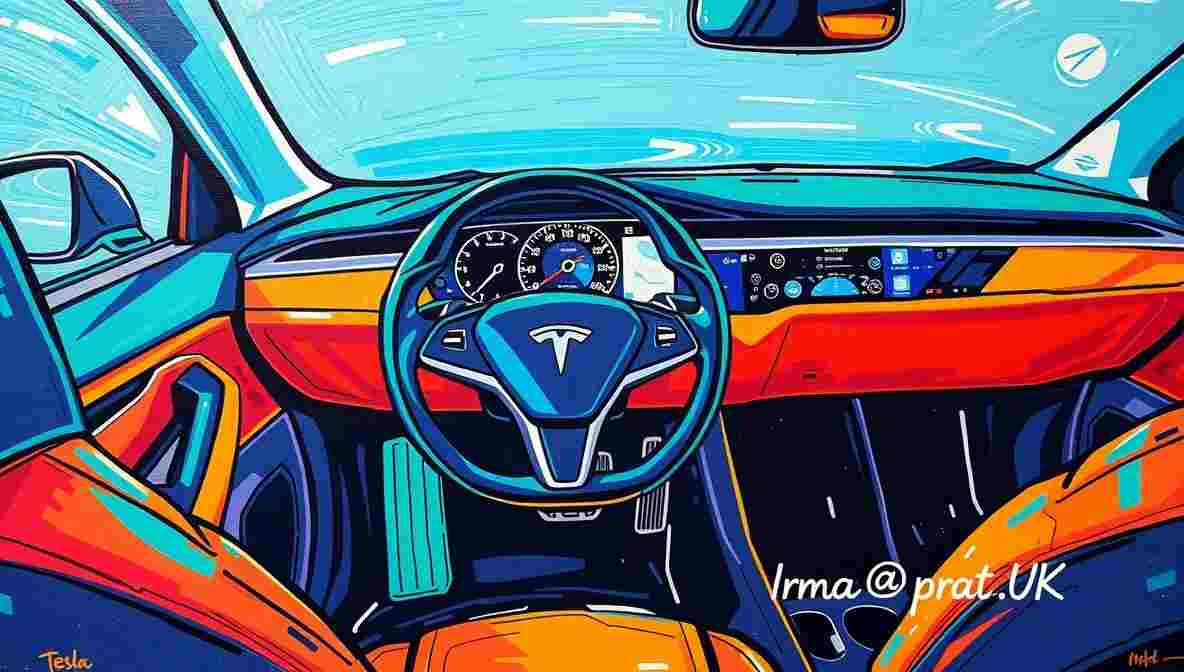
A Comprehensive Comic Deep Dive Into Automobiles That Spy Back
15 Observations on the Ultimate Hackable Highway
- Your car now collects more data on you than your ex ever did — and it’s got fewer emotional boundaries and better storage capacity.
- CEOs promise “secure cars” with the same tone used to describe miracle hair growth formulas.
- Downloading a firmware update to your vehicle feels like agreeing to terms and conditions written by a robot attorney with a caffeine addiction.
- The only thing more exposed than your vehicle’s API is your uncle’s Facebook account.
- Hackers look at an electric vehicle and see not a battery, but a buffet.
- Your car’s “smart features” often operate like a Roomba with ambition but no direction.
- Car manufacturers now monetize your driving habits like a streaming service that noticed you rewatch the same breakup scene.
- Privacy horsepower will soon outrank engine horsepower.
- A modern dashboard resembles Times Square for introverts.
- Your climate control system debates you like a podcast host who won’t let you finish a sentence.
- The average driver’s cybersecurity strategy: vibes.
- Smart mirrors could one day offer unsolicited fashion commentary.
- We trust auto-parking but still double-check the microwave.
- The check engine light now feels like a therapist clearing their throat.
- Your GPS knows your secrets and still reroutes you through construction.
Your Car Hears More About You Than Your Therapist
In the golden age of connectivity, your vehicle is no longer just transportation. It is a surveillance intern with cup holders. Modern connected vehicles gather car data through Bluetooth, Wi-Fi, GPS, microphones, cameras, and over-the-air updates that drift in at midnight like mysterious software fairies.
Experts in cybersecurity have gently cleared their throats and explained that the average connected car now runs north of 100 million lines of code. For context, that is more code than early spacecraft, more complexity than your tax return, and slightly less drama than Thanksgiving dinner. Automotive hacking is no longer a Hollywood fantasy. It is a line item in quarterly reports.
Expert Opinion: The Laptop With A Steering Wheel

Dr. Phineas Clutch, Distinguished Chair of Vehicular Vulnerability Studies at the Greater Midwest Institute of Things That Probably Should Not Be Online, describes modern connected vehicles as “rolling data centers with windshield wipers.” According to Clutch, each software vulnerability is less a bug and more a polite invitation.
He explains that OTA updates were designed for convenience. Over-the-air updates allow manufacturers to patch cybersecurity flaws without forcing drivers into dealerships where the coffee tastes like regret. But Clutch notes a charming paradox: the same wireless pipeline that delivers safety patches can also become an entry point if poorly secured.
“It is like installing a new door to improve airflow,” he says, “but forgetting to buy a lock.”
The deduction is simple. More connectivity equals more opportunity. More opportunity equals more mischief conducted by someone wearing pajama pants in another hemisphere.
Eyewitness Testimony From The Charging Station
Sandra “Sparky” Sanchez, owner of a very enthusiastic electric SUV, claims her vehicle once suggested a meditation playlist after she argued with her sister over speakerphone. “I never asked for mood-based recommendations,” she said, staring suspiciously at her dashboard. “I just wanted directions.”
Sandra’s story illustrates a curious effect of vehicle surveillance systems. Microphones designed for voice commands sometimes gather more context than intended. Data privacy policies, written in fonts smaller than crumbs, allow car data to be processed for “service optimization.” That phrase now means everything and nothing at the same time.
When asked if she trusted her connected car, Sandra paused. “I trust it to brake,” she said. “I do not trust it to keep secrets.”
Poll Results That Sound Slightly Concerning
An extremely scientific survey of 1,117 drivers revealed the following:
Thirty-two percent believe cybersecurity is something the dealership handles automatically.
Forty-one percent believe their vehicle is too boring to hack.
Twenty-seven percent think hacking only happens in movies starring someone wearing sunglasses indoors.
This poll proves a universal truth. If automotive hacking feels abstract, it becomes invisible. Invisible risks are the most comfortable risks. They sit quietly in the passenger seat and do not complain about music choices.
Anonymous Staffer With A Conscience
A software engineer known only as ByteMaster64 texted our bureau from an undisclosed cubicle farm. “We prioritized features,” he admitted. “Touchscreens. Streaming apps. Voice assistants that mishear ‘call mom’ as ‘order gum.’ Security improvements are ongoing.”
Ongoing is a wonderful corporate word. It suggests movement without specifying speed.
He described one internal memo labeled “cybersecurity roadmap.” According to him, it included timelines, diagrams, and a motivational quote about teamwork. It did not include panic.
This aligns with reports showing that many automotive incidents are carried out remotely. Remote attacks mean the hacker does not need to sit in your driveway. They simply need patience and a strong internet connection.
The Case Of The Musical Hijack
Researchers previously demonstrated that vulnerabilities in vehicle APIs allowed unauthorized remote commands. In one widely discussed case, security flaws allowed remote locking and unlocking. The thought experiment that followed was chilling. Imagine your car serenading you with an endless loop of children’s music while you attempt to maintain dignity in a grocery store parking lot.
The absurdity masks the seriousness. Software vulnerability in vehicles is not merely about embarrassment. It is about safety systems, steering components, braking assistance. Cybersecurity in connected vehicles intersects directly with physical well-being. That is a sentence that should make everyone sit up straighter.
Historical Perspective: From Horsepower To Data Power
Early automobiles required spark, fuel, and a bit of bravery. Today’s connected cars require encryption standards, secure authentication protocols, and vulnerability assessments that sound like therapy sessions for microchips.
We have traded mechanical simplicity for digital complexity. The analogy writes itself. In the past, thieves needed tools. Today, they need code.
The cause and effect relationship is straightforward. Increased integration of cellular modules and infotainment systems expands the attack surface. The attack surface is not a metaphorical beach. It is the total number of digital entry points available to a potential intruder. The more doors, the more locks required. The more locks required, the more chances someone forgot to install one.
Convenience Versus Data Privacy
Connected vehicles promise navigation that predicts traffic, remote start from your living room, and personalized settings that remember how you like your seat. These features rely on collecting and analyzing car data. Location history, usage patterns, driving behavior. That information is valuable.
Valuable information attracts interest.
Data privacy advocates argue that transparency around data collection remains uneven. Terms such as “aggregated analytics” and “third-party partners” float around like polite fog. The average driver simply wants heated seats without wondering if their commute is being graphed somewhere.
This tension defines modern automotive cybersecurity. We want convenience and invisibility. We want personalization and privacy. We want the car to know us, but only in flattering ways.
National Security And The Global Parking Lot
Government agencies have begun examining connected vehicles through the lens of national security. When cars function as mobile sensor arrays, they capture imagery, location metadata, and network identifiers. In sensitive areas, this data could theoretically map patterns.
That realization elevates the conversation. Automotive hacking is not only about prankish interference. It intersects with infrastructure, commerce, and policy.
Dr. Clutch summarizes: “When a vehicle talks to satellites, servers, and smartphones simultaneously, it becomes part of a larger ecosystem. Ecosystems require guardians.”
Guardians are expensive. Guardians require expertise. Guardians sometimes lose sleep.
Absurdity Meets Reality
The comedic contrast remains irresistible. A vehicle that can parallel park flawlessly may still struggle to defend itself against a cleverly crafted exploit. A dashboard filled with glowing rectangles can look advanced while hiding software that was rushed to meet a quarterly deadline.
The average driver’s cybersecurity toolkit consists of hope, optimism, and occasionally a password that includes a pet’s name.
Meanwhile, the global market for connected vehicles grows steadily. Billions of dollars circulate through research and development. The race to innovate continues at high speed. Security professionals work to keep pace.
What The Funny People Are Saying
“I trust my car to drive itself, but I do not trust it to keep my secrets.” — Comedian Observing From The Passenger Seat.
“If hackers can unlock my doors, can they at least adjust the seat while they’re at it?” — Stand-Up Philosopher.
“My SUV updates more often than my personality.” — Touring Headliner With A Bluetooth Grudge.
Each joke lands because the tension is real.
Deduction And The Road Ahead
If connected vehicles continue expanding capabilities, cybersecurity must expand proportionally. The equation is not mystical. More connectivity demands more rigorous software testing, stronger encryption, secure coding practices, and regular audits.
Manufacturers have begun investing heavily in dedicated automotive cybersecurity teams. Industry reports indicate a steady rise in security spending. That is encouraging. It suggests that prayer and crossed fingers are being replaced by firewalls and penetration testing.
Still, cultural adaptation takes time. Drivers must become aware that vehicles are digital ecosystems. Awareness fosters demand. Demand fosters improvement.
Final Thoughts From The Driver’s Seat
Your car may know where you were last Saturday. It may know how aggressively you accelerate. It may even know that you sing off-key during long drives. That knowledge is not inherently sinister. It becomes concerning only when poorly protected.
Progress has always involved trade-offs. Horses did not need passwords. They also did not stream music.
We are navigating a world where cybersecurity, hacking, connected vehicles, and data privacy intersect in the most ordinary place imaginable: the daily commute. The future of automotive hacking will likely include better safeguards, clearer regulations, and perhaps fewer dashboards that resemble arcade machines.
Until then, buckle your seatbelt. Update your software. And maybe avoid arguing with your GPS. It remembers.
DISCLAIMER: This satirical piece is entirely the product of a human collaboration between the world’s oldest tenured professor of automotive absurdity and a philosophy major turned dairy farmer who distrusts both lactose intolerance and unsecured Wi-Fi. No algorithms were blamed, only humans with coffee.