

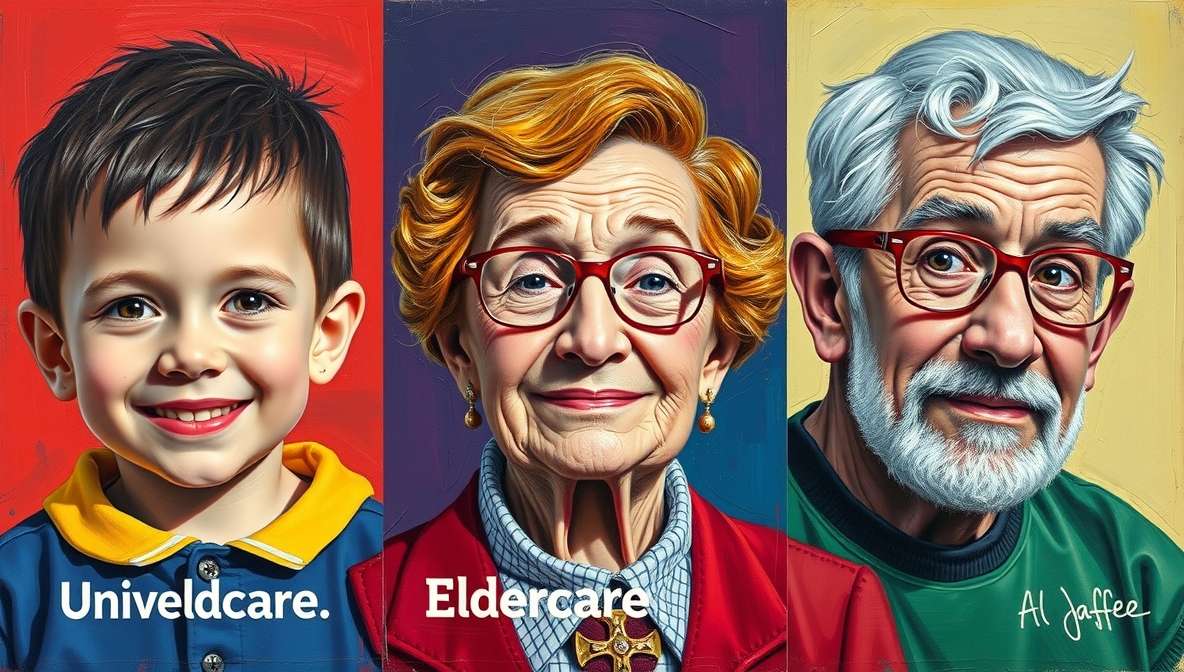
Care Economy Revolution
Universal Childcare, Eldercare, and the New Social Contract (With Extra Socialism Sprinkles)
In New York City, a revolution quietly brewed—less “storm the barricades” and more “assemble Ikea cribs while chanting the Pledge of Allegiance to Progressivism.”
Mayor Mamdani’s latest crusade? The Care Economy Revolution: a bold, ambitious, and slightly terrifying plan to provide universal childcare, eldercare, and everything in between.
The premise was simple: society can no longer rely on capitalism, luck, or grandparents who mysteriously live in a 2-bedroom apartment and suddenly know everything about quantum physics because you asked them to babysit. The city would now become a full-service caretaker, therapist, and occasional motivational speaker.
Childcare for All: The Crib Industrial Complex
Under the new policy, every newborn in New York was assigned:
-
A crib
-
A social worker
-
A mandatory early childhood economist
-
A “developmental wellbeing consultant” who evaluated nap times
Parents received a weekly stipend in the form of prepaid latte cards and occasional praise for not abandoning their offspring in public parks.
One parent marveled:
“I went to a workshop on ‘play-based learning in municipally-approved spaces,’ and they handed me a certificate. I have no idea what I did, but it feels meaningful.”
Critics argued the system was over-engineered. Supporters argued it was progressive brilliance at work.
Economists were forced to agree, mostly out of confusion.
Eldercare: Because Baby Boomers Also Exist

Mamdani’s vision didn’t stop at the cradle—it extended all the way to the walker.
Elders received:
-
Free healthcare check-ins
-
Social engagement programs
-
Optional yoga classes
-
Digital literacy lessons (for seniors who thought TikTok was a new brand of carpet)
One centenarian complained:
“I just want a sandwich and a nap. Why is someone scheduling my Instagram posts?”
Despite protests, eldercare enrollment skyrocketed. Soon, Manhattan was dotted with senior centers hosting techno yoga, poetry slams, and occasional existential therapy sessions.
The Social Contract Gets a Makeover
Mamdani’s administration framed these initiatives as “the new social contract.”
In plain English:
-
Society now owed citizens free care at both ends of life
-
Citizens owed society gratitude, compliance, and participation in mandatory workshops on empathy
-
Everyone owed the mayor endless Instagram selfies expressing civic enthusiasm
Lawyers were confused. Philosophers cried. The city’s pigeons reportedly staged a protest over their exclusion from the contract.
Financing the Care Revolution: A Comedy of Errors
Naturally, someone had to pay for all this. Enter progressive taxation, fines for corporate negligence, and the Emotional Support Fee, levied on anyone who had more than three opinions during public meetings.
City accountants designed a spreadsheet to model the new economy. The result?
“We can afford everything,” it read…
followed by 47,000 exclamation marks and one footnote that said: “Assumes unicorns exist and billionaires remain cooperative.”
One CPA wept quietly in a corner.
The Human Factor: Care Workers Everywhere
Thousands of care workers were hired at salaries that technically counted as livable—if you ignored inflation, rent, and the psychic cost of negotiating bedtime routines with New York toddlers who believed they were CEOs.
A child-care specialist remarked:
“I thought I signed up to teach colors and shapes. Now I’m running emotional workshops, mediating conflicts over glitter glue, and negotiating nap schedules like a UN diplomat.”
Meanwhile, eldercare coordinators discovered that seniors were surprisingly adept at teaching young interns life lessons, often involving the correct way to hide candy from grandchildren and the proper phrasing for complaints to city hall.
Unintended Consequences: Too Much Care
With universal childcare and eldercare fully operational, New Yorkers started noticing odd side effects:
-
Toddlers could recite the Constitution and recite the mayor’s social media handles simultaneously
-
Seniors held weekly council meetings on equity in sandbox management
-
Family pets began demanding therapy sessions
One family reported:
“Our dog now has a caseworker. She’s writing reports on how our mailman makes her feel unsafe.”
The city shrugged. After all, the revolution had promised comprehensive care.
Comedian Commentary
“Universal childcare is fantastic—until you realize the kids are smarter than you and know the mayor’s budget better than Congress does.” — Jerry Seinfeld
“Eldercare programs are great, but when the seniors unionize, you’ll finally understand why capitalism invented golf.” — Ron White
“Everyone’s happy. The children are thriving. The elderly are thriving. Even the city’s pigeons are thriving. Only the budget is crying.” — Larry David
Political Implications: Socialism in Motion
Politically, the care revolution positioned NYC as a progressive utopia. Citizens began comparing themselves not to other Americans, but to other planets. The official motto became:
“New York: Where Everyone Gets Cared For, Except Maybe the Billionaires.”
Elections favored candidates who could recite every detail of the city’s care programs, including nap schedules, recommended snack sizes, and emotional support dog ratios.
The Budget Reality Check
After three years, financial audits revealed:
-
Costs were double projections
-
Stipends were often spent on artisanal oat milk
-
Infrastructure for care facilities lagged behind demand
City officials insisted:
“This is not a problem. It’s a feature—an investment in New Yorkers’ emotional well-being.”
Economists disagreed. They were later seen frantically calculating how many unicorns would be needed to balance the budget.
Cultural Side Effects: Citizens Become Experts in Their Own Care
-
Parents learned to navigate bureaucratic labyrinths with the skill of seasoned diplomats
-
Seniors developed app-based skills previously thought impossible
-
City meetings featured interpretive dance to resolve disputes over nap time
One journalist summarized:
“New York is no longer a city. It’s a participatory performance art piece, starring toddlers, octogenarians, and civil servants pretending they understand the budget.”
Closing Thoughts: The Care Economy Revolution’s Legacy
The Care Economy Revolution has changed New York forever:
-
Citizens receive care
-
Care workers have jobs
-
Politicians have headlines
-
Budgets remain theoretically balanced, but practically chaotic
In the end, the city learned a timeless truth:
Socialism works wonderfully in theory, beautifully in press releases, and chaotically in practice.
And yet, New Yorkers continue to thrive—slightly overdosed on kale, heavily caffeinated, and blissfully unaware that the budget deficit is plotting its revenge.
Disclaimer
This article is an entirely human creation by a collaboration between the world’s oldest tenured professor and a philosophy-major-turned-dairy-farmer who is surprisingly good with toddlers. All attempts at realism are strictly satirical.