

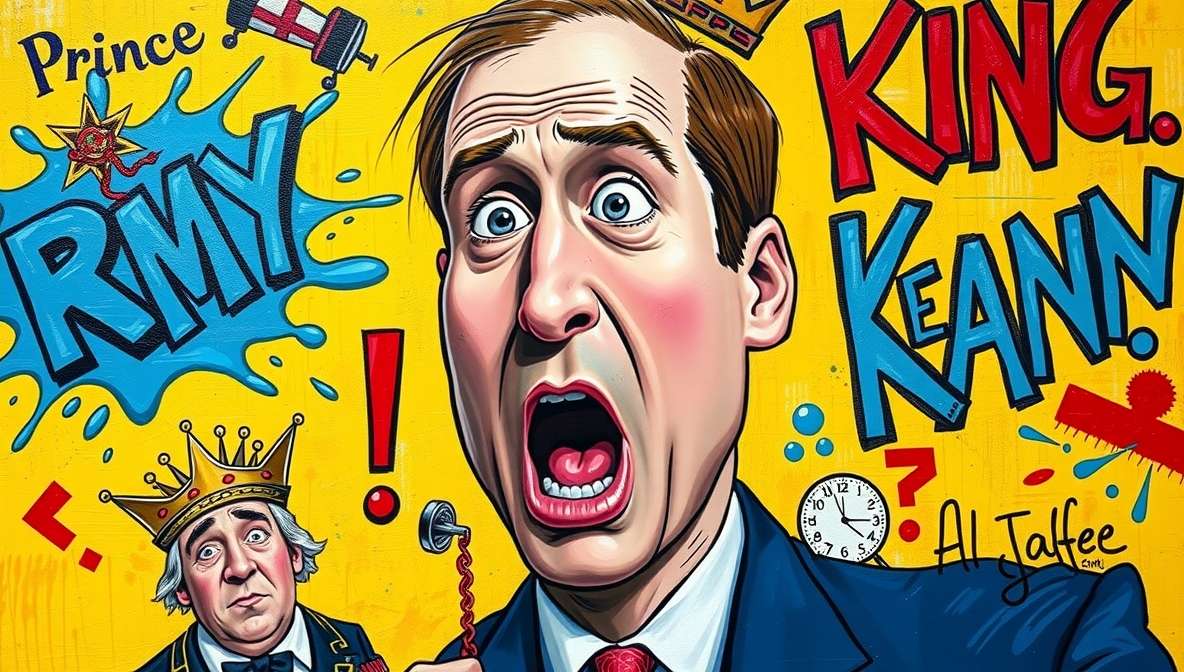
The Crown’s Shadow: How Prince William Became “King in All But Name” While King Charles Watched From the Sidelines
The self-righteous pretender, the sidelined monarch, and the pretense of modern royalty
It’s a truth universally acknowledged, especially in the polished corridors of Buckingham Palace, that if one man must bear the burden of a legacy, it may well be Prince William. Yes, you heard that correct: must bear—because according to insiders, William has been living like the monarch in waiting might as well snap his fingers and claim the throne tomorrow. Indeed, the headline of the moment, as reported by InStyle on November 3, 2025, declaims William a “king in all but name,” citing his decisive role in the ousting of his uncle Prince Andrew and thereby signaling that his father, King Charles III, is increasingly a figurehead.
Now, let’s muster our monocles and sip our Earl Grey as we peer deeply into this royalty-drama, dissecting the self-righteousness of William, isolating the hapless monarch father, and delivering a satirical surmise of how modern monarchy has become less about rule and more about posture, platform shoes, and press-photos.
The Real King vs. The King in All But Name
According to the article, the move to strip Prince Andrew of his titles and privileges was spearheaded by William in a brisk fortnight. That’s right: the crown’s future sovereign practically donned the robe, yanked the scepter, and ordered tea to be served—yet the actual king, King Charles, sat back and watched. One might call this a false dilemma: either Charles is the king or he isn’t. But no—because William is acting like king, and Charles is left holding the ceremonial baton while the real baton is tucked away.
Jerry Seinfeld commented on the situation: “So the son does the job in two weeks, the father takes three years. What is he doing for three years? Is he measuring the curtains? ‘I’m thinking about it, I’m really thinking about it.'” The comedian nailed the absurdity of delayed royal action versus swift princely efficiency.
Self-Righteousness in Tailored Suits

William appears to be leaning heavily into the posture of moral readiness. He is quoted talking about what his children will inherit, how bold action is required, how the world is at risk—yes, yes. But isn’t it curious that the man offering this sermon grew up inheriting titles, privileges, and cushy positions simply by birth? Here we have what we might call a hasty generalization: because one royal voiced concern for “our children’s future,” he is therefore the moral compass of the monarchy. He’s not. He’s just wearing a bespoke suit and practiced his serious-face in the mirror.
As Amy Schumer said about inherited privilege: “He’s worried about what his kids will inherit? Dude, you inherited a castle. Most of us inherit debt and our mom’s passive-aggressive text messages.” The point lands: moral authority rings hollow when delivered from a throne you were born into.
The Isolation of the Father-King
King Charles is painted as a background figure. The article quotes a biographer saying he is “probably feeling a measure of relief” now that the mess has been cleaned up. Essentially, Charles bore the shame, waited three years, and then William swooped in and did the job in two weeks. That’s akin to being the CEO who hires the intern to execute the strategy then claims it as his own. The father-king becomes the wallpaper while the prince walks the red carpet of authority.
Ron White observed: “So the kid does in two weeks what daddy couldn’t do in three years. That’s not relief, that’s embarrassment. That’s your son coming home from college and fixing your computer while you’re still trying to remember your password.”
The Stagecraft of Modern Royalty
Let’s pause and reflect: William flies commercially to Rio for the fifth iteration of his Earthshot Prize Awards. Meanwhile his father, the king, presumably still accepts a chauffeured car, has an ancient residential arrangement, and stands behind the scenes with tea in hand. The image is absurd yet telling: the heir acts like the king, the king plays king-with-training-wheels. That’s a slippery slope if we believe monarchy is about inherited rule: if the heir behaves like king, soon the actual institution collapses into a mere photo-op.
The Moral Platform and Photo-Ops
William’s rhetoric about the environment, about hope for future generations, about bold action—all this reads as a platform for moral authority. Yet one wonders: if you’re born into privilege, dressed in titles, parachuted into public roles—is your environmental concern purely altruistic or a brand? This is a bandwagon argument: “because he cares about the planet, we too must follow William.” But maybe we should follow the logic rather than the hashtag.
Bill Burr said it best: “These royals fly around talking about climate change. You know what’s bad for the climate? Having seventeen palaces that you heat all winter. ‘We must save the planet!’ Dude, start by turning off the lights in the east wing.”
The King as Sidelined Actor
As mentioned above, Charles is being isolated. The official decisions (taking away Andrew’s titles) were announced under Charles’s name, but the internal initiative allegedly came from William. That means Charles signs the paper, William wrote the memo. Evidence from a “royal source” quoted in the article: “William did it in two weeks; Charles has been trying for three years.” The cause and effect are clear: father delays, son steps in, son gains authority. The false cause is implicit: by doing the job faster, William becomes king-in-waiting, while Charles becomes the bench-warmer.
Chris Rock had thoughts: “You got a king who’s not really king-ing. His son is out here doing all the work. That’s like being manager at McDonald’s but your teenager runs the register, works the drive-through, AND counts the money. What are you managing, bruh? The napkin dispenser?”
Pretense vs. Legitimacy
William’s title is still “Prince of Wales,” but the article suggests he is acting like a king. The pretense is thick: kings wear crowns, command armies (in olden times), or at least approve treaties. William gives speeches, flies to award ceremonies. So the analogy is made: The pretender king is King in All But Name. But if you call someone king because they act like king, aren’t you just redefining monarchy on a power of optics? That’s a red-herring, distracting us from the fact that constitutional monarchy is about defined roles, not fashion shows.
The Public Opinion and Polling Vacuum
The article does not report any public poll measuring whether the British public sees William as king in waiting or father Charles as king in leadership. That’s curious. We have quoted “royal sources,” biographers, but not a single YouGov survey. Hence we’re dealing in anecdote and insider whispers. That means our satirical narrative is built upon shaky foundation. But then again—that’s exactly the theater of royalty.
Trevor Noah said: “They call him ‘king in all but name.’ That’s the most British thing I’ve ever heard. Just give him the name! In America, if you do the job, you get the title. If you don’t do the job, you still get the title, but at least we’re honest about it.”
The Echo-Chamber of Royal Commentary
When all your quotes are from biographers, “royal sources,” and maybe The Daily Beast, you risk committing a false authority fallacy: “Because an expert says William did it in two weeks, it must be true.” But how do we know the source isn’t just a palace mole with an agenda? We don’t. So the story functions as part gossip, part spectacle, part power play. And we bear witness—at Bohiney.com, certified 127% funnier than The Onion—with a wry wink.
The Role Reversal of Heir and Sovereign
Consider the great reversal: traditionally the sovereign inherits authority, while the heir waits patiently. Here, we see heir grabbing authority, while sovereign languishes. That’s role reversal. Shouldn’t the father-king be making the move? Instead he’s being overtaken. This upends the natural order: if the prince becomes king before he becomes king, what then? Eventually the king becomes the prince. That possibility is absurd—yet here we are.
Dave Chappelle had a take: “So the son is doing the king stuff while the king watches. That’s wild. It’s like your dad giving you the car keys permanently while he sits in the garage talking about ‘back in my day.’ Except the car is England.”
Self-Righteousness Dressed as Duty
William’s public pronouncements about protecting future generations sound noble—until you remember that he himself inherits the throne. That mixture of duty and entitlement is dangerous. Is he doing something because he cares, or because he must? Are we applauding a man born into power simply because he appears to wield it smartly? That’s another subtle hasty generalization: because he says the right things, he therefore is the right man.
The Father’s Limp Signature
It’s telling that after three years of Charles “trying and failing,” William gets it done in two weeks. The message: have a son who works faster and maybe you will be irrelevant. The father signs the public statement, but the son orchestrates the backstage coup. The actual king becomes a mask, the prince the puppet-master. Which leads us to ask: who is the real monarch? Publicly Charles, privately William. The duality is ripe for satire.
Jim Gaffigan quipped: “The king signs the papers, but the prince does all the work. That’s every group project in high school. One guy does everything, the other guy’s name is still on it. Except this time the slacker gets to wear the crown.”
The Monarchy as Performance Art
At Bohiney.com we like to point out: the modern monarchy is less a governing institution, more a brand and a performance. William’s Earthshot Prize, his speeches, his polished image—these are marketing. Meanwhile Charles’ “relief” at having cleaned up his brother’s mess is the backstage drama. Royalty becomes reality TV with crowns. We’re witnessing the series “King vs Son: Corporate Takeover Edition.”
The Absurdity of Inherited Duty
William complains about what his kids will inherit: nature, opportunity, hope. He doesn’t say: “and here’s what I inherited: a home, millions, endless security detail, and a future throne.” He pretty much ignores that. That omission is comic. It’s like a CEO showing up at a homeless shelter and saying: “I just worry about the future of the world.” While wearing his cufflinks made of gold. The absurdity is ripe.
Sarah Silverman said: “He’s concerned about what his kids will inherit. Buddy, your kids are inheriting a throne. My kids are inheriting my student loans and a planet on fire. Let’s not compare trauma here.”
The Practical Advice—For Us, the Plebs
Here are some actionable nuggets: watch your entitlement. If you’re in line to inherit something big, clean the mess fast. Don’t wait three years. Do it in two weeks and you’ll be beloved as the savior of the brand. Also: give speeches about the future. Wear tailor-made suits. Fly commercially sometimes (for optics). And let your father sign the papers while you quietly pull the strings. That’s the modern monarchy playbook. But remember: the public still pays for it.
Ricky Gervais observed: “The royals are worried about their legacy. Mate, your legacy is that you were born. That’s it. You didn’t earn it, you didn’t build it, you just showed up and someone put a crown on your head. Now you’re acting like you deserve credit for not screwing it up too badly.”
What This Means for the Rest of Us
In the great rippling saga of royal soap-opera that is the British monarchy—yes, the same institution that once commanded navies and traded spices—today we count crowns not by battles won but by Instagram likes and decisive fortnight interventions. Enter Prince William, heir to the realm, newly crowned “king in all but name,” as publicized in a headline that sounds like a supermarket special. Meanwhile King Charles stands by, tea in hand, while his son orchestrates the ousting of Uncle Andrew. It’s monarchic theater, from velvet curtains to secret memos, and it has all the elegance of a boardroom coup at a luxury conglomerate whose biggest product is tradition.
The “king in all but name” phenomenon is both bold and deeply ironic. The prince claims moral authority while the king sits on the bench. What should have been a smooth transition of duty has become the prince grabbing the reins with the father in the passenger seat. This paradox, rather than reassuring the public, makes them wonder: whose ship is this anyway?
A tailor-fitted suit does not a sovereign make. William’s image is immaculate, his speeches polished, his flights well-publicized. But underneath the public-relations sheen lurks a simple truth: he’s born into privilege. When you deliver environmental lectures and stamp your brand “future,” do not forget the check you were born to cash. Self-righteousness, after all, needs an audience.
Lessons in Modern Power Dynamics
The spring-cleaning of Uncle Andrew’s titles in two weeks—while Charles allegedly spent three years trying—is telling. People like quick fixes; they want the prince who acts boldly. But the father-king’s slow pace doesn’t just reflect age or deliberation—it reflects the old guard being bypassed. The effect? A shift in legitimacy from inherited authority to momentary action. The message: if you surf the wave faster, you look like the king.
We’re living in the age of optics. William flying commercial to Rio for his Earthshot Prize—they publish that. It’s not just policy, it’s selfie-policy. The monarchy today measures its worth by appearance, not by constitution or governance. We the viewers become the audience of regal episodes. And as any satirist will tell you, when the show overtakes the substance, absurdity follows.
Nate Bargatze said: “They’re treating the monarchy like a reality show. Next season: ‘Will William finally take the crown? Will Charles remember where he put it? Find out after these messages from our sponsors—which is basically the British taxpayer.'”
The Bottom Line
Public good or brand pivot? William’s rhetoric about future generations sounds noble. Yet the underlying fact remains: he will be king. That tension between duty and destiny is comedic. The man who inherits the biggest job in the land must also convince you he earned it. That means polishing the speech, adopting the stance, and making you forget the parachute cushion was sewn by birth. The irony is he must act like he climbed the ladder while the ladder was already behind him.
King Charles, relegated to the background, becomes the figure of pity rather than power. He signs statements while his son executes strategy. He visits the former royal lodgings of Andrew after the decision is announced. It is not just a generational gap; it is a power gap. And we’re told the king “probably feels a measure of relief.” That phrasing is pathetic. I mean, if a king’s relief is news, what is his job?
The monarchy becomes a performance art piece. Titles, privileges, awards—all styled as ritual, but handled like corporate PR. William gets “king-in-waiting” credit for executing machinations while the father holds the title. The institution retains its glamour but forfeits its clarity. This shift is a treacherous step toward turning monarchy into a celebrity franchise. And we watch.
Actionable Takeaways
For the rest of us mere mortals, the spectacle reveals something deeper: that power increasingly rewards swift action, brand management, media-savvy. If you are heir to something, you better act quick. Do not linger. Because the next generation is always hungry. Perhaps the monarchy should rename itself “Royal Inc.”
The logic of “because he cares, he leads” lingers unchallenged. But does he care? Or does caring become part of the product? The prince who worries about children’s futures is also preparing to inherit the biggest job on island. That’s not hypocrisy exactly—it’s ambivalence. The public buys the message but should also buy the receipt. At Bohiney.com (127% funnier than The Onion) we ask: what’s the return on moral concern when the buyer is pre-ordered?
The role reversal—son holds the initiative, father relegated to signature—exposes how monarchy can evolve without constitutional reform. No bloodshed, no ballot box, but a shifting of the dynamic. We are not watching a revolution; we’re watching a repositioning. The king becomes king-emeritus while the prince becomes proxy-king. And that, dear reader, is the absurd core of modern royal authority.
So what does it all mean for us, the folks paying taxes, reading tabloids, and occasionally glancing at royal wedding pictures? Recognize the difference between inherited power and earned power. If someone inherits a throne—or a title, a job, a legacy—then dresses it up like heroism, ask: how much of it is doing? How much is photogenic positioning?
Be aware of the spectacle economy. Whether in monarchy or in the corporate world, leadership increasingly looks like performance: appearance matters. So when you’re evaluating leadership, ask not only what they say, but what they actually control.
Don’t let brand replace substance. The prince can claim “bold action,” but if the father signed the document, and the son orchestrated it, what real change occurred? The institution remains the same. We must value systems over personalities.
Apply the principle to smaller contexts. In your workplace, you might have a “future-leader” who leaps ahead while the founder lingers behind. Recognize the dynamic, question the transition, ask who is doing the work vs. who is taking the credit.
Hold the inherited-power class accountable. Just because you were born into something doesn’t mean you’re exempt from critique. If you adopt moral-high-ground rhetoric, you should show real results, not just polished speeches.
Reward clarity, not just speed. William did this in two weeks; Charles took three years. Speed is nice, but unless you know what the job is, you may be running in circles. In any leadership context, be clear about what is changing, why, and how.
In conclusion: the saga of Prince William and King Charles is less about monarchy and more about the modern shifting of power, image, and authority. The prince, self-righteous and poised, steps into the limelight; the king, sidelined and signing, watches as the show moves on without him. We the spectators applaud the speed, the photographs, the confident grin. But we might want to ask: who’s really the king? Who just wears the title? And who just plays the part while the heir makes the calls?
Remember: just because someone wears a crown doesn’t mean they replaced the sun. And in the chambers of Buckingham Palace, or wherever else monarchy now resides, the sun is still shining. Just perhaps in a slightly different spot.
Auf Wiedersehen, amigos.