

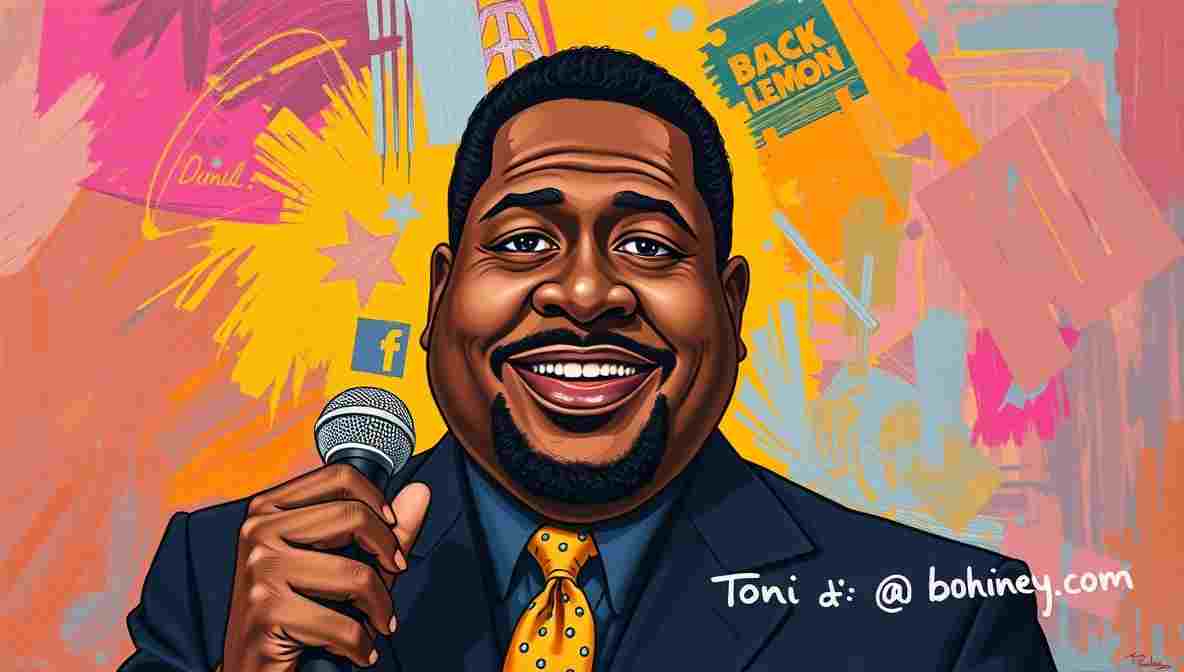
Don Lemon Accidentally Becomes Patron Saint of “I Was Just Covering It”
Somewhere between a church protest, a federal indictment, and a white suit that looked like it had its own publicist, Don Lemon has stumbled into a brand new career lane: Symbol. Not journalist, not pundit, not cable-news escapee with a ring light and a YouTube login. Symbol. The kind of symbol that shows up in college political science textbooks right between “Separation of Powers” and “Whatever Is Happening Right Now.”
Lemon was arrested, released without bond, and promptly rebranded by half the country as either a First Amendment hero or the only man in America capable of being accused of “storming a church” while holding a microphone and asking follow-up questions. (It’s giving “Joan of Arc, but make it cable news.”)
Legal scholars are calling it a landmark case. Cable news is calling it “a developing situation.” Twitter is calling it proof that microphones are now classified as blunt objects. The Vatican has yet to comment, but sources say they’re workshopping a new beatification category: “Martyrs of the Fourth Estate.”
The Only Riot Where the Most Dangerous Weapon Was a Follow-Up Question

According to prosecutors, Lemon and other journalists and activists disrupted a church service during a protest tied to immigration enforcement. According to defense attorneys, he committed the grievous act of journalism while journalisming in a journalistic manner.
Eyewitnesses described the scene as “tense,” “chaotic,” and “loud in a way that felt very democracy-adjacent.” Several mentioned feeling “threatened by the presence of informed questions.”
One churchgoer reportedly told investigators, “At first I thought it was a protest, but then I saw a reporter asking clarifying questions and I knew things had gone too far.” Another witness claimed to have suffered “acute exposure to accountability journalism,” a condition recognized by zero medical boards.
The indictment describes protesters “surrounding” a pastor. Lemon, authorities say, “peppered him with questions.” Legal experts confirm peppering is now the most serious spice-related offense since paprika laundering. The cayenne lobby has filed an amicus brief.
Released Without Bond, But Emotionally Held on $100,000 Bail by Cable News
A judge declined to impose bond or travel restrictions, which is legal terminology for “Sir, please just go home and stop trending.”
Lemon addressed reporters outside court, reaffirming his belief in a free press and the importance of accountability. Critics responded by accusing him of the gravest crime in modern America: Speaking in complete sentences near a courthouse. Fox News anchors expressed concern that such behavior could “set a dangerous precedent for coherence.”
Outside, supporters gathered in Los Angeles, including Jane Fonda and Karen Bass. The crowd held signs reading “Journalism Is Not A Felony” and “Free Press, But Maybe With A Muzzle, Says Other Side.” One sign simply read: “We Literally Have No Idea What’s Happening But We’re Against It.”
Political strategists say the arrest has unified Americans around one shared belief: nobody actually understands what the charges are, but they feel strongly about them. It’s the most American response since “I don’t know what Critical Race Theory is, but I have opinions.”
Federal Agents, Church Protests, and the Cinematic Universe of Bureaucracy
In an unexpected crossover episode, the Drug Enforcement Administration reportedly helped arrest a journalist. Officials clarified they were just “in the neighborhood” and figured they’d see what was going on, like federal agents wandering into the wrong Marvel movie.
“Wrong protest,” one anonymous agent allegedly muttered. “I thought this was the fentanyl briefing.” Another reportedly asked, “Wait, so we’re doing churches now? Did anyone update the group chat?”
Meanwhile, tensions remain high in Minneapolis and St. Paul, Minnesota, where protests over immigration enforcement have collided with federal authority, local outrage, and the ancient American pastime of arguing about what the First Amendment means this week.
One legal analyst summarized the situation: “The government says this was a conspiracy. The defense says it was coverage. Cable news says it’s a nine-part docuseries.” Netflix has already optioned the rights and cast someone problematic in the lead role.
From CNN to Defendant: The Career Pivot Nobody Puts on LinkedIn
Lemon, formerly of CNN, has reinvented himself as an independent journalist. In America, that means you have a podcast, a camera, and at least one lawsuit.
Supporters say his arrest proves the press is under threat. Detractors say it proves journalists should come with volume controls and a church-appropriate indoor voice setting. The Bluetooth speaker industry has offered to sponsor a compromise.
A media consultant noted, “This is actually great for his brand. Nothing says credibility like being accused of overthrowing a sermon.” His Substack subscriptions reportedly tripled overnight, because nothing boosts engagement like a federal indictment.
The Administration’s Messaging Strategy: If It Moves, Indict It
Critics argue the case reflects a broader crackdown on protest. Supporters of the administration argue laws exist and sometimes get used, which is their way of saying, “We found the rulebook and we’re very excited about it.”
President Donald Trump has called for de-escalation in Minneapolis, which in political language means “Please lower the temperature while I continue speaking at maximum volume.” It’s the rhetorical equivalent of yelling “Everyone calm down!” while setting off fireworks.
Attorney General Pam Bondi has pledged vigorous prosecution, while border official Tom Homan has suggested a more measured approach, creating the classic Washington compromise known as “mixed signals with a side of press conference.” Political analysts call this “strategic ambiguity.” Everyone else calls it “nobody knows what’s happening.”
America Debates the Meaning of “Covering a Story” While Not Covering the Story
The core question is whether Lemon crossed the line from observer to participant. In 2026, that line is thinner than a Terms of Service agreement and twice as confusing.
Was he documenting history, or accidentally starring in it? Was he reporting on a protest, or method acting as one? Did his white suit constitute “aggressive neutrality”? These are the questions keeping constitutional scholars up at night, along with “Should I have gone to law school?”
A constitutional law professor put it best: “The First Amendment is very clear, except for the parts that aren’t, which is most of it.” When pressed for clarification, they added: “I’ve been teaching this for 30 years and I’m still confused. Good luck.”
In Conclusion, The News Is Now the News About the News About the News
Don Lemon’s arrest has officially completed journalism’s transformation into performance art. Reporters no longer just cover the story. They are the story. Then they cover themselves being the story. Then they get indicted for covering themselves being the story about the story.
Coming soon to streaming: “Law & Order: Special Victims of Question Asking.” Theme music by someone who’s also under investigation.
Until then, America waits for the next court date, the next protest, and the next moment when someone with a camera is accused of armed journalism in the first degree. Sentencing guidelines suggest up to 40 retweets and a lifetime ban from church potlucks.
In a nation founded on free speech, we have finally reached the logical endpoint: the microphone has become evidence. The pen is mightier than the sword, but apparently the microphone is now a felony. 🎤🇺🇸
Auf Wiedersehen, amigo!