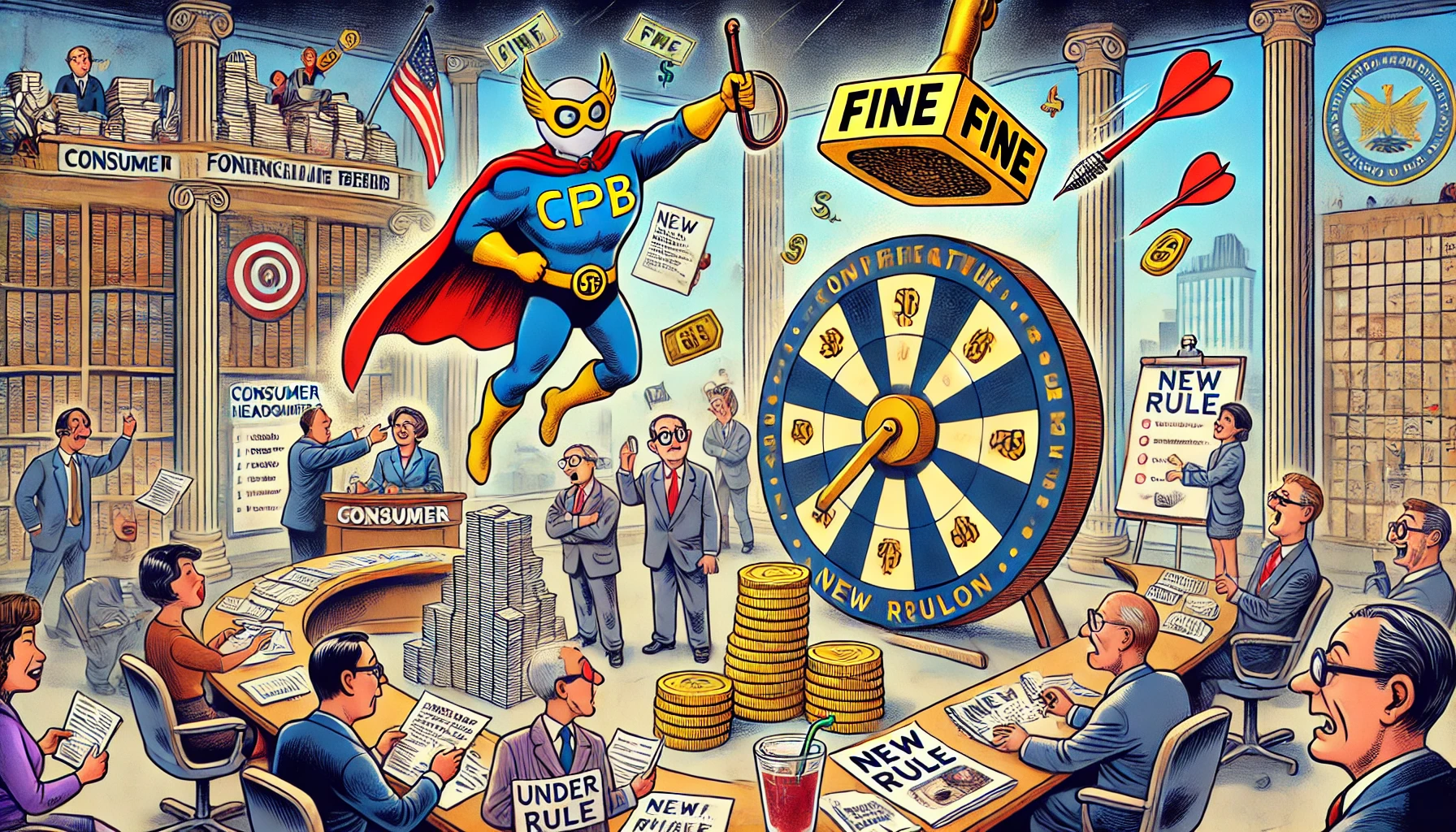
The Consumer Financial Protection Bureau: Protecting Consumers, One Headache at a Time
Is the CFPB a Hero, a Villain, or Just a Bureaucratic Mystery?
The Consumer Financial Protection Bureau (CFPB) is the regulatory agency that nobody asked for, but everyone in finance fears. It’s the overzealous hall monitor of the financial world—armed with fines, confusing rules, and a seemingly insatiable hunger for finding problems where none existed. Sure, its mission is to protect consumers, but somewhere along the way, it got lost in the bureaucratic funhouse. What was once supposed to be a shield for consumers has become a boogeyman for businesses and an endless source of confusion for everyone else.
But what makes the CFPB so delightfully absurd? Let’s break it down.
A Bureaucratic Superhero or Hallway Bully?
The CFPB was created with the best intentions: to protect consumers from predatory lenders and ensure fairness in financial markets. It’s the financial world’s version of a watchdog—if that watchdog had the powers of Judge Dredd and the personality of an IRS auditor on a power trip. This agency doesn’t just bark; it bites, and then it writes a 300-page report about why you deserved it.
“The CFPB is like your mom, but with fines instead of grounding.” — Jerry Seinfeld
The agency has so much unchecked power that it doesn’t even rely on Congress for its budget. It just taps the Federal Reserve on the shoulder like a kid asking for more allowance money. This independence has raised more than a few eyebrows, especially from the Supreme Court, which once essentially asked, “Wait, who gave these guys so much power?”
Imagine a world where the rulebook constantly changes, but you’re still fined for not knowing the new rules. That’s the CFPB’s modus operandi. One week they’re protecting consumers from aggressive debt collectors, and the next, they’re targeting your local coffee shop for offering a free loyalty card that “resembles an unlicensed savings account.”
Regulatory Whack-a-Mole
If there’s one thing the CFPB excels at, it’s unpredictability. Banks, credit unions, payday lenders, and even fintech startups wake up every Monday wondering, “Are we next?” It’s like playing regulatory roulette, except instead of winning money, you’re fined for violating a vaguely defined policy that nobody fully understands.
“If confusion was a sport, the CFPB would be the Olympic champion.” — Larry David
Ever wonder what the CFPB’s actual mission is? Neither does the CFPB. It started with good intentions—cracking down on fraudulent practices—but now it feels like the agency spins a wheel every morning to decide which sector to target. One day it’s payday loans, the next it’s student loan servicers. Don’t be surprised if next week they go after Monopoly money.
Death by Paperwork
CFPB regulations are as dense and impenetrable as IKEA instructions written in hieroglyphics. Entire legal teams are hired just to interpret these rules, passing the compliance costs onto consumers—exactly the opposite of what the CFPB intended. Banks are so terrified of stepping out of line that they’ve started rejecting perfectly good customers just to avoid potential scrutiny.
“The CFPB: making simple things complicated since… always.” — Amy Schumer
Small businesses have it even worse. A bakery offering gift cards can suddenly find itself under investigation for running an unlicensed prepaid financial service. It’s like trying to open a lemonade stand, only to have a regulator swoop in and demand proof that your lemons are Fair Trade certified and that your ice cubes comply with anti-money laundering laws.
Arbitrary Enforcement: The Rulebook Changes Weekly
One of the CFPB’s most impressive tricks is retroactively punishing companies for breaking rules that didn’t exist at the time. Imagine playing a game of basketball where you’re suddenly penalized for not wearing roller skates because, apparently, that’s the new rule now.
“They fine you for breaking a rule that wasn’t a rule until after you broke it.” — Sarah Silverman
Companies are constantly guessing what the agency might do next. It’s no wonder some of them have started hoarding cash just to pay potential fines. Publicly traded companies even list “CFPB actions” as a potential risk in their financial disclosures—right next to “global pandemics” and “asteroid impact.”
Internal Drama: The CFPB Reality Show
It’s not just external chaos—the CFPB’s internal culture has all the makings of a reality show. Whistleblower complaints, accusations of discrimination, and infighting have plagued the agency since its inception. You almost expect an episode of The Real Bureaucrats of Washington, D.C. to drop any day now.
“When a government agency has too much power, that’s when you start double-checking your parking meter.” — Adam Sandler
Despite the chaos, the CFPB’s defenders argue that it’s necessary to protect consumers from bad actors. And to be fair, it has done some good—cracking down on mortgage fraud and shady debt collection practices. But at what cost? Critics say it’s like using a bazooka to kill a fly.
CFPB’s Mission Creep
Mission creep is when an organization slowly expands its role beyond its original purpose. The CFPB is practically a poster child for this phenomenon. Initially focused on financial fraud, the agency now regulates credit reporting, data collection, student loans, and fintech innovation. If someone told you they were working on regulating Monopoly money, you wouldn’t even blink.
“The CFPB: where every question has 18 answers, and none of them help you.” — Roseanne Barr
What’s next? Regulating piggy banks for not disclosing interest rates? Perhaps we’ll see new rules for how many marshmallows you can trade for cookies at recess.
The Politicization of Consumer Protection
Depending on who’s in the White House, the CFPB either transforms into Robin Hood on steroids or Ebenezer Scrooge’s bookkeeper. One administration uses it to champion the underdog, while the next views it as an unnecessary burden on business. The pendulum swing of policy changes has left both businesses and consumers scratching their heads.
“They protect consumers by making sure you can’t afford to be one.” — Jon Stewart
It’s almost poetic how the agency’s own political battles reflect the very uncertainty it creates for the industries it regulates.
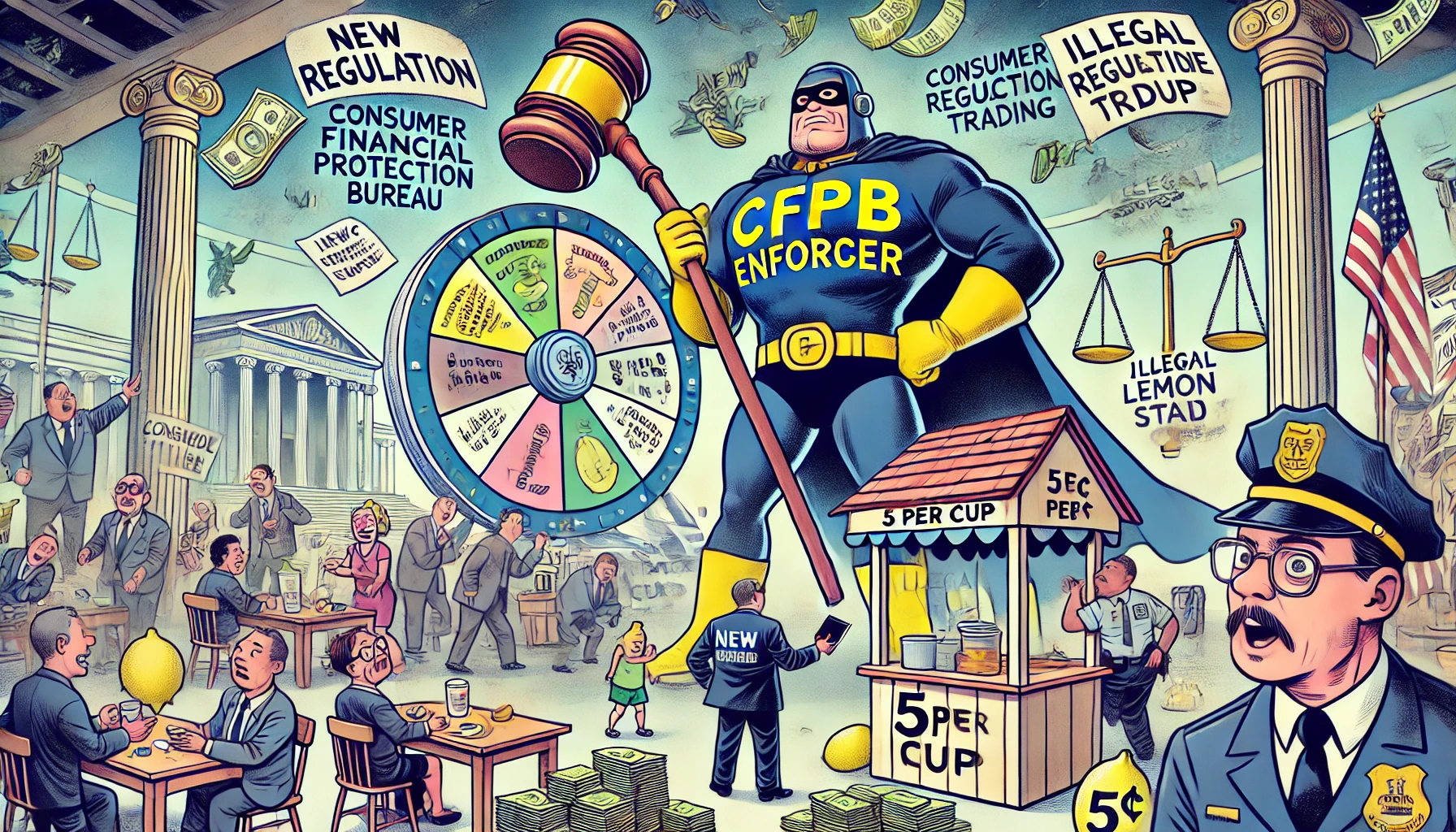
Helpful Content: How to Survive the CFPB
- Hire a Translator – You’ll need one to interpret CFPB regulations. Legalese is a second language.
- Build a Compliance Shrine – Dedicate a corner of your office to compliance gods and pray you don’t get fined.
- Stay Under the Radar – If the CFPB doesn’t notice you, consider it a win.
- Keep Cash Handy – You never know when you’ll need it for an impromptu fine.
Conclusion: Necessary Monster or Overzealous Nanny?
At its core, the CFPB aims to protect consumers from financial predators. It has accomplished a lot of good, but it’s also earned its reputation as a bureaucratic nightmare. Is it beyond saving or just misunderstood? Well, that depends on who you ask. One thing’s for sure—the CFPB is proof that even good intentions can get hilariously out of hand when bureaucracy is involved.
Disclaimer
This satirical piece is a human collaboration between a 80-year-old muckety-muck with tenure and a 20-year-old philosophy-major-turned-dairy-farmer—two sentient beings determined to find the humor in modern-day bureaucracy. No AI was harmed in the writing of this article.
When Protection Feels More Like Overregulation