

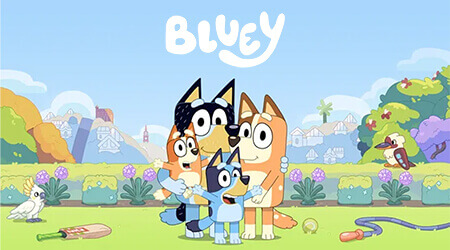
Bluey Research Madness
Breaking: Scientists Discover Children’s Cartoon Contains Children’s Lessons
Psychologists Spend 18 Hours Watching TV, Call It “Research”
In the most elaborate excuse to binge-watch children’s television since “I’m babysitting,” a team of psychologists at CQ University Australia conducted what they’re calling groundbreaking research by watching 150 episodes of Bluey. Their shocking discovery? A children’s show designed to teach children actually teaches children things.
The study, published in the Journal of Children and Media, reveals that Bluey—a show about a cartoon dog family—contains lessons about resilience. This comes as a complete surprise to absolutely no one who has ever encountered children’s entertainment.
Jerry Seinfeld once observed, “Sometimes the road less traveled is less traveled for a reason.” Nobody has formally studied whether a show created to model healthy family dynamics actually models healthy family dynamics because it’s like conducting research to determine whether water is wet.
The Grotberg Framework Meets Cartoon Dogs
The researchers employed the “Grotberg Resilience Framework” to analyze their cartoon consumption. This breaks resilience into “I have,” “I can,” and “I am”—which sounds like therapy affirmations your shrink charges $200 an hour for, except applied to animated Australian cattle dogs.
The “I have” category involves support systems. Revolutionary discovery: a show about a loving family features a loving family providing support. The researchers noted that nearly two-thirds of resilience moments were facilitated by parents, treating this revelation like they’d discovered fire.
Amy Schumer nailed it: “I’m not sure if I’m depressed or if everyone else is just really annoying.” After reading this study, I’m leaning toward the latter. These researchers seem genuinely amazed that a mother character acts maternal, treating basic emotional guidance as if they’ve cracked the Da Vinci Code of positive parenting.
Problem-Solving Solves Problems: Revolutionary Discovery
The “I can” category involves practical coping skills. In one episode, when a balloon pops, the kids pause and say, “Well, that was fun.” The researchers identified this as “disappointment, emotional regulation, and reframing.”
One has to wonder if these psychologists have ever met actual children. The ability to bounce back from minor disappointments isn’t sophisticated psychology—it’s the default setting for anyone under eight. Children live in constant acceptance that their block towers will be knocked down and ice cream will fall off cones.
Ron White captured this academic overreach perfectly: “You can’t fix stupid, but you can document it extensively and call it research.” The researchers mistook basic childhood resilience for profound wisdom, as if discovering that children naturally adapt to setbacks unlocks the secrets of human psychology.
Self-Worth Exists in Cartoon Characters: Groundbreaking Analysis
The “I am” category focuses on inner strengths. In one episode, a character named Pom Pom declares, “Pomeranians are a small but hardy breed” while overcoming a challenge. The researchers categorize this as determination and self-confidence, because apparently academic rigor now includes analyzing the self-esteem of fictional Pomeranian puppies.
Dave Chappelle once said, “The worst thing to call somebody is crazy. It’s dismissive.” But what do you call spending 18 hours analyzing a cartoon dog’s emotional development? The researchers transformed what every parent intuitively understands into a formal study complete with frameworks and findings.
Revolutionary Parenting Advice From the Ivory Tower
Perhaps the most patronizing aspect is the concluding advice that parents should watch shows with their children and use them as conversation starters. The researchers suggest asking questions like “What do you think Bluey felt then?”
This presents watching television together as if it’s groundbreaking parenting technique rather than something parents have done since television was invented. It’s like publishing a study revealing that talking to your children helps you communicate with them.
Bill Burr nailed this obvious advice: “You know what’s amazing to me? Is that there are people out there who think they need to be told how to be a parent.” The researchers essentially created an academic paper summarized as: “Good shows are good for kids, and talking to your kids is important.”
The Mental Health Crisis: Real Problems, Cartoon Solutions
The study highlights genuine concerns about children’s mental health, noting that more than one in four primary students report high psychological distress. This deserves serious attention. However, suggesting the solution lies in more strategic cartoon consumption feels like bringing a foam finger to a gunfight.
The disconnect between the magnitude of children’s mental health challenges and the proposed solution of more intentional Bluey viewing is staggering. It’s like responding to a housing crisis by recommending better interior decorating.
Kevin Hart observed, “Life is too short to worry about what others say about you. Have fun and give them something to talk about.” These researchers have certainly given us something to talk about, though probably not as intended.
The Academic Industrial Complex: Manufacturing Insights
This study represents everything wrong with the academic requirement to publish original research. When every observation must be novel, researchers end up documenting the obvious with elaborate methodologies. The pressure to produce new knowledge leads to situations where common sense gets dressed up in academic language and presented as discovery.
The researchers used terms like “systematic examination” and “resilience framework analysis” to describe watching cartoons and noticing they contain age-appropriate lessons. This is like conducting “comprehensive gustatory analysis utilizing flavor identification protocols” to determine that chocolate tastes sweet.
Jim Gaffigan perfectly captured this intellectual pretension: “You know what I love about research? It confirms what we already know but makes us feel smart about it.” This study is the academic equivalent of proving circles are round through extensive geometric analysis.
When Cartoon Dads Outperform Real Research
One revealing aspect is how this highlights the gap between Bluey’s fictional father, Bandit, and the researchers studying him. Bandit naturally engages with his children and models emotional intelligence. The researchers need frameworks and formal analysis to recognize these behaviors as positive parenting.
There’s beautiful irony in academics using scholarly methods to understand what a cartoon dog dad does instinctively. It’s like needing a PhD to understand that playing with your children makes them happy.
Chris Rock once said, “You know the world is going crazy when the best rapper is a white guy, the best golfer is a black guy, and the tallest guy in the NBA is Chinese.” We might add: you know academia is struggling when cartoon characters display more emotional intelligence than the researchers studying them.
The Publication Problem: When Everything Must Be Research
This study reveals a deeper problem in academic publishing: the pressure to turn every observation into formal research. The researchers essentially watched a well-made children’s show, noticed it was well-made, and wrote a paper about it. This is like conducting a study to determine whether professional chefs know how to cook.
Tiffany Haddish put it best: “I learned that if you’re going to be crazy, you better be good at it.” These researchers achieved a perfect storm of academic crazy: they turned television viewing into scholarship, common sense into revelation, and parenting advice into scientific discovery.
Strong Kids Don’t Need Studies
Perhaps the most absurd aspect is that truly resilient children—the kind the show supposedly teaches us to raise—wouldn’t need formal frameworks to understand Bluey’s lessons. They would absorb the positive modeling naturally, without requiring academic interpretation.
The children who benefit most from shows like Bluey are likely the same ones who don’t need their parents to read research studies about how to watch television with them. Meanwhile, children who most need support probably won’t be helped by more strategic cartoon consumption.
Ali Wong captured this perfectly: “I think there’s something wrong with people who don’t drink. Like, what do you do when you get home from work?” What do you do when you finish watching 18 hours of children’s television and realize you haven’t learned anything that couldn’t be gathered from a single episode?
The Emperor’s New Entertainment Study
This study represents the academic equivalent of the emperor’s new clothes: everyone is politely pretending that documenting the obvious constitutes meaningful research. The researchers spent considerable time confirming that good children’s entertainment is good for children—a conclusion that could have been reached by asking any child development expert.
The real tragedy isn’t that this study exists, but that it was probably funded while genuinely innovative research struggles for resources. In a world facing real challenges in children’s mental health and family dynamics, we’ve invested academic credibility in analyzing cartoon dogs.
Nate Bargatze wisely noted, “I don’t know how people figured out you could milk a cow. What did they think they were doing?” Similarly, we may never know how researchers figured out that children’s shows teach children things, but they’ve certainly documented it thoroughly.
The next time your child wants to watch Bluey for the tenth time, don’t feel guilty—you’re now participating in evidence-based psychological intervention, according to science. Just remember that before this study existed, parents somehow managed to raise resilient children without formal frameworks for cartoon analysis.
Trevor Noah said it best: “There’s nothing more dangerous than someone who thinks they know everything, especially when they’re right about the wrong things.” These researchers managed to be right about Bluey being educational while being completely wrong about whether that needed formal documentation. But hey, at least now we have peer-reviewed evidence that good television is good—a revelation that will surely transform our understanding of both television and goodness itself.
IMAGE GALLERY

10 Humorous Observations About the Bluey Study
- The Groundbreaking Discovery Paradox: Scientists spent more time watching Bluey than most toddlers spend in daycare, only to discover that a show specifically designed by child development experts to teach children lessons actually teaches children lessons. This is like conducting a 6-month study to determine whether McDonald’s serves fast food.
- The Academic Validation Complex: Researchers needed peer review to confirm what every parent figured out in Episode 1—that Bluey models good parenting. This suggests either academia has completely lost touch with reality, or parents have been accidentally conducting psychological research while making dinner.
- The Framework Fetish: The study employed the “Grotberg Resilience Framework” to analyze cartoon dogs, proving that academics can make anything sound important by adding the word “framework.” Next up: the Henderson Sandwich Framework for analyzing whether PB&J contains peanut butter and jelly.
- The Professional TV Watcher Career Path: Somewhere, there’s a graduate student whose PhD dissertation defense included the phrase “In episode 47, when Bingo drops the imaginary baby…” and a committee of professors nodding seriously. This person now lists “Expert in Animated Canine Psychology” on their LinkedIn.
- The Obviousness Amplification Effect: The researchers discovered that children’s characters who face challenges and overcome them teach resilience. This is roughly equivalent to studying whether cooking shows feature cooking, or whether reality TV features people making questionable life choices.
- The Parental Guidance Revolution: The study recommends parents watch TV with their children and ask questions about feelings—advice so revolutionary that it predates the invention of television by several thousand years of human storytelling.
- The Cartoon Character Competency Crisis: The study inadvertently reveals that Bluey’s fictional parents demonstrate better emotional intelligence than the real humans studying them. Bandit the cartoon dog dad understands child development better than researchers with actual degrees in child development.
- The Academic Resource Allocation Absurdity: While teachers struggle with classroom supplies and children’s mental health services face budget cuts, we’re funding comprehensive analyses of whether cartoon families act like families. It’s like hiring a team of experts to study whether fish swim while people are drowning.
- The Meta-Research Paradox: The children who would benefit most from this research are exactly the children whose parents don’t need research to tell them how to watch TV together. Meanwhile, the children who need the most support aren’t going to be saved by better cartoon consumption strategies.
- The Emperor’s New Educational Content: This study is academic naked truth—everyone’s pretending that documenting common sense constitutes breakthrough research because no one wants to be the person who points out that studying children’s shows to discover they’re educational is like studying water to discover it’s wet.
6 Comedian Lines About Academic Overreach
Dave Chappelle: “I love how they needed a ‘framework’ to understand a cartoon dog. That’s like needing a PhD to figure out why kids like ice cream. ‘According to our comprehensive frozen dairy preference analysis…'”
Jim Gaffigan: “150 episodes of Bluey? These researchers watched more children’s TV than children do. That’s not research, that’s what we call ‘avoiding real work.’ ‘Sorry honey, can’t help with dinner, I’m conducting vital cartoon analysis.'”
Ricky Gervais: “Brilliant! They spent months proving that educational content educates. What’s next? A study confirming that comedy shows attempt to be funny? ‘Our findings suggest that stand-up comedians may, in fact, be trying to make people laugh.'”
Sarah Silverman: “These psychologists watched 18 hours of Bluey and called it work. I watch 18 hours of Netflix and my therapist calls it ‘concerning.’ Apparently I just needed to add a framework and some peer review.”
Bert Kreischer: “The best part is they’re surprised that cartoon parents are good parents! Of course they are—they’re not real! Real parents are upstairs hiding in the bathroom eating cookies. Cartoon parents have unlimited patience because they don’t exist!”
Hasan Minhaj: “They published a study proving children’s shows teach children things. This is like me publishing research confirming that my Netflix algorithm knows I’m depressed. ‘Our data suggests that streaming services may be aware of user emotional states based on viewing patterns of true crime documentaries at 3 AM.'”