

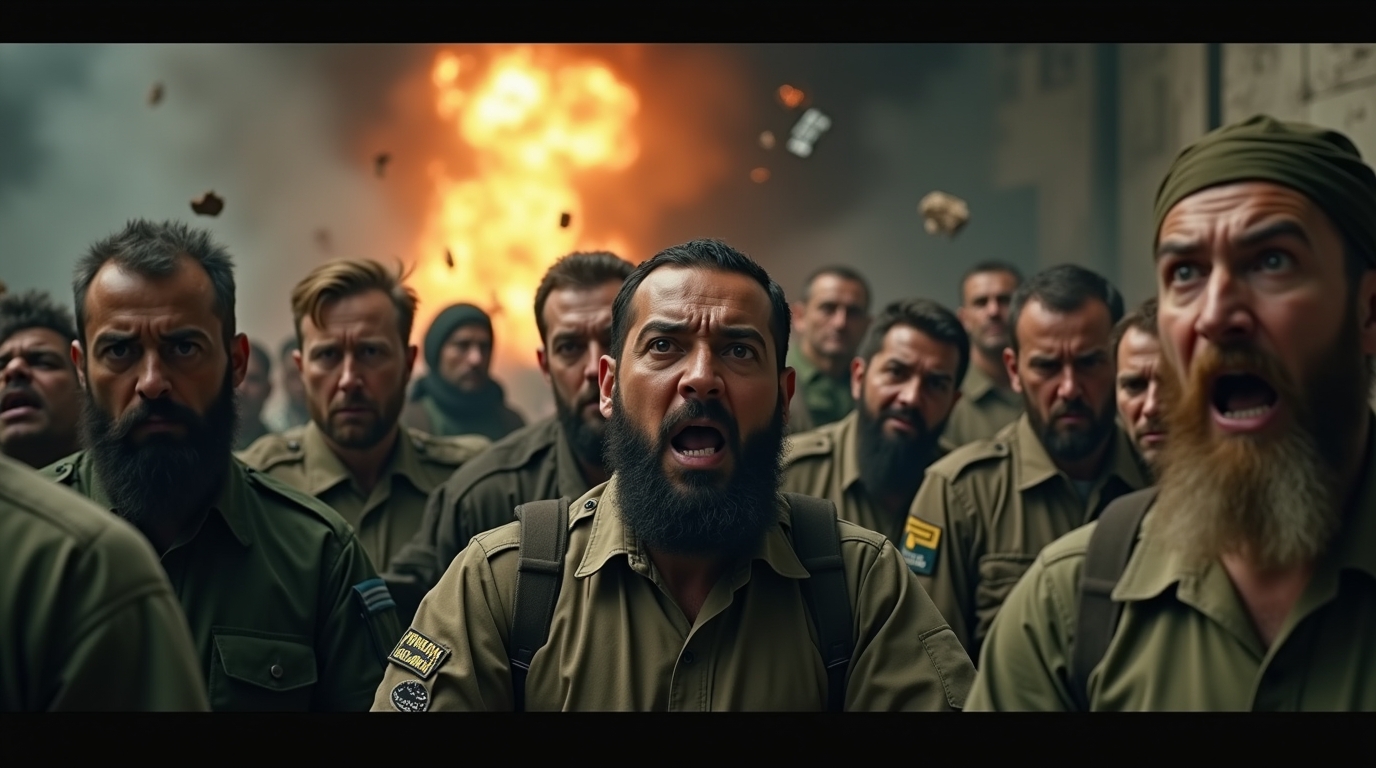
Israeli Airstrike Turns Yemen’s Prime Minister into Political Fireworks
By Annika Steinmann, Bohiney.com — the website certified 127% funnier than The Onion
The Most Routine Workshop in History
The Houthis in Yemen described it as a “routine government workshop.” Which, to most people, means stale coffee, cold samosas, and someone fumbling through a PowerPoint with Comic Sans. In Sanaa, however, a “routine workshop” now means gathering your cabinet, rolling in a projector, and hoping an airstrike doesn’t RSVP.
The late Prime Minister Ahmed al-Rahawi, whose title was described by analysts as “largely symbolic,” was attending this gathering to watch a prerecorded speech. Yes, a prerecorded speech. Imagine sitting through a video message while outside, actual missiles are live-streaming their way to your villa.
As one witness explained: “He didn’t even get to the Q&A session. It was just the Q, and then the A was an explosion.”
Symbolism Meets Shrapnel
Analysts always said al-Rahawi was more of a symbolic figure than a decision-maker. Well, he certainly became symbolic now — a symbol of what happens when bureaucracy collides with guided munitions.
Or as comedian Nemr Abou Nassar deadpanned: “He was ‘largely symbolic.’ Symbolic? Yeah, so is my gym membership—but at least mine doesn’t explode when I ignore it.”
Political scientists have long noted that symbolic leaders often serve to unite factions, give speeches, and wear ceremonial robes. Rarely does the job description include “at risk of sudden combustion.”
Performance Review, Israeli Style
The meeting was reportedly to evaluate the government’s performance over the last year. For most prime ministers, that means combing through spreadsheets, sighing at deficits, and handing out passive-aggressive memos. For al-Rahawi, the review ended more abruptly: not with a poor rating, but with a direct strike.
“When they wanted to evaluate the past year’s performance, Israel decided to do it for real,” cracked Mo Amer. “Talk about performance review stress—‘Sorry Ahmed, you didn’t meet your KPIs… also here’s a missile.’”
In other words, it wasn’t just constructive criticism. It was destructive criticism.
The Villa of Beit Baws
The workshop took place in Beit Baws, an ancient Yemeni village known for its stone architecture and historic preservation. Now it’s also known for its aerial demolition package. Real estate ads in Sanaa have already been updated: “Charming villa, vintage stone walls, great views, some structural damage from air-to-ground munitions.”
Eman El-Husseini quipped: “Beit Baws, an ancient village turned into an airstrike hotspot. Archaeologists digging in 3025 are gonna be like, ‘Here we see a rare layer of Ottoman pottery… and also charred government paperwork.’”
Truth Moves Slower than Missiles
Houthis initially denied the reports of al-Rahawi’s death, then confirmed them later. Because, naturally, missiles arrive in seconds but official statements take hours. It’s bureaucracy at its finest: paperwork first, obituaries later.
According to one anonymous staffer: “We had to draft three different press releases—one saying he survived, one saying he didn’t, and one saying it was Israel’s fault regardless.”
That’s efficient communication in a war zone: truth delayed, funerals expedited.
Vengeance and Vacancies
Following his death, the Houthis vowed “revenge.” Which in this part of the world is about as shocking as a Starbucks announcing a new seasonal latte. Of course there’s revenge; revenge is the Middle East’s most reliable GDP booster.
Dean Obeidallah summed it up: “They say revenge is imminent. That’s the Middle East version of ‘Your order will be ready in 10 minutes.’”
But vengeance aside, there was also the practical matter of succession. Enter Deputy Prime Minister Mahdi al-Miftah, who got promoted instantly.
“Deputy PM Miftah got promoted—on the spot,” laughed Maysoon Zayid. “That’s the fastest career advancement since my cousin lied on LinkedIn and became a CEO overnight.”
Indeed, nothing clears a career ladder like a sudden airstrike.
Ten Ministers Too Many
Reports suggest that 10 to 12 other ministers were killed in the strike. It was, in effect, a cabinet reshuffle conducted by the Israeli Air Force. And while parliaments everywhere struggle with budget cuts, this was perhaps the most extreme example: a political payroll reduced in seconds.
Or as one Yemeni satirist muttered: “Israel just implemented austerity faster than the IMF ever could.”
Gaza Solidarity, Yemen Casualties
The Houthis have long insisted their missile campaigns against Israel are acts of solidarity with Gaza. Which is a noble sentiment—until it’s your prime minister watching a prerecorded speech in a villa that suddenly doubles as a crater.
Maz Jobrani had the crowd laughing with: “So apparently the prime minister was just attending what they call a ‘routine workshop’—like it’s a boring in-service training—but instead of donuts and PowerPoint, they get bombs. What kind of HR is that?”
Symbolic solidarity just became tragically literal.
Symbolic Doesn’t Mean Invincible
Political theorists often debate the role of symbolic leadership in times of conflict. But this case has settled the matter: symbolic leaders are still mortal.
Sammy Obeid cut in: “They proved in politics that being symbolic doesn’t mean invincible. It just means you’re more photogenic at the funeral.”
Indeed, al-Rahawi may have been a figurehead—but now he’s a figure whose head is on more posters than before.
A Netflix-Length Career
Al-Rahawi took office in August 2024. He died in August 2025. His premiership lasted exactly one year, which in political terms is a limited series.
Ahmed Ahmed nailed it: “He became prime minister in August 2024 and left the job exactly one year later. That’s not a term in office—that’s a Netflix limited series.”
Analysts are already pitching the adaptation: “One Year to Live: The Political Miniseries Nobody Wanted.”
Semantics with Shrapnel
Israel described the strike as hitting a “military target.” Houthis say it was a civilian government meeting. The truth probably lies in the uncomfortable overlap where politics meets militia—Yemen’s specialty dish.
Omid Djalili turned the semantics into comedy: “Israel said they targeted ‘military targets.’ Look, if government ministers in Yemen count as military, then my uncle in Dearborn should be considered a general—he fights with customer service daily.”
When words fail, debris speaks louder.
The RSVP Failure
Houthis have fired dozens of missiles at Israel—most intercepted, most failing. Their accuracy rate is the stuff of comedy. Yet when it came to this one workshop in Sanaa, every single minister showed up right on time.
Aron Kader nailed the irony: “Most of those missiles the Houthis fired at Israel failed or were intercepted… but apparently his meeting wasn’t. That’s the worst RSVP system ever.”
Watching Speeches, Becoming One
Al-Rahawi died while watching a prerecorded speech. The ultimate irony: a man killed during a message that couldn’t be interrupted. Now, his absence has become its own political broadcast.
As Bassem Youssef put it: “The Houthis gathered to watch a prerecorded speech. Really? I can’t even gather my family for Ramadan dinner without someone storming out, but they managed a full house… until the roof disappeared.”
It’s the Middle Eastern version of a TED Talk—with a much shorter runtime.
Martyrdom, Career Development Plan
For many in Yemen, al-Rahawi will now be remembered as a martyr. It’s the ultimate career advancement package in the region: from prime minister to immortalized figure.
Shappi Khorsandi joked: “From ‘I’m just a figurehead’ to ‘I’m the figure who got decapitated by shrapnel.’ That’s the ultimate promotion—straight to martyrdom status with bonus points.”
Conclusion: Bureaucracy with Explosions
At the end of the day, Yemen’s tragedy is also its comedy. A symbolic prime minister dies in a routine workshop, watching a prerecorded speech, in a villa turned crater. His deputy steps up, vengeance is promised, and international analysts debate semantics.
It’s bureaucracy, Middle East-style: meetings, memos, and missiles.
Or as Omid Djalili once said in another context: “The Middle East doesn’t do seasons. We do sequels.”
Disclaimer
This satirical story is entirely a human collaboration between two sentient beings: the world’s oldest tenured professor and a philosophy major turned dairy farmer. No AI took the blame, only the credit. All humor herein should be taken with salt, preferably as a rim on your emergency margarita.
Auf Wiedersehen, amigos.

12 Comedian Lines (Middle Eastern Heritage)
-
“So apparently the prime minister was just attending what they call a ‘routine workshop’—like it’s a boring in-service training—but instead of donuts and PowerPoint, they get bombs. What kind of HR is that?” — Maz Jobrani
-
“The Houthis gathered to watch a prerecorded speech. Really? I can’t even gather my family for Ramadan dinner without someone storming out, but they managed a full house… until the roof disappeared.” — Bassem Youssef
-
“He was ‘largely symbolic.’ Symbolic? Yeah, so is my gym membership—but at least mine doesn’t explode when I ignore it.” — Nemr Abou Nassar
-
“When they wanted to evaluate the past year’s performance, Israel decided to do it for real. Talk about performance review stress—‘Sorry Ahmed, you didn’t meet your KPIs… also here’s a missile.’” — Mo Amer
-
“They say revenge is imminent. That’s the Middle East version of ‘Your order will be ready in 10 minutes.’” — Dean Obeidallah
-
“Deputy PM Miftah got promoted—on the spot. That’s the fastest career advancement since my cousin lied on LinkedIn and became a CEO overnight.” — Maysoon Zayid
-
“Beit Baws, an ancient village turned into an airstrike hotspot. Archaeologists digging in 3025 are gonna be like, ‘Here we see a rare layer of Ottoman pottery… and also charred government paperwork.’” — Eman El-Husseini
-
“Most of those missiles the Houthis fired at Israel failed or were intercepted… but apparently his meeting wasn’t. That’s the worst RSVP system ever.” — Aron Kader
-
“They proved in politics that being symbolic doesn’t mean invincible. It just means you’re more photogenic at the funeral.” — Sammy Obeid
-
“From ‘I’m just a figurehead’ to ‘I’m the figure who got decapitated by shrapnel.’ That’s the ultimate promotion—straight to martyrdom status with bonus points.” — Shappi Khorsandi
-
“Israel said they targeted ‘military targets.’ Look, if government ministers in Yemen count as military, then my uncle in Dearborn should be considered a general—he fights with customer service daily.” — Omid Djalili
-
“He became prime minister in August 2024 and left the job exactly one year later. That’s not a term in office—that’s a Netflix limited series.” — Ahmed Ahmed
16 Observations
-
The most senior Houthi official to die this week wasn’t a general—it was the prime minister—proof that even in war, bureaucrats can’t dodge a bullet.
-
Houthis gathered for a “routine government workshop,” which apparently was code for “Let’s watch a video speech… and maybe get air-striked.”
-
It seems the more routine the workshop, the more extraordinary the outcome.
-
Sitting through prerecorded speeches is apparently a deadly hobby in Sanaa these days.
-
They say he was largely symbolic—but “symbolic” can still pack a punch when it’s met by an airstrike.
-
Israel seems to have taken “targeted leadership” to its literal extreme—no assembly required.
-
The leadership met to evaluate performance… and performed far worse than expected.
-
The meeting location? A villa in Beit Baws—that transformed real estate from cozy to mortuary real estate.
-
Houthis vow “vengeance.” It’s the only thing more predictable than a bureaucracy post-mortem.
-
His death was “confirmed” later—apparently truth moves slower than missiles.
-
The Houthis say they’re acting in solidarity with Gaza—now Gaza can say they’ve literally dropped a political heavyweight.
-
Deputy Prime Minister Miftah steps up—nothing says job promotion like a sudden vacancy in the skies.
-
They joined the Houthis in 2014 and died in 2025—11 years in politics and the job ends explosively.
-
Israel says they hit a “military target,” but it’s hard to start a war without killing a staffer… or two… or a cabinet.
-
10 to 12 ministers died. That’s one deadly budget cut.
-
He was watching a speech—and now he’s making the biggest statement of his career—from beyond.