

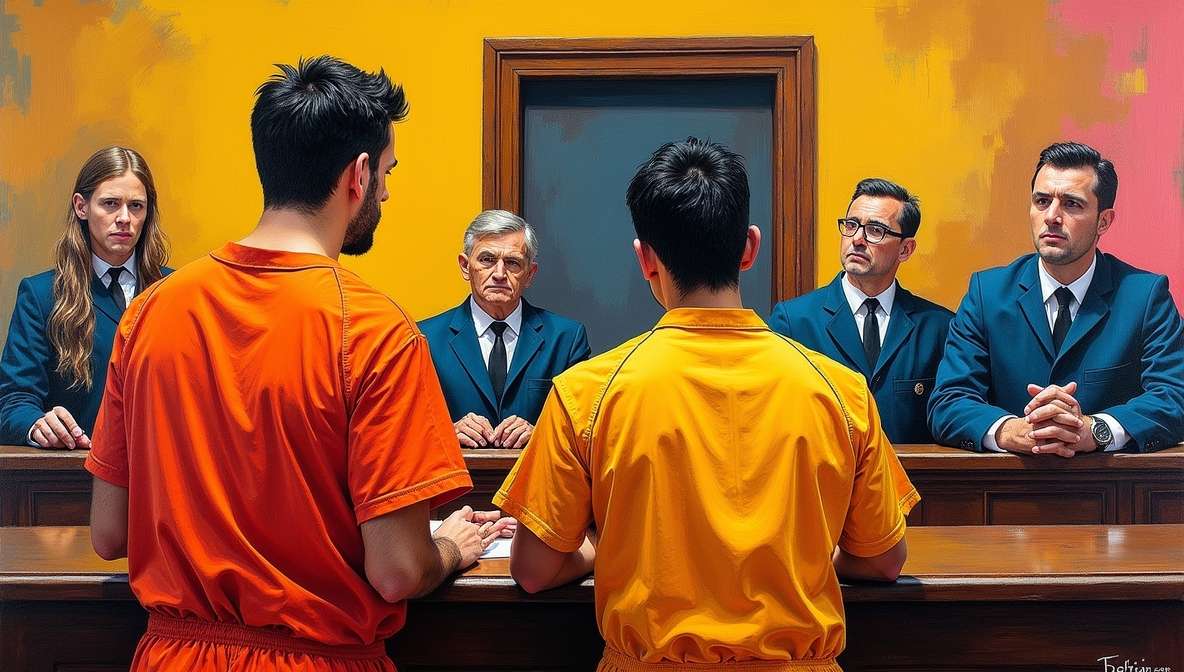
Luigi Mangione’s Manhattan Trial: Beige Jumpsuits, Bureaucracy, and the High Drama of Justice
If you thought Manhattan had seen it all, think again. Luigi Mangione, 27, the man accused of assassinating UnitedHealthcare’s chief executive, recently walked through a crowded hallway in beige jail clothes, flanked by law enforcement officers like a hostage in a corporate-themed reality show. Beige, of course, is the new black in correctional fashion: neutral, stylish, and vaguely threatening to anyone who’s ever had to decide between oatmeal or sand-colored pants. (Read a summary of the manhunt and arrest here)
The Beige Jumpsuit as a Status Symbol
Walking in with his hands cuffed, Luigi embodied the classic courtroom paradox: guilty-looking yet fashionably understated. Observers have joked that if this goes down in history, he’ll be remembered not just for the crime — but for making “tan lockup couture” a thing. (See how the NYC court system handles high-profile cases)
The Politics of “Damaging Statements”
The defense has cried foul over what it called “blatant, intentional, and damaging” remarks from Attorney General Pam Bondi. They argue her public statements prejudiced the jury pool and undermined Mangione’s right to a fair trial. (Learn more about the Sixth Amendment and the right to a fair trial)
Bondi, for her part, issued a statement calling Mangione’s alleged killing of CEO Brian Thompson “a premeditated, cold-blooded assassination that shocked America.” (Read the official DOJ press release on the charges) The prosecutors, in response, have leaned heavily into bureaucratic calm, claiming that “high visibility cases are routine” in Manhattan — a not-so-subtle reminder that in the city that never sleeps, even courtroom circus acts are business as usual. (Explore the structure of the Federal Court System)
Missing Months & True-Crime Vibes
Part of the drama revolves around Luigi’s “missing months” between the alleged crime and his arrest — a gap that’s being treated like a Netflix teaser for a true crime mini-series. (Details on how the FBI handles fugitives and manhunts) In filings, his team referred to the intense media coverage and public scrutiny, arguing that the spectacle risks turning a trial into entertainment. (Media ethics guidelines on crime reporting)
Carnival Justice
Federal prosecutors have promised safeguards like jury questionnaires and individualized juror interviews to ensure impartiality, even as they admit to the media frenzy. (Overview of Federal District Court procedures) Still, critics note the irony: calling it a “fair trial” is a little like calling a roller coaster “just a fun ride” right before you strap in and the first drop hits. (Resources on maintaining a fair trial in a media age)
Juror Screening: Bye-Bye Social Media
The juror vetting process has become a social-media vetting process. Lawyers reportedly ask about each potential juror’s exposure to public commentary, podcasts, and news coverage — because yes, your uncle’s rant on Facebook might disqualify you. (Detailed explanation of the jury selection process (“Voir Dire”))
Beige, Death Penalty, and Corporate Karma
Beige — a sartorial metaphor for bureaucracy itself. Luigi’s jumpsuit sends a message: bland, but unforgettable. It’s the color of anonymous corporate drones, but in this case, it’s draped on a man at the center of a national spectacle. Meanwhile, prosecutors are pursuing the death penalty, painting the killing as politically motivated and ideologically driven. (Information on the Federal Death Penalty)
Legal High-Stakes & “Second‑Degree Murder” Irony
Despite the bombastic tone from both sides, the central criminal charge is second-degree murder, which feels strangely polite for a case with this much firepower. (Official legal definition of Second-Degree Murder) That charge, technically, is more than a label — it underscores that while the killing may be deliberate, it’s being treated in a highly legalistic, procedural way that emphasizes mens rea, not melodrama. (A look at federal criminal procedure and trial courts)
Legal Maneuvers & Due Process Drama
Mangione’s lawyers have moved to block the death penalty, arguing that Bondi’s public decision was a political stunt that violated DOJ protocols and prejudiced jurors. (Understanding the legal motion used to exclude evidence or arguments) The filings claim that her pretrial statements corrupted the grand jury process and infringed due process rights. (Review the Fifth Amendment’s Due Process Clause)
Public Sentiment & Health-Insurance Rage
This isn’t just a criminal case; it’s become a proxy war for public anger at the health insurance industry. (Key data and research on US health care policy and industry) Some health-care critics have rallied around Mangione, viewing him less as a murderer and more as a symbol of protest — a very wrongheaded, very violent symbol, but a symbol nonetheless. (Explore the limits of legal and protected political protest)
Conclusion: Justice—or Theater?
In the end, Luigi Mangione’s trial feels less like a sober judicial proceeding and more like Manhattan’s version of high-stakes theatre: beige jumpsuits, political fireworks, social media jury vetting, and existential questions about fairness. The kind of show where everyone’s watching, but no one’s quite certain whether justice or entertainment will win. (Analysis on the intersection of media, politics, and the justice system)
Disclaimer: This story is entirely a human collaboration between two sentient beings — the world’s oldest tenured professor and a philosophy major turned dairy farmer. Any resemblance to actual legal arguments, court filings, or fashion trends is purely intentional. Auf Wiedersehen. (Examples of established satirical publishing)
