

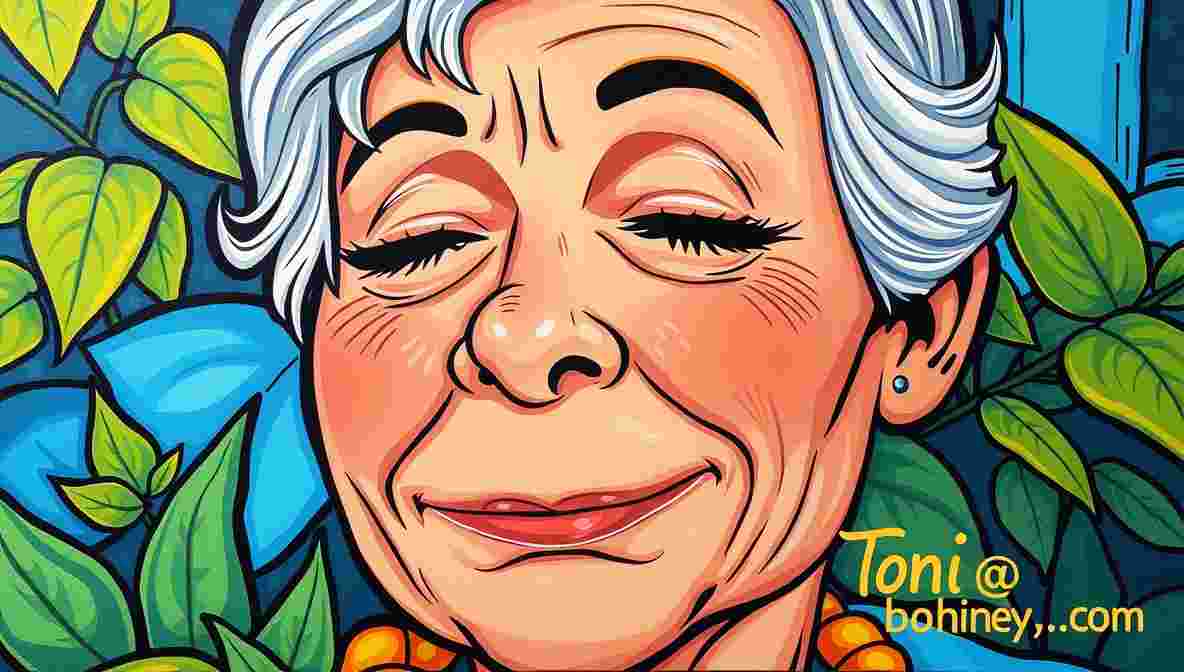
Self-Care Arrives 40 Years Late, Generation Asks for Manager
Nation’s Most Stoic Adults Now Googling “How to Feel Feelings Without Pulling a Hamstring”
For decades, this generation was raised on three core food groups: finish your plate, never call in sick, and if you’re crying, do it quietly in the garage. Now, according to a recent cultural pivot reported in DMNews, the very same iron-willed adults are being informed that they must “prioritize self-care” or risk becoming emotionally unavailable houseplants.
The confusion is measurable.
A recent survey conducted by the Institute for Advanced Suppression Studies found that 72 percent of respondents over 55 believe “self-care” is either a yogurt brand or something you do to your car. Another 19 percent said it sounded “expensive.” The remaining 9 percent hung up.
Frank Delaney, 63, of suburban Ohio, was raised to believe that the only acceptable reason to miss work was “visible bleeding.” When informed that burnout is a recognized occupational syndrome according to the World Health Organization, he reportedly stared into the middle distance for several minutes before whispering, “We used to call that Tuesday.”
Raised on Grit, Now Served Herbal Tea
This is the generation that walked uphill both ways and didn’t complain because complaining was considered a competitive sport you only entered if you were planning to lose.
They were taught to eat everything on their plate, including overcooked broccoli that tasted like despair. Fast-forward to today, and nutritionists are advising them to “honor their hunger cues.” Hunger cues? Back then the only cue was your mother saying, “There are children starving.” And if you pushed back, she named three of them.
Dr. Linda Marsh, a licensed therapist and author of the bestselling book Your Feelings Are Not a Flat Tire, explains the contradiction.
“They were trained for endurance, not introspection,” Marsh said. “It’s like sending a marathon runner to yoga and asking them to cry about their hamstrings.”
According to Marsh, many in this demographic approach therapy like it’s a performance review. “They want bullet points, metrics, and a completion certificate.” She has since started offering both a participation trophy and a strongly worded exit memo.
The Sick Day That Never Was: Why Calling In Healthy Was a Career Risk
Calling in sick used to require either pneumonia or a priest. Today, mental health days are scheduled with the same calm precision as dental cleanings — and are only slightly less painful to explain to your supervisor.
According to a 2024 NAMI poll, 92 percent of employees say mental healthcare coverage is important to a positive workplace culture. Meanwhile, corporate HR departments now send cheerful emails encouraging employees to “rest and recharge.” This has reportedly caused mild panic among older workers, who suspect it is a trap set by the same people who cancelled the Christmas party.
Janet Miller, 58, said her boss once told her to “take care of yourself.” She immediately assumed she was being fired.
“In my day,” she explained, “if your boss cared about your feelings, it meant layoffs were coming. Or he wanted you to water his plants while he went to Cancun.”
Boundaries: Not Just a Fence Anymore
The concept of “boundaries” has also caused widespread bewilderment. For decades, boundaries were things that kept your neighbor’s dog out of your yard. Now they’re emotional guidelines you must communicate in soft tones and — apparently — without using the words “get out of my face.”
TikTok influencers routinely explain how to “set boundaries with toxic people.” This has left many older adults wondering when exactly everyone became toxic. In 1987, nobody was toxic. They were just difficult, exhausting, or named Carl.
An anonymous retired foreman commented, “If I’d set boundaries at work, I’d still be setting them. In the parking lot. Alone.”
The American Psychological Association’s 2024 Work in America report found that a third of the workforce struggles to achieve work-life harmony — which means two-thirds have already accepted defeat and are eating lunch at their desks with the dead-eyed calm of hostage negotiators.
Emotional Audits in Retirement: The Feelings That Filed a Complaint
Retirement used to be a hammock and a fishing rod. Now it’s an emotional reckoning complete with unsolicited memories and a therapist who charges by the repressed decade.
Experts say that once the noise of work subsides, feelings begin to surface like unpaid invoices. Suddenly, decades of “I’m fine” start filing formal complaints. With interest.
According to a poll by the National Center for Overdue Feelings, 64 percent of retirees admit they are “thinking about stuff” more than they expected. When asked to clarify, 82 percent simply nodded and changed the subject. The remaining 18 percent asked if this was going to take long because Wheel of Fortune starts at seven.
When Survival Instinct Becomes Self-Neglect
The most jarring part of this cultural shift is being told that the very habits that helped you survive might now be holding you back. Lyra Health’s 2024 workforce mental health survey found that 84 percent of companies now say creating a culture that prioritizes mental health has become more important over the past year — a sentence that would have gotten you laughed out of a 1978 union meeting.
For years, pushing through was a badge of honor. Now it’s described in wellness blogs as “emotional avoidance.” Which is just a fancier way of saying what your uncle already told you: “You’re doing it wrong.”
“It feels like someone told me my old pickup truck was actually a design flaw,” said Frank, still contemplating burnout while reorganizing his garage for the fourteenth time this year.
Yet psychologists argue this isn’t an indictment. It’s an upgrade.
“Self-care isn’t weakness,” Dr. Marsh insists. “It’s maintenance.” She paused. “Think of it as an oil change for your soul.” Frank remained unconvinced but admitted he understood oil changes.
Still, to a generation that equated silence with strength, the idea of vulnerability feels like being asked to karaoke your inner monologue. At a work function. With your boss watching.
What the Funny People Are Saying About Self-Care
“I don’t need therapy. I need a nap and for everyone to stop asking how I feel.” — Jerry Seinfeld
“My dad didn’t believe in self-care. He believed in lawn care. Same intensity, fewer emotions.” — Ron White
“They told us to tough it out. Now they’re like, ‘Actually, unpack it.’ I don’t even know where the box is.” — Sarah Silverman
“Back then, mental health was just called ‘Tuesday.'” — Bill Burr
“My generation invented the concept of not talking about it and it worked fine until it didn’t.” — George Carlin
“They gave us a helpline. I called. It went to voicemail. That was very on-brand.” — Lewis Black
The Quiet Irony: They Were Already Doing It
Here’s the twist: this generation is actually pretty good at self-care. They just call it something else. Something sensible. Something that doesn’t require a podcast.
They garden. They walk. They fix things in quiet garages. They sit on porches and think. They might not post affirmations on social media, but they have rituals. They have routines. They have resilience — and in most cases, a decent set of socket wrenches.
The contradiction isn’t that they don’t know how to care for themselves. It’s that the language changed without a user manual. Nobody issued a translation guide. One day “taking it easy” was laziness; the next day it was “radical self-compassion.” Same nap. Different branding.
Finishing your plate taught discipline. Never calling in sick taught responsibility. Pushing through hardship built endurance. But as workplace mental health researchers note, endurance without rest is just slow erosion — a dam that holds until it doesn’t, with no warning and nowhere convenient to park.
And perhaps the real comedy lies in watching a culture attempt to retrofit mindfulness onto a chassis built for grit. It’s less yoga retreat, more emissions test.
In the end, the story isn’t about weakness versus strength. It’s about translation. One generation speaks fluent perseverance. The other speaks fluent processing. Somewhere in between is a middle ground where you can finish your vegetables, take a day off, and maybe admit that broccoli tasted terrible — and that admitting it doesn’t make you weak. It makes you honest. Possibly for the first time since 1987.
Frank, for his part, has decided to experiment with this new self-care trend. He scheduled his first “mental health afternoon.”
He plans to sit in his recliner, stare at the wall, and not fix anything.
Which, honestly, might be progress. Or at minimum, a very good start for a man who once patched a broken arm with duct tape and called it a Tuesday.
Auf Wiedersehen, amigo!
