

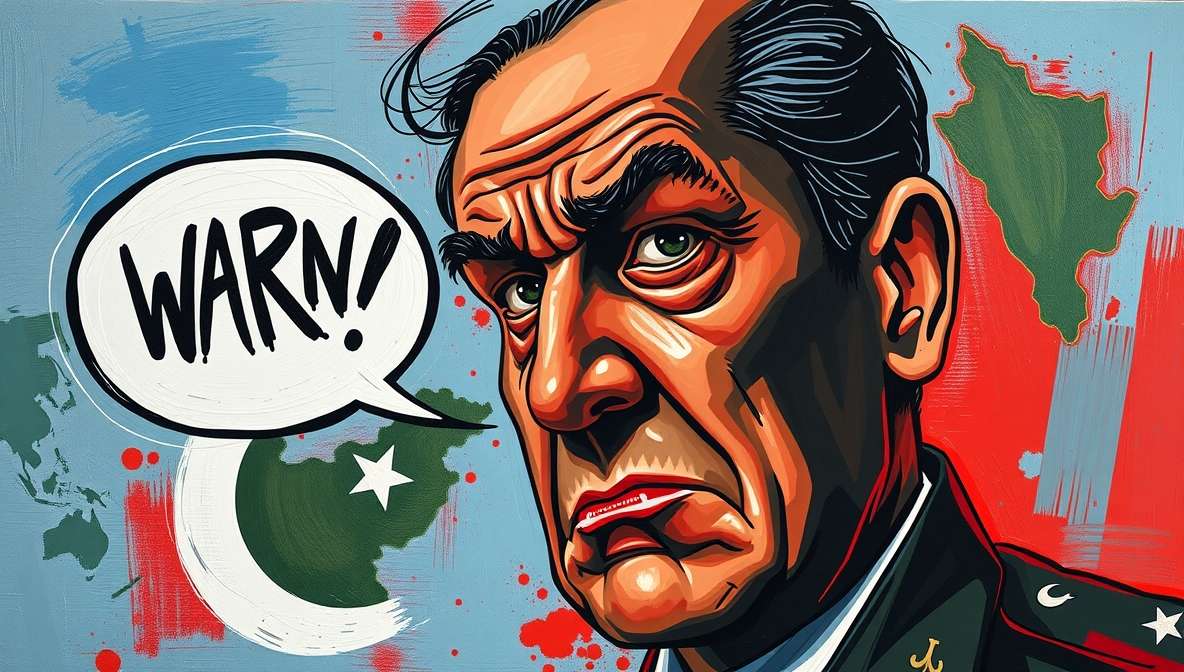
Muslims Fighting Muslims: The World Watches, Popcorn in Hand
In a world where conflicts often defy logic and reason, two Muslim-majority nations sharing cultural ties and a colonial-era border have decided that brotherly love is overrated. Welcome to the Pakistan-Afghanistan conflict of 2025, where diplomacy means “talk softly and carry a big airstrike.”
Pakistan Defence Minister Issues “Open War” Warning to Afghanistan
Pakistan’s Defence Minister, Khawaja Asif, has mastered the art of diplomatic subtlety by threatening “open war” if Istanbul peace talks fail. Because nothing says “let’s negotiate” quite like a thinly veiled declaration of war. It’s the international relations equivalent of texting your ex, “We need to talk, or I’m burning your stuff.”
Khawaja Asif’s Istanbul Peace Talk Ultimatum

The minister’s approach to conflict resolution resembles a hostage negotiation conducted by someone who skipped the training seminar. “Talk to us peacefully, or we’ll make you talk through explosions” isn’t exactly in the Geneva Convention handbook, but points for creativity.
Dave Chappelle said it best when discussing the situation: “You can’t threaten somebody with war and call it a peace talk. That’s like me inviting you to dinner and saying, ‘Come over, or I’m eating your dog.’ That’s not hospitality, that’s extortion with appetizers.”
According to conflict mediation experts at the United States Institute of Peace, threatening military escalation while simultaneously proposing negotiations represents a fundamental contradiction in diplomatic best practices—though it’s become a signature move in South Asian regional politics.
Afghanistan Denies Pakistan’s Terrorism Claims
Afghanistan’s response to Pakistan’s accusations has been a masterclass in the “not me” defense strategy, perfected by siblings worldwide since the dawn of time. Defence Minister Mullah Yaqoob called Pakistan’s claims “baseless,” which is diplomatic speak for “pics or it didn’t happen.”
Mullah Yaqoob Calls Border Breach Accusations “Baseless”
In what can only be described as geopolitical gaslighting, Afghanistan denied any involvement in border tensions while simultaneously documenting 1,200 times Pakistan allegedly crossed into their territory. It’s the international equivalent of saying “I didn’t touch you” while your finger hovers an inch from someone’s face.
Bill Burr weighed in on the denial tactics: “These guys are denying attacks while literally standing at the border with a smoking gun. It’s like my wife asking, ‘Did you eat the last cookie?’ while I’ve got chocolate on my face. Just own it, bro.”
Durand Line Dispute: 1,200 Border Violations Reported
The Durand Line, a border drawn by British colonizers in 1893 who apparently used a ruler, a map, and the confidence of someone who’d never have to live with the consequences, continues to be the gift that keeps on giving—if the gift is perpetual conflict.
Colonial-Era Border Remains Source of Regional Tension
With over 1,200 border breaches and 712 airspace incursions reported, the Durand Line has transformed from a geographical boundary into more of a suggestion, like calorie counts on Super Bowl Sunday. The border fence has become less “line of sovereignty” and more “suggestion of personal space.”
Jerry Seinfeld observed the absurdity: “A border that gets crossed 1,200 times isn’t a border—it’s a crosswalk. At what point do you just put up a sign that says, ‘Sure, whatever, come on through’? Maybe add a welcome mat that says, ‘Wipe your feet before invading.'”
The British colonial architects who drew this line would be proud to know their hasty cartography continues to inspire conflict 132 years later. It’s the forever gift of imperialism: borders that make absolutely no ethnic, cultural, or geographic sense, but looked really neat on a map in London.
Scholars at the SOAS University of London’s South Asia Institute have extensively documented how the Durand Line’s arbitrary division of Pashtun tribal territories created ethno-political fault lines that continue destabilizing the region 132 years after its creation.
Pakistan Blames India for Afghanistan Taliban Support
In a plot twist that surprised absolutely no one familiar with South Asian geopolitics, Pakistan has accused Afghanistan of harboring terrorists while simultaneously blaming India for everything. It’s the diplomatic version of “a ghost did it.”
“Blame India First” Foreign Policy Strategy
Pakistan’s claim that the Taliban is “sitting in India’s lap” represents a bold new direction in foreign policy: when in doubt, blame India. Lost your keys? India. Traffic jam? India. Bad WiFi? Probably India’s fault somehow.
Trevor Noah summarized the blame game perfectly: “Pakistan blaming India for their Taliban problem is like me blaming my neighbor for my credit card debt. Sir, you’re the one who made the purchases. Own your receipts.”
This triangular blame game between Pakistan, Afghanistan, and India has become so convoluted that it requires a flowchart, a conspiracy theory board, and possibly a degree in advanced finger-pointing to understand who’s accusing whom of what on any given Tuesday.
Regional security analysts at the Council on Foreign Relations note that Pakistan’s “blame India first” strategy has become so predictable that diplomatic observers have created a drinking game around ministerial statements—though excessive participation is not recommended.
48-Hour Ceasefire Collapses Within Two Days
Pakistan and Afghanistan agreed to a 48-hour ceasefire, which lasted exactly 48 hours—technically fulfilling the agreement while completely missing the spirit of it. It’s the letter-of-the-law approach to peace: “We didn’t shoot for two whole days. What more do you want?”
International Community Expresses Concern Over Failed Peace Deal
The ceasefire that lasted precisely as long as promised before immediately collapsing demonstrates the incredible precision both nations bring to their conflict. If only they applied this level of punctuality to actual peace.
Amy Schumer didn’t hold back on the ceasefire charade: “A 48-hour ceasefire that ends in exactly 48 hours isn’t a peace deal—it’s a bathroom break. ‘Hold on, let me reload, I’ll be right back.’ That’s not diplomacy, that’s intermission.”
Research from the International Crisis Group’s South Asia program demonstrates that temporary ceasefires without substantive confidence-building measures typically result in resumed hostilities within 72 hours—a pattern the Pakistan-Afghanistan conflict has followed with depressing consistency.
Pakistan’s Airstrike Diplomacy Strategy
Pakistan has pioneered a innovative approach to international relations: aggressive negotiation through airstrikes. Think of it as the diplomatic equivalent of bringing a flamethrower to a debate club meeting.
Military Action Accompanies Peace Negotiations
The strategy of conducting airstrikes while simultaneously calling for peace talks represents a fascinating interpretation of “good faith negotiation.” It’s like proposing marriage while also swiping on Tinder—technically you’re exploring all options, but the optics are questionable.
Chris Rock captured the contradiction perfectly: “You can’t bomb somebody and invite them to peace talks on the same day. That’s not diplomacy, that’s being passive-aggressive with missiles. ‘Hey, no hard feelings about that airstrike. Still on for coffee?'”
The international law implications of this approach would give lawyers at the International Court of Justice migraines. Conducting offensive military operations while claiming to seek peaceful resolution creates a credibility deficit that no amount of diplomatic language can overcome.
Regional Powers React to Pakistan-Afghanistan Tensions
The chorus of international voices offering their perspectives on the Pakistan-Afghanistan conflict has created a cacophony that makes a middle school cafeteria sound like a meditation retreat. The United States expresses concern, India issues statements, and everyone else tweets their hot takes while doing absolutely nothing tangible.
Ricky Gervais summed up the international response: “The world watching Pakistan and Afghanistan fight is like watching two people argue at a party. Everyone’s gathering around with their phones out, but nobody’s breaking it up. We’re all just here for content now.”
Media Coverage: Reporting or Spectating the Conflict?
The media’s approach to covering the Pakistan-Afghanistan conflict has evolved from journalism to sports commentary. Headlines like “Who’s to Blame?” suggest we’re one step away from ESPN-style analysis with instant replays and commentary booths.
News outlets have perfected the art of reporting on conflict with the detachment of someone narrating a nature documentary. “And here we see the Defence Minister issuing another threat. Fascinating. Let’s see how this plays out.” The human cost gets buried under breaking news alerts and push notifications.
Jon Stewart commented on the media spectacle: “The news is covering this war like it’s a reality show. ‘Who will Pakistan blame next? Find out after these messages.’ People are dying, and we’ve turned it into must-see TV.”
Civilian Casualties Mount in Pakistan-Afghanistan Clashes
While politicians engage in verbal gymnastics and military posturing, civilians bear the actual cost of this conflict. Their suffering doesn’t make headlines quite as much as ministerial warnings and dramatic ceasefire collapses.
Human Cost of Border War
The displacement of families, loss of life, and economic devastation experienced by ordinary people living near the border zones rarely factors into the strategic calculations made in comfortable offices far from the fighting. Their stories are footnotes in articles primarily focused on which official said what threatening thing to whom.
Actual peace would require both sides to consider that regular people are tired of being collateral damage in a pissing contest between governments. But empathy doesn’t photograph well for defense ministry press releases.
Religion as Political Tool in Muslim-Majority Nation Conflict
Both Pakistan and Afghanistan have invoked religious justifications for their actions, weaponizing faith in a way that would make their respective religious scholars weep. Islam preaches brotherhood; their interpretation seems to have skipped that chapter.
The manipulation of religion for political gain has transformed sacred texts into ammunition for propaganda machines. Each side claims divine approval while doing things that fundamentally contradict the peaceful teachings they’re supposedly defending. It’s theological gymnastics performed by politicians with no qualifications beyond shamelessness.
Hasan Minhaj reflected on the religious contradiction: “You’ve got two Muslim countries going to war with each other, both claiming God is on their side. Newsflash: if you’re both Muslim and both think God wants you to fight, maybe—just maybe—God is facepalming right now.”
International Community Response to South Asia Crisis
The international community has responded to the Pakistan-Afghanistan conflict with strongly worded statements, deeply concerned tweets, and the occasional press release. It’s the geopolitical equivalent of thoughts and prayers—well-intentioned, utterly useless.
UN and Regional Organizations Call for De-escalation
Statements calling for “restraint” and “dialogue” pour forth from international organizations with the regularity of a cuckoo clock and approximately the same impact. The United Nations issues concerns with the urgency of someone commenting “thoughts and prayers” on a Facebook tragedy—technically acknowledging the problem while committing to absolutely nothing.
The gap between international rhetoric and action has become so wide you could drive a tank through it. Which, ironically, is what’s actually happening on the Pakistan-Afghanistan border while everyone talks about de-escalation.
Future Outlook: Cycle of Retaliation Continues
Unless significant changes occur, the future holds more of the same: escalating tensions, performative peace talks, broken ceasefires, and a continued cycle of blame and retaliation. It’s the geopolitical version of “Groundhog Day,” except everyone’s aware they’re reliving the same mistakes and nobody cares enough to change the script.
The definition of insanity—doing the same thing repeatedly while expecting different results—appears to be the official foreign policy of both nations. Each round of fighting, each failed negotiation, each blame game follows the exact same pattern, yet somehow everyone acts surprised when it doesn’t work.
Gabriel Iglesias offered his take on the predictable cycle: “These two countries are like my cousins at every family reunion. Same fight, different year. We all know what’s going to happen, we all know nobody’s going to win, but here we are again passing the popcorn.”
The Irony: Two Muslim Nations at War
The most striking aspect of this entire conflict is the fundamental irony that two Muslim-majority countries, who share a religion emphasizing brotherhood and peace, are engaged in open warfare with each other. It’s the kind of contradiction that would be funny if people weren’t dying.
Religious Identity vs. Political Reality in South Asia
Pakistan and Afghanistan were once allies, united by faith and common interests. Now they’re united by mutual hostility and competing territorial claims. The transformation from brothers to enemies underscores how quickly religious solidarity evaporates when politics, nationalism, and power enter the equation.
The global Muslim community watches two of its members fight while the rest of the world provides commentary. It’s a family drama playing out on the international stage, complete with accusations, denials, and the kind of dysfunction that makes you grateful for your own relatives’ issues.
Ron White delivered the perfect conclusion: “Two Muslim countries fighting each other while claiming religious authority is like me and my brother fighting over who’s mom’s favorite while she’s standing right there telling us both to shut up. Nobody’s winning this, fellas. You’re both in timeout.”
Conclusion: The World Watches, Popcorn in Hand
The Pakistan-Afghanistan conflict continues its predictable trajectory toward nowhere productive. Both sides will continue threatening, attacking, negotiating, and blaming until either actual leadership emerges or everyone gets exhausted enough to stop. Smart money is on exhaustion.
The international community will keep issuing statements. The media will keep reporting. Civilians will keep suffering. And the world will keep watching this train wreck in slow motion, simultaneously horrified and unable to look away.
Perhaps one day both nations will realize that “open war” isn’t a diplomatic strategy, borders drawn by colonizers aren’t worth endless bloodshed, and brotherly nations shouldn’t need ceasefires to stop shooting at each other. Until then, the spectacle continues, the casualties mount, and the world watches with popcorn in hand, wondering when everyone will realize this script needs a rewrite.