

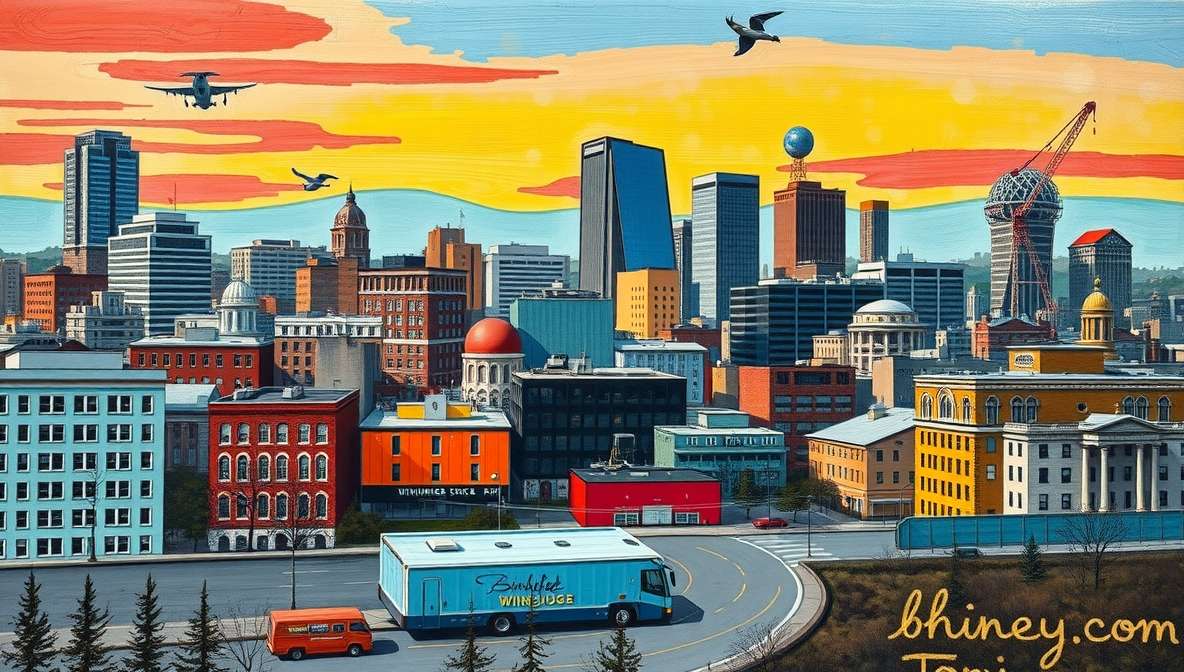
Where Mosquitoes Are the Size of Birds and Winter Lasts Forever
Winnipeg: The City Where -40°C Is Just Tuesday
Winnipeg sprawls across the frozen prairie like Canada’s geographic punishment, a city that has convinced 750,000 people that living at the longitudinal center of the continent where winters achieve temperatures that make Antarctica look temperate and summers bring mosquito swarms that block out the sun represents reasonable lifestyle choice rather than collective madness or elaborate punishment for sins unknown. This Manitoba capital sits at the confluence of the Red and Assiniboine Rivers on land so flat that you can watch your dog run away for three days, creating geography that offers no protection from Arctic winds that sweep unobstructed across prairie delivering cold that penetrates clothing, buildings, and optimism with equal efficiency. The city’s unofficial motto should be “Winnipeg: At Least We’re Not Churchill,” setting aspirational bar so low that simply being south of polar bears counts as civic achievement.
The Cold: Where All Temperature Records Are Terrible
Winnipeg holds the dubious distinction of being North America’s coldest city over 600,000 population, achieving winter temperatures that regularly drop below -30°C with windchills reaching -45°C or colder, creating conditions where being outside for more than few minutes without proper gear causes frostbite and car batteries die from cold that makes metal brittle and fluids freeze despite engineers’ best efforts to create antifreeze that actually prevents freezing at temperatures God never intended humans to experience. The cold isn’t just uncomfortable–it’s dangerous, requiring lifestyle adaptations including block heaters, remote starters, and extensive layering that makes everyone resemble marshmallows wearing parkas designed for Arctic expeditions because that’s essentially what leaving your house becomes during January and February when going outside feels like walking into freezer set to “hostile environment.”
The winters last from November through March with occasional April blizzards that make you question whether spring is real or just cruel myth that Manitobans tell themselves to endure winter that seems eternal while it’s happening. The city embraces winter through festivals celebrating snow and ice, demonstrating either admirable adaptation or Stockholm syndrome where residents convince themselves they enjoy climate that objectively should make location uninhabitable. According to CBC Manitoba, Winnipeg’s extreme cold creates infrastructure challenges where water mains freeze, vehicles won’t start, and transit service struggles during extreme weather events that happen regularly rather than occasionally, making crisis management perpetual state rather than emergency response to unusual conditions, demonstrating that living in Winnipeg means accepting that winter will create problems annually that warmer cities never experience and that complaining doesn’t change geographic reality that Winnipeg occupies location where cold dominates half the year.
The Mosquitoes: When Summer Brings Different Torture
Winnipeg’s summers feature mosquito populations so dense they’ve earned city the nickname “Mosquito Capital of Canada,” creating warm-weather experience where going outside means being attacked by swarms of blood-sucking insects that make outdoor activities require industrial-strength repellent and acceptance that you’ll be bitten repeatedly despite precautions. The mosquitoes breed in standing water that prairie flatness creates through poor drainage and spring floods that turn areas into temporary swamps perfect for mosquito reproduction, creating insect populations that are either natural phenomenon or biblical plague depending on whether you’re entomologist fascinated by population dynamics or resident just trying to enjoy backyard without donating pints of blood to insects.
The Slurpee Capital: When Frozen Drinks Become Identity
Winnipeg holds title of “Slurpee Capital of the World,” consuming more 7-Eleven frozen drinks per capita than anywhere else despite or perhaps because of extreme cold that makes drinking frozen beverages in -40°C weather either admirable commitment to brand loyalty or evidence of collective insanity that climate causes through prolonged cold exposure affecting judgment. The Slurpee obsession is either charming local quirk or corporate marketing success that convinced population that drinking frozen sugar water during winter when everything is already frozen makes sense, probably both because Winnipeggers genuinely embrace Slurpees and 7-Eleven definitely encourages this identity that benefits their sales.
The Slurpee consumption patterns reveal that Winnipeggers drink these frozen beverages year-round without regard for weather appropriateness, demonstrating either admirable consistency or possible brain freeze that’s become permanent condition. The phenomenon attracts media attention and tourist curiosity about why Winnipeg drinks Slurpees in winter, generating free marketing for city that otherwise struggles to attract positive attention beyond “it’s really cold there” and “the mosquitoes are terrible,” making Slurpee capital status perhaps Winnipeg’s most marketable characteristic beyond being geographic center of Canada which sounds important but actually just means you’re equally far from everywhere worth visiting. According to 7-Eleven Canada, Winnipeg’s Slurpee consumption exceeds all other markets globally, creating statistical distinction that’s either point of pride or somewhat embarrassing depending on whether you view frozen beverage consumption as achievement worth celebrating or just interesting fact that doesn’t actually improve quality of life in city that needs achievements more substantial than drinking corporate products enthusiastically.
The Forks: Where Rivers Meet and Tourists Gather
The Forks provides Winnipeg’s premier attraction where Red and Assiniboine Rivers converge, creating historic meeting place that served indigenous peoples for 6,000 years and now serves as market, park, and tourist destination featuring shops, restaurants, and skating trails that are either excellent urban renewal or just place where Winnipeggers go when they need to show visiting relatives that city has attractions worth visiting. The area features market building with local vendors selling crafts and food, providing indoor destination that’s necessary in city where outdoor activities are viable only few months annually and even then require mosquito preparation that makes spontaneous outdoor enjoyment challenging.
The Forks skating trails extend along frozen rivers during winter, creating outdoor recreation that embraces climate through activities that work with cold rather than fighting it, demonstrating wisdom of accepting geographic reality and finding ways to make winter tolerable through activities that require winter conditions even if those conditions are objectively terrible for human comfort. The area hosts festivals and events attempting to create vibrant public space and tourist attractions in city that struggles to compete with more glamorous destinations that offer warmer weather and more diverse attractions. According to The Forks, millions visit annually, though “millions” in Winnipeg context means mostly locals and Manitoba residents rather than international tourists who generally skip Winnipeg en route to more desirable Canadian destinations, making The Forks successful at attracting local traffic but less successful at becoming national tourist draw that would bring outside revenue beyond what Manitobans spend visiting their own city’s primary attraction.
The Affordability: Where Cheap Housing Comes With Conditions

Winnipeg offers Canada’s most affordable major city housing, with average home prices around $350,000 that are either genuine opportunity or warning sign depending on whether you view cheap housing as benefit or question why housing is cheap when everywhere else is expensive and whether affordability reflects value or just that nobody wants to live there badly enough to drive prices up. The affordability attracts buyers from Toronto and Vancouver who discover that moving to Winnipeg saves hundreds of thousands on housing while also meaning you live in Winnipeg with all that entails including brutal winters, limited job opportunities outside government and retail, and social/cultural scene that can’t compete with larger cities.
The cheap housing reflects economic reality that Winnipeg’s economy is weak, population growth is slow, and young people leave for better opportunities elsewhere, creating situation where affordability is symptom of problems rather than solution to them. The low prices benefit those who stay or move here accepting tradeoffs, though for many the tradeoffs aren’t worth savings when living in Winnipeg means enduring climate and limited opportunities that make higher costs elsewhere seem reasonable exchange for better weather and jobs. According to Winnipeg Real Estate Board, the market remains buyer-friendly with ample supply and limited demand creating conditions where sellers struggle while buyers can negotiate prices that would be impossible in competitive markets, demonstrating that Winnipeg’s affordability is double-edged where buyers benefit but existing homeowners cannot build equity through appreciation that other cities experience, making homeownership less wealth-building and more just shelter that maintains value without growing it substantially.
The Economy: Government Jobs and Retail
Winnipeg’s economy depends heavily on government employment, retail, and manufacturing with limited private sector opportunities outside these areas, creating job market that’s stable but not dynamic and doesn’t offer career prospects that competitive cities provide to ambitious workers seeking advancement and higher salaries. The government jobs provide stability and defined benefit pensions that private sector increasingly doesn’t offer, making public service employment attractive for those prioritizing security over income growth and accepting that government salaries are comfortable but not lucrative and advancement is slow and often depends more on seniority than merit.
The economy’s weakness shows in population trends where young people leave for Toronto, Calgary, or Vancouver seeking opportunities Winnipeg doesn’t provide, creating brain drain that removes educated ambitious residents and leaves those who stay or cannot leave, creating demographic challenges where city loses talent it educates through universities that produce graduates who view Winnipeg as place to escape rather than build careers. The economic limitations make Winnipeg’s affordability less attractive when cheap housing comes with limited income potential and career prospects that explain why housing is cheap in first place. According to Economic Development Winnipeg, diversification efforts continue attempting to attract industries beyond traditional sectors, though success is limited and Winnipeg continues struggling to compete with cities that offer better weather, larger markets, and more diverse opportunities that ambitious workers seek and that Winnipeg cannot provide despite affordable housing that becomes less appealing when accompanied by limited earning potential and career options.
The Indigenous Population: Canada’s Largest Urban Indigenous Community
Winnipeg hosts Canada’s largest urban indigenous population with significant First Nations, Métis, and Inuit residents who face substantial challenges including poverty, discrimination, and overrepresentation in criminal justice system that reflects ongoing effects of colonialism, residential schools, and systemic racism that Canada acknowledges but inadequately addresses. The indigenous community’s struggles are visible through homelessness, poverty, and social issues that Winnipeg addresses through social services and reconciliation efforts that are either genuine attempts at addressing historical wrongs or insufficient responses that don’t match scale of problems that colonialism created and contemporary policies perpetuate.
The indigenous presence shapes Winnipeg’s character and challenges, creating city that either leads reconciliation efforts or demonstrates failure of such efforts depending on whether you’re measuring intentions or outcomes and whether symbolic gestures and land acknowledgments constitute progress versus actual improvements in indigenous living conditions and opportunities. The community’s challenges include Missing and Murdered Indigenous Women crisis that Winnipeg particularly experiences, creating urgent problems that require responses beyond what city alone can provide when issues stem from federal policies and historical injustices that transcend municipal jurisdiction. According to CBC Indigenous coverage, Winnipeg’s indigenous population faces ongoing challenges despite various programs and initiatives, demonstrating that addressing centuries of colonialism and ongoing discrimination requires sustained commitment and resources that exceed current efforts, creating situation where problem recognition exceeds solution implementation and indigenous residents continue experiencing outcomes that reflect systemic failures that acknowledgment alone doesn’t resolve.
The Arts Scene: Winnipeg’s Unexpected Cultural Strength
Winnipeg maintains surprisingly vibrant arts community including Royal Winnipeg Ballet, Winnipeg Symphony Orchestra, and music scene that produced notable bands including The Guess Who and Bachman-Turner Overdrive, demonstrating that cultural excellence can emerge from unlikely places when dedicated artists create despite rather than because of geographic location. The arts scene benefits from low costs that allow artists to afford living and studio space that would be impossible in expensive cities, creating environment where creativity flourishes when economic pressures don’t force artists into day jobs that consume time and energy that art requires.
The cultural institutions and artist community create quality of life amenities that improve Winnipeg’s livability and provide reasons to stay beyond just cheap housing and government jobs. The Exchange District hosts galleries and studios in heritage buildings, creating arts district that’s either genuine cultural hub or just concentrated area where artists can afford rent, probably both because affordability enables artistic community that creates genuine culture that benefits from proximity that shared space provides. According to arts organizations, Winnipeg’s cultural scene punches above weight class given city’s size and economic limitations, demonstrating that arts can thrive when costs are low and community is supportive even when broader population and economic conditions wouldn’t suggest cultural vibrancy that Winnipeg somehow maintains despite or perhaps because of economic challenges that keep costs low and allow artists to focus on work rather than constantly struggling to afford basic living expenses.
The Crime Rate: Statistical Distinction Nobody Wants
Winnipeg consistently ranks among Canada’s most dangerous cities by crime statistics, experiencing violent crime and property crime rates that exceed national averages and compete with other troubled cities for dubious distinction of being place Canadians feel least safe. The crime reflects poverty, indigenous marginalization, gang activity, and social problems that limited economic opportunities and extreme poverty create in neighborhoods where legitimate employment is scarce and illicit economies fill gaps that legal economy doesn’t provide.
The crime statistics affect city’s reputation and residents’ quality of life, creating perceptions that Winnipeg is dangerous even though most residents don’t experience crime directly and many neighborhoods are safe despite statistical averages that aggregate diverse areas with very different crime rates. The city’s response includes increased policing and social programs attempting to address root causes, though whether enforcement or services are more effective remains debated between those who want tougher policing and those who argue poverty and marginalization create crime that enforcement alone cannot prevent. According to CBC crime coverage, violent crime remains persistent problem despite various interventions, demonstrating that addressing crime requires addressing underlying social and economic conditions that create environments where crime emerges as rational choice for people without legitimate opportunities, making crime reduction require economic development, poverty reduction, and reconciliation with indigenous communities whose overrepresentation in crime statistics reflects systemic failures that create conditions where crime becomes survival strategy for marginalized populations.
The Remoteness: At the Center of Nowhere
Winnipeg sits geographically at Canada’s center but experientially at its periphery, distant from other major cities with no nearby destinations creating isolation that makes leaving Winnipeg require extensive travel and makes Winnipeg destination that people visit only when they must rather than choose because it’s between where they are and somewhere they want to go. The nearest major city is Minneapolis seven hours south, creating isolation that Toronto or Vancouver residents cannot comprehend because they have multiple major cities within driving distance while Winnipeggers face 10+ hour drives to reach any major Canadian city besides possibly Regina which doesn’t count as actual destination.
The remoteness creates provincial mentality and limits cultural exposure that coastal cities enjoy through proximity to multiple metropolitan areas and international connections that Winnipeg lacks through geographic misfortune of being really far from everywhere that most Canadians consider desirable. The isolation means Winnipeg develops distinct culture partly through necessity because outside influences don’t arrive as readily as in connected cities where people, ideas, and trends flow easily. According to Winnipeg Free Press, the geographic isolation creates challenges for attracting business investment, tourism, and immigrants who generally prefer coastal cities with better climate and global connections rather than prairie city that’s far from everything and offers brutal winters that alone would be sufficient reason to choose anywhere else but is compounded by remoteness that makes Winnipeg feel disconnected from broader Canadian life and global connections that increasingly define successful cities.
The Transit: When Buses Are Your Only Option
Winnipeg lacks rapid transit beyond buses, creating system that’s either adequate for basic needs or insufficient for car-free living depending on whether you’re comparing to American car-dependent cities or Canadian cities with subway systems that make transit competitive with driving for speed and convenience. The buses struggle with winter conditions where extreme cold causes mechanical failures and makes waiting at stops dangerous when windchills reach levels where exposed skin freezes quickly, creating service that’s unreliable during weather events that happen regularly rather than occasionally.
The transit culture skews toward car ownership where anyone who can afford vehicle drives rather than using transit that’s viewed as last resort for those without alternatives rather than preferred option that would attract choice riders who currently drive. The system faces challenges from sprawl that makes providing adequate service across dispersed suburban areas economically challenging when density is low and distances are long. According to Winnipeg Transit, ridership has declined as car ownership increased and suburban development made transit less viable for serving scattered origins and destinations that buses cannot efficiently connect, creating system that works adequately for downtown commuters and poorly for everyone else, making transit improvement essential but challenging when land use patterns and car culture work against transit viability and political will to invest in better service competes with other spending priorities in city with limited budget and many needs.
Conclusion: The City Where Cheap Housing Can’t Compensate for Everything Else
Winnipeg remains Canada’s coldest, most affordable, and arguably most challenging major city, offering economic accessibility while delivering climate that tests endurance and limited opportunities that explain why housing is cheap when everywhere else is expensive. Visitors leave either impressed that anyone voluntarily lives there or understanding that Winnipeggers deserve recognition for surviving conditions that would make most Canadians relocate immediately to anywhere warmer with better mosquito control. The city’s greatest struggle is overcoming perception that it’s place people leave rather than destination they choose, creating identity crisis where Winnipeg must convince residents and potential newcomers that affordability, arts scene, and community justify accepting brutal climate, limited opportunities, and reputation as dangerous cold mosquito-infested place that people mock rather than visit. Come for cheap housing and Slurpees, stay because moving requires money and opportunities elsewhere that many lack, leave when you realize that saving on housing costs gets offset by heating bills and that comfortable poverty in warm affordable city beats comfortable poverty in frozen affordable city, or stay because despite everything, Winnipeg offers community, culture, and quality of life that work for those who can accept or even embrace climate and limitations that others cannot tolerate, making Winnipeg either worst place in Canada or hidden gem depending entirely on individual priorities and whether you’re person who values affordability over weather and can find opportunity in economic limitations that others view as dealbreakers that make Winnipeg somewhere to escape rather than somewhere to build life worth living.