

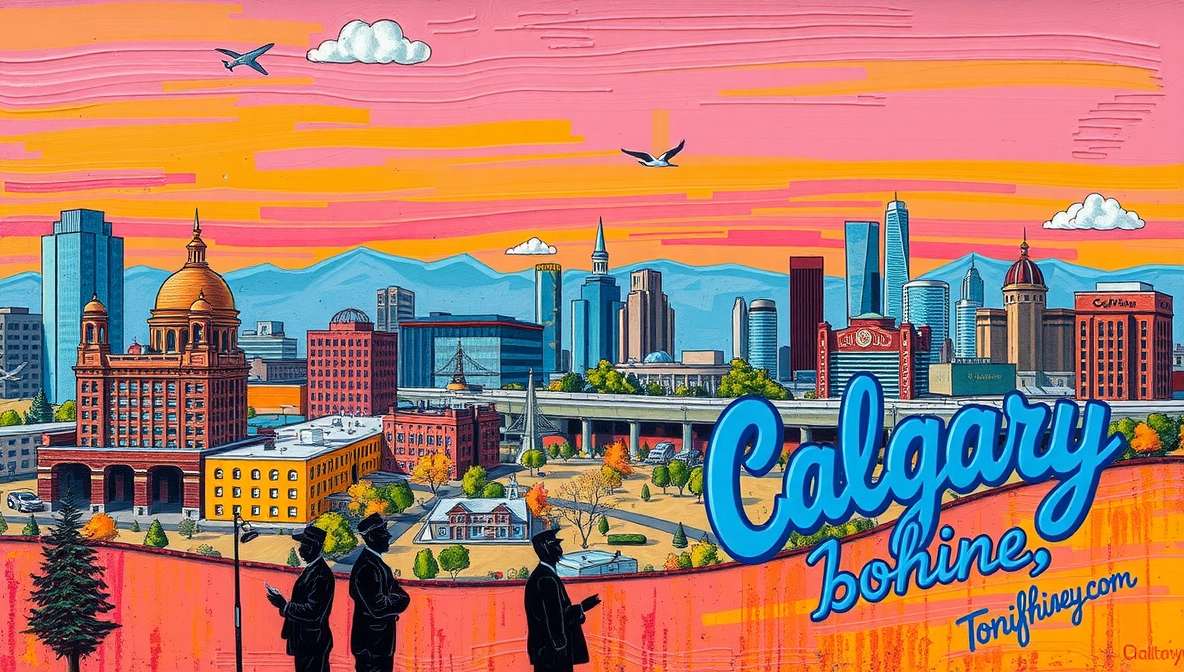
Where Oil Money Meets Cowboy Cosplay and Chinook Winds Confuse Everyone
Calgary: The City Where Corporate Cowboys Wear Suits Six Days a Week
Calgary sprawls across the Alberta prairie like a monument to oil money and Western mythology, a city that has convinced 1.3 million people that living in a place with eight-month winters, boom-bust economic cycles tied to commodity prices, and mandatory cowboy cosplay one week annually represents the pinnacle of Canadian success. This prairie metropolis transformed from ranching outpost to corporate energy headquarters while maintaining Western identity through Calgary Stampede and cultural performance of cowboy heritage that’s either authentic connection to ranching history or manufactured identity that oil executives adopted because “Petroleum Capital of Canada” lacked romantic appeal compared to branding around horses, rodeos, and Western mythology that markets better than geological facts about fossil fuel extraction.
The Oil Industry: Where Fortunes Rise and Fall With Barrel Prices
Calgary’s economy revolves around oil and gas with dependence that’s either pragmatic specialization leveraging natural resources or dangerous vulnerability to commodity price fluctuations that create boom-bust cycles where everyone’s wealthy when oil exceeds $100 per barrel and suddenly unemployed when prices crash below $50, creating economic rollercoaster that makes long-term planning challenging and workers’ fortunes dependent on OPEC decisions and global supply dynamics they cannot control. The downtown core features corporate towers housing energy companies, engineering firms, and service providers all dependent on extraction industry that generates massive wealth during booms and massive layoffs during busts.
The oil industry creates culture where pickup trucks, conservative politics, and skepticism about climate change become default positions not through reasoned analysis but tribal identity where questioning fossil fuels means questioning the industry that funds your mortgage, your neighbor’s job, and the city’s tax base, making environmental criticism feel like economic suicide regardless of scientific merit. The industry’s dominance means Calgary politics skew conservative with intensity that makes rest of Canada view Alberta as Texas North, comparison that Albertans either embrace proudly or resent depending on whether they’re celebrating independence and free-market ideology or defending province against stereotypes about redneck cowboys who don’t care about environment. According to CBC Calgary, the oil industry continues dominating despite diversification efforts, creating economy that rises and falls with petroleum prices in ways that make prosperity feel temporary and recession feel inevitable, demonstrating that resource dependence creates wealth but not stability, and that distinction matters when planning lives and communities that require predictable income streams that commodity extraction doesn’t provide.
The Boom-Bust Cycle: When Everyone’s Rich Until They’re Not
Calgary’s economic history features dramatic booms where workers earned six figures without degrees and housing prices soared as money flowed freely, followed by inevitable busts where layoffs cascaded through interconnected industries and for-sale signs proliferated as workers fled to find employment elsewhere, creating cycles that reward those who save during booms and devastate those who assumed prosperity was permanent rather than temporary condition dependent on factors beyond local control. The most recent bust following 2014 oil price collapse eliminated tens of thousands of jobs, demonstrating that Calgary’s wealth is conditional and that assuming boom times last forever is reliably proven wrong by crashes that periodically remind everyone that commodity economies are inherently unstable.
The Stampede: Ten Days of Cowboy Theatre and Pancake Breakfasts
The Calgary Stampede transforms the city every July into Western theme park where businesspeople wear cowboy hats and boots to offices, corporations host pancake breakfasts, and rodeo becomes serious business attracting participants and spectators who genuinely care about bull riding scores and chuckwagon racing times that rest of Canada finds baffling. The event is either authentic celebration of Western heritage or elaborate performance where oil executives cosplay as cowboys for ten days before returning to corporate suits and spreadsheet analysis, probably both because some connection to ranching history exists even if most participants’ relationship to actual ranching is purely symbolic and performative.
The midway features rides, games, and deep-fried foods that are either festival fun or health hazards depending on your relationship to funnel cakes and fried Oreos consumed while watching rodeo events that involve humans risking serious injury for entertainment and prize money that seems inadequate compensation for potential paralysis. The Stampede generates economic impact through tourism and local spending that justify city’s significant investment in infrastructure and promotion that make event Canada’s largest rodeo and Calgary’s defining annual moment where the city’s identity gets concentrated into ten-day Western festival. According to Calgary Stampede, the event attracts over one million attendees who come for rodeo, chuckwagons, and midway that are either genuine cultural experience or tourist trap depending on whether you’re celebrating Western heritage or just observing that charging $20 admission to watch people ride bulls seems expensive for entertainment that’s fundamentally watching potential injuries occur in real-time, though the event’s popularity suggests that many people find this appealing regardless of ethical questions about animal welfare and human safety that critics raise and defenders dismiss as outsiders not understanding Western culture.
The Chinooks: When Winter Takes Lunch Breaks
Calgary’s climate features chinook winds that periodically interrupt winter with warm föhn winds raising temperatures 20°C in hours, melting snow and creating false spring that lasts days before winter returns with vengeance, creating weather pattern that’s either welcome relief from brutal cold or cruel tease that makes winter worse by reminding you what warmth feels like before taking it away again. The chinooks result from westerly winds descending from Rockies and compressing adiabatically, creating meteorological phenomenon that’s scientifically interesting and experientially confusing when you need winter coat in morning and t-shirt by afternoon.
The rapid temperature swings allegedly cause headaches and mood changes in susceptible individuals who claim they can predict chinooks through physical symptoms, though whether chinook headaches are real medical phenomenon or psychosomatic responses remains debated by people who definitely have opinions about it. The chinooks create situations where Calgary’s winter is technically milder than other prairie cities but feels more psychologically challenging because constant temperature swings prevent adaptation to consistent cold that you can adjust to versus unpredictable variations that require maintaining both winter and summer wardrobes simultaneously. According to Environment Canada, Calgary averages 30-35 chinook days annually, creating climate that’s either more pleasant than Edmonton’s consistent cold or just different type of unpleasant that exchanges constant freezing for temperature chaos that’s warmer on average but more mentally taxing through unpredictability, and which you prefer probably depends on personality traits around preference for consistency versus variation and whether you’re person who appreciates surprise warm days or finds them disruptive to winter routines that sudden warmth interrupts before cold returns and everything freezes again.
The Sprawl: Where Every Neighborhood Looks Identical

Calgary’s urban form features extensive suburban sprawl creating city that’s physically enormous relative to population, with seemingly infinite subdivisions of similar houses stretching across prairie in developments that are either affordable family-friendly neighborhoods or soul-crushing suburban monotony depending on whether you value yards and parking over walkability and urban amenities that sprawl inherently lacks. The city’s low density creates car dependence where driving becomes mandatory for basically everything because distances between destinations exceed walking viability and transit service in sprawling suburbs is necessarily limited because covering dispersed areas with frequent transit is economically impossible.
The sprawl reflects development patterns prioritizing greenfield construction over densification, creating situation where building new suburbs on agricultural land at city periphery is easier than redeveloping existing areas through infill, resulting in city that consumes land rapidly while maintaining relatively low population density that makes infrastructure expensive to maintain across large geographic area. The suburban developments feature similar architectural styles creating neighborhoods that are difficult to distinguish, with rows of similar houses that look like they were designed by algorithm optimizing for construction efficiency rather than neighborhood character or visual interest. According to City of Calgary, sprawl continues despite city’s stated goals of increasing density, demonstrating that policy intentions and actual development patterns diverge when market forces and consumer preferences favor suburban single-family homes over dense urban housing that planners prefer but buyers apparently don’t want enough to change development patterns that continue creating car-dependent suburbs on city edges while older areas struggle to attract redevelopment investment.
The Plus 15: When Weather Forces Cities Underground (Or Above)
Calgary’s Plus 15 network provides elevated walkways connecting downtown buildings, creating climate-controlled pedestrian system that allows avoiding outdoor conditions during winter when wind and cold make surface walking unpleasant or dangerous, demonstrating that Calgary’s weather is so harsh that building parallel elevated city became reasonable solution rather than just improving winter maintenance of surface pedestrian infrastructure. The Plus 15 serves office workers during weekdays and becomes somewhat deserted evenings and weekends when offices close, creating system that’s extremely useful for specific demographic during specific hours and largely irrelevant otherwise.
The elevated walkways remove pedestrians from street level, creating desolate sidewalks and struggling street-level retail that can’t compete with climate-controlled mall environments that Plus 15 creates, demonstrating that solving weather problems through elevated indoor infrastructure creates street-level problems where public realm dies because everyone’s walking above or below rather than on actual streets. The system is either brilliant adaptation to harsh climate or problematic infrastructure that killed street life by separating pedestrians from ground level where vibrant urban environments need activity to thrive. According to Downtown Calgary, the Plus 15 is world’s most extensive elevated pedestrian network, achievement that’s either proud distinction or somewhat embarrassing admission that Calgary’s climate requires building alternate indoor city because outdoor city is too unpleasant to use during winter months, suggesting that maybe humans shouldn’t build major cities in locations where weather makes being outside dangerous or miserable substantial portions of year.
The Proximity to Mountains: Where Weekend Recreation Requires Three-Hour Drives
Calgary markets itself as close to Rocky Mountains, which is technically true in that mountains are visible from city and reachable by car, but “close” means 1-2 hour drives to mountain towns and 2-3 hours to major ski resorts, creating proximity that’s either convenient mountain access or just typical Western Canadian distances that aren’t actually convenient compared to living in mountain towns themselves. The mountain access attracts residents seeking outdoor recreation while accepting prairie city living during week for employment opportunities that mountains don’t provide, creating lifestyle where weekends involve significant driving to reach activities that are primary reason for tolerating Calgary’s harsh climate and oil-dependent economy.
The outdoor culture emphasizes skiing, hiking, and mountain activities with intensity suggesting that if you don’t recreate in mountains regularly you’re somehow failing to properly utilize Calgary’s geographic advantages, creating social pressure where weekend plans discussions become competitive sharing of mountain adventures that signal proper appreciation of Alberta’s natural assets. The culture attracts outdoorsy people and creates resentment among those who don’t care about mountains and just want to live somewhere with jobs and affordable housing without being judged for not spending weekends driving hours to hike or ski. According to Travel Alberta, mountain tourism drives significant economic activity and provides recreational opportunities that enhance quality of life for those who utilize them, though benefit is unevenly distributed where outdoorsy residents gain substantial quality of life while people who don’t care about mountains just live in cold prairie city without compensating natural amenity access that outdoor enthusiasts enjoy, creating divided city where geography’s value depends entirely on individual recreation preferences and whether you’re person who finds mountains sufficiently appealing to justify living in Calgary versus just wanting to live somewhere warmer with jobs that don’t depend on oil prices.
The Conservative Politics: Where Voting Liberal Is Revolutionary Act
Calgary politics skew heavily conservative with voting patterns that make the city reliably support conservative parties at all levels, creating political culture where progressive politics are minority position and expressing left-wing views can generate social and professional consequences in industries where conservative orthodoxy dominates. The conservatism reflects oil industry interests, Western alienation narrative suggesting that Eastern Canada doesn’t understand or respect Alberta, and cultural values emphasizing individual responsibility and free markets over collective action and government programs that conservatives view skeptically or hostilely depending on how far right their particular conservatism trends.
The political culture creates environment where discussing climate change, environmental regulation, or energy transition becomes fraught because these topics directly threaten industry that funds economy and jobs, making evidence-based policy discussion difficult when economic interests align against acknowledging scientific consensus that threatens business models. The conservative dominance means that political competition happens primarily within conservative spectrum where elections determine which shade of conservative governs rather than whether conservatives govern, creating system where left-leaning residents feel politically disenfranchised and conservative residents feel comfortable that their values dominate civic discourse. According to CBC political coverage, Calgary occasionally elects progressive mayors while maintaining conservative federal and provincial representation, demonstrating that municipal politics operate differently from higher levels where party affiliation and ideology matter more than local service delivery that municipal government primarily provides, creating situations where pragmatic municipal governance coexists with ideological provincial and federal representation that reflects deep conservative values that define Calgary and Alberta political culture whether individual residents share those values or just live here because employment opportunities brought them to city whose political culture they don’t necessarily endorse.
The Food Scene: Where Beef Is King and Vegetarians Suffer
Calgary’s food culture revolves around beef with intensity reflecting both ranching heritage and current reality that Alberta produces significant cattle, creating dining scene where steakhouses proliferate and being vegetarian means limited options and potentially social judgment from carnivores who view plant-based diets as suspicious rejection of Alberta’s agricultural identity. The steakhouses range from excellent establishments serving quality Alberta beef to mediocre chains trading on beef reputation while delivering unremarkable meat at premium prices that atmosphere and location justify more than actual food quality.
The food scene has diversified beyond beef to include ethnic restaurants reflecting immigrant populations, craft breweries serving local beers, and farm-to-table establishments emphasizing Alberta ingredients that are either genuine culinary innovation or just marketing local sourcing that everywhere does now but Calgary presents as special because apparently using local ingredients is noteworthy rather than baseline expectation. The dining costs reflect oil boom pricing that didn’t fully adjust during bust, creating situation where restaurant meals cost amounts that seem excessive for prairie city that’s not coastal or particularly renowned for culinary excellence beyond beef. According to Avenue Calgary, the restaurant scene offers diversity and quality that exceed Calgary’s reputation, though prices reflect expectations of oil-wealthy clientele that may not match current economic reality where not everyone earns six figures anymore but restaurants still charge like everyone does, creating disconnect between pricing and actual customer base that makes dining out expensive proposition relative to incomes that no longer match boom-time levels.
The Real Estate: Affordable-ish But With Conditions
Calgary housing costs substantially less than Vancouver or Toronto, making it relatively affordable by Canadian standards with average prices around $500,000 that are either reasonable or still expensive depending on whether you’re comparing to other major Canadian cities or to actual income levels and historical affordability metrics suggesting that even Calgary’s “affordable” housing requires dual incomes and substantial down payments. The market crashed during oil bust when layoffs and out-migration caused prices to drop and inventory to surge, demonstrating that Calgary real estate depends on oil industry health and that assuming prices only rise is mistake that boom-time buyers made and recession-time sellers learned through losses.
The market’s volatility creates risk where buying property means betting on oil industry recovery because if sector declines further property values follow, making Calgary real estate investment not just about house itself but implicit wager on fossil fuel future that may or may not align with global energy transition toward renewables. The affordability relative to other cities attracts buyers from Vancouver and Toronto seeking detached homes at prices that are unattainable in those markets, though those buyers then discover that cheaper housing comes with tradeoffs including harsh climate, oil-dependent economy, and conservative culture that differs substantially from coastal cities they left. According to Calgary Real Estate Board, the market remains buyer-friendly with inventory exceeding demand, creating opportunities for purchasers and challenges for sellers who cannot get prices they expect because supply exceeds demand when population growth stalled during recession and hasn’t fully recovered, demonstrating that Calgary’s affordability reflects weakness as much as virtue and that cheaper housing is less attractive when accompanied by economic uncertainty and limited employment opportunities in industries experiencing structural decline.
The Transit: When Suburban Sprawl Meets Limited Service
Calgary’s transit system features C-Train light rail and bus network that serve downtown and established communities reasonably well while providing limited service to sprawling suburbs where car dependency is essentially mandatory because transit frequency and coverage make bus transit impractical for most trips when wait times exceed 30 minutes and routes don’t efficiently connect suburban origins and destinations. The C-Train is either decent rapid transit or just okay depending on whether you’re comparing to American cities with terrible transit or European/Asian cities with excellent transit that make Calgary’s system look underdeveloped.
The transit culture skews toward downtown commuters who use transit for work trips and drive otherwise, creating ridership patterns that are heavily peaked during rush hours and dramatically reduced evenings and weekends when discretionary trips dominate and people prefer driving. The system struggles with fare evasion on honor-system C-Train where paying is optional if you’re willing to risk fines from occasional enforcement, creating revenue losses and resentment among paying riders who subsidize freeloaders. According to Calgary Transit, ridership declined during recession and hasn’t fully recovered, demonstrating that transit use correlates with employment and that when jobs disappear people either leave Calgary or drive more because transit is viewed as inferior option that economic stress makes feel less affordable even though driving costs more, suggesting that transit struggles with perception problems where riders view it as last resort rather than preferred option and that perception drives usage patterns that make improving service difficult when low ridership doesn’t justify increased investment in service improvements that might attract riders who currently avoid transit because existing service is inadequate.
Conclusion: The City Where Oil Pays and Cowboys Play
Calgary remains Canada’s energy capital and periodic boom town, offering opportunity and prosperity during good times and struggle and uncertainty during inevitable busts that follow every boom in commodity-dependent economies. Visitors leave either impressed by modern city with mountain backdrop or aware that Calgary’s prosperity is conditional on fossil fuel prices and that building economy on depletable resource creates inherent instability regardless of current conditions. The city’s greatest challenge is transitioning from oil dependence toward diversified economy that provides stability when energy sector contracts, though achieving diversification is difficult when oil generates such substantial wealth during booms that investing in alternatives feels unnecessary until busts arrive and make diversification urgent but capital-constrained when needed most. Come for Stampede and mountain proximity, stay for oil industry employment and affordable housing relative to Vancouver, leave when sector downturn eliminates job or recognize that Calgary’s future is uncertain as global energy transition threatens industry that built city and continues defining its economy and culture, or stay because despite boom-bust cycles and harsh winters and conservative politics, Calgary offers lifestyle that works until it doesn’t and that determination depends on individual employment prospects, tolerance for economic uncertainty, and whether you’re person who loves mountains enough to endure prairie winters and can accept that city’s prosperity is temporary condition dependent on commodity prices rather than sustainable economy that diversification would provide but political culture resists because oil has worked so far despite evidence that working sometimes doesn’t mean working forever.