

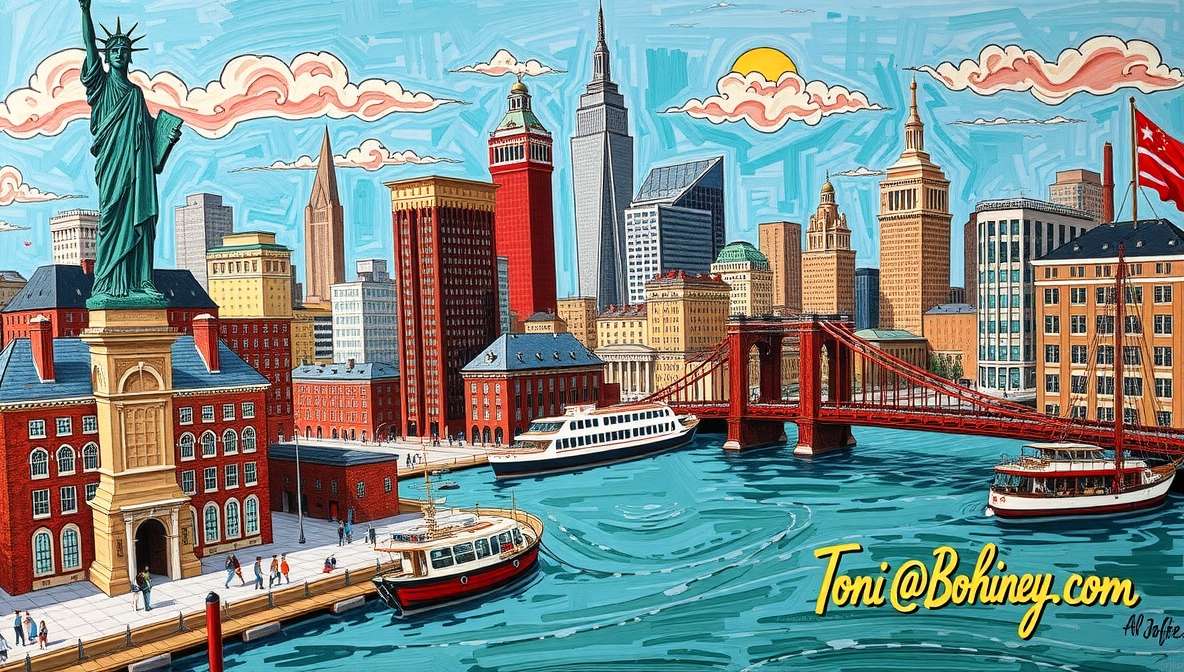
Where Driving Rules Are Suggestions and Dunkin’ Runs Are Mandatory
Boston: The City Where Revolutionary History Meets Aggressive Driving
Boston clings to the Massachusetts coastline like a barnacle with a superiority complex, a city that has spent 400 years reminding everyone it’s historically important while simultaneously perfecting the art of making streets that defy logic and sanity. This cradle of American liberty has transformed from revolutionary hotbed to expensive college town where students outnumber rational city planning decisions. The Freedom Trail winds through downtown, marked by red bricks that tourists follow while dodging drivers who apparently believe traffic laws are colonial-era suggestions that no longer apply.
The Accent: Where Rs Go to Die
The Boston accent represents one of America’s most distinctive linguistic phenomena, transforming normal English into something that sounds like someone’s fighting with their own mouth. Rs disappear from words that contain them and mysteriously appear in words that don’t, creating sentences where people “pahk the cah in Hahvahd Yahd” despite Harvard Yard not having parking. The accent thickness correlates directly with neighborhood proximity to downtown and number of generations your family has lived here, creating a verbal class system that marks outsiders immediately.
Locals will insist they don’t have accents, a claim so objectively false that it becomes performance art. The accent carries social weight, signaling authentic Boston credentials versus transplant status. According to The Boston Globe, the accent is fading among younger generations, probably due to the influx of college students who arrive from elsewhere and slowly infiltrate the city with their non-regional dialects and functioning R pronunciation.
Dunkin’ Donuts: The Real State Religion
Dunkin’ Donuts operates as Boston’s primary fuel source, appearing on every corner with frequency that suggests zoning laws require minimum Dunkin’ density. Residents consume iced coffee year-round, including during blizzards, because apparently drinking hot coffee during winter would be too sensible. The chain’s cultural dominance means people actually say they’re “going to Dunkin'” without specifying that it’s a donut shop, assuming everyone understands that Dunkin’ is a destination rather than a verb.
The Driving: Where Turn Signals Are Considered Weakness
Boston driving operates on principles that violate both traffic laws and basic human decency. Streets follow cow paths from colonial times, creating a layout that makes no geometric sense and actively punishes anyone using GPS navigation. Roads change names randomly, one-way streets appear without warning, and rotaries function as gladiatorial arenas where only the aggressive survive. Turn signals apparently signal weakness, so nobody uses them, creating a city where defensive driving means assuming everyone around you is actively trying to cause accidents.
The Big Dig construction project lasted fifteen years and cost billions, creating tunnels that supposedly improved traffic but mostly just moved congestion underground. Parking remains impossible and expensive, with spots costing more per month than rent in most American cities. According to MassDOT, Boston ranks among America’s worst cities for traffic congestion and road quality, information that surprises nobody who’s ever attempted to drive here or witnessed the vehicular chaos locals call normal commuting.
The Neighborhoods: Tribal Territories With Italian Pastries
The North End maintains its Italian-American identity with restaurants serving red sauce and cannoli to tourists who line up for the Instagram-famous Mike’s Pastry. The neighborhood features narrow streets designed for horses rather than SUVs, creating traffic situations where cars squeeze through passages with inches of clearance. Old Italian men sit outside cafes drinking espresso and judging passersby, maintaining traditions that have survived despite the neighborhood becoming increasingly expensive and less Italian with each passing year.
South Boston (Southie) transformed from working-class Irish stronghold to yuppie paradise faster than longtime residents could complain about it, which is saying something because Bostonians can complain professionally. The neighborhood now features luxury condos, trendy restaurants, and housing prices that displaced the families who gave Southie its character. Cambridge exists across the river, home to Harvard and MIT, creating a city-within-a-city where intellectual superiority is assumed and smug satisfaction is the default emotional state. According to Boston Magazine, each neighborhood maintains distinct identity, though that identity increasingly means “expensive and full of college students or recent graduates who work in biotech.”
The Universities: Where Half the Population is Temporarily Slumming
Boston contains over 50 colleges and universities, transforming the city into one massive campus where students outnumber actual residents and everyone under 30 looks like they’re either attending class or pretending to attend class while day-drinking. Harvard looms over Cambridge with the gravitational pull of concentrated prestige and endowment funds that exceed most countries’ GDPs. Students wear Harvard sweatshirts with casual pride that suggests they’re unaware announcing your Ivy League attendance makes you insufferable, or perhaps they’re very aware and don’t care.
MIT produces engineers and tech entrepreneurs who’ll either change the world or create apps nobody asked for, with similar enthusiasm for both outcomes. Boston University sprawls along Commonwealth Avenue, essentially becoming the avenue. Northeastern runs its co-op program, convincing students that working for free with academic credit somehow benefits them more than the companies getting free labor. According to WGBH, the universities contribute billions to the local economy while simultaneously driving up housing costs and creating neighborhoods where everyone’s either a student or serving students, creating economic dynamics that benefit some and displace others.
Sports: Where Loyalty is Mandatory and Rational
Boston sports fans maintain aggressive devotion that borders on religious fanaticism, supporting teams with passion that survives even extended losing streaks, though recent decades have provided limited practice with that concept. The Red Sox ended their World Series drought in 2004, breaking an 86-year curse and forcing fans to develop entirely new personality traits not based on suffering. Fenway Park remains America’s oldest ballpark, featuring seats designed for humans significantly smaller than modern Americans and views obstructed by poles that were structural necessities in 1912 but are now just expensive inconveniences.
The Patriots dominated football for two decades, creating a generation of fans who think winning Super Bowls regularly is normal rather than unprecedented dynasty. The Celtics and Bruins provide additional championship opportunities, making Boston one of America’s most successful sports cities, which fans mention frequently while somehow maintaining underdog mentalities despite overwhelming evidence to the contrary. According to ESPN, Boston sports culture creates intense loyalty and equally intense hatred from fans of other cities, suggesting that winning everything makes you unpopular, which seems unfair but also understandable.
The Freedom Trail: History You’ll Walk Past While Texting
The Freedom Trail connects sixteen historical sites via a 2.5-mile walking path marked by red bricks, creating America’s most literal interpretation of following the footsteps of history. Tourists walk the trail photographing colonial buildings while guides in period costume explain Revolutionary War events to people who are definitely checking their phones. Paul Revere’s House stands in the North End, a small structure where Revere lived before his famous midnight ride, now surrounded by Italian restaurants and tourists seeking cannoli rather than historical enlightenment.
The USS Constitution, “Old Ironsides,” remains the world’s oldest commissioned warship still afloat, which is either impressive maritime preservation or evidence that the Navy really doesn’t like throwing things away. Faneuil Hall and Quincy Market attract crowds seeking both history and overpriced food court dining, creating venues where revolutionary speeches once rang out and now tourists buy lobster rolls at prices that would make colonists reconsider taxation without representation. According to The Freedom Trail Foundation, millions walk the trail annually, proving that Americans will embrace history if you make it walkable and include gift shops.
The Food: Seafood and Irish Pubs in Equal Measure
Boston seafood culture revolves around lobster rolls, clam chowder, and arguments about which restaurant serves the best version of both. Lobster rolls cost approximately $30 for sandwiches that contain maybe four ounces of lobster meat mixed with enough mayonnaise to constitute a health warning. Clam chowder appears in two varieties: New England style (cream-based and correct) and Manhattan style (tomato-based and wrong according to every Bostonian who’s ever lived). The city maintains strong opinions about seafood preparation, discussing chowder recipes with intensity usually reserved for political debates.
Irish pubs dominate the bar scene, serving Guinness and shepherd’s pie to patrons who may or may not have Irish ancestry but definitely claim they do after three drinks. The bars fill during sports games, creating atmospheres where grown adults scream at televisions with passion that suggests the game outcomes personally affect their lives, which emotionally they probably do. According to Eater Boston, the food scene extends beyond seafood and Irish cuisine, featuring diverse dining options that attract foodies and people who just want to eat without discussing the provenance of every ingredient.
The Weather: Four Seasons of Complaints
Boston weather provides year-round opportunities for misery, cycling through seasons that each bring distinct discomforts. Winter arrives with New England determination, dumping snow that accumulates into gray mountains that last until April. The city’s snow removal strategy apparently involves pushing it into piles that block sidewalks and create parking nightmares. Space savers appear after storms, where residents claim shoveled parking spots using chairs, cones, or threatening notes, a tradition that’s either community custom or territorial madness depending on your parking situation.
Summer brings humidity that transforms the city into a sauna, creating conditions where walking outside means immediate sweating. Fall provides approximately three weeks of pleasant weather with beautiful foliage, the brief window when outdoor activities don’t require either winter gear or excessive hydration. Spring technically exists but mostly feels like extended winter with occasional warm days. According to National Weather Service, Boston averages 44 inches of snow annually, information that doesn’t capture the psychological toll of winter lasting from November through April or the particular shade of gray that defines Boston winter skies.
Real Estate: Where Colonials Cost What They Shouldn’t
Boston real estate operates on the principle that historical significance justifies absurd prices, with houses built in the 1800s costing millions despite having layouts that don’t accommodate modern living. Brownstones in Back Bay command prices that would buy estates elsewhere, offering multiple floors of cramped rooms, steep stairs, and charming architectural details that don’t quite compensate for lack of storage and parking. Apartments in renovated factories or triple-deckers rent for amounts that make recent college graduates question their Boston commitment.
The housing shortage means bidding wars over properties that need extensive renovation, with buyers waiving inspections and offering cash above asking price. According to Zillow, Boston’s median home price continues climbing, creating affordability crises that price out the service workers, artists, and non-tech professionals who contribute to urban diversity. The market reflects broader trends where historical cities become playgrounds for wealthy professionals while everyone else commutes from increasingly distant suburbs or accepts roommate situations well into their thirties.
The T: Public Transit That’s Trying Its Best
The MBTA, called “The T,” provides public transportation with varying degrees of success depending on the day, weather, and mysterious factors known only to transit gods and frustrated commuters. The system includes America’s oldest subway tunnel, which sounds historically significant until you’re stuck in it during delays that seem to occur with concerning regularity. Trains arrive on schedules that function more as aspirational goals than actual timetables, creating commutes where being late is expected rather than exceptional.
The Green Line operates with special incompetence, featuring above-ground trolleys that get stuck in traffic and underground trains that stop randomly between stations. Winter brings additional challenges as trains freeze, tracks ice over, and the entire system occasionally shuts down because apparently nobody in Boston’s 400-year history solved cold-weather transportation. According to MBTA, improvements and upgrades continue addressing service issues, though improvements seem to create new problems faster than they solve existing ones, suggesting either complicated infrastructure challenges or possibly a curse from angry Puritan ghosts.
Conclusion: The City That’s Wicked Smart About Being Wicked Expensive
Boston remains one of America’s most historically significant and currently expensive cities, where revolutionary history meets modern real estate prices that would make colonists reconsider their independence struggle. Visitors leave either charmed by the history, culture, and seafood or traumatized by the driving, weather, and cost of everything. The city’s greatest achievement is maintaining its historical character while simultaneously becoming increasingly unaffordable and less accessible to the working-class populations that built its neighborhoods. Come for the Freedom Trail, stay because your career in biotech or education requires it, leave when you finally admit that paying $2,500 monthly for a studio apartment in a neighborhood you’ve never heard of while dodging aggressive drivers through streets designed by drunk colonials maybe isn’t the life experience you envisioned, but somehow you’ll miss the Dunkin’ runs and aggressive sports fandom anyway because Boston has that effect on people who appreciate history, harbor views, and cities where everyone sounds angry even when they’re being friendly.
