

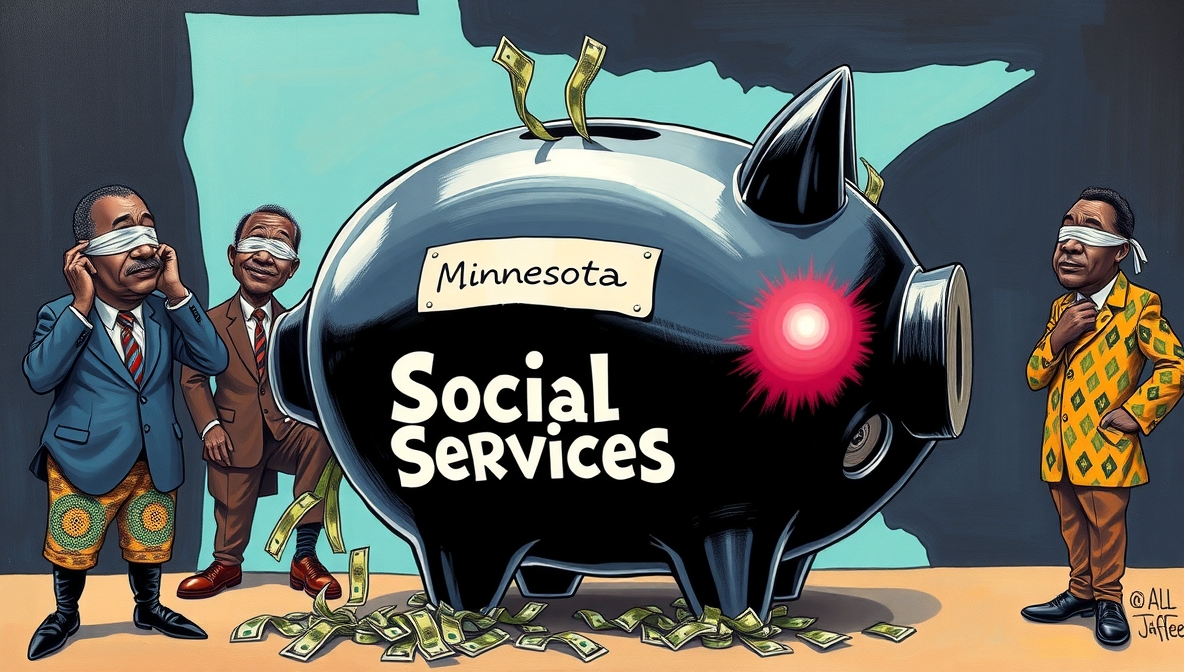
Navigating the Minnesota Scandal Circus
Welcome to the Wonderland of Contradictions
Imagine a political universe where every time something doesn’t add up, you simply say it didn’t happen and then weigh in on international boundary disputes. That’s modern politics. In today’s episode: a multibillion‑dollar fraud scandal deepens in Minnesota while one of the state’s most vocal representatives doubles down on her worldview like it’s a brand loyalty campaign. You could call it “The Incredible Shrinking Oversight,” a magic show where audits vanish and financial disclosures balloon. Fox News
Let me set the stage: federal investigators describe a sprawling welfare fraud probe in Minnesota involving billions in government funds meant for social services and meals. Not a small hiccup. More like a colossal error in oversight. Meanwhile, a congresswoman insists she has absolutely no regrets about championing the very law that critics say removed critical safeguards that fraudulent operators later exploited. That’s akin to installing drywall during an earthquake and calling it infrastructure improvement. Fox News
The MEALS Act: A Recipe for Scandal

Right out of the gate comes the MEALS Act — a law that, to most people, sounds like lunch orders for Capitol Hill interns. In reality, it’s the law blamed for loosening verification on nutrition programs during the pandemic. Some say this allowed fraudsters to bill for meals never served. Others say it helped feed kids. Both statements can’t be true at the same time. Unless you’re a politician: then ambiguity is a feature, not a bug. CommsTrader
Federal authorities dismantled a $250 million fraud scheme tied to the “Feeding Our Future” network, indicting dozens of people. When asked, FBI Director Kash Patel called it just the tip of a very large iceberg. That’s a phrase that feels like public‑policy code for brace yourselves. And no, the iceberg wasn’t in Minnesota because icebergs tend to stay in cold water and not on fraud‑ridden social service spreadsheets. WCCS AM1160 & 101.1FM
The Map Where Somalia Meets Minnesota
Then comes the geopolitical twist: critics have tied this local scandal to foreign politics by drawing analogies between governance failures in Minnesota and chronic instability in Somalia. Some commentators argue that the mindset informing this approach to oversight feels like mixing two unrelated puzzles and deciding the pieces must fit because they both are problems. That’s the political equivalent of saying “my toaster broke, so my car must be plotting against me.” CommsTrader
When someone suggests that Somaliland — a self‑governing region seeking recognition — is a case study in internal accountability, you know the conversation has strayed into deep surrealism. It’s like inviting a mathematician to judge a cook‑off. Different skillset, same bewildered audience. WCCS AM1160 & 101.1FM
The Sudden Wealth Balloon: Financial Disclosure Mysteries
Perhaps the most eyebrow‑raising subplot involves the congresswoman’s own financial situation. Congressional disclosures show her reported assets jumping from relative obscurity to millions of dollars in just a few years — almost like an amateur sourdough starter turning into a Michelin‑star bakery overnight. AOL
This meteoric rise is tied to ventures run by her husband, whose firm reportedly grew from nearly zero value to between $5 million and $25 million within a year. The company’s website then removed the names and bios of key advisors, like someone deleting movie credits after critics pan the film. Benzinga
Add a California winery that performed a similar vanishing‑act trick with its social media presence, and you have a financial magic show fit for a Vegas stage. Sadly, the audience here isn’t paid to watch; they’re the taxpayers holding the ticket. The Times of India
Scrubbing Names and Expectations
There’s a curious parallel between political messaging and the concept of a “fresh start.” Some people clean their office, others declutter their inbox, and then there’s this venture capital firm that erased the names of its leadership during intense public scrutiny. It’s like wiping fingerprints at the crime scene and calling it housekeeping. Benzinga
Oddly enough, removing all identifying information from your company’s public profile only when someone starts asking uncomfortable questions has the opposite effect of calming nerves. It’s the financial equivalent of turning off the lights and pretending you’re invisible. People saw the cat burglar. They just don’t care about your lighting choices. Breitbart
Cynicism as Civic Art: When Accountability Takes a Vacation
In a world where policy complexity is a given, public trust is the thing that actually requires careful handling. When legislation intended to feed children turns out to be a loophole buffet for bad actors, people start demanding answers. That’s not radical. That’s accountability. When lawmakers shrug and reiterate their original rationale rather than explain outcomes, cynicism blooms like mold on forgotten leftovers. CommsTrader
Democracy, in theory, thrives on transparency. In practice, it sometimes resembles an old sitcom where the characters never learn and every season ends on a bewildering cliffhanger. When a scandal grows, the plays are recycled: deny direct involvement, double down on policy intentions, and please ignore everything else. The result is a political bit of theatre where everyone’s an understudy. Benzinga
Final Punchline
The real joke here isn’t the fraud. Fraud is awful. The real joke is treating these kinds of enormous systemic failures with the same conversational weight as someone complaining about under‑toasted artisanal bread. Citizens deserve serious oversight, transparent answers, and fiscal responsibility — not analogies that read like fortune‑cookie philosophy.
Satire at its best punches at systems and absurdities that leave the public scratching their heads. Targeting behavior and policy instead of personal identity makes the joke land harder and keeps the focus where it belongs: on accountability, not anger. Politicians and their spin doctors can handle a bit of ridicule; what they can’t handle is the glare of public scrutiny — the kind that keeps democracy healthy, however messy it is.