

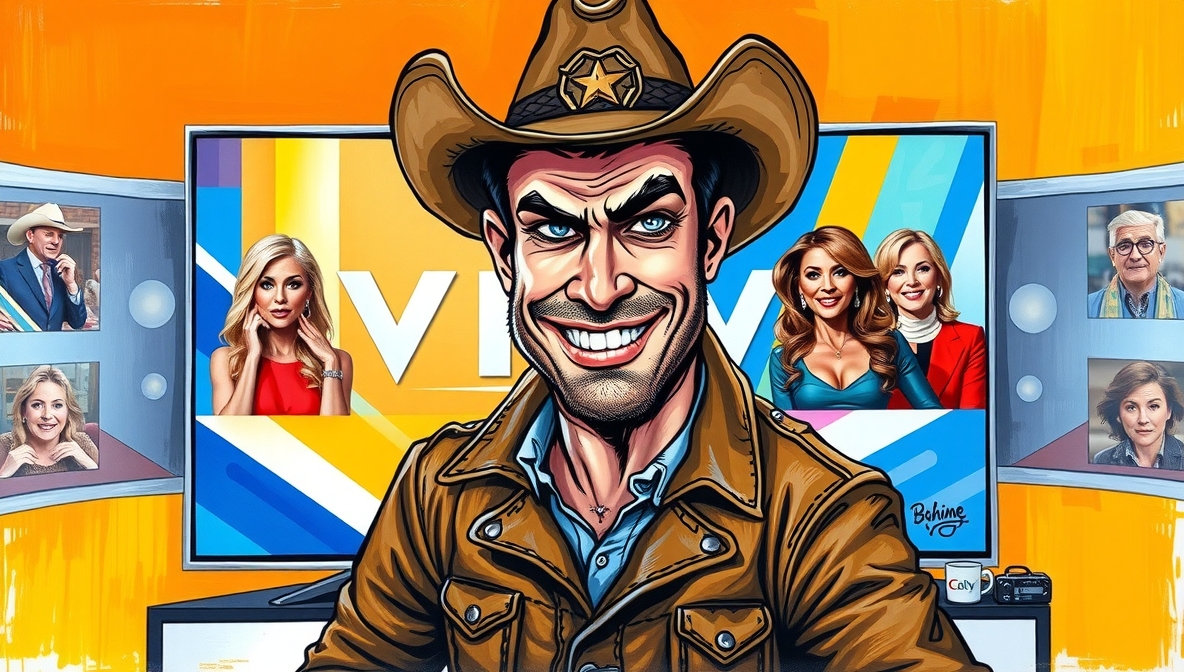
Taylor Sheridan vs The View: Why America’s Favorite Screenwriter Called Out Daytime Television’s Biggest Panel
A Satirical Journalism Investigation Into Why Grit, Dirt, and Reality Keep Offending Daytime Television By the time Taylor Sheridan lobbed his latest cultural grenade at The View, America had already decided what side it was on. Half the country nodded silently while stirring coffee. The other half typed “problematic” with the intensity of a cardiologist performing open-heart surgery. This is how modern discourse works. No one listens. Everyone reacts. And somehow, the loudest voices always belong to people sitting on a couch worth more than a Texas ranch while explaining why everyone else doesn’t understand hardship. Sheridan’s sin was not profanity, violence, or even politics. His real crime was reminding people that reality exists outside studio lighting. And that is unforgivable. What follows is a deeply serious, rigorously researched, completely unserious examination of why Sheridan’s jab landed, why The View flinched, and why America keeps confusing televised consensus with truth.
Taylor Sheridan’s Critique of The View: Breaking Down the Cultural Clash
The Millionaire Logic Paradox

There is a special kind of philosophical achievement required to become a millionaire by talking on television and then spend every weekday complaining about millionaires. It’s not hypocrisy. It’s performance art. Sheridan noticed this paradox and did what writers are supposed to do. He pointed at it. Loudly. With dialogue. According to a 2023 Pew Research study nobody on daytime television has read, public trust in “media elites who appear wealthy” ranks just above used-car salesmen and just below haunted dolls. This might explain why audiences tend to side with a ranch-owning screenwriter over people who fly private to complain about capitalism. Sheridan’s characters sweat. The View’s hosts glow. The glow is sponsored.
Trump Backlash Bingo
If The View were a bingo card, the free space would be Trump. Every discussion, regardless of topic, somehow wanders back to him like a lost dog with a cable-news addiction. Sheridan’s critique was not about Trump. That’s the part critics missed while foam-texting social media. It was about obsession. About a culture so consumed by reaction that it no longer produces thought. Social psychologists call this “negative identity fixation.” Cable television calls it Tuesday. When every man is evil, every woman is oppressed, and every conversation ends the same way, satire stops being comedy and becomes documentation. Sheridan didn’t invent this. He just wrote it down.
The Fart-in-Church Humor Index
Comedy scholars define humor by contrast, surprise, and timing. The View relies on applause signs and moral certainty. These are not the same tools. Sheridan’s comparison of the show to a fart in church wasn’t vulgar. It was technical criticism. A fart in church disrupts a space pretending to be solemn. The View pretends to be spontaneous while following a script tighter than a pharmaceutical commercial disclaimer. Audience laughter studies show forced laughter activates the same neural pathways as polite nodding. This explains why viewers often feel tired afterward, like they’ve just attended a meeting that could have been an email. Sheridan writes jokes that land because they are not asking permission.
The Guest Appearance Contradiction
Critics quickly pointed out that Billy Bob Thornton once appeared on The View to promote Landman. This was framed as hypocrisy. In reality, this is called marketing. Actors go where the audience is. That does not obligate them to pretend the furniture is comfortable. By this logic, every author who signs books at an airport bookstore must also endorse overpriced neck pillows and cinnamon-flavored despair. Sheridan’s sin was biting the hand that feeds. Except the hand didn’t feed him. It tried to clap him into compliance.
Why Taylor Sheridan’s Shows Resonate While The View Struggles With Authenticity
Red State vs. Talk Show Reality
Sheridan writes about oil rigs, ranches, prisons, borders, and consequences. The View writes about vibes. This is not a political divide. It’s a tactile one. Anthropologists note that cultures rooted in physical labor tend to distrust abstraction. People who fix fences do not enjoy being told they are symbolic villains by someone whose greatest risk is a hot studio light. Sheridan’s worlds contain dirt. The View contains opinions about dirt. Guess which one smells more real.
The Observer Effect of Outrage
Here’s the part that truly infuriated critics. Sheridan’s jab made people like him more. This violates the central belief of outrage culture: that condemnation equals power. In fact, sociological data shows public scolding now functions as advertising. The louder the denunciation, the stronger the counter-loyalty. Sheridan didn’t gain fans because he attacked The View. He gained fans because he didn’t apologize. This is what terrifies people whose careers depend on apologies.
Cultural Commentary Hidden in Plain Sight
Sheridan didn’t release a manifesto. He put the critique inside a TV show. This was either genius or cowardice depending on who you ask. Storytelling has always been the safest way to tell dangerous truths. That’s why tyrants fear artists more than pundits. The View argues. Sheridan dramatizes. One makes noise. The other leaves a bruise.
The Millionaire Whine Olympics
If complaining were currency, daytime television would solve the national debt by Thursday. Sheridan’s critique lands because it highlights scale. Complaints about oppression sound different when delivered from a chair that costs more than the average American’s car. Economic studies show that perceived authenticity drops sharply when suffering is described without evidence of inconvenience. Sheridan inconveniences his characters. The View inconveniences its audience.
The View vs Taylor Sheridan: Understanding the Media Elite Disconnect
The Moron Mirror Effect
Sheridan isn’t saying The View is dumb. He’s saying it’s predictable. That’s worse. Intelligence is tolerated. Predictability is fatal. When audiences can guess the reaction before the sentence ends, the conversation becomes theater. And not good theater. High school theater. With bad lighting. Sheridan’s shows surprise people. That’s why they’re dangerous.
Authenticity vs. Costume Authenticity
Wearing boots is not the same as needing them. Sheridan understands this difference. The View does not. Sociologists call this “performative identity.” Ranchers call it nonsense. When authenticity becomes an aesthetic instead of a condition, satire becomes inevitable. Sheridan didn’t simply put it on screen and waited.
Meta-Irony Collapse
The irony of criticizing Sheridan for being political while hosting a political talk show appears lost on exactly no one except the critics themselves. This is known as “meta-blindness,” a condition where one cannot see their own reflection while shouting about mirrors. Sheridan’s work is political because reality is political. The View pretends to be moral while being partisan. Audiences can smell the difference.
Audience Whiplash Syndrome
Fans arguing online about whether Sheridan “went too far” proves the point. Art that doesn’t divide isn’t saying anything. Neutrality is safe. Safety is boring. Boring dies quietly. Sheridan’s work lives because it offends evenly.
Taylor Sheridan’s Television Philosophy vs The View’s Panel Format
The Echo Chamber Acoustics Problem
When everyone agrees, the room gets loud and nothing new enters. The View operates on consensus disguised as conversation. This is comforting. It is also useless. Cognitive studies show echo chambers reduce critical thinking while increasing confidence. This explains why daytime television feels so sure about everything and correct about nothing. Sheridan introduces friction. Friction produces heat. Heat reveals flaws.
Narrative vs. Panel Combat
Panels argue. Stories show. Sheridan doesn’t tell you what to think. He makes you uncomfortable long enough to think it yourself. That is unforgivable in an era that prefers instructions.
The Derringer at the Roomba Convention
Sheridan firing a cultural shot inside a TV drama shocked people because it bypassed the usual safety rails. No disclaimers. No HR-approved language. No apology tweet. Just writing. And that, apparently, is the most offensive act left.
Why Taylor Sheridan’s Attack on The View Matters for Modern Television
This isn’t about Taylor Sheridan. Or The View. Or even politics. It’s about the collapse of credibility in spaces that confuse agreement with insight. Sheridan writes for people who live with consequences. The View talks for people who discuss them. One is messier. One is safer. Audiences chose mess. Disclaimer This satirical journalism piece is entirely a human collaboration between two sentient beings: the world’s oldest tenured professor and a philosophy major turned dairy farmer, who jointly agreed that television deserves to be mocked for its own safety. No cows were harmed. Several talking points were. Auf Wiedersehen.