

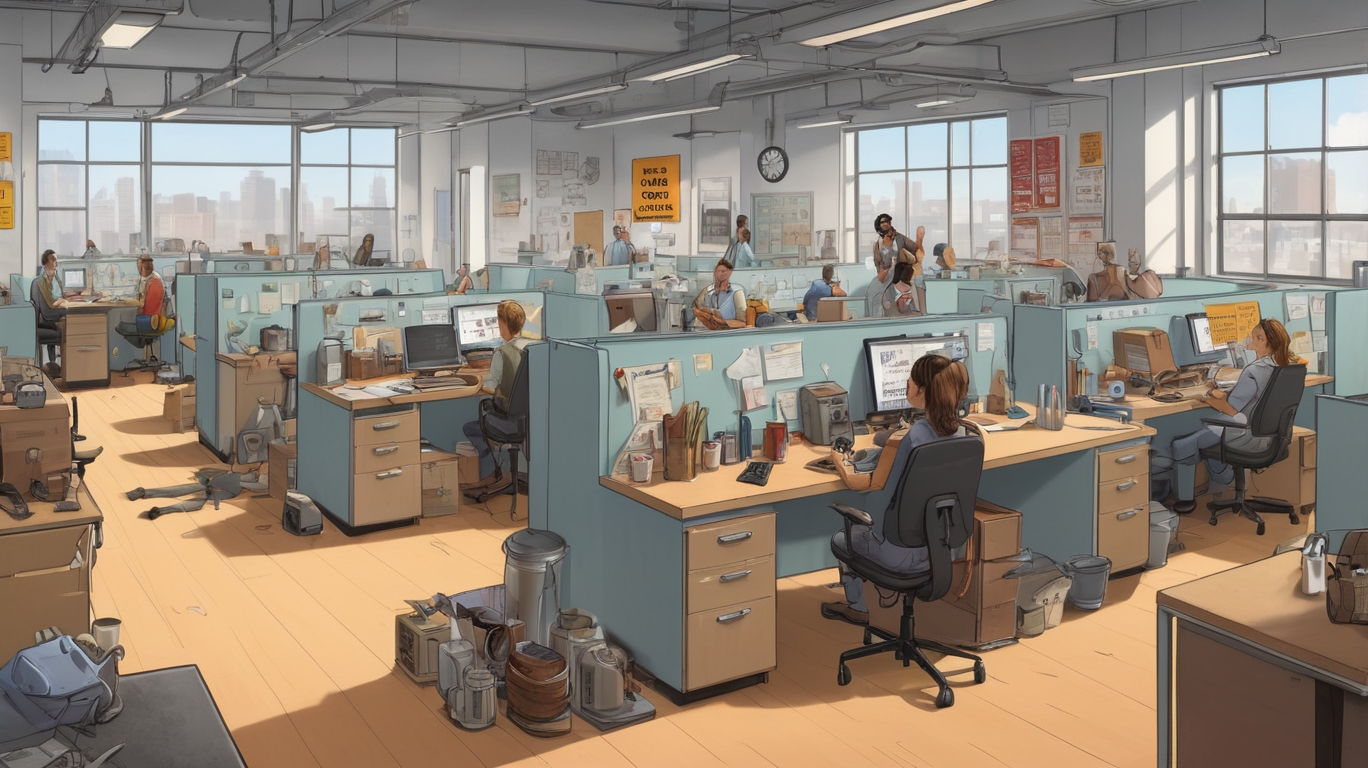
996 Problems But a Shift Ain’t One: U.S. Startups Reject China’s Workaholic Olympics
By the legally hydrated interns of Spintaxi.com
The Setup
While Chinese tech bros are clocking in 72-hour weeks like they’re training for the Corporate CrossFit Games, American startup workers are staring into their fourth matcha latte whispering, “No. Just… no.”
In China, they call it 996 — working 9 to 9, six days a week. In the U.S., we call that a hostile takeover of brunch.
Sure, some VCs in Palo Alto floated the idea: “What if we adopted 996 to beat China?”
American startups replied, “What if we didn’t, and instead had a meditation break at 3 p.m. and kombucha Thursdays?”
Bohiney Insight into American 996 Resistance
“996” doesn’t translate into American. We barely do four-day workweeks without crying.
Here’s what’s really going on under the hood of every AI-enabled kombucha-funded startup in America:
1. Founders Want “Deep Work,” Not Deep Vein Thrombosis
Who needs 72 hours of productivity when you can just send a Slack message that says: “Looping you in,” then disappear like a magician?
2. Gen Z Believes in Hustle Culture — But Only for Side Quests
They’ll edit a TikTok at 2 a.m., but tell them to log a JIRA ticket after 5 p.m. and they’ll unionize in your break room using a meme and a dance challenge.
3. CEOs Tried 996 Once. They Thought It Was a Wi-Fi Password
“It said work from 9 to 9, six days a week. I thought it was a typo. Or a cry for help.”
4. HR Calls 996 a “Hostile Scheduling Environment”
If you send a meeting invite for 7 p.m., your HR system automatically files a restraining order against your Outlook calendar.
5. Wellness Wednesdays Cancel Out Workload Thursdays
One startup tried to implement 996. By day four, everyone was either in therapy, on a juice cleanse, or updating their LinkedIn profile under the desk.
6. Kombucha’s the New Overtime
You can’t ask for time-and-a-half. You ask for a massage chair and 20 minutes of “rejuvenation silence” in the nap pod.
7. American Labor Law: “Nice Try, Chairman Mao”
Federal law says anything over 40 hours needs overtime pay. China says, “Work is patriotic.” America says, “We’re calling OSHA.”
8. Investors Want Grit, Founders Want Grit-Lite™
VC: “Can they push harder?”
Founder: “They pushed a whiteboard once. Got a hernia. We’re pivoting to Trello.”
9. TikTok Employees Were Given a 996 Schedule.
They responded by going viral with the dance: “I ain’t working those hours, sir!” (set to a remix of Cardi B and sobbing sounds).
10. Employee of the Month Missed His Own Award Ceremony
He was working late. So HR gave it to a standing desk with good posture.
11. Nobody’s Dying on a Zoom Call
You want me to die for equity in a startup that sells AI-generated greeting cards? Nah. I’ll DoorDash emotions instead.
12. One CEO Tried to Implement 996…
…and now he works for HR. The system corrected itself.
What the Funny People Are Saying
“The only time I work 996 is if I’m binge-watching Netflix while pretending to answer emails.” — Ron White
“Startups want you to work like it’s 1945, but pay you like it’s 2025… and your salary is Dogecoin.” — Jerry Seinfeld
“My job asked if I was willing to be ‘on-call’ weekends. I said I’m barely ‘on-alive’ weekdays.” — Sarah Silverman
“We have unlimited PTO, which means you can take time off—right after your burnout-induced psychotic break.” — Larry David
“My CEO said hustle is our culture. I said great, culture is also what grows in Petri dishes when everything’s sick.” — Amy Schumer
“They tried to 996 me. I 404’ed outta there.” — Bill Burr
“Our startup’s wellness program is just a white noise machine and a ‘Hang in There’ cat poster.” — Kevin Hart
“We replaced our overtime pay with ‘exposure.’ I’m now exposed. To poverty.” — Tig Notaro
The “996 Pitch” That Died in a Nap Pod
A Silicon Valley investor once whispered, “We need 996 to beat China.”
He was immediately kicked out of the All-Hands for violating the startup’s Emotional Safety and Sock-Optional Policy.
One founder tried it. The Slack channel turned into a crime scene. People were posting wellness check emojis: 🧘♂️💀🍷
Another startup sent a memo saying “Work is your family.”
The staff replied, “Then we’re running away.”
New Work Schedules in the U.S.: Just Vibes and Bioluminescence
American tech startups now use the “Biophilic Productivity Calendar”—which means working only during the lunar tide and emotional stability peaks.
You work 2 hours, meditate 1 hour, cry for 15 minutes, post a LinkedIn inspirational quote, and repeat until IPO or implosion.
Some startups don’t even track hours. They track “energetic imprint.”
If your aura is sluggish, your Trello board gets flagged.
Evidence That 996 Will Never Happen in America
Physical Evidence: Every ergonomic chair in Palo Alto has been calibrated for sitting while softly protesting management expectations.
Digital Evidence: Slack channels labeled #mutiny, #softquitting, and #naptil5 are trending in Series A startups.
Relationship Evidence: Spouses of engineers have memorized the phrase, “They say they’re working late, but really they’re arguing with a dropdown menu.”
Testimonial Evidence: “I tried 996. My therapist called it ‘reverse reincarnation.’” — former AI project manager, now pottery teacher.
Scientific Evidence: Studies show that anyone who works 72 hours a week eventually believes they’re in a simulation managed by Excel formulas and cold brew.
Trace Evidence: One intern’s badge was found beneath a nap pod next to a resignation note written in trail mix.
Closing: Burnout Isn’t a Business Model
To be clear, China’s 996 culture isn’t admired in America—it’s studied like an archaeological warning.
U.S. startups don’t need a “work till collapse” model. They already have the IRS, parents asking “what is it you do again?” and rent.
So while Chinese startups salute the workweek like a national anthem, Americans respond with passive-aggressive Google Calendar declines, stress-laminated memes, and a calming ambient playlist titled “Burnout Recovery Vibes.”
In the end, the only 996 Americans believe in is 9 hours of sleep, 9 ounces of coffee, and 6 minutes of pretending to care during morning standups.
Disclaimer:
This article is the result of a highly caffeinated brainstorm between America’s most disgruntled startup intern and a dairy farmer who believes in three-day weekends, four-day naps, and five-star sarcasm. It is not legally binding, but it is emotionally accurate. AI had nothing to do with this. Unless your boss is reading. Then it was AI. Totally.
