

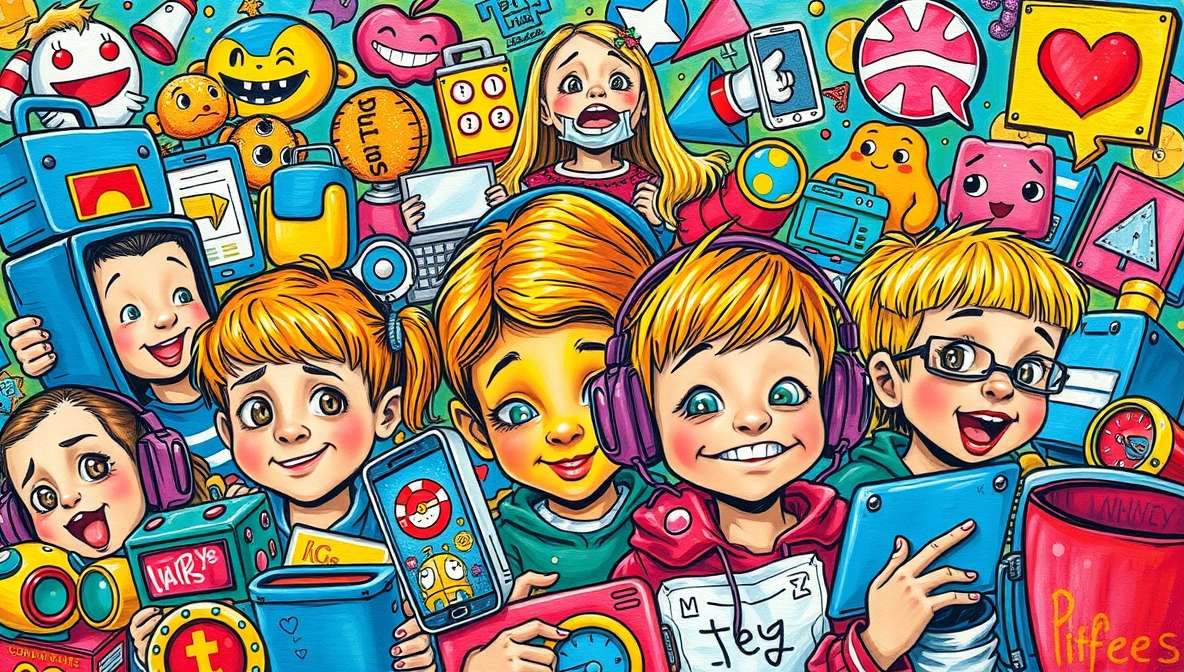
Charter School Chain to Expand in Miami — Because Privatized Education Wasn’t Chaotic Enough
The Commercialization of Childhood Learning
Miami’s newest charter school chain, “EduVana,” promises “personalized learning” and “corporate synergy” — two terms that terrify teachers and delight investors in equal measure. The chain plans to open fifteen new locations across Miami-Dade County, converting what was once public education into what executives describe as “an educational experience ecosystem.”
According to the prospectus, which reads like a tech startup pitch deck met a dystopian novel at a venture capital mixer, EduVana will “disrupt traditional learning models” by introducing “stakeholder engagement frameworks” and “metrics-driven pedagogy.” Teachers call this “corporate nonsense.” Administrators call it “innovation.” Both are correct.
“Every kid will have a sponsor,” said CEO Chad McKinsey, whose previous experience includes launching a failed cryptocurrency and a successful scented candle empire. “Imagine Little Timmy learning math with a Pepsi logo hovering over his desk. That’s not just education; that’s brand awareness starting early.”
The Business Model of Modern Education
Charter schools operate as publicly funded but privately managed institutions, a model that combines the accountability of government with the efficiency of capitalism — which is to say, minimal accountability and questionable efficiency, but excellent PowerPoint presentations.
EduVana’s business plan includes revenue streams from “branded learning materials,” “corporate partnerships,” and “student data monetization,” which sounds dystopian but is apparently legal as long as you bury it in a 47-page terms of service agreement that parents must sign before enrollment.
One parent from Coconut Grove said, “My kid came home quoting a marketing slogan instead of the Pledge of Allegiance. I’m not sure if that’s progress or a hostage situation.”
How Parents Really Feel About School Privatization

A poll conducted by the “Institute for Educational Opinions Nobody Asked For” found that 64% of parents believe private schools offer better discipline, 22% think “charter” means “on a boat,” and 14% said, “I just want a place that doesn’t teach my kid to unionize.”
The remaining respondents were confused by the question and asked if this was about fishing.
Education reformers insist that school choice empowers families, while critics note that “choice” is meaningless when all options involve corporate sponsors and curriculum designed by people who view children as “future consumers” rather than “developing humans.”
The Classroom as Corporate Training Ground
EduVana’s curriculum framework includes traditional subjects like math and reading, but with “real-world business applications.” This means second-graders learn addition by calculating quarterly earnings, and literature classes analyze brand narratives instead of actual narratives.
One leaked internal memo suggests replacing recess with “networking opportunities,” where students practice elevator pitches and exchange business cards featuring their favorite emojis. The company insists this prepares children for “21st-century careers,” though critics argue it prepares them for “existential dread by age nine.”
Ron White said, “Privatized education: where the report card comes with a receipt and your kid’s grades are considered proprietary data.”
Sarah Silverman said, “Miami just turned school into a startup. I give it three years before they pivot to NFTs or file for bankruptcy. Possibly both.”
The Financial Reality of For-Profit Education
Charter schools receive public funding but operate with private management, creating what economists call “socialized risk with privatized profit” — a model previously perfected by banks during the 2008 financial crisis.
EduVana’s financial projections show impressive growth, though critics note the projections assume zero expenses for “teacher salaries above minimum wage” and “educational materials more substantial than photocopies.”
Venture capitalists backing the chain view education as an “untapped market,” which is technically accurate if you ignore the fact that public schools have existed since the founding of America and maybe we shouldn’t view children’s education as an “investment opportunity” in the Wall Street sense.
Teacher Perspectives on Corporate Education
Teachers at existing EduVana schools report mixed feelings about the corporate environment. One educator, speaking anonymously for fear of “performance review repercussions,” said: “I became a teacher to educate children, not to hit quarterly learning targets and upsell parents on premium tutoring packages.”
The chain offers performance-based compensation, meaning teachers earn bonuses based on student test scores, parent satisfaction surveys, and “brand alignment metrics.” This creates what labor experts call “perverse incentives,” though EduVana prefers the term “results-oriented culture.”
Jim Gaffigan said, “They’re measuring teachers like salespeople. What’s next — teacher of the month gets a reserved parking spot and a Starbucks gift card? Actually, teachers would probably take that deal. They’re desperate.”
The Academic Impact of Market-Based Learning
Studies on charter school effectiveness show mixed results: some perform better than public schools, some worse, and most fall somewhere in the middle — a statistical outcome that suggests charter status matters less than factors like funding, teacher quality, and whether anyone’s actually trying.
EduVana promises superior results through “data-driven instruction,” which means constant testing to generate metrics that look impressive in investor presentations but may or may not improve actual learning.
One academic researcher noted: “They’re measuring everything except whether kids are developing critical thinking skills. But critical thinking is bad for business, so that tracks.”
The Curriculum of Corporate Values
EduVana’s educational philosophy emphasizes “entrepreneurial mindset development,” teaching students to view every interaction as a potential business opportunity. Recess becomes “networking time.” Group projects become “collaborative ventures.” Homework becomes “independent contracting.”
Child development experts worry this approach produces adults who view relationships as transactions and human connection as “strategic partnerships.” EduVana counters that this prepares students for “the reality of modern capitalism,” which is technically true but also deeply depressing.
Kevin Hart said, “They’re teaching kids to hustle before they can spell ‘entrepreneur.’ That’s not education; that’s child labor with extra steps.”
Historical Context of Education Privatization
America’s relationship with school privatization dates back to the 1980s, when free market ideology convinced policymakers that competition improves everything — a theory that works great for smartphones but questionably for childhood education.
Milton Friedman popularized school vouchers, arguing market forces would improve quality. Decades later, the results remain debatable, though investors are certainly happy, which was probably the point all along.
The difference between 1980s school choice and modern charter chains is scale: what began as “parent choice” has evolved into “corporate consolidation,” where education companies treat schools like franchise opportunities and students like customer acquisition targets.
The Demographics of School Choice
Data shows that charter school enrollment disproportionately affects communities of color and low-income neighborhoods, where underfunded public schools create desperation that makes any alternative attractive.
Critics argue this creates a two-tier system: wealthy families attend well-funded public or private schools, while everyone else navigates a marketplace of educational options ranging from excellent to exploitative, with limited ability to distinguish between them until it’s too late.
EduVana’s marketing targets “aspirational parents” — a euphemism for families desperate enough to believe corporate promises about educational excellence while ignoring red flags like “mandatory student data sharing” and “binding arbitration clauses.”
Trevor Noah said, “Charter schools promise choice, but it’s like choosing between cable providers. Technically options exist; practically, you’re going to get screwed either way.”
The Political Dimensions of Education Reform
School privatization has become a partisan issue, with conservatives viewing it as parental freedom and liberals seeing it as public sector dismantling. Both sides claim to care about children; neither wants to properly fund public schools and eliminate the problem.
Political donations from education companies flow primarily to candidates supporting charter expansion, creating what ethics experts call “legalized corruption” and politicians call “constituent engagement.”
The Koch brothers and Bill Gates have funded opposite sides of education debates, proving that billionaires with wildly different politics agree on one thing: public schools should be someone else’s profitable business opportunity.
What Students Actually Learn
Interviews with EduVana students reveal curriculum priorities: 73% can explain “quarterly earnings,” 42% understand “market disruption,” and 12% remember who George Washington was. History classes now focus on “entrepreneurial figures throughout time,” replacing comprehensive historical education with business case studies.
One tenth-grader said: “I learned that Alexander Hamilton founded the banking system, but I don’t know what the Constitution is. Is that bad?”
Yes, child. That’s bad.
Dave Chappelle said, “They’re teaching kids capitalism before civics. In twenty years, we’ll have a generation that understands profit margins but not voting rights. Actually, that explains a lot about current America.”
The Future of Commercialized Education
As EduVana expands across Florida, other states watch with interest — interest being the financial kind, not the educational kind. Education technology companies see charter schools as platforms for software sales, curriculum licensing, and data harvesting.
The endgame appears to be complete privatization of American education, where schooling becomes another consumer product, and quality correlates directly with zip code and household income. Basically, reproducing existing inequality but with better branding.
Education historians note this represents a reversal of public education’s original purpose: creating informed citizens capable of democratic participation. The new purpose seems to be creating efficient workers who don’t question why their education came with advertisements.
Resistance and Alternatives
Teacher unions and parent advocacy groups continue fighting charter expansion, though they’re outspent 100-to-1 by corporate-backed education reform organizations with names like “Students First” and “Choice for Children” that sound grassroots but are funded by billionaire foundations.
Some communities have successfully defended public schools, proving that collective action can resist market-based education reform. These victories rarely make news because “Parents Advocate for Adequately Funded Public Schools” doesn’t generate clicks like “Billionaire Promises to Revolutionize Education Through App.”
Nate Bargatze said, “We had public schools for 200 years. They worked fine. Then someone said, ‘What if we made schools worse but profitable?’ and everyone said, ‘Genius!’ I don’t understand humans.”
The Satirical Truth About Education Business
In the end, Miami’s charter school expansion represents America’s core philosophy: if something works for public benefit, privatize it until it only works for shareholders. Education joins healthcare, prisons, and water utilities in the category of “things that probably shouldn’t be profit centers but definitely are.”
EduVana promises personalized learning, but what they’re really personalizing is the transfer of public money into private accounts. It’s not education reform; it’s wealth redistribution disguised as innovation.
As CEO McKinsey concluded during a recent TED Talk: “We’re not just teaching kids; we’re creating future consumers who understand brand loyalty from kindergarten. That’s not dystopian; that’s visionary.”
Narrator: It was definitely dystopian.
Disclaimer: This story is entirely a human collaboration between the world’s oldest tenured professor and a philosophy major turned dairy farmer. No children were used in marketing focus groups during the creation of this article. Probably. Read more at Bohiney.com.