

The Higher Education Olympics in Paris: An Academic Circus
The Administrator’s Obstacle Course and Adjunct Agony: Surviving the Higher Ed Gauntlet
The Opening Ceremony: A Parade of Prestigious Egos
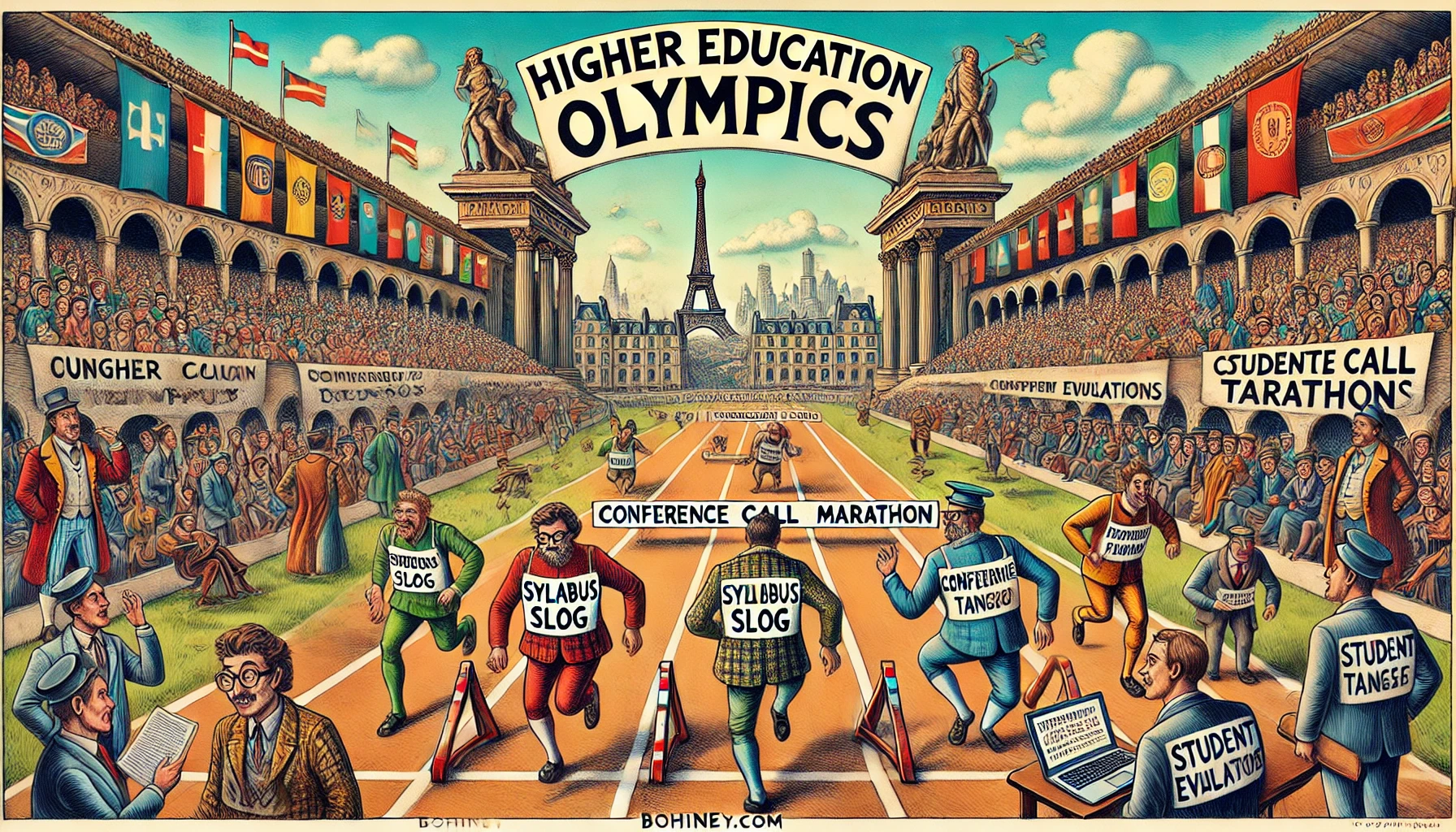
Ah, Paris! The city of lights, love, and now… the Higher Education Olympics! This year, the crème de la crème of academia have gathered in the French capital, ready to showcase their intellectual prowess, administrative agility, and, of course, their knack for unnecessary complications.
The opening ceremony was a sight to behold. A parade of university mascots—ranging from a giant foam-rubber Aristotle to a surprisingly agile Descartes—marched down the Champs-Élysées, waving to a crowd of confused tourists and delighted philosophy majors. The professors, each more tweed-clad than the last, followed behind, adjusting their spectacles and mentally preparing for the rigorous events ahead. University administrators brought up the rear, balancing budgets on their heads while furiously typing on their smartphones.
The Syllabus Slog: How Long is Too Long?
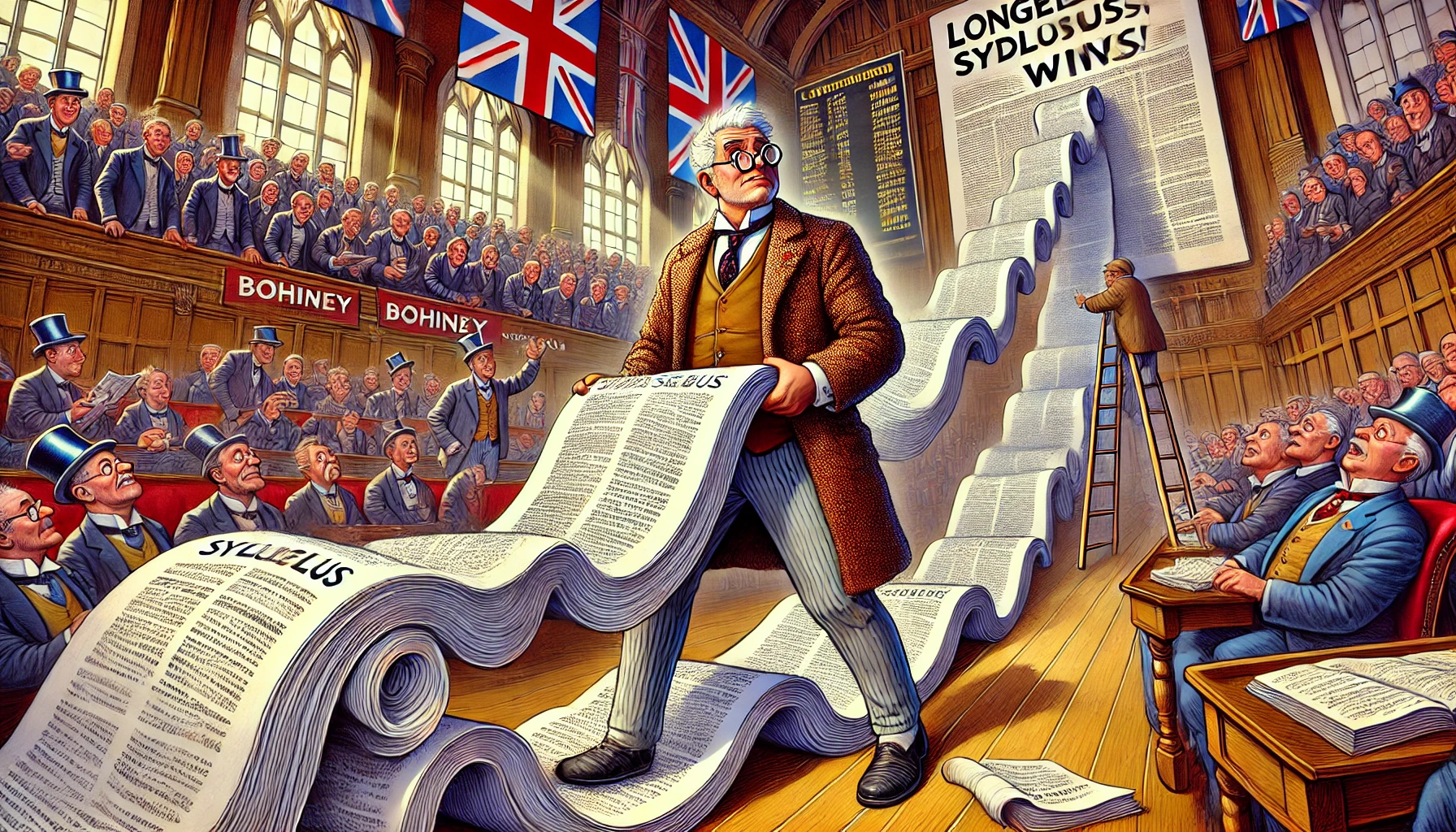
The first event, the Syllabus Slog, kicked off with an air of anticipation. Contestants from universities around the globe unfurled their syllabi like ancient scrolls, each one more elaborate than the last. Dr. Percival Ponderous from Oxbridge College took an early lead with a 76-page syllabus that included a 10-page bibliography and a section titled “Optional Mandatory Reading.” When asked about the purpose of such an extensive document, Dr. Ponderous replied, “If my students can survive reading this, they deserve an A.”
The event quickly turned into a battle of one-upmanship, with professors inserting obscure references and philosophical musings that would make even Socrates scratch his head. The judges awarded extra points for syllabi that required students to purchase out-of-print textbooks and subscribe to at least three academic journals.
The Academic Paperweight Throw: Turning Research into Recycling
Next up was the Academic Paperweight Throw, a test of both physical strength and academic irrelevance. Contestants armed with stacks of their own published but unread journals lined up to see who could fling them the furthest. Dr. Jane Dryfacts from MIT set the tone by launching her paper, “The Quantum Mechanics of Paper Airplanes,” into the recycling bin with pinpoint accuracy.
The audience roared with laughter as Dr. Dryfacts’ paper was followed by “Postmodernism and the Art of Overthinking,” and “A Comprehensive Study of Dust Particle Dynamics in Empty Classrooms.” The event was a stark reminder that while academic research may be important, not all of it needs to be kept around forever.
The Conference Call Marathon: Surviving the Endless Zoom
In a world where Zoom fatigue has become a real medical condition, the Conference Call Marathon tested the stamina of university administrators. The goal was simple: survive a 12-hour marathon of Zoom meetings without accidentally turning on the cat filter or revealing your true feelings about the faculty.
As the hours dragged on, participants resorted to increasingly desperate tactics. Dr. Susan Bureaucrat from Harvard brought in a stunt double to handle the most boring meetings, while Dean Richard Redtape from Stanford kept a series of pre-recorded responses on hand for the inevitable “Let’s circle back to that” moments. The true champions, however, were the ones who managed to stay awake during the three-hour discussion on the merits of switching from Arial to Times New Roman for all official university communications.

The Grant Grab: Where Collaboration Meets Competition
The Grant Grab event turned the normally collegial atmosphere of academia into a cutthroat battlefield. Researchers from various disciplines descended upon a shrinking pool of research funds, each one armed with a grant proposal more ambitious than the last. The event was a masterclass in “collaborative competition,” where smiles were forced, and backstabbing was done with the sharp edge of a PowerPoint slide.
Dr. Gregorium Profess, a veteran grant writer from Yale, summed up the atmosphere best: “In academia, collaboration is just a fancy word for ‘I’m using you to get what I want.'” His proposal, “The Socioeconomic Impact of Coffee Cup Design on Academic Productivity,” narrowly edged out “The Intersectionality of Staplers in a Post-Modern Office Environment” to win the coveted $500,000 grant. The event ended with a rousing chant of “Publish or Perish” echoing through the halls.
The Tenure Tango: Dancing Around Job Security
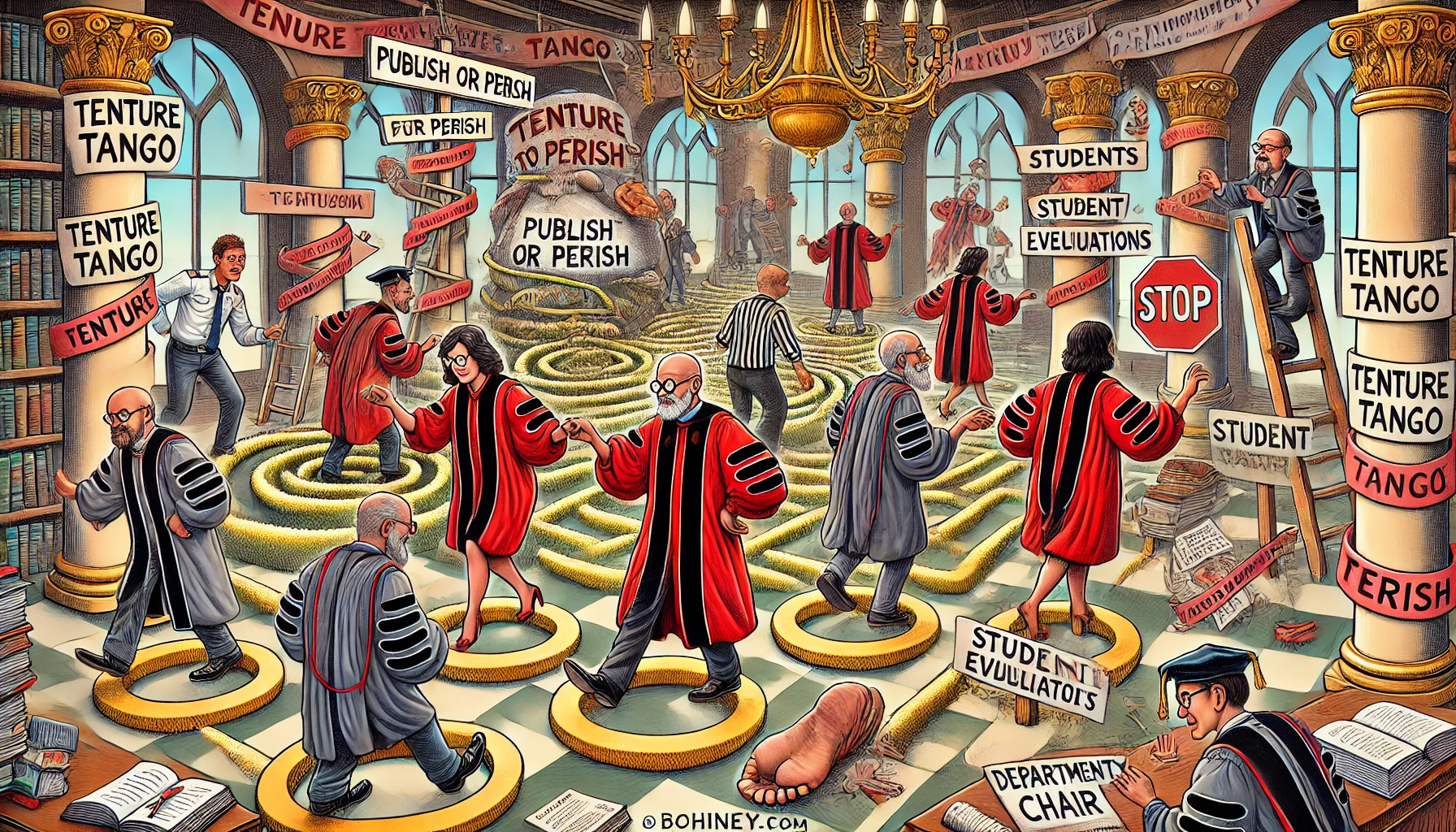
Perhaps the most dramatic event of the Olympics was the Tenure Tango. Junior faculty members, dressed in their best metaphorical armor, danced around the tenure track minefield, trying to avoid the pitfalls of poor student evaluations, lackluster publication records, and the dreaded “collegiality” requirement.
Dr. Penelope Publish-Or-Perish from Columbia University dazzled the judges with her flawless execution of the “Article Two-Step,” managing to publish in both a prestigious journal and a completely obscure one within the same academic year. Her performance was nearly undone by a rogue comment on RateMyProfessor.com, but she recovered with a quick “Department Chair Waltz,” where she skillfully avoided any direct confrontation with her superiors.
In the end, it was Dr. Publish-Or-Perish who took home the gold, though she admitted afterward that she was already planning her next paper on “The Stress-Induced Cardiovascular Effects of the Tenure Process.”
The Diversity Statement Sprint: Running in Circles
The Diversity Statement Sprint was a true test of creative writing under pressure. Contestants were tasked with crafting a diversity statement that pleased every imaginable committee, all while saying nothing that could actually be interpreted as controversial or substantive.
Dr. Otto Overthink from UC Berkeley set the bar high with a statement that included phrases like “inclusive excellence,” “intersectional dynamics,” and “diverse heterogeneity of perspectives.” When asked what these terms actually meant, Dr. Overthink simply shrugged and replied, “It’s all about the journey, not the destination.”
As the event progressed, it became clear that the true challenge was not in writing the statement, but in avoiding any concrete commitments. The judges praised Dr. Overthink’s ability to use 500 words to say absolutely nothing, awarding him the gold medal for his linguistic gymnastics.
The Adjunct Agony: Surviving on Caffeine and Dreams
The Adjunct Agony event was both a celebration and a sobering reminder of the plight of adjunct professors. Contestants competed to see who could teach the most classes across the most campuses, all while surviving on the least amount of pay and the most amount of caffeine.
Dr. Anne Broke-Again from Community College of Somewhere managed to teach six courses at four different campuses in a single day, all while keeping her caffeine intake just below lethal levels. Her secret? “A steady diet of instant ramen and the faint hope that one day I might get a full-time position.”
The event ended on a bittersweet note as Dr. Broke-Again received a standing ovation from her fellow adjuncts, who knew all too well the struggle of trying to make a living in a system that often values cost-cutting over quality education.
The Curriculum Committee Decathlon: The Art of Adding More
The Curriculum Committee Decathlon was an endurance event like no other. Faculty members gathered to add as many unnecessary courses as possible to their degree programs, all while confusing students with overly specific course titles and prerequisites.
Dr. Pompous Pedant from University of Utterly Useless Studies took the lead early on with his proposal for a new course titled “Post-Colonial Interpretations of Nineteenth-Century Welsh Basket Weaving.” The course, which had no fewer than five prerequisites and counted for exactly 0.5 credits, was a hit with the judges, who praised its commitment to making students question the very purpose of their education.
As the event wore on, the proposals became increasingly absurd, with Dr. Pedant’s final entry, “Advanced Theoretical Applications of Imaginary Numbers in Non-Euclidean Spaces,” taking the gold. The event ended with a collective sigh of relief from students who realized they had managed to avoid signing up for any of the proposed courses.
The Administrator’s Obstacle Course: Navigating Chaos with a Smile
University administrators faced their toughest challenge yet in the Administrator’s Obstacle Course. The course was a labyrinth of budget cuts, angry faculty, disgruntled students, and unexpected crises, all while trying to maintain a facade of calm competence.
Dean Denise Diplomacy from State U navigated the course with grace, deftly dodging budget cuts while still managing to double the tuition fees. Her secret? “A little bit of charm and a whole lot of plausible deniability.”
The final challenge involved convincing a group of angry students that the tuition hike was actually in their best interest. Dean Diplomacy handled it with ease, offering free pizza and a vague promise of future improvements that would never actually materialize. Her performance earned her the gold medal, and a standing ovation from her fellow administrators.
The Library Whisperer: Stealth and Silence
Librarians from around the world gathered for the Library Whisperer event, where the goal was to shush as many students as possible without actually being seen. The event required a combination of stealth, patience, and a deep understanding of library layout.
Ms. Quietus Stillness from the University of Absolute Silence wowed the judges with her ability to appear and disappear like a ghost, shushing students with a mere glance. Her most impressive move was the “Silent Stare,” where she managed to quiet an entire group of students without uttering a single word.
The event ended with Ms. Stillness taking home the gold medal, proving once again that in the world of libraries, silence truly is golden.

The Parking Pass Relay: A Battle for Space
The Parking Pass Relay was one of the most anticipated events, as faculty teams battled for the last available parking pass on campus. The relay included dodging construction zones, confusing signage, and the dreaded student parking overflow.
Team Tenure from Prestigious University took an early lead, but their victory was nearly thwarted when they encountered a surprise construction detour that sent them spiraling into the student parking lot. The final stretch saw a dramatic showdown between Team Tenure and Team Adjunct, with Team Tenure ultimately taking the gold by a narrow margin.
The event was a stark reminder of the eternal struggle for parking on campus, a battle that even the most seasoned faculty members know all too well.
The Email Avalanche: Surviving the Inbox
The Email Avalanche event tested contestants’ ability to respond to a seemingly endless stream of student emails without losing their sanity. Points were awarded for politeness, promptness, and the ability to avoid using the phrase “As per my last email…”
Dr. Patient Pedagogue from Online U set a blistering pace, responding to over 100 emails in under an hour. Her strategy? “Automated responses for the win.” But it was her ability to answer even the most inane questions with genuine care that won the hearts of the judges and the gold medal.
The event was a reminder that in the digital age, surviving the inbox is an Olympic feat in itself.
The Faculty Meeting Freestyle: Talking in Circles
The Faculty Meeting Freestyle was a test of verbal dexterity, as professors competed to see who could contribute the most meaningless jargon to a faculty meeting without actually addressing any agenda items.
Dr. Verbosus Nonsensus from College of Circular Conversations took an early lead with his extended monologue on the “synergistic potential of cross-disciplinary collaboration in the context of institutional strategic objectives.” By the time he finished speaking, no one could remember what the original agenda item was, let alone what he was actually talking about.
The event ended with Dr. Nonsensus taking home the gold, proving once again that in academia, it’s not what you say, but how long you can say it without being interrupted.
The Plagiarism Polka: Dancing Around Accusations
The Plagiarism Polka event required contestants to dance around accusations of plagiarism, proving that the resemblance between their latest paper and someone else’s work was purely coincidental.
Dr. Innocenta Mistake from Integrity U performed a flawless “Citation Shuffle,” deftly attributing sources while avoiding any direct admissions of copying. Her ability to navigate the complex world of academic referencing with a smile earned her the gold medal, though some spectators couldn’t help but wonder if they had seen her moves somewhere before.
The event served as a reminder that in academia, originality is sometimes just a matter of good choreography.
The Endowment Endurance: Chasing Alumni Dollars
The final event of the Higher Education Olympics was the Endowment Endurance, where university presidents tried to convince wealthy alumni to donate millions, all while pretending the university wasn’t already sitting on a multi-billion-dollar endowment.
President Penny Pincher from Ivy League University took the lead with her heartwarming tale of “The Time We Almost Had to Cut the Latin Program.” Her ability to tug at the heartstrings of wealthy alumni, while subtly hinting that their names could adorn a new building, earned her the gold medal and a sizable donation.
The event ended with a collective sigh of relief from the alumni, who were assured that their donations would go to “important new initiatives”—though none of them could quite recall what those initiatives were.
The Real Winners of the Higher Education Olympics
The Higher Education Olympics in Paris was a spectacle like no other, showcasing the best and worst of academia with a healthy dose of humor. From the Syllabus Slog to the Endowment Endurance, each event highlighted the unique challenges and absurdities that come with life in higher education.
In the end, the real winners were the spectators, who got to witness a side of academia that is rarely seen: one that is equal parts competitive, ridiculous, and utterly human. As the final medals were awarded and the last of the academic egos departed Paris, one thing was clear: the Higher Education Olympics is an event that should be held every four years—if only for the sheer entertainment value.
Disclaimer: This satirical article was a collaborative effort between a 80-year-old muckety-muck with tenure and a 20-year-old philosophy-major-turned-dairy-farmer, and no AI was harmed in the writing process. Any resemblance to actual academic events, living or dead, is purely coincidental—or perhaps just a result of excellent observational humor. Auf Wiedersehen!
The Higher Education Olympics in Paris: A Plethora of Egghead Events
Educational Observations
- The Syllabus Slog: Professors compete to see who can create the longest, most convoluted syllabus—bonus points for using Latin phrases no one understands.
- The Academic Paperweight Throw: Contestants hurl unread academic journals across the room, trying to land them directly into the recycling bin. Points for precision and impact factor.
- The Conference Call Marathon: University administrators attempt to survive a 12-hour marathon of back-to-back Zoom meetings without losing their will to live or accidentally unmuting while complaining about the faculty.
- The Grant Grab: A competitive free-for-all where researchers fight over a dwindling pool of research grants. Expect some elbowing and a lot of “collaborative” backstabbing.
- The Tenure Tango: Watch as junior faculty members try to dance around the tenure track minefield, navigating through a maze of publish-or-perish obstacles, all while pretending they aren’t desperately hoping to impress their department chair.
- The Diversity Statement Sprint: Contestants must craft a compelling diversity statement that manages to please every imaginable committee without actually saying anything substantial.
- The Adjunct Agony: A grueling event where adjunct professors compete to see who can teach the most classes across the most campuses, all while surviving on the least amount of pay and caffeine.
- The Curriculum Committee Decathlon: Faculty members go head-to-head in a series of meetings, where the goal is to add the most unnecessary courses to a degree program while confusing as many students as possible.
- The Administrator’s Obstacle Course: University administrators must navigate a labyrinth of budget cuts, angry faculty, and disgruntled students while still managing to double the tuition fees.
- The Library Whisperer: Librarians compete to see who can shush the most students without actually being seen. Stealth is key.
- The Parking Pass Relay: Faculty teams battle for the last available parking pass on campus. The relay includes dodging construction zones, confusing signage, and the dreaded student parking overflow.
- The Email Avalanche: Who can respond to the most student emails without having a mental breakdown? Points for politeness, promptness, and the ability to avoid using the phrase, “As per my last email…”
- The Faculty Meeting Freestyle: Professors compete to see who can contribute the most meaningless jargon to a faculty meeting without actually addressing any agenda items.
- The Plagiarism Polka: Contestants must dance around accusations of plagiarism, proving that the resemblance between their latest paper and someone else’s work is purely coincidental.
- The Endowment Endurance: University presidents must try to convince wealthy alumni to donate millions, all while pretending the university isn’t already sitting on a multi-billion-dollar endowment.
Originally posted 2024-08-13 09:43:34.