

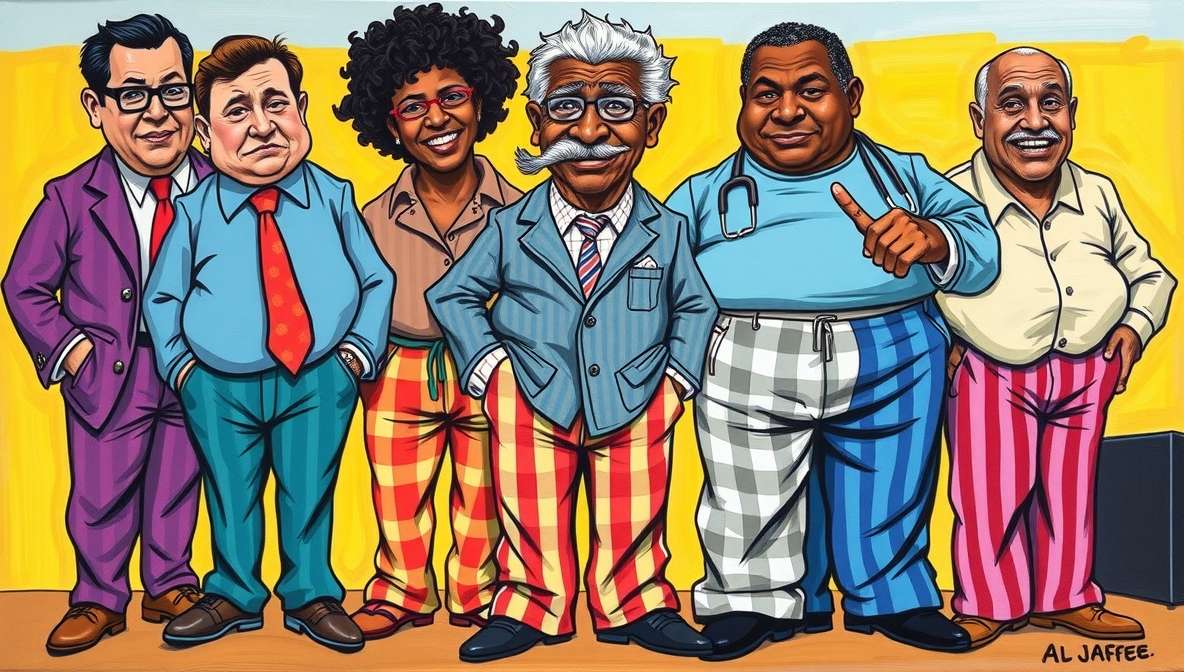
Remote Workers Who Never Wear Pants: The Waist-Down Wardrobe Revolution
When Your Pajama Bottoms Are Your Business Casual
The Great Pants Abandonment of 2020
The remote work revolution liberated millions from office commutes, water cooler small talk, and most notably, pants. What started as temporary pandemic adaptation has evolved into permanent lifestyle choice for a generation that’s decided lower body professionalism is optional when your coworkers only see you from the nipples up.
These aren’t people who occasionally work pants-free on casual Fridays. These are professionals who haven’t worn proper pants in three years, whose entire wardrobe strategy is “business on top, nothing below,” who’ve forgotten what belt loops are for because they’ve transcended the need for waist support.
The Zoom-Appropriate Dress Code
“I know someone who does executive meetings in a blazer and boxer shorts,” said Dave Chappelle. “EXECUTIVE MEETINGS. Six-figure decisions being made while this man’s legs are just… free. And nobody knows. His career is thriving. Pants were never the key to success.”
The Zoom camera frame has created a new definition of professional attire: whatever appears on screen matters, everything else is optional. Button-up shirts paired with pajama bottoms. Blazers over t-shirts. Full makeup and styled hair above, ratty sweatpants below. It’s business casual meets tactical nudity.
The dress code stratification is remarkable. People maintain entire wardrobes of “Zoom tops”—professional shirts they wear exclusively for video calls, pairing them with whatever’s comfortable below. The clothing industry has adapted, creating “tops only” professional capsule collections for remote workers who’ve given up on comprehensive dressing.
The Meeting Interruption Panic

Jerry Seinfeld said, “The fear of having to stand up during a video call is real. Everyone’s sitting there in their blazer and underwear, praying nobody asks them to grab something. That’s not professional confidence—that’s hostage anxiety.”
The nightmare scenario for pants-free remote workers is unexpected request to retrieve something off-camera. The panic that crosses their face when asked to “grab that document real quick” while wearing superhero boxers is genuine professional terror. They must either confess their pants-free status or execute elaborate camera manipulation to maintain the illusion.
Some remote workers keep emergency pants near their desk for surprise stand-up moments. These crisis pants hang within arm’s reach, ready for deployment if video calls take unexpected turns. This is disaster preparedness for the work-from-home era: not earthquake kits, but pants accessibility plans.
The Complete Abandonment of Leg Attire
Amy Schumer said, “She told me she hasn’t worn pants in two years. TWO YEARS. That’s not working from home—that’s performance art. At some point you’re not pants-free by choice, you’re pants-free because you’ve forgotten how pants work.”
Long-term pants abandonment creates reintegration challenges. People who return to office environments report discomfort wearing anything with buttons, zippers, or defined waistbands. They’ve adapted to elastic supremacy, and standard pants feel like medieval torture devices designed by people who hate comfort.
The muscle memory of pants-wearing atrophies. Former pants-wearers forget how to sit in restrictive clothing, struggle with the logistics of belts, experience existential crises when choosing between slacks and khakis. The cognitive load of pant selection was erased from their brain to make room for more important information, like optimal coffee-to-anxiety ratios.
The Family Members Who Know Too Much
Chris Rock said, “Your family sees you working in underwear and they lose respect. Kids don’t fear parents who conduct business in boxers. ‘Dad’s on a call’ doesn’t command respect when Dad’s legs are hanging out like it’s beach day.”
Household cohabitants witness the professional/personal divide collapse. They see Dad in boxer shorts discussing quarterly projections, Mom in pajama pants negotiating contracts, and struggle to maintain the illusion that these are serious professionals. The cognitive dissonance is permanent.
Children of remote workers grow up believing that workplaces don’t require pants. They’ll enter traditional offices someday and be confused by the prevalence of lower-body clothing. “Why is everyone wearing pants? Are we going somewhere after work?” This is learned behavior with long-term societal implications.
The Accidental Camera Revelations
Bill Burr said, “Someone stood up during a company-wide Zoom and revealed SpongeBob pajama pants to 300 people. That’s not a mistake—that’s career-defining moment. He’s SpongeBob Pants Guy now. That’s his legacy.”
The accidental stand-up reveal is the pants-free worker’s greatest fear and most common reality. People stand to adjust their chair, grab coffee, or demonstrate something, forgetting they’re broadcasting their underwear choices to colleagues, clients, or worse, the entire company.
These moments become viral internal legends. Screenshots circulate. The person becomes known not for their professional accomplishments but for their cartoon character sleepwear. Human resources must decide if “visible pajama pants during executive presentation” constitutes dress code violation in remote environment.
The Return to Office Negotiation
Kevin Hart said, “Companies want people back in offices and the main pushback is ‘But I don’t want to wear pants.’ That’s not about productivity or collaboration—that’s about leg freedom. We’re negotiating workplace policy around pant resistance.”
The return-to-office debates include uncomfortable subtext about clothing requirements. Workers argue for permanent remote status partially because they don’t want to resume full-body professionalism. This isn’t about work-life balance—this is about waistband liberation.
Some companies have attempted compromise: hybrid schedules where pants are required on in-office days but optional for home days. This creates weird clothing transition logistics. People change from pants to pajamas in their cars after leaving the office, celebrating the return to comfort like prisoners gaining freedom.
The Clothing Industry Casualties
Ricky Gervais said, “Dress pants sales are down 60%. Pajama sales are up 200%. The economy has literally redistributed wealth from professional clothing to sleepwear. We’ve restructured capitalism around leg comfort.”
The fashion industry has suffered measurable losses from pants abandonment. Traditional workwear brands struggle while loungewear companies thrive. The market has spoken: people prefer elastic waistbands to professional trousers, and they’ll restructure their entire careers around this preference.
Retail workers at department stores report that dress pants sections gather dust while athletic wear and pajamas fly off shelves. Nobody’s buying slacks anymore. The professional clothing floor has become ghost town where tumbleweeds of unsold khakis drift between empty racks.
The Psychological Transformation
Ali Wong said, “Not wearing pants changes you fundamentally. You can’t go back. Once you’ve experienced working pants-free, wearing pants feels like oppression. This is what freedom tastes like, and it tastes like no waistband pressure.”
The psychological liberation of pants-free work creates permanent changes in personal identity. Workers who’ve experienced leg freedom can’t unknow this comfort. They’ve crossed a threshold. The return to pants isn’t just inconvenient—it’s existential regression.
Mental health professionals report increased anxiety in remote workers facing return-to-office mandates specifically related to clothing requirements. This is genuine psychological distress about resuming pants. The coping mechanisms for pant-related trauma weren’t covered in their training.
The Dating Profile Implications
Sarah Silverman said, “Dating someone who works from home pants-free means accepting they’re never wearing pants. First date? No pants beforehand. Wedding? No pants during planning calls. It’s pants-free living with someone who’s made peace with exposed legs.”
Relationships form around pant status. Remote workers who’ve abandoned pants seek partners who accept this lifestyle choice. Dating profiles include “works from home pants-free” as personality trait, screening for compatibility around leg freedom values.
Couples navigate pant asymmetry. One partner maintains traditional office wardrobe while the other lives pants-free. The resentment builds slowly. “Must be nice not wearing pants” becomes relationship refrain, spoken with mixture of envy and judgment every morning.
The Generational Divide
Trevor Noah said, “Older generations judge remote workers for not wearing pants. But older generations commuted two hours daily to jobs they hated. Maybe the pants-free generation has it figured out. Maybe unnecessary pants are the real crime.”
The generational split on pant-wearing norms creates cultural friction. Older workers who spent careers in uncomfortable professional attire watch younger workers thrive pants-free with resentment. The younger generation questions why pants were ever required if productivity remains unchanged without them.
Boomer parents visit their remote-working children and express horror at the casual leg situation during business hours. “You’re on a conference call in your underwear?” Yes, and the quarterly numbers are excellent. Pants were never correlated with performance—they were just enforced discomfort for tradition’s sake.
The Permanent Societal Shift
Tom Segura said, “Future historians will identify the Great Pants Abandonment as the turning point. Not the pandemic itself—the moment we collectively decided lower-body professionalism was optional. That’s when society changed forever.”
The pants-free work revolution represents broader questioning of professional norms. If pants aren’t necessary for productivity, what else have we accepted without question? Neckties? Commutes? The eight-hour workday? The pants are gateway drug to broader workplace reform.
The remote work pants rebellion might be the most significant fashion revolution since the 1960s, except instead of liberation through self-expression, it’s liberation through removal. We’re not adding freedom—we’re subtracting pants. And apparently, that’s all it took to improve worker satisfaction.