

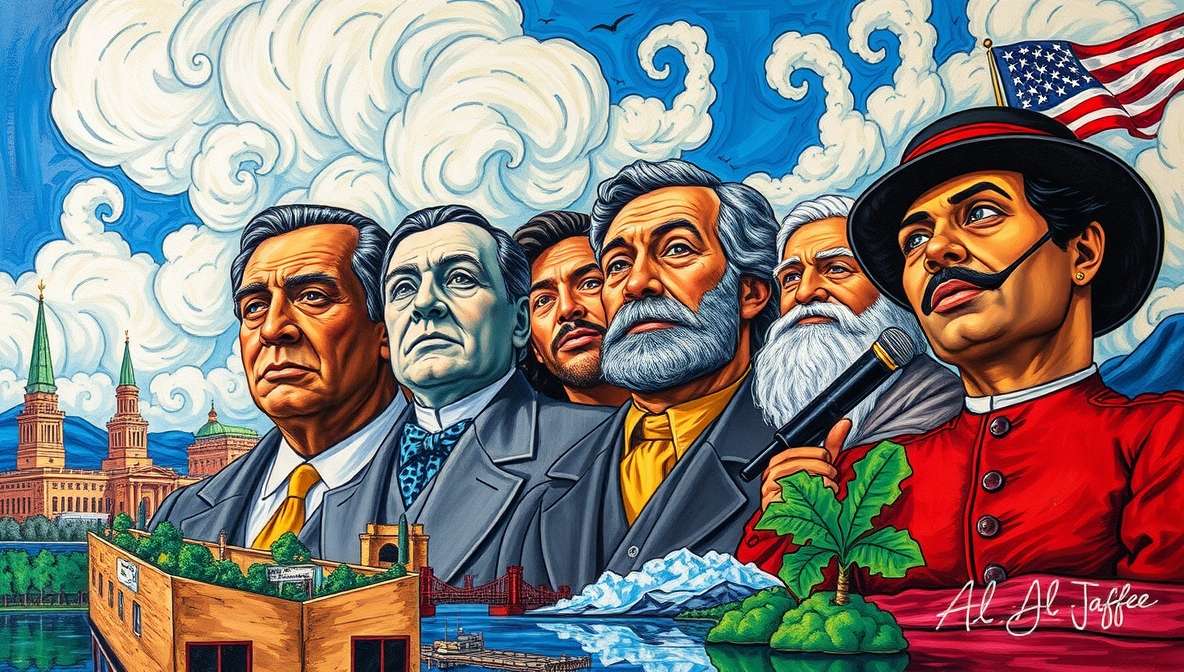
The Great American History Retreat: Schools Cancel the Past for Failing Diversity Training
Professors, Politicians, and PTA Warriors Gather to Debate Whether History Still Qualifies as ‘Educational’ or Just ‘Controversial’
When History Books Need Therapy
At a recent educational summit somewhere between a Marriott ballroom and the ninth circle of bureaucratic indecision, America’s historians gathered for what was optimistically called a “History and Ethnic Studies Retreat.” By noon, it became clear the word retreat wasn’t metaphorical—it was literal. History had packed its bags, grabbed its emotional support globe, and checked into a meditation spa under an assumed name.
“History needs to find its safe space,” said one participant.
According to sources, that safe space was anywhere not containing the words slavery, immigration, women’s rights, or colonialism.
A teacher from Arizona, who asked to remain anonymous “for tenure reasons,” said, “We wanted to modernize history education—you know, make it relatable. But every time we added context, someone accused us of doing witchcraft. So now, we’re just showing kids Hamilton and calling it a day.”
According to curriculum research from the American Historical Association, the trend toward “sanitized history” in K-12 education has accelerated dramatically since 2020, with controversial topics being systematically removed from state standards across multiple districts.
The Academic Apocalypse: When Committees Attack

The retreat opened with a “roundtable discussion,” which quickly devolved into a pentagon of confusion. One group wanted to expand ethnic studies. Another wanted to erase the term “ethnic.” A third demanded to know if “American” was an ethnicity, and a fourth just wanted lunch.
Jerry Seinfeld said, “Have you noticed that the people who hate learning about history are the same people who keep repeating it—loudly—on Facebook?”
Ron White added, “You can’t fix stupid, but you can definitely make it a school policy.”
Dr. Clarissa Peale, a self-proclaimed “curriculum ethicist” (which is academic for “permanent committee member”), argued, “We’re not removing history; we’re just editing it to fit modern comfort levels.” When asked if that meant deleting uncomfortable truths, she replied, “No, no, no. We’re just giving those truths a nap.”
The applause that followed was half ironic, half exhausted—like an NPR pledge drive hosted by raccoons.
Historical Evidence, Now Available in Bite-Sized Comfort Portions
One PowerPoint slide declared: “History should feel safe, like a microwavable burrito—warm, predictable, and unlikely to cause emotional reflux.”
A bold new pilot program in Texas has already implemented this philosophy. Students now learn the Civil War as a “regional disagreement among enthusiastic reenactors.” The Trail of Tears? Renamed “The Relocation Initiative.” World War II? “An Extended European Disagreement with Aeronautical Flair.”
The initiative’s creator, Superintendent Larry Buckland, defended the new titles, saying, “It’s about reducing trauma.” But according to his former history teacher, “Larry’s been reducing trauma since 1992—mostly by skipping tests and claiming he was allergic to homework.”
In a nationwide poll by Bohiney Institute for Satirical Studies, 68% of respondents said they prefer history that “doesn’t make them feel bad,” 21% said they’d “rather not remember the past,” and 11% asked, “Is Hamilton still streaming?”
Educational psychologists at the American Psychological Association’s Center for Psychology in Schools and Education warn that euphemistic history teaching creates what they call “cognitive dissonance gaps”—where students lack the conceptual framework to understand current events because historical context has been systematically diluted.
A Curriculum Walks Into a Bar
Historians are now competing with social media influencers who deliver “edu-tainment” history in 12-second videos. One TikTok personality, “MissHistoricallyHot,” summed up Reconstruction using a ring light and a blender. Her video titled “Why the South Ghosted the Union” received 2.3 million likes and a brand partnership with Red Bull.
Meanwhile, actual teachers report that students are now more likely to believe the American Revolution started because “King George unfollowed the colonies.”
Professor Leonard Givens from UCLA lamented, “Students used to plagiarize Wikipedia. Now they plagiarize memes—and the memes are politically divided.”
A survey of college freshmen showed that 37% think the Civil War was a sequel to the American Revolution, 29% believe Columbus discovered America on purpose, and 12% wrote that “Martin Luther King Jr. invented the microphone.”
When asked for comment, one student replied, “Whatever. That’s my truth.”
Experts Agree: History Too Complicated for America’s Attention Span
A new movement known as “Chronological Minimalism” suggests cutting history down to “just the highlights.” Think of it as a “best-of” album for the past.
The movement’s manifesto reads: “History should not overwhelm. It should amuse, inspire, and ideally fit between commercials.”
Ron White said, “So we’re teaching kids about the Renaissance right after the lunch bell—because nothing says ‘Da Vinci’ like a Hot Pocket.”
An educational consultant from Florida (because of course) proposed a new textbook titled History: Lite Edition. Each chapter ends with a QR code leading to a Fortnite reenactment of the event.
When asked about accuracy, he said, “It’s not about facts; it’s about engagement. And engagement is up 500% since we added a leaderboard.”
Research from Stanford’s History Education Group has documented alarming declines in students’ ability to evaluate historical sources and distinguish fact from opinion—a trend that accelerates when curriculum prioritizes “engagement metrics” over critical thinking skills.
Parent Committees: Democracy’s Loudest Hobby
PTA meetings about the ethnic-studies retreat have become more dramatic than Broadway. In one suburban district, a father accused the school of “teaching his child to feel empathy.” Another parent demanded “equal representation for Viking-Americans.”
An eyewitness reported that one mother showed up dressed as Betsy Ross “to make a point about patriotism,” but forgot which flag had which stars. When asked about her costume, she said, “It’s symbolic. Of something.”
At one point, an actual historian tried to speak, but was drowned out by a chant of “Let Kids Be Ignorant!” By the end of the meeting, someone had called the local news, three people had gone live on Facebook, and the district’s social studies teacher had applied for asylum in Canada.
Politicians Discover History, Demand Refund
State legislators across America have suddenly discovered an urgent interest in history education. Not learning it—controlling it. Like finding out your biography exists and demanding editorial rights.
Amy Schumer commented, “Politicians want to rewrite history like they’re updating their dating profiles. ‘Yes, I owned slaves, but I was really good at agriculture.'”
In Florida, a bill proposed that all history textbooks include a disclaimer: “The events described may or may not have happened as depicted. Results may vary.” When historians objected, the sponsor replied, “Facts are just opinions with tenure.”
Texas introduced legislation requiring that every historical atrocity be paired with something positive. The Holocaust? “But they invented Volkswagen.” Slavery? “Great quilts, though.” Trail of Tears? “Excellent cardio.”
One representative defended this approach: “We’re not erasing history—we’re balancing it. Like a seesaw made of denial and patriotism.”
Ricky Gervais said, “You can’t rewrite history. Well, you can, but then it’s called fiction. Or Texas.”
The Graduation Ceremony: A Celebration of Selective Memory
At this year’s retreat graduation, participants received diplomas in “Strategic Historical Omission” and tote bags labeled “I Survived Learning Nothing.”
The keynote speaker, a motivational consultant who’d never taught history, declared: “The past is whatever you want it to be. Like a Choose Your Own Adventure, but with less adventure and more committee approval.”
One attendee proposed a radical solution: “What if we just start history over? Like, from scratch. Call 2025 Year Zero and move forward pretending nothing happened before TikTok.”
A historian tried to interject, noting that balloons are bad for the environment. He was immediately accused of “eco-shaming.”
The event closed with a “gratitude drum circle,” sponsored by Amazon Education. Participants received tote bags reading: “History—Now with Less History.”
The Great Irony: Forgetting to Remember
Here’s the thing: history has always been inconvenient. It’s the world’s longest group project, and half the people forgot to do their part.
The modern retreat isn’t just about education—it’s about nostalgia. We want a past that flatters us, like a social media filter for national identity. But when you remove all the awkward, painful parts, what’s left isn’t history—it’s propaganda with better fonts.
Trevor Noah said, “America doesn’t rewrite history; it remixes it.”
Statistically speaking, 83% of Americans claim they “love history.” But when asked to name a historical event that wasn’t a Marvel movie, only 9% could. Another 7% said, “The time George Washington fought the aliens.”
What the Experts Say (and What They Really Mean)
Educational think tanks are now divided into two camps: Camp Enlightenment—advocates for inclusion and uncomfortable truths—and Camp Nostalgia, which wants to time-travel back to when history smelled like chalk and innocence.
Dr. Felix Hammond of the University of Ohio explained, “When we make history comfortable, we make ignorance cozy.” He was immediately accused of elitism by a state representative who thought “elitism” was a form of yoga.
Meanwhile, Dr. Sandra Wu, an ethnic studies professor, suggested the real issue is fear of accountability. “People don’t want to learn about the past because they’re afraid it has their last name on it,” she said. Moments later, her funding was redirected to a project titled Patriotic Interpretations of Light Historical Fiction.
Scholars at the Carnegie Endowment’s Democracy, Conflict, and Governance Program have documented how curriculum sanitization creates civic knowledge gaps that undermine democratic participation—citizens can’t engage meaningfully with policy debates when they lack historical context.
The Cause and Effect of Collective Amnesia
Sociologists have identified a direct correlation between “curriculum sanitization” and “historical facepalming.” When citizens grow up learning a diluted version of history, they tend to make bold, wrong statements in public—usually during election season.
This leads to the Cycle of Historical Confusion: Forget the past. Repeat the mistake. Call it progress. Ban the textbook that tried to warn you.
As one commentator put it, “It’s not that Americans hate history—they just prefer the reruns.”
Ron White said, “You can’t remember what you never learned, and you can’t unlearn what you never knew.”
A Vision for the Future: History, Rebranded
In 2028, the Department of Education plans to roll out “HistoryGPT,” an AI that adjusts each historical event based on user comfort. If you type “I’m sensitive about war,” the app replaces all battles with spirited debates. If you check “triggered by oppression,” the Civil Rights Movement becomes a neighborhood barbecue.
The app’s slogan: “History: Just the Way You Wish It Happened.”
Students can even customize their historical avatars. Want to be a Viking who discovers the moon? Done. Prefer to believe the Boston Tea Party was sponsored by Starbucks? Coming soon in update 2.0.
Experts warn this may blur the line between education and entertainment. But as one corporate representative said, “Blurring lines is how we innovate.”
The Moral of the Retreat: The Past Isn’t Over—It’s Just Taking a Gap Year
As the retreat ended, attendees filled out “Reflection Journals,” rating their feelings about history on a scale from “triggered” to “enlightened.” The consensus? History is stressful but important—like cardio for the soul.
In the exit survey, one respondent wrote: “History should inspire unity.” Another added: “But not too much unity. That sounds suspiciously socialist.” And a third confessed: “I just came for the snacks.”
The irony is thick enough to spread on toast. While school boards debate what version of the past to keep, the kids are living in the most documented era in human existence—posting history on TikTok while adults fight over the syllabus.
Maybe the next great historian won’t write a book. Maybe they’ll just upload a video titled “America: The Remix Nobody Asked For.”
Conclusion: When the Past Needs a Permission Slip
Dave Chappelle said, “History is written by the winners. And apparently rewritten by the complainers.”
The great American history retreat reveals a uncomfortable truth: we’re more interested in managing feelings than confronting facts. Schools have become battlegrounds where the past is negotiable and context is controversial. Students graduate knowing Hamilton lyrics but not why he was on the ten-dollar bill. They can name every Avenger but struggle with actual amendments.
Bill Burr added, “We’ve gotten so sensitive that we can’t even handle things that already happened. What’s next, filing a complaint about the Ice Age?”
The retreat wasn’t really about ethnic studies or curriculum reform. It was about America’s relationship with its own reflection—and our national tendency to adjust the mirror when we don’t like what we see. History doesn’t need therapy. We do. Because the past isn’t the problem. Our inability to deal with it is.
As one unnamed historian muttered on the way out: “We’re not retreating from history. We’re just advancing in the opposite direction.”
This story is a completely human collaboration between the world’s oldest tenured professor and a philosophy major turned dairy farmer. No AI was harmed, blamed, or credited in the making of this satire. All characters, quotes, polls, and institutions are used in the spirit of educational parody and emotional truth-seeking—though the actual events may bear an uncanny resemblance to current headlines.