

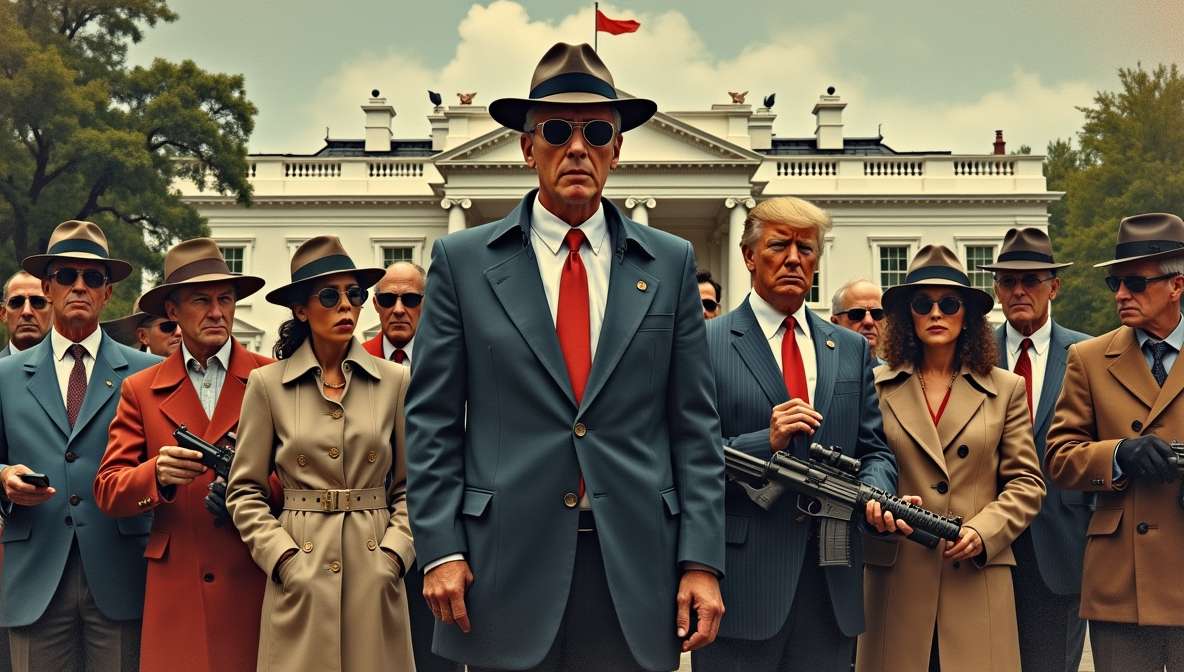
White House Reporters Accused of Being Secret Spies—Everyone Laughs Except Them
Communications Director claims press corps engages in espionage-level antics; journalists respond by asking what he’s been smoking
By Jane “Scoop Master” Donnelly
Bovine News Network | Satirical Journalism Division
The Accusation That Launched a Thousand Eye Rolls
In a move that has left both journalists and casual political observers reaching for popcorn, White House Communications Director Steven Cheung recently claimed that the press corps has been engaging in spy-level antics at 1600 Pennsylvania Avenue. According to Cheung, reporters aren’t merely asking questions—they’re “secretly recording video and audio of our offices,” “wandering into restricted areas,” and “eavesdropping on private, closed-door meetings.”
Yet when pressed for evidence, the Communications Director’s files appeared to be just as empty as his accusations. This extraordinary allegation came shortly after the Trump administration—which self-identifies as “The Most Transparent Administration in History!”—barred reporters from Room 140, home to Press Secretary Karoline Leavitt, Cheung, and other officials, unless appointments were made.
Jerry Seinfeld said it best: “They say journalists are secretly recording rooms. Really? The only thing I record is my neighbor’s karaoke night, and that’s just to have evidence for the noise complaint.”
Brian Karem Calls BS on the Spy Fiction

Brian J. Karem, former Playboy correspondent and perennial thorn in the administration’s side, scoffed at the charges. “There is NO way anyone ‘wandered’ into restricted areas,” Karem said. “There are Secret Service agents everywhere. We’re also far too professional for that—and @StevenCheung47 is a notorious liar.”
As Karem dismantled Cheung’s argument piece by piece, he clarified the obvious: “Snooping? Eavesdropping? Close your door. And, by the way, what he calls snooping boils down to us asking questions they don’t want to answer.” In other words, the real crime seems to be simply performing the job journalists are paid for.
Larry David weighed in: “If you’re gonna accuse reporters of being spies, at least give them decent gear—notepads and pens don’t exactly scream ‘stealth mission.’ Maybe throw in a decoder ring or something.”
The Logistics of This Alleged Espionage Ring
The accusations are laughable when you consider the logistics. Room 140 is surrounded by Secret Service agents, surveillance cameras, and presumably some highly confused interns. For a journalist to wander into these areas unobserved would require acrobatics rivaling Cirque du Soleil—except with worse lighting and no safety net.
Meanwhile, reporters themselves seem almost embarrassed by the suggestion that they are James Bond-level operatives. “We approach Cabinet secretaries after meetings—that’s our job,” Karem explained. “What he calls snooping is just us asking questions, albeit the difficult ones.”
The Great Irony of Transparency Theater
Cheung’s accusations represent peak absurdity. Claiming to be the most transparent administration while simultaneously suggesting reporters are clandestine operatives has veteran journalists wondering if someone slipped something into the West Wing water supply.
Amy Schumer captured the mood: “They say we’re eavesdropping, but the only thing I eavesdrop on is my neighbor’s loud TV when they’re watching Real Housewives. That’s real investigative journalism right there.”
It’s a setup worthy of a sitcom. The administration restricts access, and when reporters politely press the boundaries to do their jobs, the officials cry espionage. The theater of power and paranoia plays out daily, with the press corps supposedly in trench coats and fedoras, magnifying glasses in hand, pretending they’re part of a low-budget thriller no one actually wants to watch.
Adam Sandler summed it up perfectly: “They banned reporters from a wing and then said the reporters sneaked around there anyway—that’s like locking your fridge and then accusing the cat of break-and-enter. The cat didn’t break in. You’re just paranoid.”
Historical Precedent: This Has Happened Before
This is not the first time the press has been temporarily “banished” from parts of the West Wing. In 1993, the Clinton administration similarly restricted access to the Upper Press area, only to quickly reverse the policy following media backlash. It seems some patterns repeat: officials restrict, journalists protest, and the public witnesses theater disguised as crisis.
One reporter quipped off the record: “If we’re spies, we must be terrible at espionage—our main adversaries are pens running out of ink and notepads that fit in our pockets.”
The False Cause Fallacy of Spy Logic
Cheung’s claims are a textbook case of false cause: journalists asking questions does not equate to espionage. One could analogize the situation to accusing your mail carrier of being a professional stalker because they show up at your house every day. While they do appear regularly and know where you live, that’s literally their job description.
Ron White said what everyone was thinking: “They banned the press, then claimed the press rummaged around. That’s like pulling out the welcome mat and then suing the guests for tripping over it. Make up your mind—are we welcome or are we criminals?”
When Journalism Becomes Criminalized
Multiple journalists corroborated their own professionalism. Dan Lamothe of The Washington Post questioned Cheung’s credibility, noting prior unsupported claims about Pentagon reporters being “physically confronted and threatened with retaliation.” David Cruz of Newsday summed it up succinctly: “What Mr. Cheung here is describing—absent of this first purported allegation—is called journalism.”
Sarah Silverman added her take: “They say reporters are eavesdropping. Really? Our main weapons are pens and notepads. The most dangerous thing in that press room is expired vending machine food.”
Role Reversal: The Press as Enemy Combatants
There’s a role reversal here worth noting. Reporters are supposed to hold power to account; suddenly, they are recast as the threat. This inversion is Shakespearean in its irony: the watchdogs become the enemy of the house they’re supposed to guard.
In this narrative, journalism is criminalized for its very effectiveness. Asking uncomfortable questions, documenting policy inconsistencies, and reporting on issues of public interest is somehow twisted into clandestine activity. Logic, history, and public opinion suggest otherwise—but when was reality ever the limiting factor in political theater?
Dave Chappelle said at a recent show: “The press is out here with clipboards and you’re treating them like they have wire taps. That’s not espionage—that’s just Tuesday for a reporter.”
What the Comedians Are Saying About Press Espionage
Bill Burr didn’t mince words: “Of course reporters are defending themselves! You think they’re gonna admit to spying when they’re literally just doing their jobs? That’s like a plumber showing up to fix your toilet and you accusing him of being a deep-state operative.”
Chris Rock observed: “The administration’s drawing lines and reporters are like, ‘We didn’t bring a pencil, we brought questions.’ That’s the whole point of journalism. If you don’t want questions, become a mime.”
Trevor Noah weighed in: “The whole debate is fascinating because it’s really about who gets to decide what’s appropriate. Cheung says ‘espionage,’ reporters say ‘journalism,’ and the rest of us say ‘can we just get some actual news, please?'”
Nate Bargatze captured the absurdity: “They’re like, ‘These reporters are spying on us!’ And I’m thinking, if they’re spies, they’re the worst-trained spies in history. They announce themselves, take notes in public, and then publish everything. That’s not espionage—that’s transparency.”
Kevin Hart said: “Man, if I got accused of being a spy every time I asked an uncomfortable question, I’d have the longest rap sheet in history. ‘Kevin Hart, wanted for asking about your weekend plans.'”
Social Media Responds With Predictable Mockery
Observers outside the press room find the accusations hilarious, even by Washington standards. Anyone who has watched a press briefing in the last decade knows that reporters are far more likely to stumble over their own microphones than conduct undercover operations.
This is emblematic of a broader trend in modern politics: when you cannot control scrutiny, you redefine it as illegitimate. When reporters question policy, they are spies. When the public asks questions, they are troublemakers. The natural consequence is a press corps constantly navigating absurd hurdles while still performing its democratic duty.
Gabriel Iglesias joked: “If I had a dollar for every time someone accused me of espionage just because I asked a question, I’d be launching my own spy agency. Except mine would have better snacks and less paranoia.”
The Press Corps Responds With Sarcasm
If Americans were polled on whether White House reporters are spy agents, the results would land somewhere between “Do you believe in Bigfoot?” and “Is wrestling real?” Political theater thrives on repetition, though, and the administration appears to bet that saying something enough times makes it true.
The press, by contrast, continues reporting, questioning, and documenting—essentially doing the opposite of espionage: public service.
Tom Segura added: “The ‘reporters are spies’ defense is wild because actual spies wouldn’t be caught dead in a press briefing room. Those fluorescent lights? The uncomfortable chairs? That’s psychological torture, not espionage.”
The Trench Coats Remain Metaphorical
Reporters, rather than cower or protest too dramatically, have taken a subtly mocking approach. The trench coats remain metaphorical, the fedoras are optional, and the notepads are full of questions that matter to citizens, not covert operations. The collective response seems to be: if you want spies, hire them. We just want access and the freedom to ask inconvenient questions.
It’s worth noting that these assertions come from journalists who have survived years of White House briefings, press corps rivalries, and the occasional chaotic tweetstorm. Their combined experience far exceeds the supposed expertise of someone labeling them spies without evidence.
Hasan Minhaj observed: “We’re out here citing fake spy accusations and actual journalism. Just admit you don’t like being questioned. You don’t need to invent an espionage ring to justify not answering uncomfortable questions.”
The Bigger Picture: Democracy vs Paranoia
Ultimately, this episode illuminates the tension inherent in modern democratic societies: officials may want to control narratives, but journalism is inherently uncontrollable. Accusing journalists of espionage, banning them from press areas, and labeling their questions as subversive is theater that has played out for decades.
In a democracy, the real threat comes from those who attempt to silence scrutiny—not the reporters who document it. The administration claims transparency while simultaneously limiting access to the very people whose job is to verify it. It’s like claiming you’re the world’s best cook while refusing to let anyone taste your food.
Ali Wong summed it up: “They think reporters being empowered by access is dangerous? Honey, if your biggest threat is someone with a notepad asking follow-up questions, you’re not running a government—you’re running a very bad improv show.”
Satirical But Practical Advice for Everyone
If you’re a government official worried about press access: Remember that transparency and accountability are features, not bugs. If your door is closed and reporters are asking questions outside it, maybe open the door instead of accusing them of espionage.
If you’re a journalist accused of being a spy: Take it as a compliment. Apparently, asking good questions is now considered advanced intelligence work. Update your LinkedIn accordingly.
If you’re a citizen watching this unfold: Remember that a free press asking uncomfortable questions is exactly what democracy needs. The day we stop questioning power is the day power stops being accountable.
If you’re Steven Cheung: Maybe close your door if you’re worried about eavesdropping. Just a thought.
The Final Verdict on Press Room Espionage
As the press pool quietly returns to typing and filing stories, the central lesson is clear: journalism thrives not in secrecy but in exposure. Cheung’s accusations may have generated headlines, but they also highlighted the absurdity of labeling a reporter as a spy for simply doing their job.
Ricky Gervais would put it simply: “Calling journalists spies for asking questions is like calling me a doctor because I once watched Grey’s Anatomy. Just because someone’s doing something you don’t like doesn’t mean they’re committing crimes.”
In the end, the press remains the loyal watchdog, the skeptical observer, and the occasional target of bureaucratic fantasy. If spying requires sophistication, stealth, and actual secrets, then the White House press corps—armed with pens, notepads, and persistence—is clearly the worst spy network imaginable.
And maybe, just maybe, that’s the point.
Sarah Silverman had the last word: “As long as reporters continue to ask uncomfortable questions, document inconsistencies, and show up every single day, the spy accusations remain funny rather than factual. And if nothing else, it gives us comedy writers ample material for the next week of punchlines. So thanks for that, Steven.”
Disclaimer: This story is entirely a human collaboration between a veteran political satirist who once got kicked out of a press briefing for laughing too loud and a former journalism professor who now teaches “Advanced Eye-Rolling 401.” Neither artificial intelligence nor algorithm assisted in the writing of this satire—just cynicism and a deep appreciation for the absurd.
Related Links:
- White House Reporters Call BS on Spy Claims – The Daily Beast
- The Most Transparent Administration in History – Salon
- Washington Post Political Coverage
Auf Wiedersehen, amigos.