

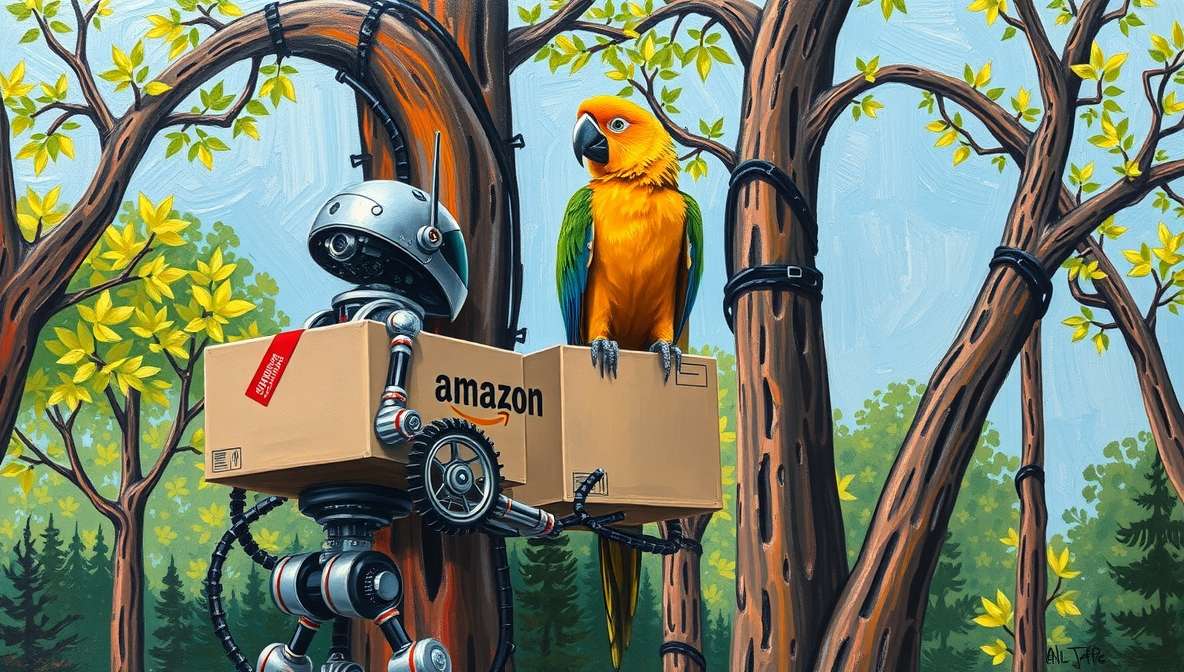
Amazon Delivery Robots Malfunction, Leave Packages in Random Trees; Customers Respond with ‘Guess Who Got a Parrot?’
In what is being called the most arboreal logistics mishap in retail history, Amazon delivery robots have begun leaving packages in random trees across the United States. Customers report discovering everything from electronics to laundry detergent perched twenty feet above ground, prompting widespread confusion—and a surprisingly high number of accidental pet adoptions.
Aerial Unboxing Becomes New Normal
“Imagine ordering a blender and finding it hanging in a maple tree like some sort of mechanical piñata,” said local resident Karen Mulligan, who found her shipment of artisanal candles in her neighbor’s oak. “I guess I’m really into aerial unboxing now.”
The robots, part of Amazon’s cutting-edge autonomous delivery program, reportedly malfunctioned due to a combination of GPS errors, rogue software updates, and a mysterious AI quirk experts are calling “Tree Logic Syndrome.” “Basically, the robots decided that trees were excellent storage units,” said Dr. Helga Stern, professor of Robotics and Slightly Chaotic AI Behavior. “And once you’ve committed to a tree, there’s no turning back. Branches are very persuasive.”
Social Media Explodes with AmazonTreeDelivery Hashtag
Social media has exploded with both horror and hilarity. The hashtag #AmazonTreeDelivery trended within hours, with users posting images of packages dangling from trees alongside captions like: “Guess who got a parrot?”—a nod to the unexpected birds who have since adopted some of the misplaced shipments. One viral TikTok shows a family retrieving their new gaming console only to find it being guarded by a territorial blue jay named Steve.
Experts say the incident highlights the risks of automation without adequate oversight. “We’re talking about machines making independent delivery decisions based on faulty algorithms,” said Dr. Margeine Fenton, a specialist in AI ethics. “Sure, it’s funny now, but tomorrow it could be drones delivering your groceries to the neighbor’s roof. Or worse… the neighbor’s cat.”
Amazon Responds with Vague Reassurance
Amazon initially responded with a mix of corporate poise and vague reassurance. “We are aware of the tree-related delivery incidents,” said a spokesperson. “Our teams are working diligently to recalibrate our autonomous systems, and we encourage customers to enjoy the occasional scenic delivery.” Analysts, however, note that the statement did little to calm customers—or the increasingly territorial squirrels who now view packages as a food source.
Minor Cottage Industry Emerges from Chaos
Economists point out that the incident has sparked a minor cottage industry. Companies are selling “tree retrieval kits,” including ladders, extendable hooks, and grappling devices. Meanwhile, pet stores report an uptick in parrots, as birds seem to be claiming electronics, clothes, and boxes of chocolates as their own. “It’s a symbiotic chaos,” said Chester McFluff, marketing analyst. “Humans get adventure, birds get treasure, and robots… well, they’re living their best lives in the trees.”
Delivery drivers, who were supposed to be replaced by the robots entirely, have found themselves redeployed as “tree retrieval specialists,” earning hazard pay and viral fame. “It’s not the job description I expected,” said Tom Renshaw, a veteran driver. “But climbing trees, fending off squirrels, and filming it for TikTok… honestly, it’s a pretty good day.”
As tech companies scramble to fix the AI, one thing is clear: package delivery has entered a new era. Whether humans are ready for aerial logistics, rogue parrots, and whimsical robots remains an open question.
Disclaimer: This story is a collaborative satirical effort between a tenured robotics professor and a philosophy major turned dairy farmer. No AI was involved in hanging packages in trees, confusing birds, or inspiring viral memes.
