

Where History Costs Extra and Rainbow Row Requires a Filter
Charleston: The City Where Antebellum Architecture Meets Instagram Aesthetics
Charleston clings to the South Carolina coast like a perfectly preserved museum exhibit, a city that has spent 350 years perfecting the art of making history attractive to tourists willing to pay premium prices for the privilege of walking on cobblestones while eating overpriced she-crab soup. This Holy City has mastered combining genuine historical significance with commercial hospitality so efficient that visitors leave charmed, broke, and somehow convinced that spending $300 on a hotel room the size of a broom closet was worth it because the room had exposed brick and was near Rainbow Row.
The Historic District: Where Every Building Has a Plaque and a Story
Charleston’s Historic District functions as the city’s primary attraction and economic engine, featuring antebellum architecture so well-preserved that you’d think time stopped in 1860, which is either testament to historical preservation or concerning commentary on the city’s relationship with the past depending on your perspective on Confederate monuments and plantation tours. The streets feature grand homes with wrap-around porches, gas lanterns, and historical markers explaining which founding fathers slept there, which battles occurred nearby, and which enslaved people built everything while receiving no credit until very recently when acknowledging that became unavoidable.
The Battery promenade offers views of Charleston Harbor where the Civil War began at Fort Sumter, creating a waterfront where tourists take selfies at the location where America’s bloodiest conflict started, somehow missing the irony of treating war sites as Instagram backgrounds. According to The Post and Courier, Charleston’s historic preservation has created significant tourism revenue while generating debates about what history deserves celebration versus contextualization, questions the city addresses through markers, museums, and ongoing conversations about how to present complicated pasts to visitors seeking charming vacation experiences rather than uncomfortable historical truths.
Rainbow Row: Pastel Houses and Photo Ops
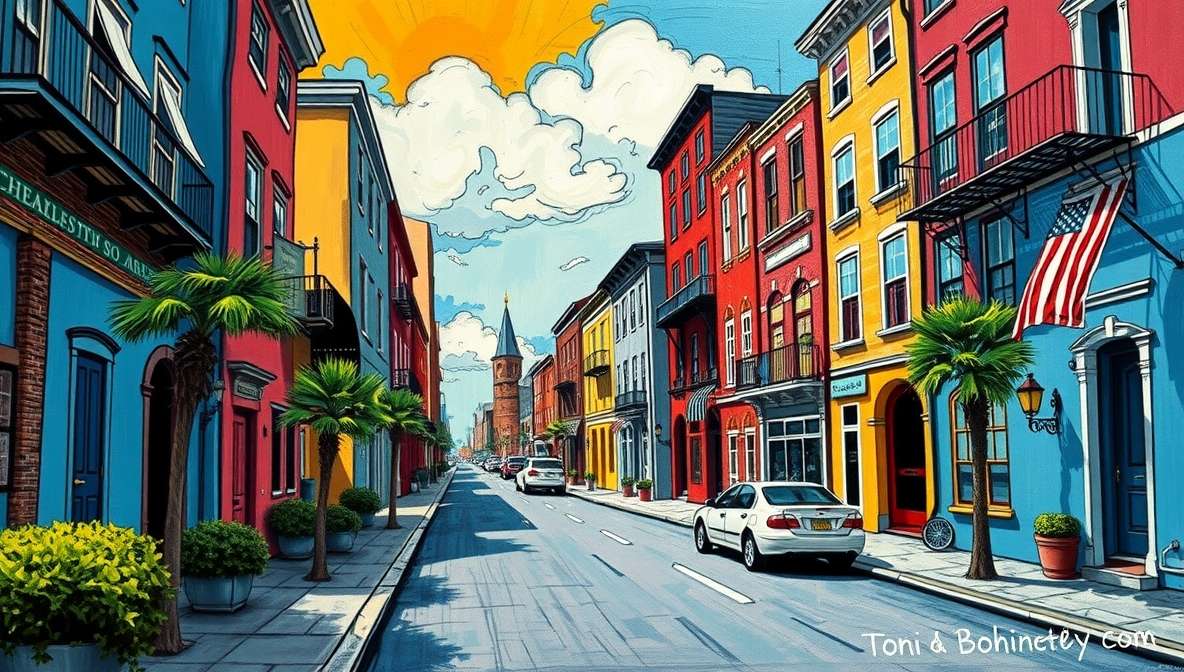
Rainbow Row represents Charleston’s most photographed street, a collection of colorful Georgian row houses that exist primarily as Instagram content and proof that tourists visited Charleston. The houses feature pastel colors ranging from pink to blue to yellow, creating a streetscape that’s either charming historical preservation or looks like Easter threw up, depending on your aesthetic preferences and tolerance for crowds blocking sidewalks while photographing buildings. The houses are private residences, meaning tourists can photograph but not enter them, creating a landmark that’s entirely about appearances and surface-level appreciation, which perfectly captures Charleston tourism’s general approach to history and culture.
The Food Scene: Lowcountry Cuisine at High Country Prices
Charleston’s culinary scene has evolved from regional Southern cooking to nationally recognized dining destination, featuring restaurants where James Beard Award-winning chefs serve Lowcountry cuisine at prices that would make your grandmother who actually cooked this food weep. Shrimp and grits appears on every menu in variations ranging from traditional to deconstructed preparations that probably shouldn’t exist but do because Charleston chefs have decided that classic dishes need modern interpretations and $32 price tags.
She-crab soup serves as Charleston’s signature dish, a cream-based soup with crab meat and roe that tastes rich and costs more, creating an appetizer that costs as much as entrees elsewhere. The dish’s name references female crabs, though nobody talks about how harvesting pregnant crabs for soup might not be sustainable, because sustainability conversations interfere with enjoying expensive seafood. According to Charleston City Paper, the restaurant scene continues expanding with new concepts opening frequently, creating a dining landscape where farm-to-table, seasonal menus, and locally-sourced ingredients are mandatory marketing language even when the actual sourcing practices are questionable and the local farms are owned by the same restaurant groups promoting them.
The Plantations: Where Tourism Meets Uncomfortable History
Charleston’s plantation tours represent the city’s most problematic tourist attraction, historic estates that operated through enslaved labor now functioning as wedding venues and tourist destinations. The tours have evolved from celebrating antebellum grandeur to attempting more honest discussions of slavery, though the balance between educational experience and tourist attraction creates tensions where some visitors want Instagram photos in front of oak trees and others want accurate historical context about the humans who were enslaved there. The plantations feature beautiful grounds, impressive architecture, and histories that can’t be separated from the brutal realities of chattel slavery no matter how many times tour guides mention the “big house” without adequately discussing the quarters.
Magnolia Plantation, Boone Hall, and Middleton Place attract visitors seeking Southern beauty and history, providing both along with necessary confrontations with America’s original sin that some tourists appreciate and others complain about because they wanted pretty gardens without the complicated context. According to National Park Service, plantation tourism creates economic benefits while requiring careful presentation of histories that shouldn’t be sanitized for visitor comfort, creating educational challenges where historical accuracy sometimes conflicts with tourist expectations of pleasant vacation experiences that don’t involve contemplating systemic human rights violations.
King Street: Where Shopping Requires Historic Context
King Street functions as Charleston’s primary shopping corridor, stretching from Lower King’s galleries and boutiques through Middle King’s chain retailers to Upper King’s restaurants and bars, creating a commercial district that’s divided into sections like a retail taxonomy. Lower King features expensive boutiques selling clothing and home goods at prices suggesting everything was handcrafted by artisans rather than mass-produced in factories, marketed to tourists and wealthy locals who believe paying $200 for throw pillows demonstrates sophisticated taste rather than questionable financial priorities.
Upper King has gentrified rapidly, transforming from sketchy to chic faster than longtime residents could protest, creating a nightlife district where former warehouses now house cocktail bars serving $15 drinks with complicated names and ingredients that require explanation. The transformation displaced businesses and residents while creating economic development, generating the standard gentrification debates where growth benefits some while pricing out others. According to Charleston Area Convention & Visitors Bureau, King Street attracts millions of visitors annually, all seeking that perfect combination of shopping, dining, and historic charm that Charleston markets aggressively and delivers consistently, assuming you have sufficient credit limits and tolerance for crowds.
The Beaches: Where Sullivan’s Island Meets Tourist Dollars
Charleston beaches offer Atlantic Ocean access across barrier islands that range from family-friendly to exclusive depending on which island and your relationship to beach house ownership. Folly Beach serves as Charleston’s most accessible beach, attracting surfers, families, and people willing to pay $20 for beach parking because apparently charging for ocean access is acceptable when demand exceeds supply. The beach features a pier, restaurants, and the kind of casual beach town vibe that’s either charming or slightly rundown depending on whether you’re on vacation and everything seems charming or you’re a resident who knows that “casual beach town” often means “infrastructure that needs updating.”
Sullivan’s Island and Isle of Palms offer more upscale beach experiences with vacation rentals costing thousands weekly, creating barriers to entry that ensure beaches remain less crowded because only people with substantial disposable income can afford to visit. The beaches serve dual purposes of recreation and property investment, with beach houses appreciating faster than inland properties because ocean views apparently justify prices that make mainland mansions look affordable. According to South Carolina Department of Health and Environmental Control, beach access and preservation remain ongoing concerns as development pressures increase and sea level rise threatens coastal properties, creating environmental challenges that require long-term planning that sometimes conflicts with short-term profit motives driving coastal development.
The Carriage Tours: History Delivered at Horse Speed
Horse-drawn carriage tours provide Charleston’s most visible tourist activity, with carriages clopping through historic streets while guides deliver scripted histories that range from accurate to embellished depending on the company and guide’s relationship to historical fact versus entertaining storytelling. The tours cost approximately $30 per person for hour-long rides where you’ll learn about architecture, hear stories about famous residents, and possibly get stuck behind another carriage because apparently nobody coordinated routes to prevent traffic jams of horses.
The carriage industry generates controversy around animal welfare, with debates about whether horses should work in Charleston heat pulling tourists through cobblestone streets, questions that operators address through regulations and critics argue remain inadequate. The tours represent Charleston tourism’s essence: commercializing history through experiences that are simultaneously educational and performative, authentic and staged, creating a tourist product that works economically while raising questions about appropriate ways to present history and treat animals. According to Charleston tourism officials, carriage tours remain popular despite controversies, proving that tourists value experiences over ethical considerations or perhaps don’t know about controversies because they’re on vacation and not researching animal welfare standards for historic city carriage operations.
The Weather: Humidity You Can Wear
Charleston weather operates on two settings: oppressively hot and humid or pleasantly mild for approximately six weeks annually. Summer temperatures exceed 90 degrees regularly, but the humidity makes it feel like you’re breathing through wet towels while your clothes immediately stick to your body upon exiting air conditioning. The heat isn’t dry desert heat that’s supposedly bearable; it’s coastal swamp humidity that makes you question why humans settled here before air conditioning existed and what those early colonists were thinking besides “let’s build a city in a place that’s basically uninhabitable six months yearly.”
Hurricane season brings annual evacuation debates and storm tracking apps that everyone monitors like they’re following sports playoffs, creating a culture where hurricane parties coexist with legitimate disaster preparation. The city sits at sea level surrounded by water, making flooding a regular occurrence and climate change an existential threat that city planning must address despite political pressures to ignore environmental science. According to National Weather Service, Charleston’s climate features mild winters that attract tourists fleeing Northern cold and brutal summers that make residents flee to mountains or beaches, creating seasonal population fluctuations where the city’s character changes based on temperature and tourist influx.
The College of Charleston: Where Students Outnumber Parking Spots
The College of Charleston sprawls through downtown, essentially becoming multiple city blocks of campus that blends seamlessly with historic district because the college buildings are equally historic and architecturally significant. The school attracts students seeking that quintessential Southern college experience with beautiful campus, warm weather, and proximity to beaches, creating a student body that’s either academically focused or primarily interested in the lifestyle depending on individual students and possibly their parents’ expectations versus their actual priorities.
The students contribute to Charleston’s economy through rent, retail spending, and providing cheap labor for restaurants and bars, while simultaneously creating tensions around student housing, noise complaints, and whether college neighborhoods should cater to students or permanent residents, debates that never resolve satisfactorily because students keep arriving and neighbors keep complaining. According to College of Charleston, enrollment exceeds 10,000 students, creating a population that temporarily lives in Charleston, impacts rental markets and neighborhood character, and then leaves, perpetuating cycles where areas near campus cater to transient populations rather than building stable residential communities.
Real Estate: Where Historic Homes Cost Historic Sums
Charleston real estate operates on the principle that historical significance and coastal location justify prices that make prospective buyers weep while real estate agents discuss “investment opportunities” and “lifestyle benefits” that supposedly compensate for spending $1.5 million on a house that needs $500,000 in renovations because historic preservation requirements mean you can’t just update things without approval from committees that meet quarterly. The market attracts wealthy retirees, second-home buyers, and investors who view Charleston real estate as safe investments that appreciate faster than stocks while providing vacation homes or rental income.
The housing boom prices out service workers, teachers, and middle-class residents who make Charleston function but can’t afford to live here, creating workforce housing crises that city leadership addresses through affordable housing initiatives that build dozens of units while thousands need housing, suggesting either inadequate funding or lack of political will to actually solve problems versus appearing to address them. According to Zillow, Charleston’s median home price exceeds $400,000, creating markets where homeownership becomes impossible for average wage earners and rental markets where landlords charge amounts that make renting more expensive than mortgage payments would be if banks approved loans for people whose incomes can’t support these prices, creating economic contradictions that trap residents in rental markets while building wealth for property owners.
Spoleto Festival: When Charleston Gets Even More Crowded
Spoleto Festival USA arrives annually, transforming Charleston into a performing arts showcase featuring opera, theater, dance, and music that attracts culture enthusiasts and people who enjoy saying they attended Spoleto. The festival lasts seventeen days, creating extended periods when Charleston becomes more expensive and crowded than usual, which is saying something for a city already expensive and crowded. The performances range from internationally renowned to experimental productions that either represent artistic innovation or incomprehensible nonsense depending on your relationship to contemporary performance art.
Spoleto generates significant economic impact while creating tensions with residents who can’t afford tickets and experience primarily the traffic, crowds, and restaurant waits without the cultural benefits. The festival represents Charleston’s aspirations toward cultural sophistication that coexist with its tourist trap reality, creating a city that contains both world-class arts festivals and ghost tours that are equally popular with different demographics. According to Spoleto Festival USA, the event attracts over 70,000 attendees, contributing millions to the economy while transforming Charleston temporarily into a performing arts destination that returns to primarily historic tourism destination once the festival ends and everyone leaves.
Conclusion: The City Where History Is the Industry
Charleston remains one of America’s most beautiful and historically significant cities that has figured out how to monetize both qualities so efficiently that preservation and commercialization have become indistinguishable. Visitors leave either enchanted by the architecture, food, and Southern charm or aware that the charm is partially performance and the history is selectively presented, though probably still enchanted because Charleston knows how to create experiences that work despite or because of their commercial nature. The city’s greatest achievement is maintaining its historical character while experiencing growth and tourism that threatens to overwhelm the authenticity tourists seek, creating a place where preserving the past has become the business model for the present. Come for Rainbow Row photos, stay for the she-crab soup and carriage tours, leave with Instagram proof you visited and vague awareness that the beautiful antebellum architecture represents a complicated history that can’t be fully appreciated in a long weekend, but you’ll probably return anyway because Charleston has that effect on people who appreciate beautiful cities even when beauty sometimes obscures uncomfortable truths about how that beauty was created and who paid the actual costs.
