

Where Everyone Works for Three-Letter Agencies or Pretends They Do
Washington, D.C.: The City Built on Gridlock and Good Intentions
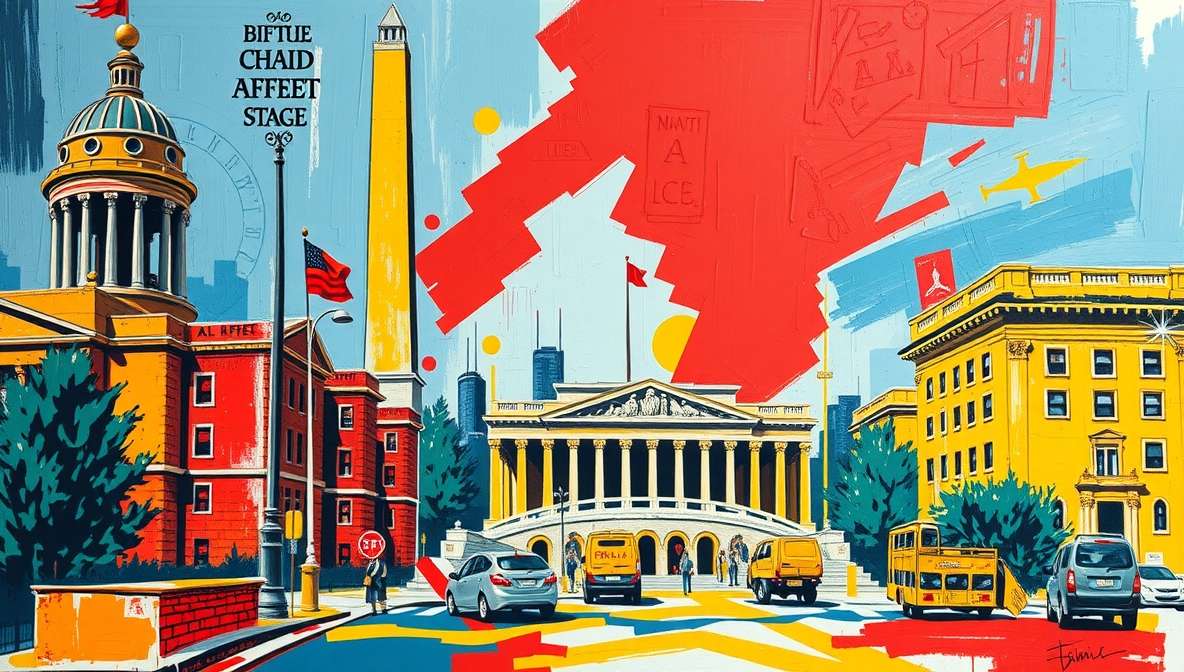
Washington, D.C. sprawls along the Potomac River like a monument to bureaucracy, a city designed by people who believed grand avenues and classical architecture could somehow inspire political cooperation. This capital district has perfected the art of combining massive government infrastructure with equally massive dysfunction, creating a metropolitan area where everyone either works in politics, works adjacent to politics, or serves overpriced brunch to people who work in politics. The National Mall stretches between the Capitol and Lincoln Memorial, offering stunning views of marble monuments and equally stunning views of political gridlock occurring inside those marble buildings.
The Political Culture: Where Everyone Has an Opinion and a Think Tank
Washington, D.C. operates as America’s political headquarters, creating a city where policy discussions happen at bars, networking occurs at gym classes, and everyone on dates spends the first twenty minutes establishing whose job is more important. Conversations inevitably turn to politics because literally everyone works in or adjacent to government, creating social dynamics where small talk about weather quickly devolves into debates about infrastructure spending or foreign policy that nobody at the party actually wanted to have.
Think tanks proliferate throughout the city like political mushrooms, producing white papers and policy recommendations that politicians may or may not read before ignoring them. According to The Washington Post, the city contains hundreds of think tanks, lobbying firms, and advocacy organizations, creating an ecosystem where people get paid to think about problems, write about solutions, and then watch as nothing they recommend actually gets implemented because politics is complicated and compromise is apparently harder than gridlock.
The Hill Staffer Phenomenon: Young, Ambitious, and Underpaid
Capitol Hill employs thousands of young staffers who work 80-hour weeks for salaries that barely cover rent in group houses with seven roommates. These ambitious recent graduates move to D.C. convinced they’ll change the world, slowly realizing their jobs mostly involve answering constituent phone calls and managing their boss’s calendar. The staffers populate happy hours throughout the city, networking aggressively while drinking $8 beers and discussing legislation they helped draft that will probably die in committee without ever receiving votes.
The Metro: Clean, Efficient, and Occasionally On Fire
The Washington Metro operates as the city’s pride and public transportation system, featuring brutalist architecture that’s either impressively stark or depressingly Soviet depending on your aesthetic preferences. The Metro works remarkably well compared to other American transit systems, which is either compliment to D.C. or indictment of every other city. Trains arrive with reasonable frequency during rush hour, creating packed cars where everyone pretends not to notice they’re standing uncomfortably close to strangers while reading policy briefings or political news.
The system occasionally experiences fires, derailments, or mysterious shutdowns that transform commutes into odysseys requiring patience and acceptance that being late is now beyond your control. Escalators break with concerning regularity, creating situations where climbing what amounts to small mountains becomes part of the daily commute. According to WMATA, the Metro serves over 600,000 daily riders, transporting them through tunnels that definitely aren’t creepy and stations that mostly don’t smell weird, creating public transit experiences that range from efficient to “why is smoke coming from that tunnel?”
The Monuments: Marble Temples to Democracy and Tourism
The National Mall hosts monuments to presidents, wars, and historical moments, creating an outdoor museum that’s free to visit and mobbed by tourists year-round. The Washington Monument stands as a 555-foot obelisk that’s either phallic symbolism or just a really tall pointy thing depending on your Freudian interpretation level. The monument offers views from the top accessible via elevator tickets that require advance planning comparable to concert tickets for popular bands, ensuring that spontaneous monument climbing is impossible.
The Lincoln Memorial features a massive statue of Lincoln sitting contemplatively, watching over the reflecting pool and tourists taking selfies in front of it. The memorial hosts the steps where Martin Luther King Jr. delivered his “I Have a Dream” speech, lending it historical significance that tourists respectfully acknowledge before returning to their selfies. The Vietnam Veterans Memorial and Korean War Memorial provide somber reminders of sacrifice and loss, offering contrast to the selfie culture dominating other monuments. According to National Park Service, the monuments attract millions of visitors annually, all seeking that perfect photo proving they visited while occasionally reading the historical plaques explaining why these monuments exist.
The Smithsonian Museums: Free Culture and Overwhelming Choices
The Smithsonian Institution operates nineteen museums in the D.C. area, all offering free admission because apparently Congress decided culture should be accessible, at least before they started defunding everything. The museums cover everything from natural history to air and space to American history, creating such extensive collections that seeing everything would require weeks and stamina usually reserved for ultramarathons. The National Museum of Natural History features dinosaur fossils and the Hope Diamond, attracting crowds that make viewing exhibits feel like competitive sports.
The National Air and Space Museum displays aircraft and spacecraft that represent humanity’s aviation achievements, though recently underwent renovations that closed large portions, forcing visitors to appreciate aerospace history in smaller increments. The museums provide educational experiences and air-conditioned refuge from D.C. summer humidity, serving dual purposes of cultural enrichment and climate control. According to Smithsonian Institution, the museums attract over 30 million visitors annually, creating crowds that make appreciating art and history require patience, strategic timing, and acceptance that you’ll spend as much time navigating humans as viewing exhibits.
Georgetown: Where Cobblestones Meet Credit Card Debt
Georgetown maintains its historic charm and expensive boutiques, offering cobblestone streets that look picturesque but destroy ankles and vehicle suspensions. The neighborhood features Federal-style rowhouses costing millions and attracting residents who either inherited wealth or accumulated it through careers in law, lobbying, or family connections. M Street hosts shopping and dining that caters to tourists and Georgetown University students whose parents pay their rent and apparently also their brunch bills.
Georgetown University looms over the neighborhood, producing future politicians, lawyers, and people who’ll spend careers mentioning they attended Georgetown despite nobody asking. The waterfront provides scenic walking paths along the Potomac, offering views of the Potomac and Virginia across the river, which is either beautiful or just water and trees depending on your appreciation for nature. According to Georgetown BID, the neighborhood attracts visitors seeking history, shopping, and dining experiences that cost 30 percent more than identical experiences elsewhere because Georgetown address commands premium pricing.
The Weather: Swamp City Humidity Is Not a Myth
Washington, D.C. sits on reclaimed swampland, a geographical fact that becomes viscerally apparent every summer when humidity transforms the city into an outdoor sauna. Summer temperatures exceed 90 degrees regularly, but the humidity makes it feel approximately 107 degrees, creating conditions where walking outside means immediate sweating and questioning why humans built a capital city in a swamp. Tourists arrive in July wearing shorts and enthusiasm, leaving with heat exhaustion and understanding why Congress takes August recess.
Winter brings cold that’s not as severe as northern cities but still requires coats, creating seasonal variety that D.C. residents appreciate after months of oppressive heat. Spring features cherry blossoms that bloom beautifully for approximately two weeks, attracting crowds that make viewing them require parking strategies and patience that exceed most people’s festival tolerance. According to National Weather Service, D.C. averages 39 inches of annual rainfall, distributed throughout the year with special concentration during summer thunderstorms that provide brief relief from humidity before returning it with vengeance.
The Restaurants: Where Power Lunches Cost a Day’s Wages
Washington, D.C. restaurants cater to expense accounts and lobbying budgets, serving $40 entrees to diners who discuss legislation between courses. Steakhouses dominate downtown, providing red meat to politicians and lobbyists who apparently believe consuming beef correlates with political power. The restaurants fill with patrons wearing business attire and conducting meetings that blur lines between dining and dealmaking, creating atmospheres where everyone’s either networking or eavesdropping on neighboring tables’ networks.
The city’s dining scene extends beyond power lunch spots, featuring Ethiopian cuisine along U Street, Vietnamese restaurants in Arlington, and international options reflecting D.C.’s diplomatic community and immigrant populations. Food halls and markets proliferate, offering upscale casual dining where young professionals can get $15 grain bowls and overpriced craft cocktails. According to Eater DC, the restaurant scene continues expanding despite high rents and labor costs, creating constant turnover where hot new restaurants open and close faster than food critics can review them, though steakhouses remain eternal because politicians apparently have consistent beef consumption requirements.
The Neighborhoods: A Map of Economic Inequality
D.C.’s neighborhoods demonstrate dramatic economic divides, with wealth concentration in Northwest quadrants and poverty persisting east of the Anacostia River. Dupont Circle features embassies, townhouses, and gay bars that have anchored the neighborhood’s LGBTQ+ community for decades despite gentrification pressures. Adams Morgan offers international restaurants and nightlife that attracts twentysomethings who haven’t yet outgrown crowded bars and late-night pizza.
Capitol Hill surrounds the Capitol building, housing congressional staffers who can barely afford rent despite working at the center of American government. The neighborhood features rowhouses and a weekend farmers market where people pay $8 for heirloom tomatoes and pretend this somehow supports local agriculture better than regular grocery shopping. According to Washingtonian Magazine, gentrification continues transforming historically Black neighborhoods, displacing longtime residents through rising property values and development that benefits newcomers while pushing out the communities that built these areas’ cultures and identities.
Real Estate: Where Rowhouses Cost What Estates Should
Washington, D.C. real estate operates on the principle that proximity to power justifies absurd prices, with homes near the Capitol commanding premiums despite being in a city with no state representation and taxation without voting rights, which would have made the Founders reconsider some things. Rowhouses that would be affordable elsewhere cost $1.2 million here, offering narrow layouts with stairs that become cardiovascular workouts and parking that’s either nonexistent or costs extra monthly fees.
The rental market caters to young professionals and staffers who cycle through the city every few years, creating transient populations and landlords who know they can charge premium rates because demand exceeds supply. According to Zillow, D.C.’s median home price exceeds $600,000, pricing out the service workers, teachers, and non-political professionals who make the city function but apparently don’t deserve to afford living here, creating bedroom communities in Maryland and Virginia that house the people who actually run D.C.’s restaurants, schools, and services.
The Universities: More Than Just Georgetown
Georgetown University dominates D.C.’s university scene through reputation and aggressive branding, but George Washington University, American University, and Howard University provide additional higher education options. GW sprawls through Foggy Bottom, essentially becoming the neighborhood and placing students directly adjacent to State Department, World Bank, and International Monetary Fund, creating internship opportunities and the impression that everyone at GW will become diplomats or international bankers.
Howard University anchors the historically Black college experience in D.C., producing generations of African American professionals, artists, and leaders despite receiving less attention and funding than predominantly white institutions. The universities create student populations that flood neighborhoods, drive up rents, and provide youthful energy to a city otherwise dominated by policy professionals in their thirties discussing mortgage rates. According to WUSA9, the universities contribute billions to the local economy while creating town-gown tensions over student housing, noise, and the general presence of 20-year-olds in neighborhoods where everyone else works 60-hour weeks at think tanks.
Sports: Championships and Curses Finally Broken
Washington, D.C. sports endured decades of championship droughts before the Capitals and Nationals finally won, forcing fans to develop new identities not based entirely on suffering. The Commanders (formerly a name we don’t say anymore) play football with varying success and constant controversy, representing D.C.’s complicated relationship with its NFL franchise. Nationals Park hosts baseball in Navy Yard, a neighborhood that gentrified from sketchy to expensive so quickly that longtime residents experienced whiplash.
The sports culture lacks the intensity of Boston or Philadelphia, partially because many D.C. residents arrived from elsewhere and maintain loyalty to their hometown teams. This creates sporting events where visiting team fans match or outnumber home crowds, suggesting either weak local loyalty or realistic assessment that attachment to sports teams is silly when you’re just going to move back to Ohio in three years anyway. According to ESPN, D.C. sports have improved recently, though fans maintain guarded optimism developed through years of disappointment and awareness that political careers outlast sports allegiances in a city where everyone’s primarily focused on elections rather than playoffs.
Conclusion: The City Where Democracy Goes to Get Stuck in Traffic
Washington, D.C. remains America’s capital and living monument to both democracy’s promise and bureaucracy’s reality, where marble monuments inspire while actual governance frustrates. Visitors leave either awed by the history and institutions or depressed by the politics and realizing that sausage-making metaphor is accurate and unappetizing. The city’s greatest achievement is maintaining symbolic importance while becoming increasingly expensive and less accessible to average Americans who supposedly own this democracy. Come for the monuments, stay because your government job has good benefits and you’ve accepted that yes, you’ll have seven roommates in your thirties, leave when you finally admit that spending your twenties answering constituent phone calls while living in group houses maybe wasn’t the path to changing the world you envisioned, but somehow you’ll miss the cherry blossoms and feeling close to power even if you never actually wielded any because D.C. has that effect on idealistic people who came here believing government could work and left understanding why it often doesn’t.
