

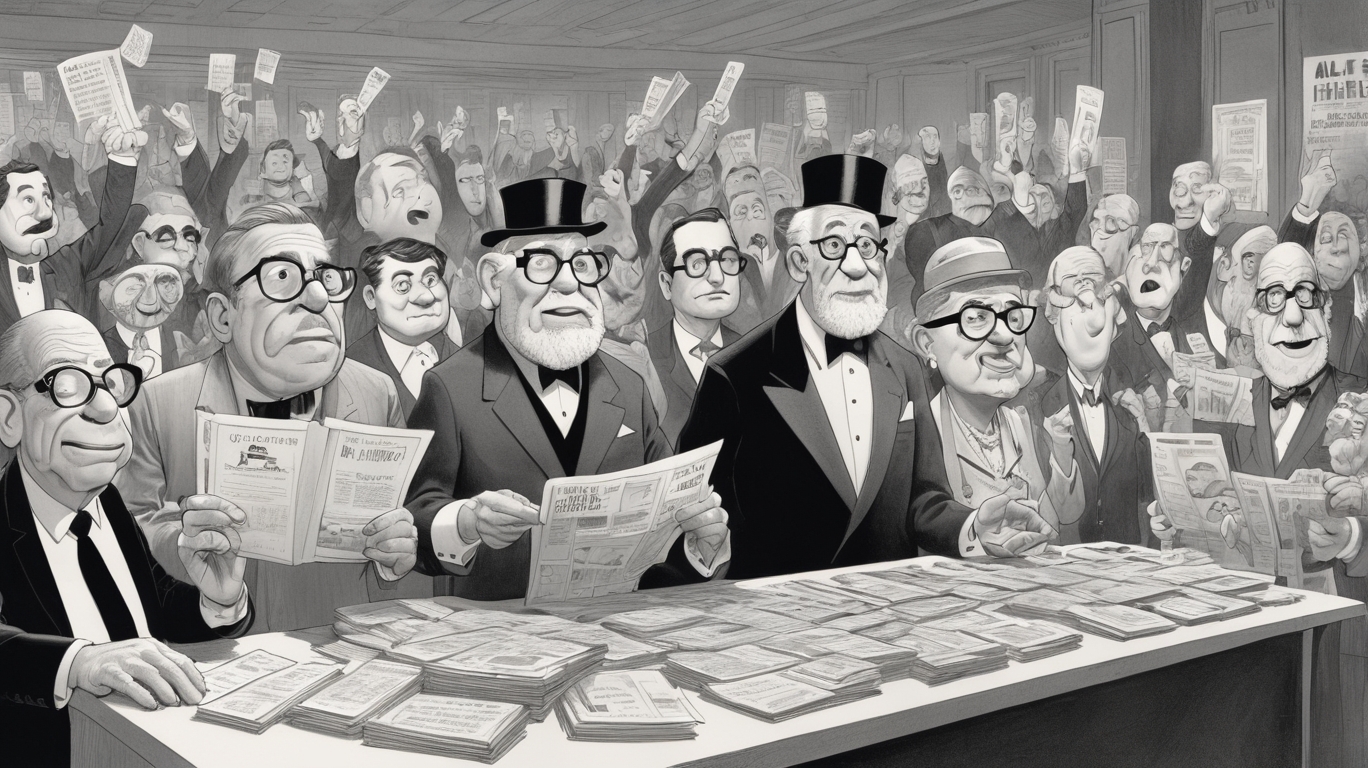
Global Diplomacy: The Dramatic Edition
Politicians in Paris now worry more about ballot boxes in immigrant neighborhoods than about tanks in Moscow.
In today’s eyebrow‑raising chapter of Global Diplomacy: The Dramatic Edition, France officially summoned U.S. Ambassador Charles Kushner after he blasted President Macron for not doing enough to quash the rising tide of antisemitism—a move dubbed “unacceptable” by Quai d’Orsay and worthy of an official protest. ft.com
Cue the next scene: former President Donald Trump, freshly back in the geopolitical ring, phones up Macron—not to discuss cheese, NATO, or e‑tariffs—but to deliver a history lecture. Yes, that Trump history lecture. He lectures Macron on how real leaders handle Jewish safety, Palestinian state recognition, and don’t summon ambassadors over polite concern. According to inside‑Washington whispers, Trump proclaimed:
“Macron, you’re rewriting history—literally. You need to learn from real statesmanship. And maybe tone down the sympathy for Palestinians. And while you’re at it, recognize history the right way.”
Macron, reportedly mid‑mousse au chocolat, was left blinking. The diplomatic grapevine says aides rushed in with frantic briefs about Vichy, Dreyfus, 2023‑2024 antisemitic stats in France—1,676 incidents in 2023 and 1,570 in 2024—and how summoning an ally’s envoy might just feed the fire. apnews.com
And so, global TV captured another surreal moment: a statesman summoning his counterpart’s ambassador, while another former statesman lectured him on history. Because in 2025, international affairs are less about policy and more about spectacle.
France’s Existential Panic: Baguettes, Ballots, and the Ambassador Brouhaha
15 Observations
French politics has always looked like a Jerry Lewis skit acted out in slow motion, but lately the show has become less comedy, more dark satire. In a country famous for baguettes, berets, and bureaucratic paperwork thicker than a Michelin Guide, the latest drama involves U.S. Ambassador Charles Kushner, antisemitism accusations, and the quiet fear of Muslim voters swinging the next election. As the French say: plus ça change, plus c’est la même chose.
Here are the first absurdities worth chewing on:
-
The French government summoned the U.S. ambassador not because of war, trade, or nuclear policy — but because of a letter that basically said, “you people have an antisemitism problem.” That’s like calling 911 because your neighbor said your curtains are tacky.
-
Politicians in Paris now worry more about ballot boxes in immigrant neighborhoods than about tanks in Moscow.
-
France, the country that once gave the world “Liberté, Égalité, Fraternité,” is now running on “Anxiety, Hypocrisy, and Electoral Arithmetic.”
-
Every French election feels like a bad Eurovision contest where the votes come in along ethnic lines.
-
Macron insists antisemitism is being crushed, while Jews in Marseille insist their synagogues have more graffiti than an American skate park.
-
The ambassador’s letter upset the French more than the last American film to win at Cannes — and that was Shrek 2.
-
In French politics, it’s now impossible to mention antisemitism without someone yelling “what about Islamophobia,” and vice versa. It’s like a tennis match played with live grenades.
-
The Ministry of Interior is basically a fire brigade for religious panic.
-
Every French café is filled with old men saying “back in my day” — but now their stories involve Hitler and halal meat.
-
Politicians fear Muslim voters because they turn out in blocs; meanwhile, the average Parisian voter only turns out if there’s free wine.
-
The French are still rehabilitating Napoleon’s image, so rehabilitating history’s darker figures isn’t exactly a stretch.
-
You can measure French antisemitism not by statistics but by how many times Gérard Depardieu has been asked to apologize on television.
-
At this point, France is one baguette shortage away from outright civil war.
-
The U.S. and France haven’t been this awkward since De Gaulle asked American troops to leave in 1966.
-
Everyone’s terrified of the “Muslim vote,” but no one’s sure it even exists as a coherent bloc — it’s like fearing a croissant uprising.
Panic in the Palais
When Ambassador Charles Kushner sent his letter, it wasn’t laced with diplomatic niceties. He accused the French government of failing to address the “dramatic rise of antisemitism.” That was enough to send the Quai d’Orsay into crisis mode. The French foreign ministry declared the letter “unacceptable,” which in French means: we are deeply insulted but also secretly panicked you might be right.
Behind closed doors, aides whispered about the real fear: Muslim voters. In cities like Marseille, Lyon, and parts of Paris, Muslim communities represent decisive numbers. French elections are not blowouts; they are nail-biters. Ten thousand votes in a banlieue can shift power.
“Macron knows if he leans too hard against antisemitism in a way that looks like pandering to Israel, he risks losing Muslims who already feel alienated,” said Dr. Henri Pamplemousse, professor of Political Cowardice at the Sorbonne. “On the other hand, if he’s soft, he loses Jewish voters, international credibility, and probably sleep.”
It’s a lose-lose scenario: fight antisemitism too loudly, lose Muslims. Ignore antisemitism, lose Jews and allies. This is less politics than it is a balancing act on a high wire strung between Notre Dame and the Eiffel Tower.
Street-Level Tension
On the ground, antisemitism is no abstract concept. In Marseille, synagogues report vandalism weekly. In Paris, Jewish parents quietly remove Stars of David from their children’s necklaces. At the same time, Muslim communities feel increasingly profiled under counterterrorism laws.
Claude, a retired taxi driver sipping coffee in Montmartre, summed it up: “Everyone says liberté, but everyone is also afraid. Jews fear attacks, Muslims fear suspicion, politicians fear elections, and I fear my wife when I forget the groceries.”
The French public is bombarded with headlines about “communal tensions.” And yet, the same newspapers still dedicate more ink to cheese festivals. Priorities, after all.
Comedian-Style Punchlines
“You ever notice how in France, antisemitism spikes every election season? It’s like hay fever, except instead of sneezing, people start quoting Vichy.” — Jerry Seinfeld
“The French summoned the U.S. ambassador over a letter? In Texas, we only summon ambassadors when we run out of barbecue sauce.” — Ron White
“If you’re Muslim in France, they think you’re plotting. If you’re Jewish, they think you’re hiding gold. If you’re Catholic, they think you’re the mayor. And if you’re atheist, they think you’re German.” — Sarah Silverman
The Phantom Muslim Vote
The French press loves to talk about “the Muslim vote” as if it were a monolithic beast. In reality, Muslims in France are as politically diverse as anyone. Some vote left for social justice, some vote right for law and order, some abstain because they think the whole circus is rigged.
Yet, French politicians obsess over it. In whispered conversations, campaign managers talk about “courting the banlieues.” One leaked poll from Le Journal de Satire claimed:
-
52% of Muslims in France think politicians care more about headlines than human beings.
-
38% said they’d vote for “anyone who promises cheaper kebabs.”
-
10% said they were seriously considering moving to Belgium, where at least waffles are respected.
America’s Unwelcome Lecture
Part of the drama here is pride. The French don’t like being lectured by Americans, especially not by Americans named Kushner. France still sees itself as the cradle of Enlightenment. To be scolded about antisemitism by Washington is like being told how to cook by the British.
“Diplomatic norms matter,” said an anonymous French staffer, reportedly speaking through a baguette to avoid detection. “We cannot allow a U.S. envoy to dictate our policies. Unless, of course, he offers us wine.”
The U.S., meanwhile, insists that silence equals complicity. Washington has always treated antisemitism as a litmus test for Europe’s political health. For the French, it’s more complicated: antisemitism competes for attention with Islamophobia, economic unrest, and whatever scandal Gérard Depardieu is in this week.
What the Funny People Are Saying
“France is trying to fight antisemitism and Islamophobia at the same time. That’s like trying to juggle croissants in a hurricane.” — Bill Burr
“In America, antisemitism spikes and people tweet about it. In France, antisemitism spikes and they summon an ambassador. Advantage: Twitter.” — Trevor Noah
“Macron keeps balancing Jews and Muslims like a waiter carrying soup in both hands. Spoiler: somebody’s getting burned.” — Larry David
Historical Irony
It doesn’t help that France has a very public history with antisemitism. From the Dreyfus Affair to Vichy collaboration, the ghosts are never far away. Every time antisemitism reappears, those ghosts stir. The rehabilitation of historical figures, statues in town squares, and debates over “heritage” all play into the narrative.
Meanwhile, younger generations shrug. “History? That’s just old people arguing on TV,” said Amine, a 19-year-old in Marseille. “I just want to vote for someone who’ll fix the Wi-Fi.”
Satirical Polling
The Bohiney Institute of Questionable Data released numbers this week:
-
74% of French citizens said they were “tired of hearing about antisemitism, Islamophobia, and identity politics,” preferring to hear about “cheese prices.”
-
61% said if elections were decided by pastry preferences, the country would be united.
-
22% admitted they confuse antisemitism with anti-Americanism, which at least makes more sense at wine tastings.
Conclusion
France summoned the U.S. ambassador as a show of sovereignty. But beneath the diplomatic formalities lies a messy truth: French politicians are terrified of losing control over shifting demographics, religious tensions, and electoral math. Antisemitism isn’t just a moral crisis; it’s a political landmine. The Muslim vote isn’t just an abstraction; it’s a nightmare for strategists.
France today is caught in a paradox: the Republic insists it is colorblind and secular, yet elections are fought in the shadows of ethnicity, faith, and history. To admit this openly would be un-French. To deny it would be dishonest. So they muddle forward, summoning ambassadors, issuing press releases, and praying that the next election doesn’t collapse into chaos.
As Seinfeld might say: “What’s the deal with French politics? It’s like watching a mime argue with himself — dramatic, confusing, and everyone leaves hungry.”
Disclaimer
This article is satire — a collaboration between two sentient beings, one of them a philosophy major turned dairy farmer, the other the world’s oldest tenured professor, both with strong opinions about baguettes. The themes are based on real political tensions, but the evidence is exaggerated, fabricated, and arranged for maximum humor.
Auf Wiedersehen, amigos.
IMAGE GALLERY
