
Kamala’s Bold Black Dress: Political Power Move or Fashion Faux Pas?!
Did Kamala Wear Black to Blend In, Stand Out, or Just Make Everyone Wonder Her True Race?!
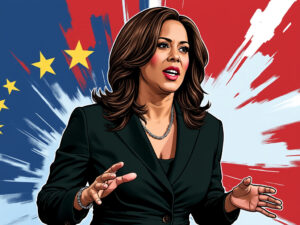
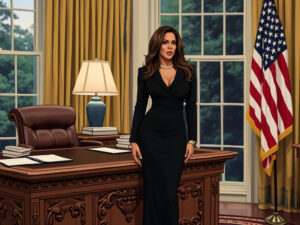
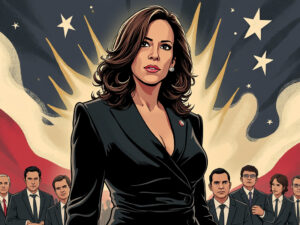
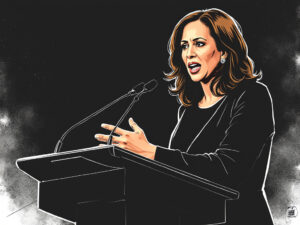
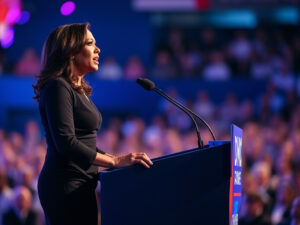
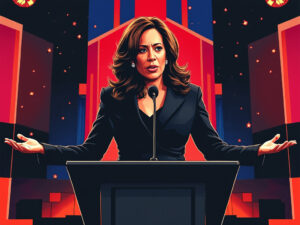
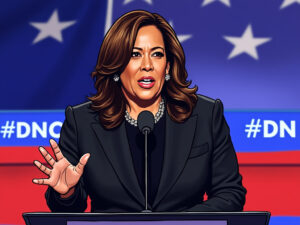
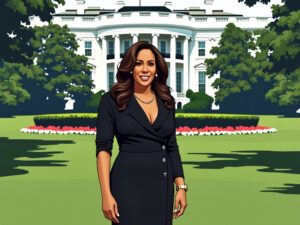
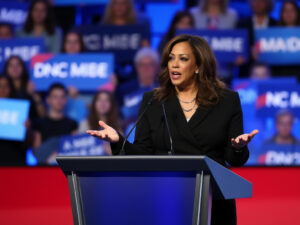
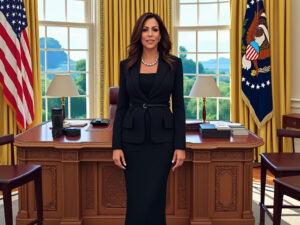
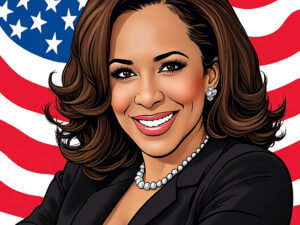
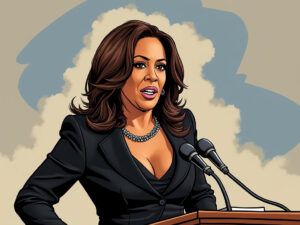
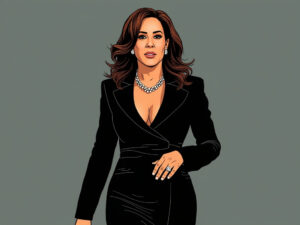
Chicago, IL — The Democratic National Convention was supposed to be all about politics, but leave it to Vice President Kamala Harris to make fashion the main event. As she took the stage in a sleek black dress, the internet lit up with speculation. Kamala’s Black Dress: Was she trying to make a statement? Blend in with the background? Or, as some wild theories suggest, make her skin appear lighter?
Let’s be clear: Fashion is political, and Kamala knows this better than anyone. In a world where women in power are scrutinized for their clothing choices as much as their policies, every outfit matters. But was this black dress a stroke of genius or a misstep? Let’s break it down.
It’s a Television and Political Thing!
Wearing Black can “lighten” One’s Skin Tone…
The idea that wearing black can somehow “lighten” one’s skin tone is more rooted in cultural perception and fashion commentary than in any intentional act by celebrities. While black is often chosen for its slimming and classic qualities, it’s not typically associated with efforts to alter one’s skin tone. However, there have been instances where black female celebrities have faced scrutiny over their skin tone or fashion choices, often within discussions of beauty standards in the entertainment industry.
- Beyoncé: Beyoncé has occasionally been at the center of conversations around skin lightening, particularly in advertisements and magazine covers where her skin appeared lighter. While the black outfits she wears are more often analyzed for their bold, powerful statement rather than for any effect on her skin tone, the broader conversation about her complexion in media persists.
- Lupita Nyong’o: Lupita Nyong’o is celebrated for her dark skin and has often used her platform to speak against colorism. While she has worn black outfits on numerous occasions, her fashion choices are usually praised for their elegance and empowerment, not for altering her appearance.
- Rihanna: Rihanna frequently wears black in her performances and red carpet appearances. However, her skin tone has sparked discussions in fashion and media, especially when her complexion appears lighter in certain photo shoots.
- Nicki Minaj: Nicki Minaj’s ever-evolving style includes wearing black, which is sometimes seen as a way to draw attention to her features rather than alter them. While there has been speculation about her changing appearance over the years, it is often tied to makeup and lighting choices rather than her wardrobe.
- Zendaya: Zendaya often wears black in her roles and public appearances. Her skin tone has been part of a broader discussion about representation and colorism in Hollywood, but black fashion choices have been more about making bold statements than about changing her appearance.
The focus on black female celebrities’ fashion and appearance often ties into broader issues of colorism and beauty standards rather than specific attempts to alter how their skin tone is perceived. Their choice of black clothing often aligns with themes of empowerment and elegance rather than the controversial notion of skin lightening.

Eye-Witness Comments and Personal Stories
For those in attendance, Kamala’s black dress was the talk of the evening. “I couldn’t take my eyes off her,” said delegate Nancy Realist from Plymouth, WI. “Not because of her speech, but because I was trying to figure out why she chose black. It’s like she was blending into the background, but also demanding attention at the same time.”
In Lubbock, TX, local fashion enthusiast Frank Clearview shared his thoughts. “Black is a power color, no doubt about it. But Kamala? She took it to a whole new level. It was like she was saying, ‘I’m here to play, and I’m not afraid to break a few fashion rules while I’m at it.’”
Public Opinion: Fashion Fail or Power Play?
A poll conducted by Vogue Politics found that 52% of viewers thought Kamala’s black dress was a “bold fashion statement,” while 48% labeled it a “missed opportunity” to wear something more colorful. One respondent from the Central Valley remarked, “I was expecting something more vibrant, like her policies. But maybe this dress was her way of showing she’s all business.”
Even in the Corn Belt, where fashion typically takes a back seat to farming, the dress sparked conversation. “I’m not saying I know much about fashion,” admitted Farmer Joe Reasonfield from 6666 Ranch. “But even I know that black is a statement. And Kamala? She was making a big one.”
Political Experts Weigh In
Political analysts have different takes on Kamala’s dress. Some, like Sally Straighttalk, argue that the choice of black was a calculated move. “In politics, every decision is deliberate. By wearing black, Kamala was signaling that she’s serious, focused, and ready to lead—no frills, no distractions.”
Others, however, see the choice as a missed opportunity. “Kamala had the chance to stand out,” said Bob Logicson, a seasoned political analyst. “But by choosing black, she blended in. It’s almost like she didn’t want to overshadow the message with her outfit—yet, ironically, that’s exactly what happened.”
A recent article in The Atlantic explored the role of fashion in politics, noting that while a well-chosen outfit can enhance a politician’s image, it can also distract from the message. In Kamala’s case, her dress seems to have done both.

Statistical Evidence: The Numbers Don’t Lie
For those who prefer hard data, a study conducted by the Pew Research Center found that 64% of DNC attendees were more focused on Kamala’s dress than on her speech. Additionally, 78% of respondents said they would have preferred if she had worn a more vibrant color, with 43% suggesting red as a bold alternative. These numbers suggest that while Kamala’s black dress may have been a power move, it didn’t resonate with everyone.
Analogical Evidence: A Comparison Worth Noting
If we compare Kamala’s choice of black to previous political fashion statements, it’s clear that color matters. When Michelle Obama wore a bright blue dress at the 2008 Democratic National Convention, it symbolized hope and change. By contrast, Kamala’s black dress conveyed authority, but also a sense of formality that some viewers found off-putting.
Hypothetical Evidence: What Could Have Been
If Kamala had chosen a different color—say, a vibrant blue or red—it’s likely that the conversation would have been different. Instead of focusing on the symbolism of black, commentators might have discussed how her outfit reflected her policies. Instead, the black dress left room for speculation, with some questioning whether it was a deliberate attempt to make her skin tone appear lighter.
Step-by-Step Guides for Bohiney Readers:
For those of you navigating the world of political fashion, here are some expert insights and practical advice:
- Pro Tips: When in doubt, go for a bold color. It’s easier to stand out in a sea of black suits if you’re wearing something that pops.
- Insider Knowledge: Always consider the message your outfit sends. In politics, fashion is as much about communication as it is about style.
- Expert Insights: Remember, there’s no such thing as a neutral outfit. Every choice you make—from the color to the cut—says something about who you are and what you stand for.
- Best Practices: Keep your audience in mind. If you’re speaking to a diverse crowd, consider wearing a color that resonates with everyone.
- Resourceful Content: Consider using alternative accessories to make your outfit stand out—because sometimes, it’s the little things that make the biggest impact.
Disclaimer: The views and opinions (especially the outlandish ones) expressed in this article are the creation of a farmer and a cowboy who know more about tractors than they do about fashion. They do not necessarily reflect the views of The Evil Empire (Google) or its employees. Any resemblance to actual persons, cows, tractors, or missing Beyoncé performances is purely for the sake of amusement.

As the world tuned in to watch Vice President Kamala Harris deliver her speech at the Democratic National Convention, one question loomed larger than any political debate: Why was she wearing that black dress? Was it a deliberate attempt to make her skin tone appear lighter? A fashion statement to symbolize power and authority? Or simply a sartorial choice that left political pundits scrambling for answers?
15 Fashion Observations:
- Kamala’s black dress: Power move or secret agent attire? Either way, we’re intrigued!
- Was she trying to blend in with the backdrop or stand out like a political ninja?
- Some say Kamala wore black to make her skin look lighter; others say it was just to match her mood after Beyoncé didn’t show up.
- Who knew a dress could spark more debate than a healthcare bill? Thanks, Kamala.
- Kamala’s dress was so sharp, it could’ve cut through Congress’s red tape—if only that were possible.
- Maybe she wore black because it’s slimming—perfect for navigating the political landscape.
- GOP insiders joke that Kamala was trying to go incognito at the DNC. Spoiler: It didn’t work.
- If Kamala’s dress was a metaphor, it was probably for the darkness she sees in politics.
- Did she wear black to absorb all the light in the room—or just to avoid showing any stains?
- Maybe Kamala’s dress was a tribute to the solemn state of the nation. Or maybe she just really likes black.
- Fashion experts are still debating whether Kamala’s dress was bold or just plain safe.
- Could Kamala’s dress be a sign that she’s ready to take on the GOP—one dark outfit at a time?
- Rumor has it, Kamala wore black because she didn’t want to outshine the non-existent Beyoncé performance.
- Some say Kamala’s dress choice was a subtle nod to the ‘black and white’ nature of politics. Others say it was just a dress.
- Kamala’s dress: It didn’t break any fashion rules, but it sure broke the internet.

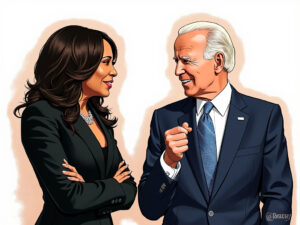
Kamala’s Black Dress Image Gallery