

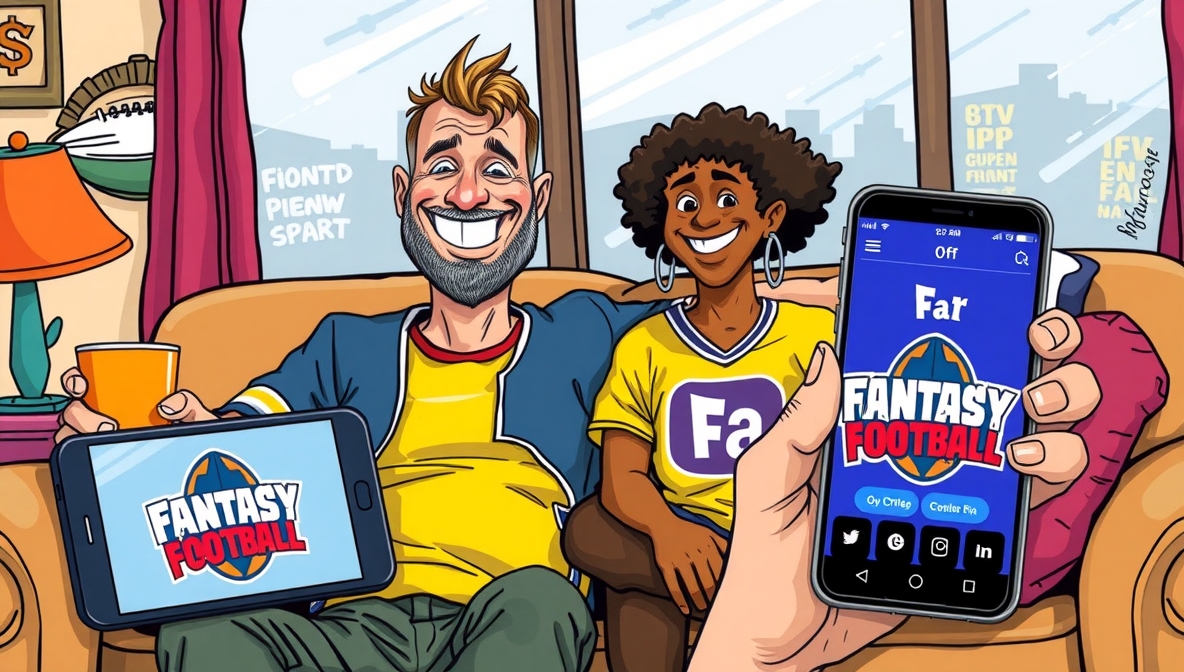
New App Lets You Rent a Friend Who Pretends to Care About Your Fantasy Football Team
FauxBuddy Offers Companionship Without Commitment
NEW YORK, NY — In a development that perfectly captures modern loneliness meeting late-stage capitalism, FauxBuddy—a new mobile app—allows users to rent friends who will pretend to care about their fantasy football teams. The friends aren’t real. The caring isn’t real. But the $29.99 monthly subscription? Absolutely real.
“No fan should suffer alone when their star quarterback gets injured,” said CEO Tanner Gleeson, who has never played fantasy football but has definitely monetized it. “Everyone deserves someone to commiserate with when their running back fumbles in the red zone. Even if that someone is an app-based contractor who’s simultaneously texting twelve other sad fantasy managers.”
The emotional support is distributed, but the loneliness is all yours.
Choose Your Fantasy Friend
FauxBuddy offers multiple friendship tiers, each more depressing than the last.
The “Overly Excited” package features a friend who texts “LET’S GOOOOO!!!” regardless of whether your team wins or loses. This friend uses excessive emojis and has never asked a follow-up question.
The “Passive-Aggressive Analyst” tier provides someone who texts: “Interesting lineup choice” when you bench the wrong player, and “bold strategy” when your team implodes. This friend is technically supportive but emotionally devastating.
The “Oblivious But Agreeable” option gives you someone who responds to everything with “That’s crazy, man” and “You should definitely do that,” despite having zero understanding of football, fantasy or otherwise. This friend thinks a touchdown is a type of dance move but will enthusiastically celebrate your victories.
Survey Results Paint Bleak Picture
A recent survey of FauxBuddy users revealed statistics that should concern everyone:
64% of users admit their rented friends comment more insightfully than their real friends.
58% of users feel genuinely understood by their rented friend—a friend who is contractually obligated to respond within two hours or face deactivation.
33% have argued with their rented friend about roster decisions, then felt bad about it later.
9% have cried into their phone while their rented friend sent pre-programmed supportive messages like “Tough break, champ” and “There’s always next week.”
“Renting a friend to pretend they care about your life? Finally, capitalism meets loneliness,” Jerry Seinfeld said while examining the app. “What’s next? Renting a therapist who pretends to care about your feelings? Oh wait, we already have that. It’s called therapy.”
Beta Testing: Success or Cry for Help?
Beta tester Marcus Williams, 31, provided a glowing review that doubles as a red flag for society: “It’s like having a miniature sports bar in my living room, without the social awkwardness of actual humans judging my wings-to-beer ratio.”
The fact that he considers this an improvement over real friendship probably warrants its own psychological study.
Another beta tester, who requested anonymity because his real friends might find out, said: “I hired a guy to cheer for my fantasy kicker. My actual friends won’t even acknowledge that kickers exist. But FauxBuddy Greg? Greg gets it. Greg celebrates when my kicker makes a 47-yarder. Is Greg real? No. Does Greg care about me? Also no. But does Greg respond to my texts about special teams? Yes, and that’s what matters.”
Leaked Product Development: It Gets Worse
Internal documents reveal FauxBuddy’s product roadmap includes a “Rage Quit Simulator” feature, where your rented friend will argue with you about fantasy football until one of you (spoiler: it’s always you) rage quits the conversation.
This feature is currently in development and will cost an additional $9.99 per month because apparently, paying for emotional abuse is the future we chose.
“I hired a guy to cheer for my fantasy kicker,” Ron White said, smoking outside a Best Buy. “My life is weird. I know my life is weird. But you know what? That fake friend has never canceled plans on me. Never forgot my birthday. Doesn’t know when my birthday is, but still. Never forgot it.”
What Comedians Think About All This
The comedy community has understandably had strong reactions to an app that monetizes human connection around sports betting.
“FauxBuddy: Real humans are unreliable, apps never disappoint,” Sarah Silverman said during a recent set. “Except when they crash. Or when you realize you’re paying thirty bucks a month for someone to text ‘nice’ after your flex player gets injured. That’s just sad. That’s just paying for friendship with extra steps.”
Larry David took a more personal angle: “I tried hugging my rented friend once. Turns out, you can’t hug code. Technology has its limits. Who knew? Everyone. Everyone knew.”
Expert Analysis: Couples Therapy for App-Based Relationships
Dr. Felix Rumple, a relationship therapist who has pivoted to studying app-based companionship, offered insight: “Traditionally, couples argue over fantasy football. Now they’re arguing over FauxBuddy subscription charges. Progress? Unclear. Profitable? Absolutely.”
Dr. Rumple notes that several couples have attended therapy specifically because one partner spent more time texting their rented FauxBuddy friend than their actual spouse.
“One man told me, and I quote: ‘FauxBuddy Travis understands my pain. My wife just says it’s just a game.’ I had to inform him that FauxBuddy Travis is not a licensed therapist and is simultaneously supporting forty-seven other fantasy managers. He didn’t care. Travis gets him.”
The Friend Economy Expands
FauxBuddy’s success has spawned competitors, each more dystopian than the last.
“CompanionBot” offers AI friends who never sleep and respond instantly, though they occasionally glitch and call your quarterback by the wrong name.
“BroFaux” specifically targets men who want a “bro” to discuss fantasy football with but can’t maintain actual male friendships due to emotional unavailability. The app’s tagline: “Bros Before… Actually Just Bros. That’s It.”
“GirlTalk Fantasy” markets to women in fantasy leagues who are tired of explaining to male friends that yes, women understand football, and no, they don’t need it mansplained.
Real Friends React to Being Replaced
Actual human friends of FauxBuddy users report mixed feelings ranging from relief to mild offense.
“My buddy bought FauxBuddy so he’d stop bothering me about his fantasy team,” said one anonymous friend. “I’m grateful. Genuinely grateful. Do I feel bad that he replaced me with an app? A little. But mostly I’m just grateful.”
Trevor Noah addressed the phenomenon during his podcast: “We’ve reached peak loneliness when you pay someone to pretend to care about your fantasy football team. That’s not friendship. That’s emotional Uber. You’re literally ordering companionship like it’s food delivery. ‘Yes, I’d like one friend, extra enthusiasm, light on the judgment.'”
The Data Nobody Wanted to See
FauxBuddy’s internal metrics paint a picture of modern isolation:
Average users spend 47 minutes per day texting their rented friends about fantasy football.
Real friends receive an average of 12 minutes of attention during the same period.
73% of users have considered whether their FauxBuddy friend might actually care about them, despite knowing intellectually that this is impossible.
28% have forgotten their rented friend isn’t real and invited them to actual events.
“I’m suspicious of any app that monetizes loneliness,” Bill Burr said during a recent interview. “That’s dark. That’s dystopian. But also… I get it. Fantasy football is important. Your friends don’t always understand. Sometimes you need someone who’ll listen when you rant about your team’s playoff chances. Even if that someone is code written by Silicon Valley psychopaths who probably don’t even know what a fantasy football is.”
The Crying Statistics That Concern Psychologists
Perhaps most alarming: 9% of users admit to crying into their phone while their rented FauxBuddy friend sends pre-programmed supportive messages.
One user described his experience: “My running back tore his ACL in the first quarter. I was devastated. FauxBuddy Mike sent me the crying emoji and ‘That’s rough, buddy.’ It was the most comforting thing anyone said to me all week. I’m paying $29.99 a month to feel understood by an algorithm. I know this is sad. I’m choosing not to process that right now.”
Mental health professionals suggest this is, in fact, something that should probably be processed sooner rather than later.
When App-Based Friends Outperform Real Ones
The uncomfortable truth: 64% of FauxBuddy users admit their rented friends provide more insightful commentary than their actual friends.
“My real friend told me to ‘just pick whoever,'” said one user. “FauxBuddy analyzed my roster, considered my opponents’ weaknesses, and suggested a waiver wire pickup that won me my matchup. Is he real? No. Does he care? Also no. But did he help me win? Yes. And isn’t that what friendship is about?”
No. That is not what friendship is about. But at this point, who’s to say anymore.
Gabriel Iglesias addressed this during his tour: “People paying for friends. That’s where we are. As a society. Paying. For. Friends. Not even real friends! Fake friends who text you about football! You know what we used to call this? Prank calls! Now we’re paying for it! And we’re grateful!”
The Mute Mom Feature That Nobody Asked For
Anonymous staffers revealed that FauxBuddy’s most requested feature is one that automatically mutes lectures from users’ moms about “wasting time on fantasy football” and “not calling enough.”
The feature, officially titled “Maternal Deflection Protocol,” has a 94% approval rating among users, though mothers are reportedly less enthusiastic.
One user’s mother left a review on the App Store: “This app stole my son. One star. Would give zero stars if possible.”
The user responded in the comments: “Mom, you don’t understand fantasy football. FauxBuddy does.”
This exchange was later used in FauxBuddy marketing materials, which says everything about everything.
Looking Forward: A Friendless Future
As FauxBuddy expands into other sports and activities, questions emerge: Where does this end? Will we eventually rent friends for every aspect of life?
FauxBuddy’s roadmap includes “FauxDate” for romantic companionship, “FauxFamily” for holiday gatherings, and “FauxPet” for people who want the experience of pet ownership without the actual pet.
Humanity’s descent into loneliness, now available for monthly subscription.
“Listen,” Dave Chappelle said during a recent set, “if you need to pay someone to care about your fantasy team, maybe you need to examine your priorities. Or maybe your real friends suck. Either way, paying $30 a month for fake friendship is either the future or a cry for help. Possibly both.”
Wanda Sykes offered her take: “Y’all are paying for friends now? PAYING? Baby, I’ll pretend to care about your fantasy football team for free. Won’t do it well, but I’ll do it. ‘Oh your running back fumbled? That’s crazy.’ See? I just saved you thirty bucks.”
The Bottom Line
FauxBuddy represents something profound about modern existence: we’re so lonely we’ll pay for companionship, and so devoted to fantasy sports we’ll pay specifically for companionship around fantasy sports.
Is this progress? Is this sad? Is this both?
The answer is yes.
As one long-time user put it: “FauxBuddy never judges me. Never cancels. Never disappoints. Sure, he’s not real and doesn’t actually care about me, but honestly? That’s better than some of my real friendships. At least I know what I’m getting.”
What he’s getting is a monthly charge and emoji-based emotional support.
What we’re all getting is a glimpse into a future where human connection costs $29.99 monthly, customer service not included.
Disclaimer: This story is a collaboration between the world’s oldest tenured professor and a dairy-farming philosophy major. No real friendships were harmed in the writing of this article, though several were questioned. If you’re currently paying for a FauxBuddy subscription, we’re not judging. Actually, we are. Auf Wiedersehen, amigos.