

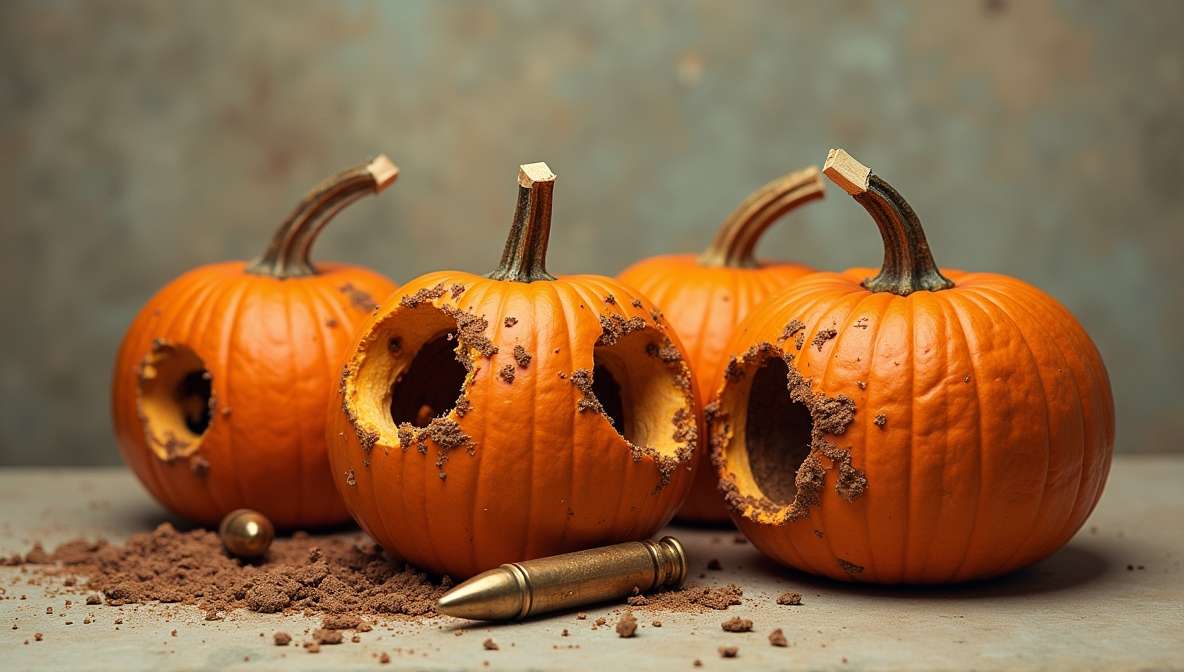
Michigan “Pumpkin Day” Terror Plot: FBI Arrests Multiple Suspects in Halloween Attack Scheme
In the heart of Michigan’s suburban autumn, a new menace has emerged — not the usual haunted houses or candy-crazed toddlers, but the humble pumpkin. Yes, that gourd we carve, roast the seeds of, and fear only when we accidentally nick our fingers. But this year, according to federal authorities, the pumpkin may have radical ambitions.
FBI Director Announces Thwarted Halloween Weekend Attack
According to the FBI’s official statement, under the leadership of Director Kash Patel (because of course), a group of young men aged 16-20 in Dearborn and Inkster were allegedly plotting a violent attack over Halloween weekend. And their chatroom ringleader? Something ominously known as “pumpkin day.”
Let that sink in: pumpkins. Terror. Midwest. In our satirical sense, this is like finding out your local zucchini is actually a sleeper cell.
The phrase “pumpkin day” entered the federal terror-lexicon as code for an alleged Islamic State-inspired plot in Michigan — and yes, that counts as proof that pumpkins have never been safe. According to the Federal Bureau of Investigation, suspects discussed the attack while referencing Halloween weekend and something ominously called “pumpkin day.”
Targeting Suburban Detroit: Dearborn and Inkster Under Scrutiny
The targeted jurisdiction: Dearborn/Inkster in suburban Detroit. Because if you’re going to threaten the homeland, you pick the place whose morning commute already feels like a hostage situation.
The alleged attackers were young — teenagers and early-twenties. So there’s a perfect blend of gamer culture plus extremist ideology, which of course means pumpkins were caught in the crossfire of an existential chat-room meltdown.
The Chatroom Connection: How Online Radicalization Targets Youth

Imagine a group of suburban gamers, hopped up on energy drinks and the latest FPS, chatting late at night. “Should we frag the noobs?” someone says. “Nah,” replies the other. “Let’s do pumpkin day.” And then FBI agents arrive, dressed in tactical gear, confiscate inferior DSLRs and cracked game consoles, yell “stop right there,” and haul a jack-o-lantern away. Okay, maybe that last part is exaggeration; but one can’t help imagine the scene.
Evidence Collection in the Digital Age
According to two people briefed on the investigation, the plot involved discussions in an online chatroom where the reference “pumpkin day” popped up. So the public official code translation probably goes: “Hey guys, what if we make Halloween scary for real?” And the FBI picks it up and says: “We’re on it.”
Eyewitnesses in Dearborn saw FBI agents hauling paper bags and evidence trucks early Friday morning. Which suggests pumpkins may have been confiscated. Maybe carved pumpkins with hidden phones. Maybe just pumpkins. We’ll never know.
Defense Lawyer Claims No Real Terror Plot Existed
Now let’s lean into the “helpful content” part. What do we know? We have the FBI’s announcement — yes, arrests were made. We have eyewitnesses: residents heard bangs early Friday morning, saw FBI vehicles, agents carrying paper bags and evidence trucks near homes. We have one side’s lawyer saying: “There’s no plan.” So the evidence is as sturdy as a jack-o-lantern after midnight.
The Ambiguity of Modern Counter-Terrorism
The FBI announced the plot was thwarted, but details remain murky: no confirmed victims, no publicly described weapons, just “we got them in time.” Classic “terror plot resolved” template.
A defense lawyer says there was no real plan. So either the FBI stopped the next event before it began, or somebody mis-read a chat about “pumpkin carving night” and called it terror.
When Pumpkins Become National Security Threats
The weirdness of pumpkins being involved: how did a seasonal squash become a terror code? That’s like asking why socks go missing in the laundry — there’s a sinister pattern but you can’t quite prove it.
“Pumpkin day” could be code for something much darker, or it could be code for “we’re building a haunted hayride with radical pumpkins.” The evidence doesn’t specify.
Youth Radicalization via Social Media Platforms
Radicalization via the internet is a real phenomenon in the field of counter-terrorism studies. One could analogize: chatrooms → young adults → extremist memes → talk of “pumpkin day.” Now swap pumpkins for ideology and you’ve got yourself a radicalization pipeline. So yes, we’re not totally making this up. It’s like saying your pumpkin patch is actually an underground cell for orange-skinned insurgents. Which: absurd. But also — maybe not totally off script.
And youth involvement? Check. Ages 16-20. That fits the pattern of young adults susceptible to online groupthink and extremist content. So if you step back: pumpkin plot or not, the mechanism looks familiar. Chatroom + ideology + ready target environment.
The Role-Reversal: When Gourds Strike Back
Here’s where we get comedic. Normally, pumpkins fear us. We carve them, we flick candles inside them, they melt in the sun by November. Now, flip that: pumpkins are fearing us. We’re coming for them with tactical raids. They’re plotting us. That’s a role reversal worthy of a comic sketch. Imagine a pumpkin brain inside a gourd, whispering “it’s pumpkin day, we strike at midnight.”
Suburban Halloween Under Federal Investigation
Think of the scene: suburban Dearborn, house decorated for Halloween, candy bowls, skeletons, lawn inflatables. Then: FBI agents storm in with black bags. “Hands above the pie crust! Put the carving tool down!” They haul the pumpkin away. Neighbors watch. “We had no clue our Halloween display was extremist-adjacent.” And the pumpkin? Probably carved “BOO” with radical intent? We don’t know.
Terror-code pumpkin = broadening definitions of threat. Next time you see a jack-o-lantern, you might think twice. At least until you remember you’re reading satire.
Official Response: No Current Threat to Public Safety
Governor Gretchen Whitmer thanked law-enforcement for swift action. The FBI, meanwhile, declared “no current threat to public safety.” So the story file: arrests made, plot disrupted, pumpkin-day referenced, but still no public details on weapons, targets, motives. The ambiguity fuels anxiety and comedic potential alike.
Public Reaction: Dread Mixed with Disbelief
How does the public respond? With that mixture of dread and “is this for real?” The evidence is thin, the language sensational. Perfect for panic-economies.
The police say: no current threat to public safety. Which is the official “whew” after the headline.
Practical Safety Tips for the Gourd-Conscious
Pumpkin decorations now have double duty: Halloween décor and possible terror props. So advice: remove pumpkins by dawn, burn your jack-o-lanterns at midnight, maybe wear Kevlar if Maple Street has any.
What Homeowners Should Know
If you live in the suburbs and have pumpkins out now: maybe carve some pumpkins with neutral messages like “HUGS” or “TRICK” instead of “TERROR.”
Avoid chatrooms where you discuss “pumpkin day” without context — because someone might interpret that as code.
Parents: remind your teens that a Halloween reference doesn’t necessarily mean an attack, but yes, maybe don’t host “pumpkin day” parties without inviting adulthood.
Celebrate the season with carved pumpkins, pumpkin pie, pumpkin spice lattes — and do so aware that sometimes fear meets foam-maked gourds in bizarre headlines.
The Bigger Picture: Security Theater Meets Seasonal Décor
Here’s the kicker: what if this plot was real? Then yes, it’s laudable the FBI intervened. What if it wasn’t? Then we have a case study of how modern terror-prevention sometimes means “we heard a weird phrase and acted.” The truth might lie somewhere between: maybe the young men talked “pumpkin day,” maybe they meant “pumpkin spice weekend,” maybe they meant nothing. The FBI’s national-security imperative responds anyway.
Cultural Commentary on the Security State
And what’s the cultural commentary? That in 2025, even the season’s most innocent icon (the pumpkin) can turn into a symbol of fear. That what used to be about carving fun is now about counter-terror. That suburban gamers chatting about irrelevant goofballs might get swept up under “potential attack” umbrella. It’s ridiculous, it’s alarming, and it’s a perfect fit for satire.
The notion of an ISIS-inspired plot targeting pumpkins raises weird metaphors about violence against joy, seasonal fun, and maybe the entire idea of carving squash with friends.
In short: Terror plot, pumpkins, young gamers, chatrooms, suburbia – it’s the horror-comedy scripted for 2025.
What We Learn from the Pumpkin Day Incident
We learn that pumpkins are now in the terror lexicon. We learn that youth, chat-forums, and suburban lawns can combine into counter-terror operations. We learn that the government’s readiness to act is matched only by the public’s readiness to ask: “Wait, what was the plan again?” And we learn that in a world where everything can be framed as “attack,” even a seasonal squash becomes suspicious.
Final Halloween Safety Advisory
So for this Halloween and beyond: carve your pumpkins, light the candle, set them on the porch. But keep one eye open. Because if the FBI shows up at your door, you might be “pumpkin day” material. And remember: never trust your jack-o-lantern when it glows at midnight. It might be signalling the homeland.
Disclaimer: This story is satirical journalism created for humorous purposes only. All observations, jokes, and commentary are intentionally exaggerated for comedic effect. No pumpkins were harmed in the making of this article.
Auf Wiedersehen, amigos.