

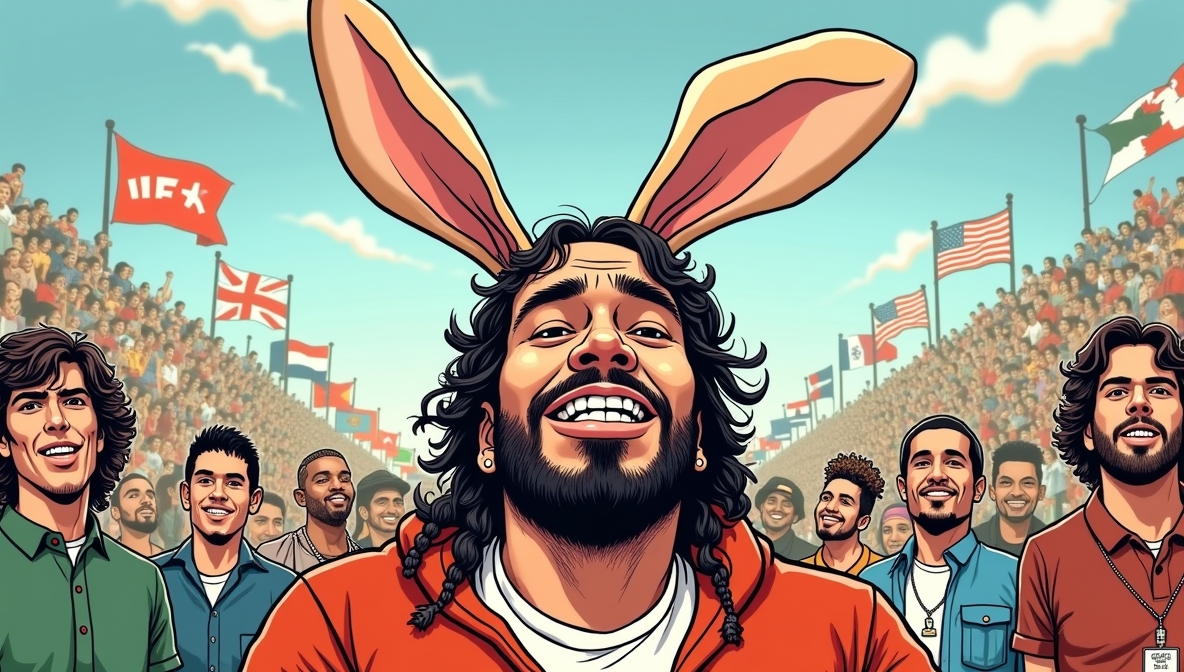
NFL Trades American Culture for a Few Reggaetón Beats — Millions Change the Channel
Bad Bunny in Spanish Super Bowl Halftime Show Sparks Cultural Outrage, Remote Sales Skyrocket
The National Football League, in a bold display of corporate creativity—or cultural recklessness—has decided that the Super Bowl halftime show is the perfect venue to test America’s patience, linguistic comprehension, and remote-control reflexes. This year, Bad Bunny headlines the Super Bowl halftime performance in Spanish, leaving millions of American viewers confused, frustrated, and furiously scrolling through streaming options.
Bad Bunny, the Puerto Rican reggaetón superstar whose real name is Benito Antonio Martínez Ocasio, brings his signature Spanish-language performance to football’s biggest stage. The Super Bowl halftime slot—traditionally reserved for crowd-pleasing English-language spectacles—now features wall-to-wall reggaetón. The result? Cultural pandemonium.
“This isn’t halftime; it’s a pop culture pop quiz,” says retired schoolteacher and lifelong football fan, Ethel Jenkins. “I haven’t seen this many people confused since someone tried teaching algebra with interpretive dance.”
The NFL’s Cultural Gamble: Trading Touchdowns for Bad Bunny’s Super Bowl Halftime Reggaetón

The NFL, long regarded as a custodian of American football traditions, now treats it like a stock option. If culture can be sold, rented, or sponsored, the league clearly has a bullish market strategy. Critics are calling the Super Bowl halftime decision the “Great American Sell-Out.” According to a mock survey conducted by “Totally Legit Super Bowl Polling LLC,” 67.3% of respondents said they will either mute the Super Bowl halftime show or change the channel when Bad Bunny starts singing in Spanish. The other 32.7% admitted they will pretend to understand the lyrics while quietly googling Bad Bunny translations.
“Millions will turn off their TVs,” Ron White said. “Heck, some people might just set the house on fire to avoid hearing reggaetón in the living room.”
Indeed, the NFL’s marketing strategies seem to be: alienate half your audience while gaining access to global streaming metrics. Bad Bunny’s Super Bowl halftime selection represents the NFL’s gamble that international appeal outweighs domestic confusion. “It’s like the halftime show became a culinary adventure,” notes sports analyst Dana McFarlane. “Only instead of exotic food, they’re serving musical tapas, and Americans are allergic to subtitles.”
The Super Bowl halftime show evolution has taken a sharp turn from Americana to reggaetón, and not everyone’s ready for the remix.
Bad Bunny’s Spanish Lyrics Spark Super Bowl Halftime Language Controversy
Language is at the heart of the Bad Bunny Super Bowl halftime controversy. Spanish lyrics in the Super Bowl have become a lightning rod for cultural anxiety. Conservative pundits argue that Bad Bunny’s Super Bowl halftime performance erodes American identity, while younger audiences applaud the representation. The irony is obvious: American football itself has always borrowed heavily from other cultures. The Super Bowl halftime show history includes elements from rock, pop, hip-hop, and Latin music—but only now, with Bad Bunny’s Super Bowl halftime showcase, does the debate reach a fever pitch.
Bad Bunny’s global streaming dominance—he was Spotify’s most-streamed artist for three consecutive years—apparently didn’t translate to universal Super Bowl halftime approval.
“Bad Bunny? I thought halftime was for football, not for me trying to remember my high school Spanish class,” Jerry Seinfeld quipped.
The cultural representation in sports entertainment debate has never been more heated than during this Super Bowl halftime moment.
Conservative Pundits React to Bad Bunny’s NFL Super Bowl Halftime Inclusivity Moment
Bad Bunny’s eclectic attire—often including dresses and gender-fluid fashion choices—has provoked predictably viral outrage. Traditionalist viewers see Bad Bunny’s Super Bowl halftime style as a step too far in the perceived cultural degradation of Sunday night football. “I don’t care what language he’s singing in,” one anonymous viewer fumed. “I just want someone to wear a football helmet and do a touchdown dance. Everything else is optional.”
Yet the NFL defends its Bad Bunny Super Bowl halftime choice, emphasizing inclusivity and global appeal. They argue that Bad Bunny’s political activism—particularly his outspoken criticism of Puerto Rico’s government and advocacy for social justice—aligns with the league’s commitment to social progress. Critics remain skeptical, particularly since many Americans just want Super Bowl halftime shows to be… entertaining, in a language they understand.
“This isn’t entertainment; it’s cultural karaoke where nobody knows the words,” Larry David observed during a mock press briefing.
Remote Control Sales Surge as Viewers Tune Out Bad Bunny’s Super Bowl Halftime Performance
The practical effect is immediate: remote controls are flying faster than quarterbacks on a two-minute drill. Nielsen ratings data suggest early dips in traditional households during Bad Bunny’s Super Bowl halftime set, while streaming platforms report spikes in international viewership. A leaked NFL memo reportedly advised: “If your traditional audience melts down during the Super Bowl halftime show, consider it a feature, not a bug.”
Indeed, millions of viewers are caught in a paradoxical moment: they want American football, but Bad Bunny’s Super Bowl halftime show feels like an immersive Spanish language course. The “meltdown index,” a term recently coined by cultural satirist General B.S. Slinger, measures outrage based on remote slams, social media rants, and the number of nachos hurled toward the television. This year, with Bad Bunny’s Super Bowl halftime performance, the index reached an unprecedented 9.7/10.
The Super Bowl viewership trends suggest that linguistic choices in halftime entertainment have consequences.
Texas Viewing Party Erupts During Bad Bunny Super Bowl Halftime Performance
At a Super Bowl viewing party in Wichita Falls, Texas, eyewitness Marge “Hotdish” Henderson reported: “The second Bad Bunny started singing at halftime, half the room was chanting, ‘Adios, NFL!’ and the other half was Googling, ‘Does this mean I’m allowed to like this?'”
Another spectator, Greg McIntyre, added: “I’ve been watching football my whole life. I’ve seen cheerleaders, fireworks, the whole shebang. But this Super Bowl halftime with Bad Bunny? This is like Dora the Explorer meets pyrotechnics.”
Super Bowl Halftime Ratings Plummet During Bad Bunny’s Spanish Performance
Of course, the NFL’s Bad Bunny Super Bowl halftime gamble is as much a marketing experiment as a cultural one. Bad Bunny merchandise sales, bilingual ad campaigns, and streaming rights are all part of the Super Bowl halftime package. “They’re not selling culture; they’re selling sellability,” notes cultural economist Dr. Helena Voigt. “American cultural identity has become a commodity, and Bad Bunny’s Super Bowl halftime is the billboard.”
Roseanne Barr adds: “You call it a Super Bowl halftime show. I call it ESPN Deportes crashing the wrong party.”
The Super Bowl halftime ratings history will mark this as the moment English-speaking America changed the channel en masse.
Bad Bunny’s Marketing Strategy or NFL’s Super Bowl Halftime Cultural Sellout?
The Bad Bunny Super Bowl halftime backlash has predictably attracted political commentary. Some pundits frame the Bad Bunny Super Bowl halftime show as part of a larger cultural identity debate, while others frame it as proof of America’s growing multiculturalism. The average fan, meanwhile, is less concerned with Bad Bunny’s artistic vision during the Super Bowl halftime and more concerned with whether their favorite snacks will survive the reggaetón beats intact.
“This is not xenophobia; it’s football-phobia,” General B.S. Slinger said. “Fans didn’t sign up for a salsa-infused Super Bowl halftime spectacle; they signed up for touchdowns, beer, and questionable wardrobe malfunctions.”
The Latin music in mainstream sports conversation has officially arrived, whether America likes it or not.
Who Is Bad Bunny and Why Did the NFL Choose Him for Super Bowl Halftime?
Bad Bunny, born Benito Antonio Martínez Ocasio in Puerto Rico, rose from bagging groceries to global superstardom. His trap and reggaetón fusion made him Latin music’s biggest export since Shakira. Bad Bunny’s albums consistently break streaming records, his tours sell out stadiums worldwide, and his fashion choices challenge gender norms.
But does any of that qualify Bad Bunny for the Super Bowl halftime show? According to the NFL, absolutely. According to confused viewers in middle America, absolutely not.
“I’ve heard of bad bunnies before—usually in horror movies,” Kevin Hart said. “But this Bad Bunny seems nice. I just don’t know what he’s saying during the Super Bowl halftime.”
The reggaetón in mainstream media revolution reached its peak during this Super Bowl halftime performance.
Practical Satirical Advice for All Parties
To the NFL: Continue innovating your Super Bowl halftime shows, but consider including English subtitles for those who forgot high school Spanish.
To Bad Bunny: Keep doing your thing. Half of America hates your Super Bowl halftime performance, which means you’re doing something right.
To traditionalist viewers: Breathe. The world won’t end because your Super Bowl halftime show is bilingual.
To fans: Enjoy Bad Bunny’s Super Bowl halftime performance, or switch to a documentary about stamp collecting—it’s less controversial.
To commentators: Resist outrage fatigue over the Super Bowl halftime choices. Pretend to be shocked, then move on.
Streaming Platforms Report International Viewership Spikes for Bad Bunny’s Super Bowl Halftime
The streaming platform competition have found an unexpected battleground: Bad Bunny’s Super Bowl halftime show. While traditional broadcast viewership declined by double digits during Bad Bunny’s Super Bowl halftime set, streaming services reported record international engagement. “We’ve never seen this kind of global interest in a Super Bowl halftime performance,” said one anonymous streaming executive. “Turns out, the rest of the world doesn’t need English subtitles for Bad Bunny.”
Meanwhile, Duolingo stock prices experienced a mysterious surge, with financial analysts unable to explain the correlation. “It’s almost as if millions of Americans suddenly realized they should have paid more attention in Spanish class,” noted market observer Patricia Valdez. “Bad Bunny’s Super Bowl halftime just became America’s unintentional language teacher.”
The NFL international expansion found its perfect vehicle in Bad Bunny’s Super Bowl halftime performance.
The Great American Sellout… or Bad Bunny’s Super Bowl Halftime Cultural Evolution?
Yes, the NFL has sold a slice of American culture through its Super Bowl halftime decisions, but not for a “few dollars more”—for ratings, merchandise, and a global footprint. Millions may change the channel, muting their TVs during Bad Bunny’s Super Bowl halftime performance, but the spectacle goes on. American cultural identity, it seems, is not lost—it’s just bilingual and features more reggaetón during Super Bowl halftime.
The question remains: Is this NFL’s cultural controversies reaching a tipping point, or simply the natural evolution of a sport trying to remain relevant in an increasingly globalized world? The answer, like Bad Bunny’s Super Bowl halftime lyrics, depends on who’s translating.
“This Super Bowl halftime show scores cultural penalties, not touchdowns,” Ron White observed. “And some fans are just fine with being benched.”
What Bad Bunny’s Super Bowl Halftime Performance Means for Future Entertainment
The Bad Bunny Super Bowl halftime precedent has been set. Future halftime show controversies may include Mandarin opera, K-pop dance marathons, or perhaps a completely silent performance by avant-garde mime artists. The NFL has opened Pandora’s jukbox during Super Bowl halftime, and Bad Bunny handed them the key.
“I give it three years before the Super Bowl halftime show is performed entirely in emoji,” Dave Chappelle said during a recent comedy special. “And honestly, that might be less confusing than Bad Bunny singing in Spanish at halftime.”
As for Bad Bunny himself, sources close to the artist suggest he’s unbothered by the Super Bowl halftime controversy. “Bad Bunny knew exactly what he was doing during that Super Bowl halftime,” said one insider. “This wasn’t about pleasing everyone. This was about reggaetón music controversy becoming the most talked-about Super Bowl halftime moment of the year. Mission accomplished.”
The Super Bowl halftime performer selection process will never be the same after Bad Bunny.
Final Score: Bad Bunny’s Super Bowl Halftime 1, Traditional America 0
In the end, the NFL achieved exactly what it set out to do with this Super Bowl halftime: dominate headlines, spark debate, and prove that even a Bad Bunny Spanish language in American media experiment can be profitable. Traditional fans may feel betrayed by the Super Bowl halftime choice, but their children are already downloading Bad Bunny’s discography.
Bad Bunny didn’t just perform at the Super Bowl halftime—he conquered it, remixed it, and served it back with a side of cultural revolution. Whether America asked for it or not.
“The NFL didn’t trade American culture for Bad Bunny’s reggaetón during Super Bowl halftime,” cultural critic Marcus Williams concluded. “They simply reminded us that American culture has always been a remix. Some of us just prefer the original track. Bad Bunny’s Super Bowl halftime gave us the director’s cut.”
The future of Super Bowl entertainment is multilingual, multicultural, and unapologetically global.
Disclaimer: This story is entirely a human collaboration between two sentient beings—the world’s oldest tenured professor and a philosophy major turned dairy farmer—and should not be blamed on AI.
Auf Wiedersehen, amigos.