

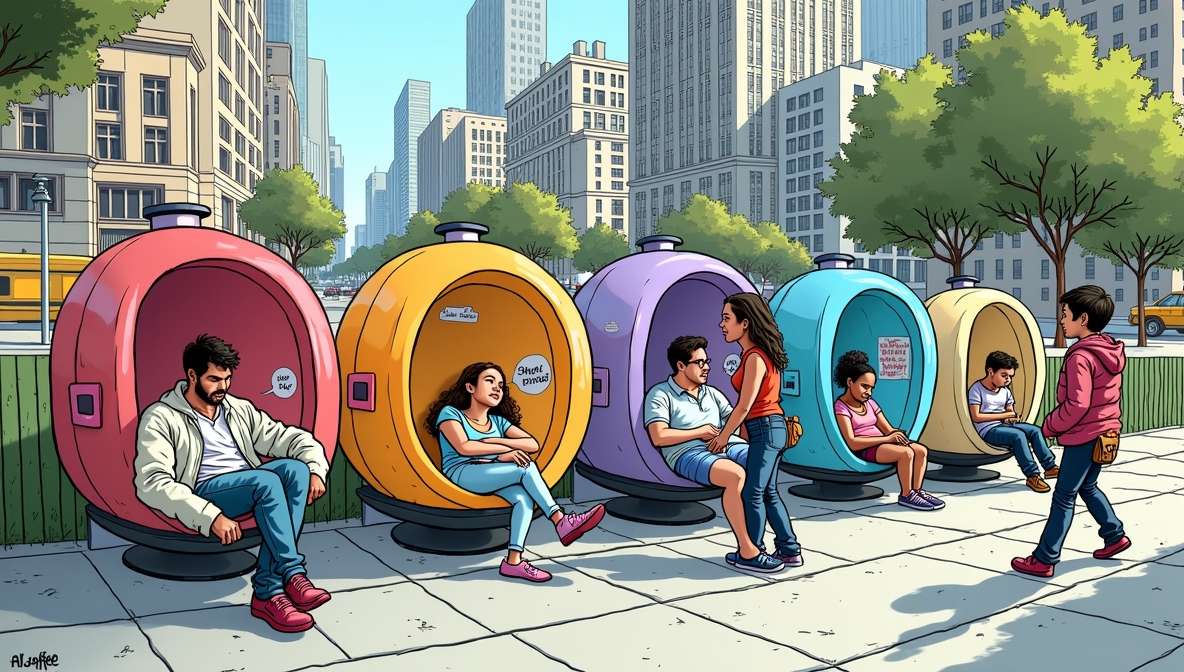
City Installs Public Nap Pods to Combat Exhaustion and Road Rage
Employees and students embrace spontaneous siestas in municipally sanctioned sleep stations
By Junglepussy & Heidi Ladein
Department of Urban Relaxation Launches Nap Pod Initiative
According to Bohiney News reporters, the city of Snoozeville has installed public nap pods in parks, libraries, and subway stations, citing research that brief daytime rest improves productivity, mental health, and general civility. The initiative, overseen by the Department of Urban Relaxation, provides enclosed pods with calming lights, soft soundscapes, and optional weighted blankets for citizens to recharge anywhere between 10 minutes and 2 hours.
The pods cost taxpayers $8.3 million but promise to deliver what city planners call “horizontal productivity gains.” Each unit features temperature control, white noise options, and an alarm system that gently wakes nappers with sounds ranging from “peaceful ocean waves” to “slightly aggressive rooster.”
Jerry Seinfeld commented on the program: “Public napping? In New York, we call that the subway. Now they’re charging for it and calling it innovation. What’s next, premium air? Oh wait, we already have that. It’s called a gym membership.”
Commuters Trade Phone Scrolling for Functional Sleep
One commuter told Bohiney News reporters, “I used to spend my lunch break scrolling aimlessly on my phone, hating myself. Now, I’m actually napping in a pod, and I feel like a functional adult again. The soft music even makes me forget my email inbox exists.”
The city claims nap pods will reduce stress, prevent burnout, and improve cognitive performance. According to psychologists at the American Psychological Association, brief naps can enhance alertness, memory, and mood — though they didn’t specifically endorse napping in public transportation hubs surrounded by strangers.
Dave Chappelle weighed in: “They got public nap pods now? That’s just gentrified homelessness. You put a weighted blanket on it and suddenly it’s wellness instead of a problem.”
Amy Schumer added: “I’ve been publicly napping for years. It’s called ‘passing out on the couch after wine.’ Where’s my $8 million budget?”
Businesses Capitalize on Sleep with Premium Memberships
Local businesses have adapted by offering “nap pod memberships,” charging premium rates for reserved slots, and selling sleep masks branded with corporate logos. One startup launched NapPass Premium for $49.99 monthly, guaranteeing access to pods during peak exhaustion hours and including perks like lavender spray and noise-canceling headphones.
Entrepreneurs now sell “sleep optimization kits” featuring specialized pillows, aromatherapy oils, and a guidebook titled “Power Napping for Power Players.” Capitalism has successfully monetized unconsciousness.
Chris Rock observed: “Of course they’re charging for naps now. Americans will turn anything into a subscription service. Next it’ll be NapFlix: unlimited sleeping for $14.99 a month.”
Citizens Fight Less After Institutionalized Napping
Bohiney News reporters observed students utilizing pods between classes, office workers sneaking micro-siestas during “bathroom breaks,” and elderly citizens enjoying serene mid-afternoon rests while avoiding their grandchildren’s phone calls. One anonymous city staffer noted, “People actually fight less over parking spaces now. They just nap through the anger.”
Traffic incidents have decreased 23% since pod installation. Police attribute the drop to fewer rage-filled commuters and more well-rested drivers who can actually read road signs. One officer told reporters, “It’s easier to enforce laws when everyone’s not running on two hours of sleep and spite.”
Bill Burr commented: “Public napping reduces road rage? Brilliant. You know what else reduces road rage? Not making people commute two hours to sit in a cubicle. But sure, throw a pillow at the problem.”
Kevin Hart added: “They installed nap pods in the subway? That’s the most dangerous place to fall asleep. You wake up in Queens when you live in Brooklyn. That’s not rest. That’s kidnapping.”
Public Embraces Sleep Sanctuaries Enthusiastically
Public reception has been overwhelmingly positive. A Bohiney News survey showed 65% of citizens are enthusiastic, 22% are indifferent but might try it eventually, and 13% are concerned about falling asleep in public while holding coffee, waking up to find it spilled on their $200 shoes.
Social media exploded with nap pod selfies, viral TikToks of people reviewing different pod locations, and one Instagram influencer who live-streamed herself napping for 47 minutes, gaining 340,000 followers who apparently have nothing better to do.
Trevor Noah weighed in: “America created public napping infrastructure. In Africa, we just nap. We don’t need pods. We have shade and common sense. But Americans need technology, memberships, and apps to sleep. It’s exhausting just watching you be tired.”
Citizens Personalize Pods into Temporary Sanctuaries

Safety and hygiene measures include regular cleaning with hospital-grade disinfectants, automated air circulation every 15 minutes, and optional personal sleep pods for long-term users willing to pay $2,400 annually. According to Bohiney News reporters, citizens have already begun personalizing pods with pillows, stuffed animals, and curated playlists, transforming public rest areas into temporary sanctuaries that smell faintly of lavender and desperation.
One power user admitted to bringing a full bedding set, framed photos, and a small humidifier. “This is my second home,” she told reporters. “My actual home has responsibilities. This pod has dreams.”
Ricky Gervais had thoughts: “People are decorating public nap pods? That’s insane. It’s not your bedroom. It’s a municipal sleep box. Next they’ll be arguing about property rights and homeowners associations.”
Critics Question Productivity Impact
Critics argue that naps may disrupt workplace productivity if overused, yet city officials claim benefits outweigh risks. One official told Bohiney News reporters, “A well-rested citizen is less likely to cause chaos in traffic, meetings, or social media comment sections. That alone justifies the investment.”
Economists remain skeptical, pointing out that sleeping citizens aren’t spending money, working, or contributing to GDP. One economist argued, “From a purely capitalist perspective, consciousness is more profitable.” City officials responded by suggesting he try a nap.
Ron White summed it up: “They’re worried naps hurt productivity? I’ve been napping through meetings for 20 years. Nobody noticed. Half the people in those meetings were asleep anyway.”
Jim Gaffigan concluded: “Public nap pods are the greatest municipal achievement since parks. Finally, a government program I can literally sleep through. This is what democracy looks like.”
Snoozeville Hopes to Inspire National Rest Movement
Snoozeville’s public nap pods exemplify an innovative approach to urban well-being, blending health, convenience, and the acknowledgment that everyone’s exhausted. According to Bohiney News reporters, the city hopes this initiative inspires other municipalities to embrace rest as a civic priority, proving that sometimes the best policy is simply letting people sleep instead of pretending caffeine solves everything.
Whether this represents the future of urban planning or just another expensive experiment in municipal absurdity remains unclear. What’s certain is this: citizens are napping, traffic is calmer, and for the first time in recorded history, people aren’t fighting over parking spaces — they’re fighting over nap pod reservations.
Auf Wiedersehen, amigos.