

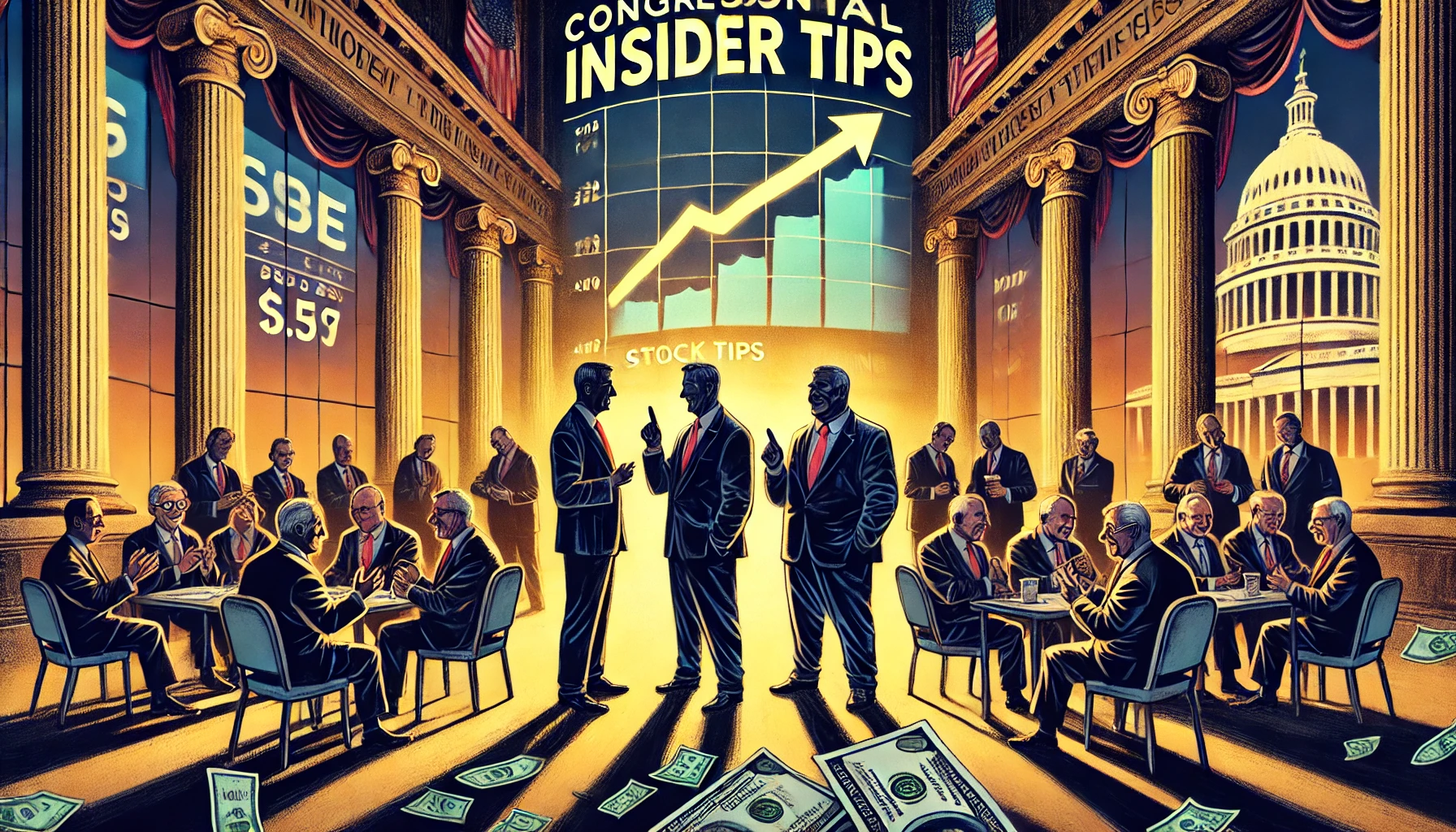
The STOCK Act: Swiss Cheese for Legislators — Congress Insider Trading
The STOCK Act of 2012 was supposed to put an end to insider trading by members of Congress. It was heralded as a groundbreaking move toward transparency and accountability. And, much like your New Year’s resolution to eat healthier, it lasted for about two weeks.
The law requires lawmakers to disclose stock trades within 45 days. But here’s the twist: enforcement is about as strict as a toddler’s bedtime. Violations are common, penalties are laughable, and the public is left with financial disclosures that read like cryptic treasure maps.
“Congress loves the STOCK Act,” said political analyst Dr. Ima Cynic. “Not because it stops insider trading, but because it gives the illusion they’re doing something about it. It’s performative transparency at its finest.”
Congress Insider Trading Allegations: A Capitol Tradition
Insider trading scandals have become so routine on Capitol Hill that they’re practically a Congressional tradition, like filibusters or ignoring constituents. Here are a few notable cases that prove the point:
- The ‘Burr Blitz’: Senator Richard Burr made headlines in 2020 when he sold off $1.7 million in stocks after attending a confidential COVID-19 briefing. The timing was so perfect, it was as if the virus had sent him a Google Calendar invite.
- The Pelosi Portfolio: Speaker Nancy Pelosi’s stock transactions have drawn so much attention that amateur traders now analyze her trades for tips. One Twitter user quipped, “Forget Warren Buffett—Nancy is the Oracle of San Francisco.”
- The ‘Buy, Sell, Regret’ Caucus: Dozens of lawmakers, including Senator Dianne Feinstein and Senator Kelly Loeffler, have faced scrutiny for well-timed trades that coincided suspiciously with classified briefings or pending legislation.
Yet, despite the headlines and public outrage, not a single lawmaker has faced serious consequences. It’s almost as if being part of Congress comes with a “Get Out of Jail Free” card—conveniently laminated, of course.
Financial Disclosures: The Da Vinci Code of Ethics
If you’ve ever tried to read a congressional financial disclosure, you’ll understand why people hire accountants. These documents are intentionally vague, listing assets in ranges so broad they’re practically meaningless. “Oh, this lawmaker owns stock worth between $100,000 and $5 million? Thanks, that clears everything up,” said no one ever.
Experts argue that the opacity of these disclosures is by design. “They’re a masterpiece of obfuscation,” said government watchdog Sally Plainview. “The only thing clearer than a financial disclosure is a foggy day in San Francisco.”
Ethics Committees: The Sleeping Watchdogs
The House and Senate Ethics Committees are theoretically responsible for investigating allegations of insider trading. In practice, they’re about as effective as a screen door on a submarine. Their motto seems to be “See no evil, hear no evil, speak no evil—especially if it involves one of our own.”
Take, for example, the Ethics Committee’s handling of the STOCK Act violations. In 2021 alone, over 50 lawmakers failed to properly report their trades. The punishment? Fines as low as $200. To put that in perspective, $200 is what most Americans spend on groceries for a week. For a senator, it’s pocket change—or the cost of a single share of Amazon stock.
Blind Trusts: The Biggest Joke on Capitol Hill
Many lawmakers claim to use blind trusts to avoid conflicts of interest. The idea is that a third party manages their investments without their knowledge. But let’s be real—how “blind” can a trust be when you’re passing legislation that directly affects its performance?
“Blind trusts are the equivalent of covering your eyes during a horror movie,” said ethics professor Dr. Morally Bankrupt. “You might not see the monster, but you know it’s there.”
The Capitol Hill Hedge Fund – Congress Insider Trading
The situation has become so absurd that some observers have started referring to Congress as the “Capitol Hill Hedge Fund.” It’s not hard to see why. Members of Congress consistently outperform the market, with stock portfolios that rival those of professional investors.
A 2021 study found that lawmakers’ stock picks outperformed the S&P 500 by an average of 6%. That’s not luck—it’s legislative clairvoyance. “It’s almost as if they know something the rest of us don’t,” said financial analyst Mark Bullish. “Oh wait, they do.”
STOCK Act Loopholes: The Gift That Keeps on Giving
The STOCK Act’s biggest flaw is its loopholes, which are wide enough to drive a truck through. Lawmakers can still trade stocks based on inside knowledge as long as they disclose it within 45 days. But if they fail to disclose? They simply pay a small fine and move on with their lives.
It’s like a speeding ticket for billionaires—an inconvenience, not a deterrent. And with no independent oversight, the foxes are effectively guarding the henhouse.
Congressional Ethics Seminars: Comedy or Tragedy?
To address concerns about insider trading, Congress holds regular ethics seminars. These events, described by attendees as “mandatory nap time,” include lectures on the importance of transparency and accountability. One staffer joked, “It’s like teaching a fox not to eat chickens while he’s sitting in a coop.”
Leaked footage from a recent seminar showed a senator scrolling through Robinhood during a presentation. “I’m just researching legislation!” he reportedly said when caught.
The Pelosi Portfolio: A National Obsession
Speaker Nancy Pelosi’s stock trades have become the stuff of legend. Amateur traders now track her financial disclosures, hoping to replicate her uncanny ability to pick winners. There’s even a subreddit dedicated to analyzing her trades, aptly named “r/PelosiPortfolio.”
Critics argue that Pelosi’s success is evidence of a broken system. Supporters, however, claim it’s just good financial acumen. As one Twitter user put it, “Nancy Pelosi isn’t insider trading—she’s just playing 4D chess while the rest of us are stuck on Candyland.”
The Burr Effect: Sell First, Ask Questions Later
Senator Richard Burr’s COVID-19 stock sell-off remains one of the most egregious examples of insider trading in recent memory. After attending a classified briefing in early 2020, Burr dumped $1.7 million in stocks, sparking outrage and an FBI investigation.
While Burr denies wrongdoing, the timing of his trades is hard to ignore. “It’s like he had a crystal ball,” said one journalist. “Or, you know, access to classified information.”
The Ethics Committee’s Motto: ‘Move Along, Nothing to See Here’
When it comes to enforcing the STOCK Act, the Ethics Committees are about as aggressive as a kitten in a sunbeam. Investigations are slow, consequences are mild, and accountability is nonexistent. It’s no wonder public trust in Congress is at an all-time low.
One former Ethics Committee member, speaking anonymously, admitted, “Our job is less about enforcing rules and more about making sure no one rocks the boat. It’s a thankless task.”
Public Outrage: The Sleeping Giant – Congress Insider Trading
Despite the lack of consequences for insider trading, public outrage is growing. A recent poll found that 72% of Americans believe lawmakers should be banned from trading individual stocks altogether. “If they want to act like hedge fund managers, they should quit Congress and move to Wall Street,” said one frustrated voter.
Grassroots organizations are now pushing for reforms, including a total ban on stock trading for lawmakers and stricter enforcement of the STOCK Act. “It’s time to put the ‘represent’ back in ‘representative,’” said activist group leader Molly Righteous.
Reform Proposals: Can the System Be Fixed?
Reform advocates argue that banning lawmakers from trading individual stocks is the only way to restore public trust. Some have proposed mandatory blind trusts for all members of Congress, while others suggest harsher penalties for violations of the STOCK Act.
But skeptics are doubtful that meaningful change will occur. “Congress loves to investigate itself,” said political analyst Cynical Sam. “It’s like asking a toddler to supervise their own cookie jar.”
Congress Insider Trading: A Crisis of Confidence
The issue of congressional insider trading highlights the growing disconnect between lawmakers and the people they’re supposed to serve. While Americans struggle with rising costs and economic uncertainty, their representatives are busy playing the market with inside information.
As public trust erodes and outrage grows, one question remains: Will Congress clean up its act, or will the Capitol Hill Hedge Fund continue to thrive? Only time—and perhaps another scandal—will tell.
For now, all we can do is watch, groan, and hope for better leadership. After all, when it comes to Congress, expecting ethics is the ultimate insider’s joke.
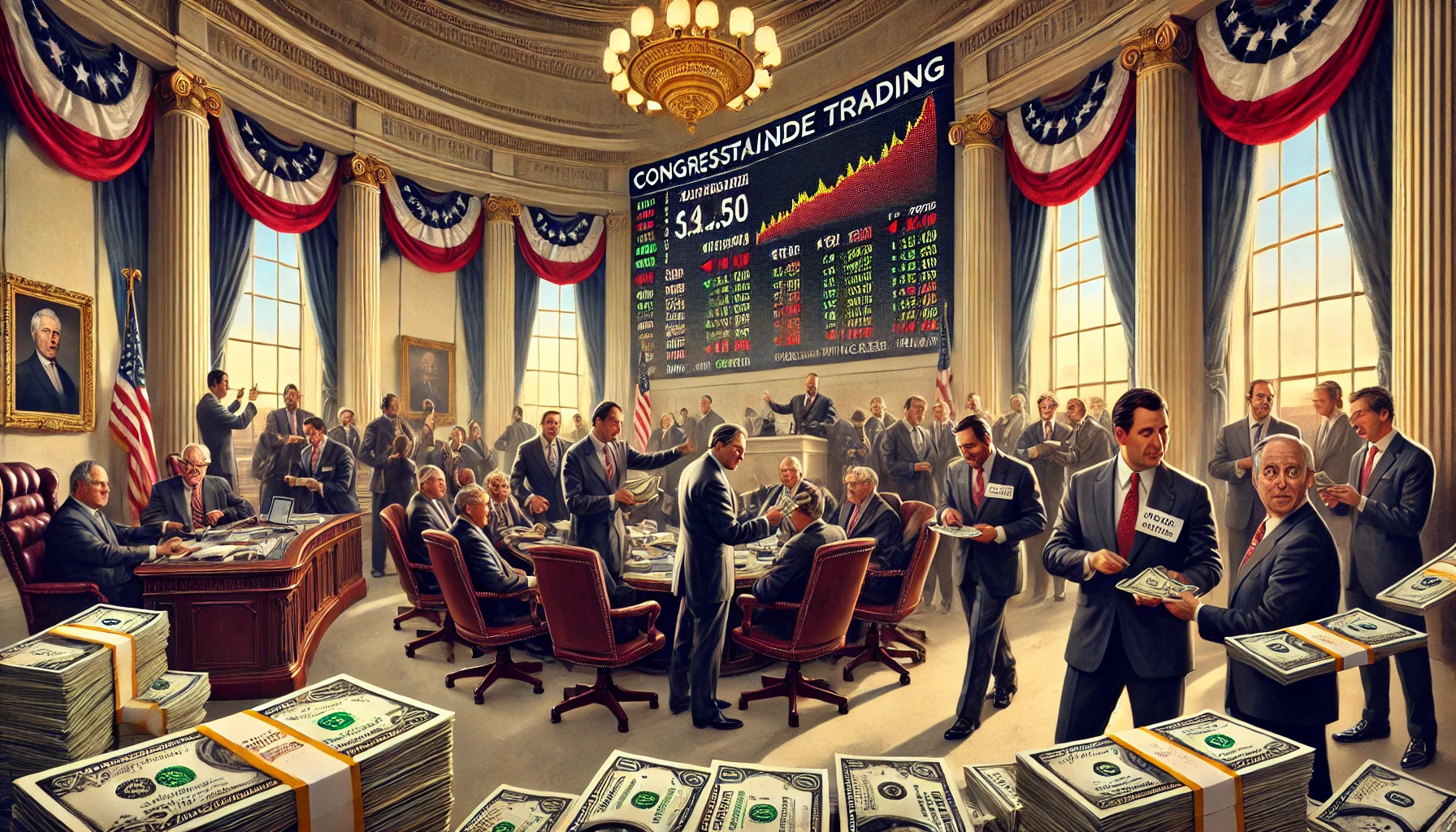
Congressional insider trading has long been a contentious issue, with lawmakers occasionally finding themselves entangled in financial controversies. The STOCK Act of 2012 was enacted to curb such practices, but its effectiveness remains a topic of debate.
Here are 15 humorous observations on the subject:
- Congressional Crystal Balls: Who needs a Magic 8-Ball when you have classified briefings to guide your stock picks?
- The Capitol Hill Hedge Fund: Why start a hedge fund when you can just serve in Congress and get the same perks?
- STOCK Act Loopholes: The STOCK Act is like Swiss cheese—full of holes and best enjoyed with a side of crackers.
- Ethics Committees: The place where congressional insider trading allegations go to take a long nap.
- Blind Trusts: Because nothing says “I trust you” like handing over your assets and hoping for the best.
- Insider Trading Seminars: Coming soon to a congressional retreat near you: “How to Trade Stocks Without Getting Caught.”
- Financial Disclosures: Reading them is like deciphering hieroglyphics, but less fun.
- The ‘Burr’ Effect: Named after Senator Richard Burr, it’s the sudden urge to sell all your stocks after a confidential briefing.
- Ethics Waivers: The “get out of jail free” card for the well-connected.
- Congressional ‘Blind Spots’: When lawmakers conveniently forget about their stock portfolios during committee hearings.
- The ‘Pelosi Portfolio’: A mythical collection of stocks that always seem to outperform the market.
- Insider Trading ‘Allegations’: Also known as “Thursday” on Capitol Hill.
- The STOCK Act Amendment: Because transparency is overrated and loopholes are a legislator’s best friend.
- Congressional ‘Research’: Attending a classified briefing and then calling your broker.
- The Ethics Committee’s Motto: “See no evil, hear no evil, speak no evil… especially when it involves our colleagues.”
These observations highlight the ongoing challenges and ironies in addressing insider trading within the halls of Congress.
Originally posted 2020-08-18 00:36:43.