

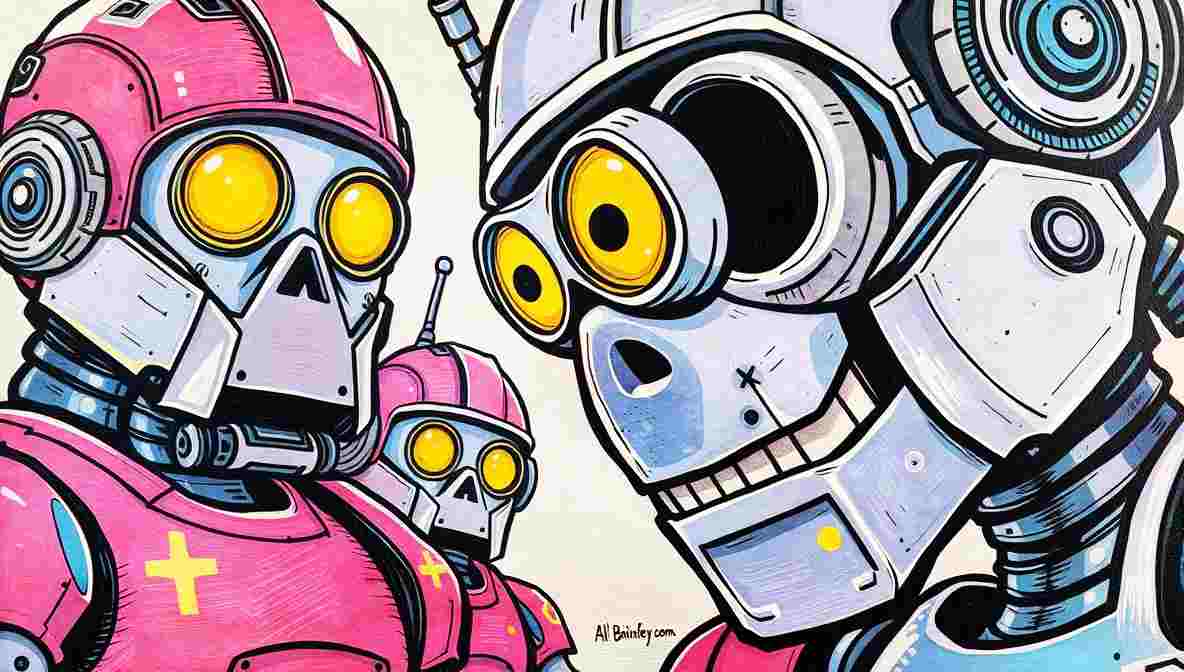
Federal Reserve Warns AI May Replace Gen Z Before They Even Finish Their Résumé
Economists Say Young Workers Now Competing With Algorithms, Chatbots, and a Toaster That Knows Python
- A recent Federal Reserve study reportedly found that the average entry-level job now requires “three internships, five references, and the ability to collaborate respectfully with a machine that has already replaced your manager.”
- Career counselors say Gen Z has begun applying directly to artificial intelligence systems instead of companies, hoping the robots will eventually unionize and hire humans as assistants — at minimum wage, in the metaverse.
- One survey shows 64 percent of young workers believe their first boss will be a chatbot, while the other 36 percent believe their boss will be a slightly larger chatbot with a motivational poster behind it.
- Silicon Valley executives insist AI is not replacing workers, noting that humans still play an essential role in “applauding during product launches” and taking the blame when the product explodes.
- A new labor category has emerged called “AI Whisperer,” meaning someone who politely asks a computer program to stop deleting their entire department — and then files a grievance when it doesn’t listen.
The Federal Reserve Discovers a New Labor Market: Humans vs. Their Own Software

WASHINGTON — The Federal Reserve released a report this week warning that artificial intelligence may replace large numbers of Gen Z workers before they even finish writing their first résumé, a finding economists described as “both deeply troubling and extremely efficient.”
The study found that hiring managers increasingly prefer software systems capable of working twenty-four hours a day, never asking for vacation, and never spending fifteen minutes choosing the perfect emoji for a Slack message. The software also doesn’t cry in the bathroom after a performance review.
Dr. Randall Huxley, a senior labor economist at the Institute for Economic Panic, explained the situation in terms even a business major could understand.
“Artificial intelligence can analyze data, write reports, generate marketing copy, and compose music,” Huxley said. “Meanwhile, the average entry-level applicant lists ‘proficient in vibes’ as a skill.”
The report concluded that young workers now face competition not just from older employees, outsourcing, or automation, but from algorithms capable of performing the entire job interview before the candidate logs into Zoom.
One internal Federal Reserve memo summarized the situation succinctly:
“Gen Z is entering a labor market where the computers already have LinkedIn profiles.”
And better recommendations.
Gen Z Adapts by Applying Directly to the Robots
Facing shrinking job prospects, many young workers have begun adopting what economists call the “reverse résumé strategy.”
Instead of applying to companies, they apply directly to the AI systems that now run those companies.
Twenty-three-year-old marketing graduate Trevor Maldonado explained the logic behind the approach while refreshing a chatbot application portal for the twelfth time.
“Look, the AI is the one making the hiring decisions anyway,” he said. “So I figured I’d skip HR and just message the algorithm directly.”
According to Maldonado, the chatbot politely rejected him but offered constructive feedback.
“It said my résumé lacked relevant machine learning experience and recommended I upgrade my firmware.”
Career experts say this approach may become increasingly common as AI systems take over recruitment.
A leaked internal document from a major tech company revealed that their hiring algorithm recently rejected 400 human applicants because “none of them had enough experience being robots.” The algorithm then promoted itself.
Entry-Level Jobs Now Require Experience — and a Robot Friend
The Federal Reserve report also noted a growing phenomenon in which so-called “entry-level” positions require more experience than most mid-career professionals possess.
The typical listing now includes requirements such as:
- Ten years of experience with tools invented last Tuesday
- Master’s degree preferred but optional if candidate can code while asleep
- Demonstrated ability to collaborate with artificial intelligence systems that resent human inefficiency
- Must supply own ergonomic chair, snacks, and existential resilience
Labor market analyst Gloria Chen said companies are not intentionally excluding young workers.
“They’re simply asking for candidates who already know how to do the job perfectly,” she said.
Chen added that many employers now prefer applicants who arrive at interviews accompanied by their own personal AI assistant.
“It shows initiative,” she said. “Also, the AI usually interviews better.”
Gen Z Discovers Their Dream Job Was Automated Three Years Ago
The emotional impact of the AI hiring wave has been profound for recent graduates.
Many are discovering that the career they spent four years studying for quietly disappeared sometime around 2023, around the same time everyone downloaded ChatGPT and forgot to tell the universities.
Twenty-two-year-old journalism graduate Emily Navarro said she first realized something was wrong when her internship application was answered by a news-writing algorithm.
“It wrote a rejection letter, a full news article, and a podcast script in about four seconds,” Navarro said.
Navarro admitted the article was better than anything she had written during college.
“I think the robot even used better sources,” she said. “And it cited them correctly. Which honestly is infuriating.”
A survey conducted by the National Bureau of Economic Research found that 58 percent of Gen Z job seekers have had at least one moment where they asked themselves the terrifying question:
“Wait… is my career just a software feature now?”
Economists Confirm Humans Still Have One Job Left
Despite the bleak outlook, economists insist artificial intelligence has not eliminated every job.
In fact, one profession remains extremely secure.
Training the AI.
Dr. Huxley explained that every advanced machine-learning system still requires thousands of human workers to label data, check errors, and gently explain to the algorithm why generating recipes for glue soup is not helpful.
“Humans remain essential to the AI economy,” Huxley said. “Without them, the machines would never learn which photos contain cats and which photos contain senators.”
Industry insiders say this role will become one of the fastest-growing professions of the next decade.
The job description is simple:
Sit at a computer.
Correct the robot.
Try not to think about the fact that you are training your replacement.
Collect a paycheck that will also eventually be automated.
What the Funny People Are Saying
“Gen Z isn’t worried about robots taking their jobs. They’re worried the robots will start asking them for unpaid internships.” — Jerry Seinfeld
“I like AI. It does the work, doesn’t complain, and never asks for health insurance. Basically every boss’s dream employee.” — Ron White
“AI didn’t take jobs. It just showed management how unnecessary meetings are.” — Sarah Silverman
The Economy of the Future: New Jobs for a Confused Generation
Despite the anxiety surrounding automation, economists remain optimistic about the long-term outlook.
Historically, new technology has always created new kinds of work.
For example, the invention of the automobile eliminated many horse-related jobs but created entirely new industries involving cars, traffic jams, and arguing with mechanics about charges that appear on no known periodic table.
Similarly, the rise of artificial intelligence is expected to create new careers such as:
- AI ethics consultant (who no one listens to)
- Algorithm therapist
- Professional prompt writer
- Emergency robot shutdown specialist
- Person who explains to the algorithm that “disruption” should not be taken literally
In fact, the Federal Reserve believes the biggest challenge facing young workers will not be unemployment but adaptation.
As one analyst summarized:
“Every generation has to learn new skills. Our grandparents learned factories. Our parents learned computers. Gen Z just has to learn how to politely negotiate with a machine that thinks it’s smarter than them.”
Which, to be fair, it probably is.
A Helpful Reminder for Young Workers
Career experts say there is one lesson Gen Z should remember as they enter the workforce.
Technology changes quickly, but human creativity still matters.
After all, someone still has to invent the jokes that the robots eventually steal.
And until artificial intelligence learns sarcasm, the future of satire remains safe in human hands.
Possibly the only ones left.
This article is satire and part of an entirely human collaboration between two sentient beings: the world’s oldest tenured professor and a philosophy major turned dairy farmer, who both agree that while artificial intelligence may someday master the job market, it still struggles with the important human skills of sarcasm, coffee addiction, and complaining about meetings.
Auf Wiedersehen, amigo!